
Safety
General information, not medical advice
Your prescriber and the leaflet in your pack know your situation. This page does not.
- Follow your prescriber and the leaflet
- Don't start, stop, or change a dose on your own
- Doses and warnings differ by country and product
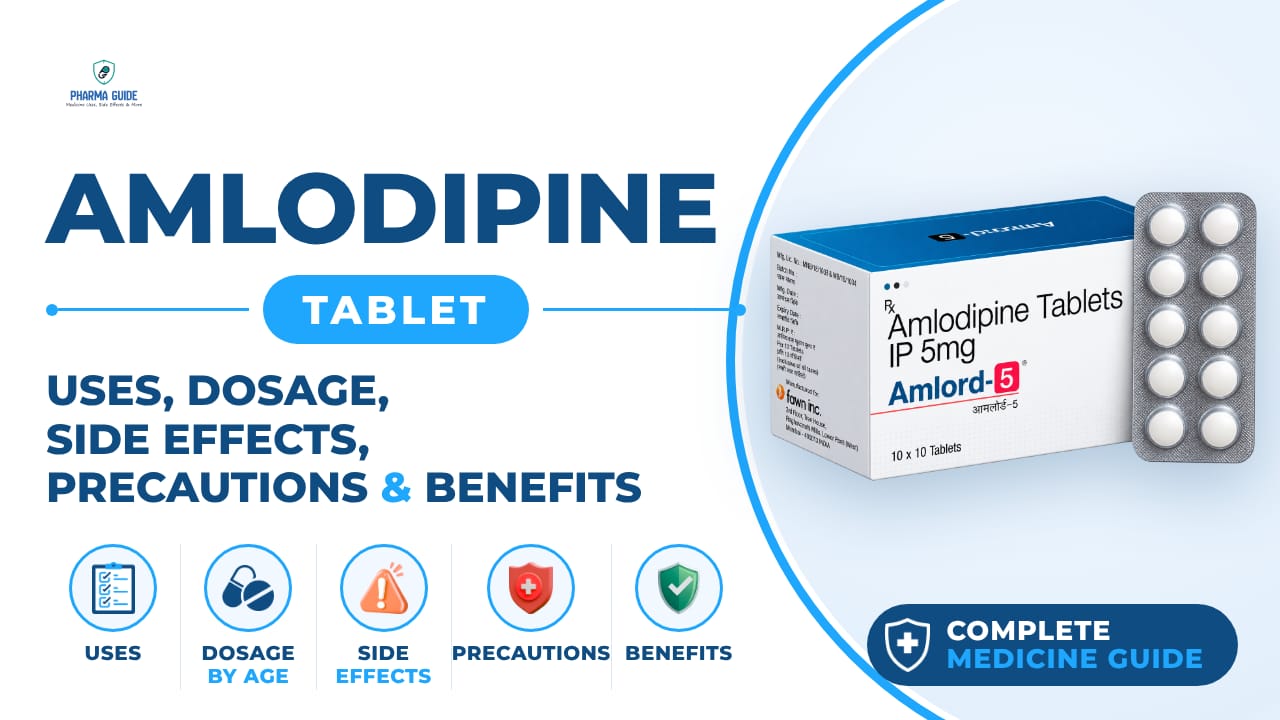
Amlodipine Tablet: Uses, Dosage, Side Effects, Precautions and Alternates
| Generic name | Amlodipine |
|---|---|
| Drug class | Calcium channel blocker |
| Forms | Tablet, Oral liquid solution, Oral suspension, Powder for oral solution |
Quick overview
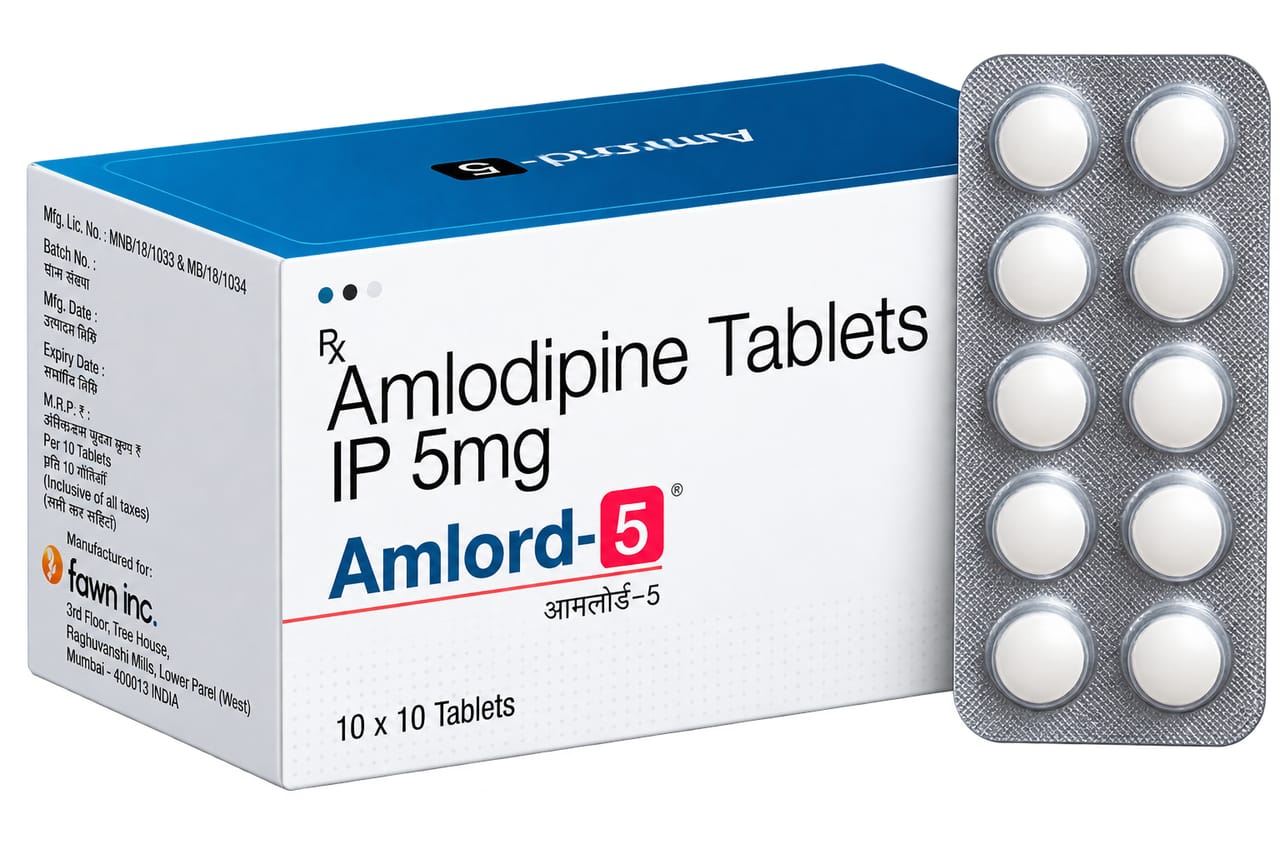
Amlodipine Tablet is a prescription medicine, generic name amlodipine, belonging to the calcium channel blocker drug class. It is used to treat high blood pressure and to prevent certain types of chest pain (angina). It works by relaxing and widening blood vessels, making it easier for blood to flow and reducing how hard the heart has to work. It is usually taken once a day and may be used alone or with other blood pressure or heart medicines.
What is Amlodipine Tablet
Amlodipine is a prescription medicine used to treat high blood pressure and prevent certain types of chest pain (angina). It belongs to a group of medicines called calcium channel blockers.
Amlodipine Tablet uses
- Treats high blood pressure (hypertension)
- Prevents chronic stable angina (chest pain)
- Treats confirmed or suspected vasospastic (Prinzmetal) angina
- Used in people with coronary artery disease to lower the risk of hospital stays for angina and the need for a coronary procedure
- Can be used alone or together with other blood pressure or heart medicines
Benefits of Amlodipine Tablet
- Helps manage blood pressure with one dose lasting more than 24 hours, so it's taken once a day
- Relaxes blood vessels, making the heart's job easier
- Lowering blood pressure may lower the risk of stroke or heart attack
- Controls chest pain if taken regularly (though it will not stop chest pain once it has started)
How Amlodipine Tablet works
Amlodipine works by relaxing and widening blood vessels, which makes it easier for blood to flow and reduces how hard the heart has to work.
Amlodipine Tablet dosage
Take by mouth at the same time every day. It can be taken with or without food; if it upsets your stomach, take it with food. Keep taking it unless your care team tells you to stop, even if you feel well. Do not share this medicine with others.
If using the oral suspension, shake it well before each use. Use a proper dosing cup or oral syringe to measure liquid forms, not a household spoon. If using the powder for oral solution, mix with water and use within the time instructed, then discard if not used promptly.
Doctors usually start with a low dose and may gradually increase it. Talk to your care team about use in children, as amlodipine may be prescribed for children as young as 6 for certain conditions with precautions.
| Age group | Dose |
|---|---|
| Under 6 years | Safety/effectiveness not established |
| 6–17 years | 2.5–5 mg once daily |
| 18–64 years | Usually 5 mg once daily; may increase to 10 mg once daily |
| 65+ years | Usually start at 2.5 mg once daily; adjust according to response |
Available forms and strengths
- Tablet
- Oral liquid solution
- Oral suspension
- Powder for oral solution
Side effects of Amlodipine Tablet
Common
- Dizziness or lightheadedness
- Drowsiness or feeling tired
- Swelling of the legs, ankles, hands, or feet
- Irregular, rapid, or pounding heartbeat (palpitations)
- Muscle stiffness or tremors
- Stomach pain or nausea
- Facial flushing or redness
Serious
- Allergic reaction: skin rash, itching, hives, swelling of the face, lips, tongue, or throat, or difficulty breathing
- Signs of a possible heart attack: chest pain or tightness, pain spreading to the shoulders, arms, or jaw, nausea, shortness of breath, cold or clammy skin, feeling faint or lightheaded, sweating
- Low blood pressure: dizziness, feeling faint or lightheaded, blurry vision
- Worsening or more frequent chest pain (angina)
- Fainting
Warnings and precautions
- Amlodipine should not be used by people with certain serious heart conditions, including cardiogenic shock, severe narrowing of the aortic valve, unstable angina, severe low blood pressure, or heart failure, as it can worsen these conditions.
- When you first start amlodipine or increase your dose, your chest pain may temporarily get worse, or in rare cases you could have a heart attack.
- Do not treat coughs, colds, or pain yourself while on this medicine without asking your care team, since some over-the-counter medicines can raise blood pressure.
- Stand up or sit up slowly to reduce the risk of dizziness or fainting spells.
- If you have high blood pressure, keep taking amlodipine even if you feel well, since high blood pressure often has no symptoms.
- It's not known if amlodipine will harm an unborn baby, but untreated high blood pressure during pregnancy can cause serious problems for both mother and baby. Your doctor will weigh the benefits and risks.
- Amlodipine has been used safely for high blood pressure during pregnancy based on recent research.
- Amlodipine passes into breast milk in only very low amounts and has not been shown to cause harm in breastfed infants, so it is generally considered acceptable during breastfeeding, though sources give different advice — talk to your doctor.
- Kidney problems do not significantly affect how the body processes amlodipine, so people with kidney impairment generally do not need a dose change.
- Tell your doctor if you have liver disease. The liver breaks down amlodipine, and liver problems can cause the medicine to stay in the body longer, so your doctor may need to start you on a lower dose and adjust it carefully.
- Drinking alcohol while taking amlodipine can further lower your blood pressure and increase side effects like dizziness or fainting.
- This medication may affect your coordination, reaction time, or judgment. Do not drive or operate machinery until you know how it affects you.
Storage
- Store at room temperature between 20 and 25 degrees C (68 and 77 degrees F)
- Protect from light and moisture
- Keep the container tightly closed
- Store the oral suspension in the refrigerator; do not freeze; protect it from light
- Keep out of the reach of children and pets
- Get rid of any unused medication after the expiration date
- Take the medication to a medication take-back program; check with your pharmacy or law enforcement to find a location
- If a take-back program is not available, check the label or package insert to see if it should be thrown out in the garbage; if safe to trash, mix it with cat litter, dirt, or coffee grounds, seal in a bag, and put it in the trash
- Do not flush this medication down the toilet unless instructed
When to see a doctor
- Get emergency help right away for signs of an allergic reaction such as hives, difficulty breathing, or swelling of the face, lips, tongue, or throat.
- Seek emergency care or call your doctor right away if you have chest pain or pressure, pain spreading to the jaw or shoulder, nausea, or sweating, which could be signs of a heart attack.
- Call your doctor immediately if you have worsening or more frequent chest pain, a rapid or irregular heartbeat, or if you feel like you might faint.
- If you think you have taken too much of this medicine, contact a poison control center or go to an emergency room right away.
Alternatives
- Metoprolol
- Hydrochlorothiazide
- Lercanidipine
- Felodipine
- Nifedipine ER
Watch the video
FAQs
What is Amlodipine Tablet used for?
It is used to treat high blood pressure, prevent chronic stable angina, treat confirmed or suspected vasospastic (Prinzmetal) angina, and lower the risk of hospital stays or coronary procedures in people with coronary artery disease.
How does Amlodipine Tablet work?
It works by relaxing and widening blood vessels, making it easier for blood to flow and reducing how hard the heart has to work.
What is the usual dosage of Amlodipine Tablet for adults?
Adults 18–64 years usually start at 5 mg once daily, which may be increased to 10 mg once daily, while those 65 and older usually start at 2.5 mg once daily, adjusted according to response.
What are the common side effects of Amlodipine Tablet?
Common side effects include dizziness or lightheadedness, drowsiness, swelling of the legs, ankles, hands, or feet, palpitations, muscle stiffness or tremors, stomach pain or nausea, and facial flushing.
Is Amlodipine Tablet safe during pregnancy or breastfeeding?
It's not known if amlodipine will harm an unborn baby, but untreated high blood pressure in pregnancy can be harmful, so doctors weigh benefits and risks; it passes into breast milk in very low amounts and has not been shown to harm breastfed infants, though you should talk to your doctor.
General information, not medical advice
Your prescriber and the leaflet in your pack know your situation. This page does not.
- Follow your prescriber and the leaflet
- Don't start, stop, or change a dose on your own
- Doses and warnings differ by country and product
Sources
Video
Related medicines
Calan Tablet: Uses, Dosage, Side Effects, Precautions and Alternates
Calcium channel blocker
Calan Tablet (verapamil) treats high blood pressure, angina, and irregular heart rhythms by relaxing blood vessels and slowing heart conduction. Learn uses,
Flunarizine Tablet: Uses, Dosage, Side Effects, Precautions and Alternates
Calcium channel blocker
Flunarizine Tablet prevents migraine and treats vertigo by relaxing blood vessels. Learn its dosage, benefits, side effects, and precautions.