
Safety
General information, not medical advice
Your prescriber and the leaflet in your pack know your situation. This page does not.
- Follow your prescriber and the leaflet
- Don't start, stop, or change a dose on your own
- Doses and warnings differ by country and product
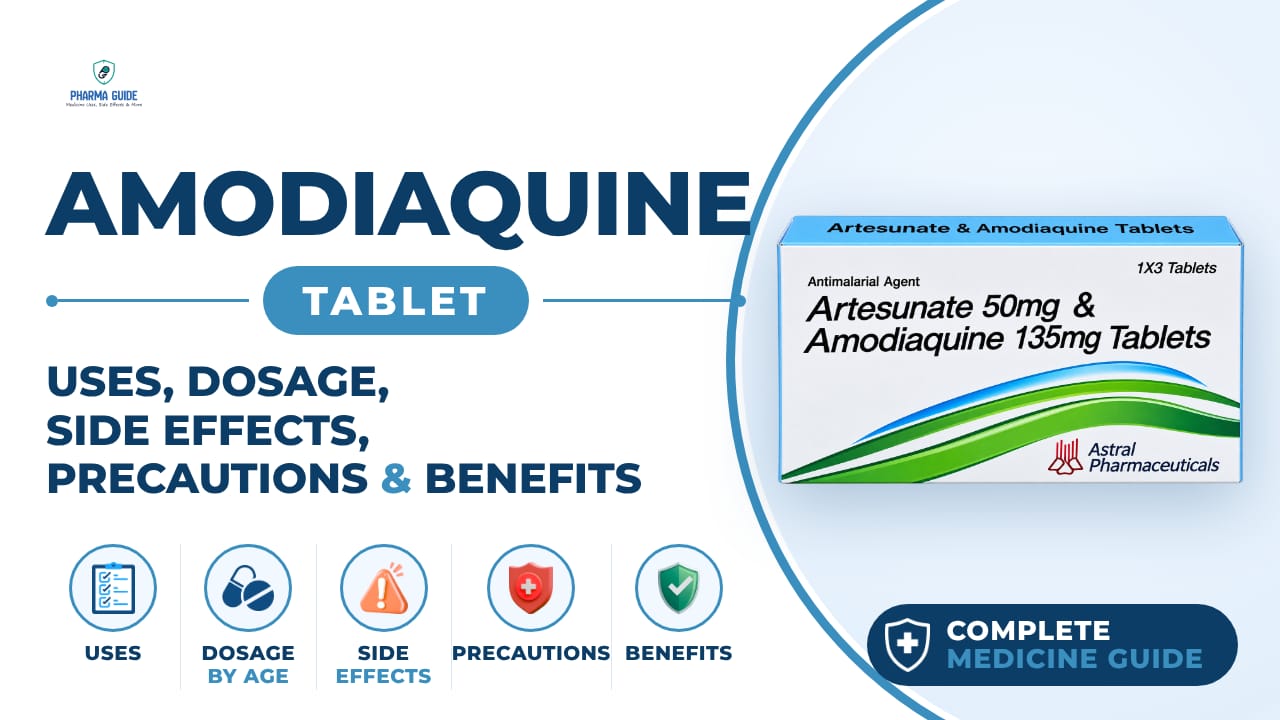
Amodiaquine Tablet: Uses, Dosage, Side Effects, Precautions and Alternates
| Generic name | Amodiaquine |
|---|---|
| Drug class | Antimalarial (4-aminoquinoline) |
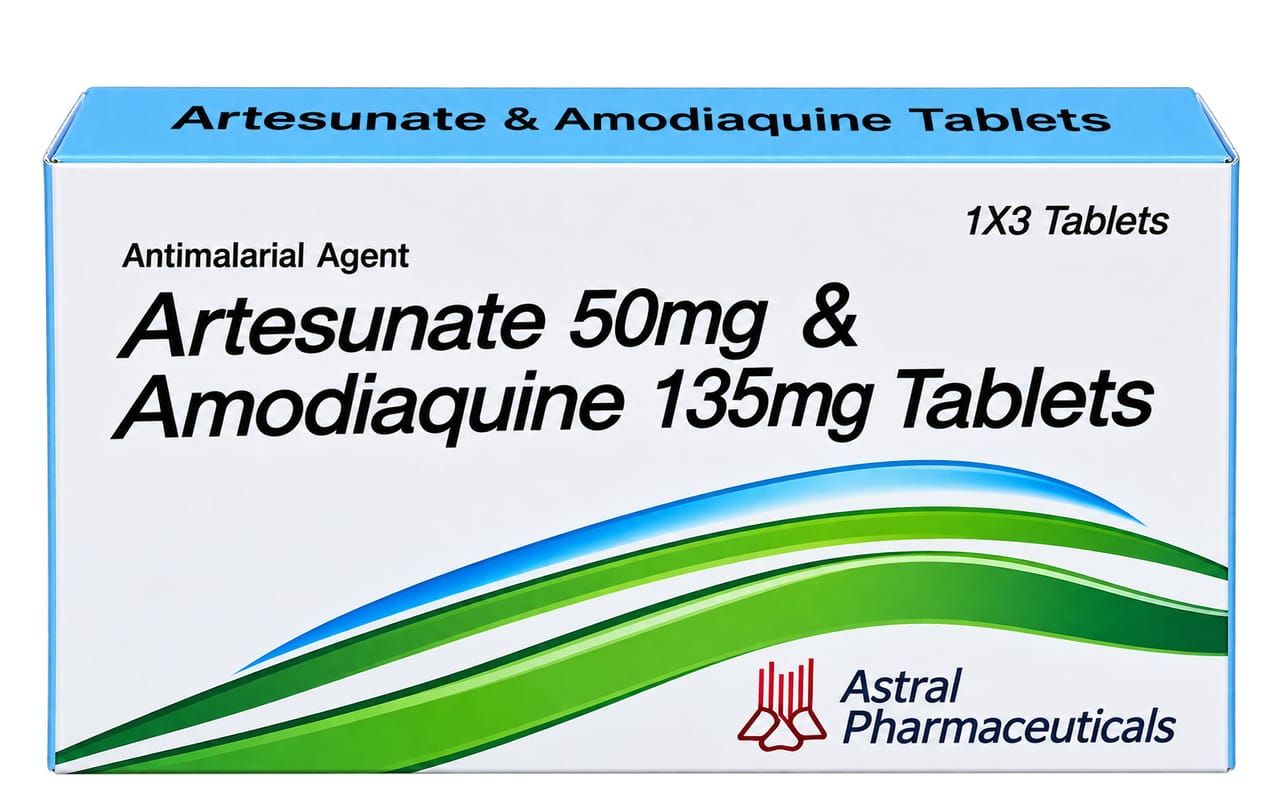
| Forms | Tablets (plain, bilayered, including fixed-dose combination with artesunate) |
Quick overview
Amodiaquine Tablet contains Amodiaquine, an antimalarial medicine from the 4-aminoquinoline class. It is used to treat uncomplicated malaria caused by Plasmodium falciparum and is often combined with artesunate to improve effectiveness. The medicine is given once daily for 3 days, with doses based on age and body weight. It can cause side effects affecting the stomach, nervous system, heart rhythm, liver, and blood, so it should be used under medical supervision.
What is Amodiaquine Tablet
Amodiaquine is an antimalarial medicine used to treat malaria caused by the Plasmodium falciparum parasite. It is often combined with artesunate to make treatment more effective.
Amodiaquine Tablet uses
- Treatment of uncomplicated malaria caused by Plasmodium falciparum strains that respond to amodiaquine and artesunate
- May be used in mass drug treatment programs to lower the spread of malaria in a community
- Treats uncomplicated falciparum malaria
- Used as part of combination antimalarial therapy
- Helps clear malaria parasites from the blood
Benefits of Amodiaquine Tablet
- Clears the malaria parasite from the blood when combined with artesunate
- Still works against some strains of malaria that have become resistant to chloroquine
- Provides effective antimalarial activity when combined appropriately
- Short 3-day treatment course
- Available in pediatric weight-based formulations
- Can be used across multiple age groups when dosed by body weight
How Amodiaquine Tablet works
Amodiaquine gets into red blood cells infected with the malaria parasite and stops the parasite from processing a waste product, which kills the parasite. When combined with artesunate, which attacks the parasite in a different way, the two medicines work together against the infection.
Amodiaquine Tablet dosage
Swallow the tablets with water; they should not be taken with a high-fat meal. If you cannot swallow the tablets, such as for very young children, the tablets can be crushed and mixed with water or taken with water. If you miss a dose, take it as soon as you remember, unless it is almost time for the next dose — then skip the missed dose and continue as normal. If vomiting occurs within half an hour of taking a dose, take another dose; if vomiting continues, seek medical care for possible severe malaria. Doses may be taken with meals to help lessen stomach upset.
| Age group | Dose |
|---|---|
| 2–11 months (4.5 to <9 kg) | 67.5 mg once daily for 3 days |
| 1–5 years (9 to <18 kg) | 135 mg once daily for 3 days |
| 6–13 years (18 to <36 kg) | 270 mg once daily for 3 days |
| 14–64 years (≥36 kg) | 540 mg once daily for 3 days |
Available forms and strengths
- Tablets (plain, bilayered, including fixed-dose combination with artesunate)
Side effects of Amodiaquine Tablet
Common
- Loss of appetite
- Stomach pain
- Nausea
- Weakness
- Sleepiness
- Trouble sleeping
- Cough
- Prolonged QT interval (a heart rhythm change seen on ECG)
- Diarrhea
- Vomiting
- Itching, rash, or skin swelling
- Joint pain
- Fever
- Swelling of the arms or legs
Serious
- Severe allergic reaction
- Low white blood cell counts, including a severe and sometimes life-threatening drop called agranulocytosis
- Severe hepatitis (liver inflammation), which can sometimes be fatal
- Irreversible damage to the retina of the eye (with frequent or prolonged use)
- Abnormal heart rhythms, including slow heart rate
- Convulsions
- Hallucinations
- Unusual movements such as tongue protrusion, muscle spasms, or neck twisting (extrapyramidal reactions)
- Severe drop in blood sugar
- Vertigo
- Grey-colored skin pigmentation, especially on fingers and inside the mouth
Warnings and precautions
- Do not use this medicine in areas where the malaria parasite has become widely resistant to amodiaquine, because then only the other ingredient would actually be working, raising the risk of resistance developing.
- This medicine should not be used to prevent malaria (as a long-term preventive drug), because long-term use raises the risk of serious blood and liver problems.
- This medicine has not been studied for treating severe or complicated malaria and should not be used for that.
- This medicine has not been studied in people with certain blood conditions, including thalassaemia, sickle cell disease, or G6PD deficiency, so caution is needed.
- This medicine should be used carefully in people with heart problems, slow heart rate, low potassium or magnesium levels, or in people taking other medicines that affect heart rhythm, because of a risk of a heart rhythm change called QT prolongation.
- This medicine should not be taken together with the HIV medicine efavirenz, because the combination can cause serious liver damage.
- This medicine contains lactose and should not be given to people with certain rare inherited conditions affecting sugar processing unless absolutely necessary.
- This medicine may be used in the first trimester of pregnancy if the preferred option is not available or suitable, and can be used during the second and third trimesters. Long experience with amodiaquine has not shown a clear risk of birth defects, but safety has not been formally confirmed.
- Only small amounts of this medicine pass into breast milk, and it can be used to treat malaria in breastfeeding women.
- There is no specific information on dosing in people with kidney problems, so this medicine should be used with caution in these patients.
- This medicine should be used carefully in people with liver disease, since amodiaquine can build up in the liver and cause damage, and it should never be used again in anyone who previously had liver injury from it.
- People who drink alcohol regularly should use this medicine with caution because of the added risk to the liver.
- This medicine can cause sleepiness, dizziness, or weakness. Do not drive or use machines if you experience these effects.
Storage
- Do not store above 30°C.
- Store in an air-tight container, in child-resistant packaging out of the reach of children.
When to see a doctor
- Get medical help right away if you develop a fever with a sore throat or mouth ulcers, as this could be a sign of a dangerous drop in white blood cells.
- Seek medical attention immediately if you notice yellowing of the skin or eyes, or other signs of liver problems, since treatment may need to be stopped right away.
- Seek medical care if you have unusual movements of the tongue, face, or body, even after just one dose, as this may require stopping the medicine and switching to another antimalarial.
- If you suspect an overdose, get to a hospital right away where heart and breathing function can be closely monitored and treated.
- Seek urgent medical help for symptoms such as severe headache, dizziness, vision changes, fainting, irregular heartbeat, or seizures, which can occur with amodiaquine toxicity.
Alternatives
- Artemether + lumefantrine
- Artesunate + mefloquine
- Dihydroartemisinin + piperaquine
Watch the video
FAQs
What is Amodiaquine Tablet used for?
It is used to treat uncomplicated malaria caused by Plasmodium falciparum, often combined with artesunate, and may also be used in mass drug treatment programs to reduce malaria spread.
How is Amodiaquine Tablet dosed?
It is given once daily for 3 days, with the dose based on age and body weight, ranging from 67.5 mg for infants 2–11 months to 540 mg for those 14–64 years weighing 36 kg or more.
What should I do if I miss a dose of Amodiaquine Tablet?
Take the missed dose as soon as you remember, unless it is almost time for the next dose, in which case skip the missed dose and continue as normal.
What are the serious side effects of Amodiaquine Tablet?
Serious side effects include severe allergic reaction, low white blood cell counts (including agranulocytosis), severe hepatitis, irreversible retinal damage, abnormal heart rhythms, convulsions, hallucinations, and grey-colored skin pigmentation.
Can Amodiaquine Tablet be used during pregnancy or breastfeeding?
It may be used in the first trimester if the preferred option is unsuitable, and can be used in the second and third trimesters. Only small amounts pass into breast milk, so it can be used to treat malaria in breastfeeding women.
General information, not medical advice
Your prescriber and the leaflet in your pack know your situation. This page does not.
- Follow your prescriber and the leaflet
- Don't start, stop, or change a dose on your own
- Doses and warnings differ by country and product
Sources
Video
Related medicines

Injectafer Injection: Uses, Dosage, Side Effects, Precautions and Alternates
Iron products
Injectafer (ferric carboxymaltose) treats iron deficiency anemia and heart failure-related iron deficiency via IV. Learn uses, dosage, side effects, and

Gliclazide Tablet: Uses, Dosage, Side Effects, Precautions and Alternates
Sulfonylurea (hypoglycemic/antidiabetic agent)
Gliclazide Tablet is a sulfonylurea for type 2 diabetes that boosts insulin release. Learn about dosage, side effects, warnings, and precautions.