
Safety
General information, not medical advice
Your prescriber and the leaflet in your pack know your situation. This page does not.
- Follow your prescriber and the leaflet
- Don't start, stop, or change a dose on your own
- Doses and warnings differ by country and product
Amoxicillin Syrup: Uses, Dosage, Side Effects, Precautions and Alternates
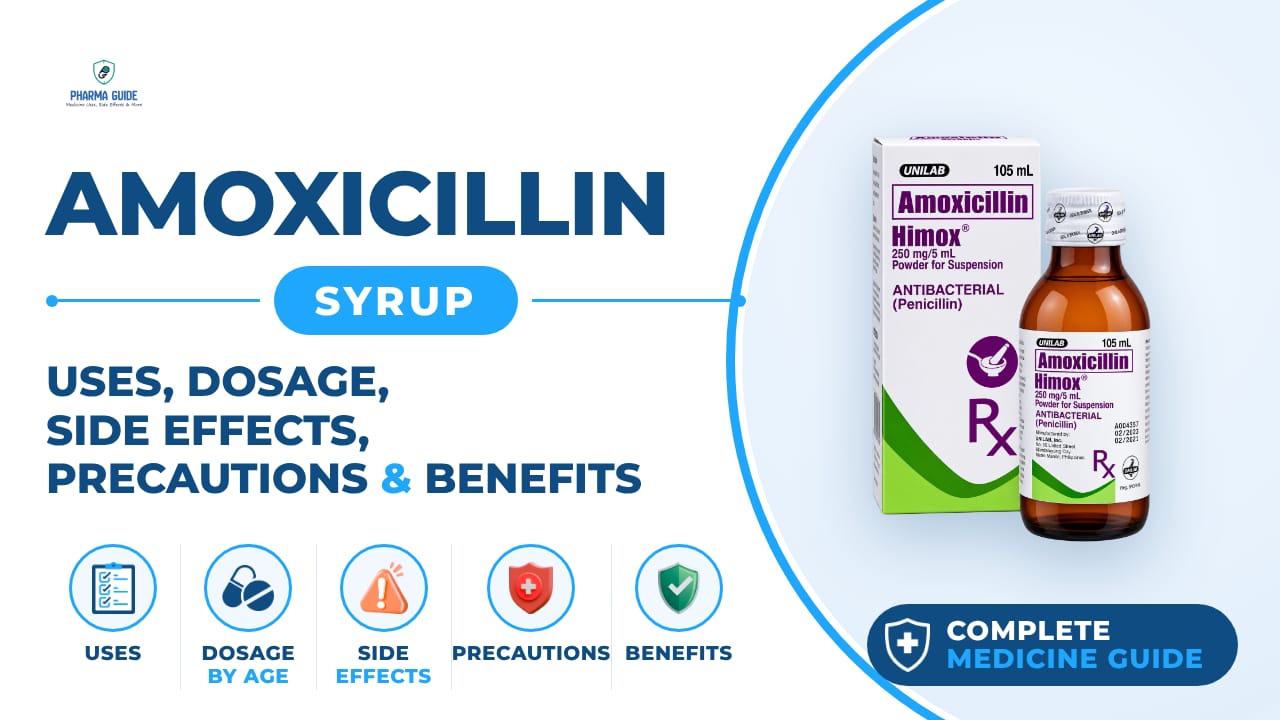
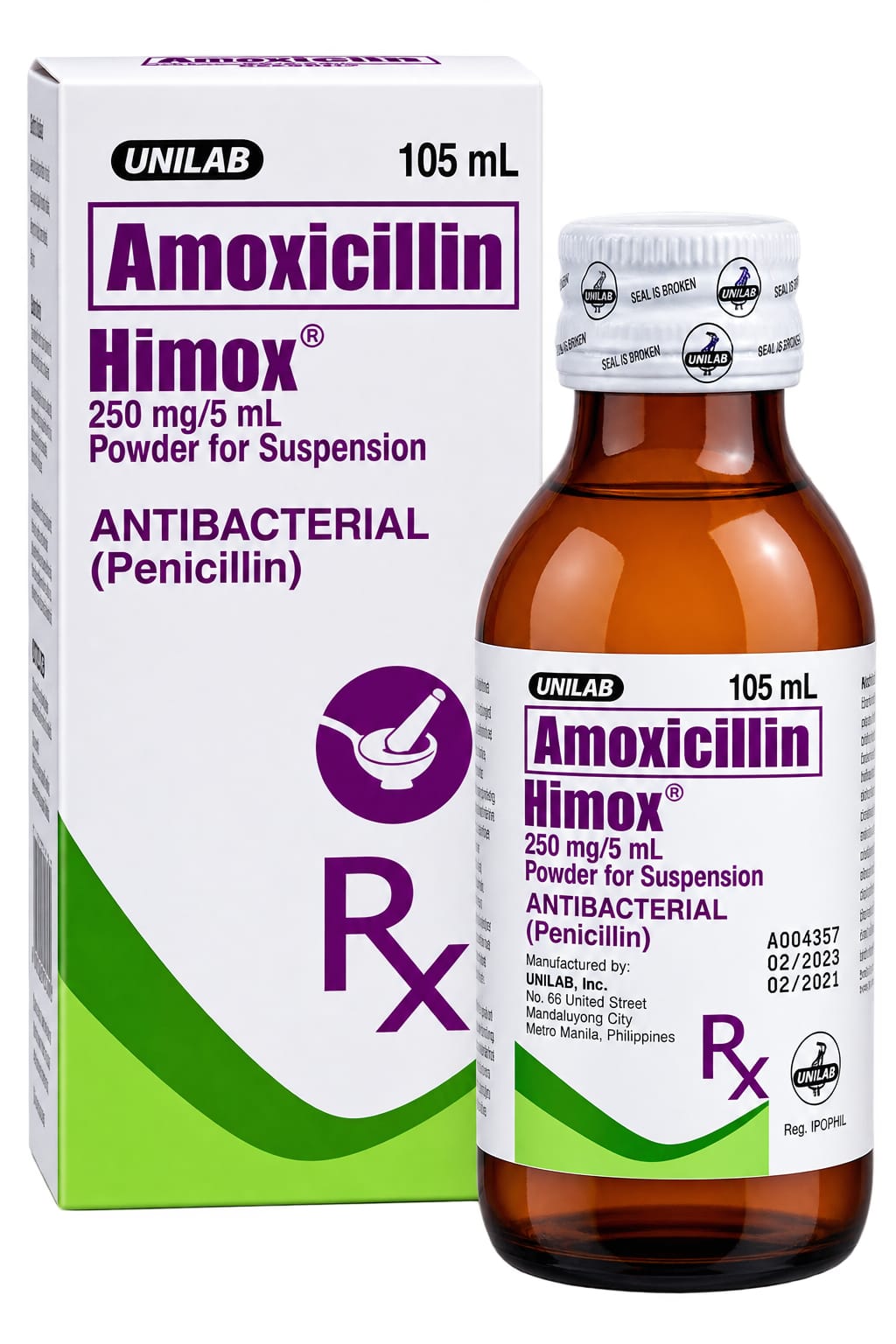
| Generic name | Amoxicillin |
|---|---|
| Drug class | Penicillin-like antibiotic |
| Forms | Syrup / oral suspension (liquid), Capsule, Tablet, Chewable tablet, Powder for oral suspension |
Quick overview
Amoxicillin Syrup is a liquid antibiotic that belongs to the penicillin-like antibiotic class and is used to treat certain bacterial infections. It works by stopping the growth of bacteria, and the liquid form makes it easy to give correct doses to young children. It can be taken with or without food and does not work against viral infections such as colds or flu.
What is Amoxicillin Syrup
Amoxicillin syrup is a liquid antibiotic that treats certain infections caused by bacteria. It belongs to a group of medicines called penicillin-like antibiotics and works by stopping the growth of bacteria. The liquid form makes it easy to give correct doses to young children.
Amoxicillin Syrup uses
- Ear infections
- Respiratory tract infections
- Throat infections
- Urinary tract infections
- Skin and soft tissue infections
- Sinus infections
- Dental infections
- Pneumonia
- H. pylori infection (with other medicines)
- Prevention of bacterial endocarditis
- Lyme disease
- Prevention of anthrax infection after exposure and treatment of skin anthrax
Benefits of Amoxicillin Syrup
- Treats many kinds of bacterial infections in children and adults
- Convenient liquid form for accurate dosing in young children
- Can be taken with or without food
How Amoxicillin Syrup works
Amoxicillin works by interfering with the building of the bacterial cell wall. This stops the growth of bacteria and kills them, which helps reduce the infection. It does not work against viruses such as the common cold or flu.
Amoxicillin Syrup dosage
Take amoxicillin exactly as directed by your doctor. Shake the bottle well before each use to mix the medicine evenly. Use a properly marked measuring device such as a medicine spoon or oral syringe; do not use a household spoon.
May be taken with or without food; taking it with food can help prevent stomach upset. The suspension can be placed directly on the child's tongue or added to formula, milk, fruit juice, water, or another cold liquid and taken right away. If using chewable tablets, chew them completely before swallowing.
Take it at around the same times every day, usually every 8 or 12 hours. Complete the full course even if you feel better. Call your doctor if your symptoms do not improve or get worse.
| Age group | Dose |
|---|---|
| Under 3 months | Usually 30 mg/kg/day, divided every 12 hours, under medical supervision |
| 3 months–11 years | Commonly 20–40 mg/kg/day, divided into 3 doses; some infections require higher doses |
| 12–17 years | If adult-sized, commonly 250–500 mg every 8 hours, depending on the infection |
| 18–64 years | Commonly 250–500 mg every 8 hours, or 500–875 mg every 12 hours for certain infections |
| 65+ years | Usually adult dosing, but kidney function may require dose adjustment |
Available forms and strengths
- Syrup / oral suspension (liquid)
- Capsule
- Tablet
- Chewable tablet
- Powder for oral suspension
Side effects of Amoxicillin Syrup
Common
- Nausea
- Vomiting
- Diarrhea
- Stomach upset
- Loss of appetite
- Headache
- Skin rash
- Oral thrush
- Vaginal yeast infection
- Temporary discoloration (yellow, brown, or gray) of teeth, mostly in children
- Black hairy tongue
- Dizziness
- Anxiety
Serious
- Severe allergic reaction (anaphylaxis) with swelling of the face, throat, tongue, lips, and eyes, difficulty breathing or swallowing, skin blistering or peeling
- Severe diarrhea (watery or bloody stools), which may occur up to 2 months or more after treatment
- Liver problems
- Blood disorders
- Stevens-Johnson syndrome and other severe skin reactions
- Seizures
- Prolonged vomiting, extreme tiredness, and paleness
- Signs of kidney problems such as cloudy urine
- Confusion or changes in behavior
Warnings and precautions
- Tell your doctor if you are pregnant or plan to become pregnant.
- The safety of amoxicillin during pregnancy has not been fully established, so it should only be used when the possible benefits outweigh the possible risks to the baby.
- Tell your doctor if you are breastfeeding or plan to breastfeed.
- Talk to your doctor about how to feed your baby while you are taking this medicine.
- Tell your doctor if you have kidney disease. Because amoxicillin is mostly removed by the kidneys, the dose may need to be lowered if your kidney function is reduced.
- Tell your doctor if you have liver disease or a history of liver problems linked to amoxicillin. Liver function should be checked during long-term treatment.
- Do not use this medicine if you are allergic to amoxicillin, penicillin, or cephalosporin antibiotics, or if you have had a severe allergic reaction to them.
- Do not use this medicine if you have infectious mononucleosis (mono), as a rash is likely to occur.
- Serious and sometimes fatal allergic reactions have happened with penicillins. If an allergic reaction occurs, stop the medicine and get medical help.
- Severe diarrhea from Clostridium difficile can happen during or up to 2 months or more after treatment. Report persistent or bloody diarrhea to your doctor.
- Do not use antibiotics for viral infections like colds and flu. Using them when not needed can make future infections harder to treat.
- This medicine may reduce how well hormonal birth control (pills, patches, rings, injections) works, so use another method of contraception.
- Amoxicillin can affect blood thinners (such as warfarin), which may increase bleeding risk. Close monitoring may be needed.
- This medicine may cause a false positive result in some urine sugar tests. Tell your doctor if you are diabetic.
- Finish the full course as prescribed even if you feel better; stopping early can let the infection return and bacteria become resistant.
Storage
- Store dry powder at room temperature below 25°C (or 15°C to 30°C), away from excess heat and moisture, and not in the bathroom.
- After reconstitution (mixing with water), store the liquid in the refrigerator; it may also be stored at room temperature. Do not freeze.
- Discard the reconstituted syrup after 7 to 14 days as indicated on the label.
- Keep the bottle tightly closed and protect from light.
- Keep out of reach of children.
- Do not flush this medicine down the toilet. Use a medicine take-back program, or return expired medicines to your pharmacist.
When to see a doctor
- Stop taking the medicine and get emergency medical treatment if you have signs of a severe allergic reaction such as rash, itching, hives, skin blisters or peeling, wheezing, difficulty swallowing or breathing, or swelling of the face, throat, tongue, lips, or eyes.
- Contact your doctor right away if you have severe, watery, or bloody diarrhea, with or without fever and stomach cramps, which may start even months after treatment.
- Get medical help if you have prolonged vomiting, extreme tiredness, and paleness that occur within 24 hours of taking the medicine.
- In case of overdose, contact your local poison control center immediately. If the person has collapsed, had a seizure, has trouble breathing, or cannot be woken, call emergency services.
Alternatives
- Ampicillin Suspension
- Amoxicillin-Clavulanate Suspension
- Cephalexin Suspension
- Cefuroxime Suspension
- Cefixime Suspension
Watch the video
FAQs
What is Amoxicillin Syrup used for?
It is used to treat bacterial infections such as ear, throat, sinus, urinary tract, skin, and respiratory infections, pneumonia, Lyme disease, H. pylori infection, dental infections, and for prevention of bacterial endocarditis and anthrax after exposure.
How should Amoxicillin Syrup be taken?
Shake the bottle well before each use and measure the dose with a proper measuring device, not a household spoon. It can be taken with or without food, usually every 8 or 12 hours, and the full course should be completed even if symptoms improve.
Can Amoxicillin Syrup be taken with food?
Yes, it may be taken with or without food, and taking it with food can help prevent stomach upset.
What are the common side effects of Amoxicillin Syrup?
Common side effects include nausea, vomiting, diarrhea, stomach upset, loss of appetite, headache, skin rash, oral thrush, vaginal yeast infection, dizziness, and temporary tooth discoloration in children.
How should Amoxicillin Syrup be stored after mixing?
After reconstitution, store the liquid in the refrigerator or at room temperature, avoid freezing, and discard any unused syrup after 7 to 14 days as indicated on the label.
General information, not medical advice
Your prescriber and the leaflet in your pack know your situation. This page does not.
- Follow your prescriber and the leaflet
- Don't start, stop, or change a dose on your own
- Doses and warnings differ by country and product
Sources
- MedlinePlus - Amoxicillin (https://medlineplus.gov/druginfo/meds/a685001.html)
- Amoxil Syrup, Marham (https://www.marham.pk/medicines/amoxil-syrup)
- AURO-AMOXICILLIN Product Monograph, Auro Pharma Inc. (https://pdf.hres.ca/dpd_pm/00053742.PDF)
Video
Related medicines

Injectafer Injection: Uses, Dosage, Side Effects, Precautions and Alternates
Iron products
Injectafer (ferric carboxymaltose) treats iron deficiency anemia and heart failure-related iron deficiency via IV. Learn uses, dosage, side effects, and

Gliclazide Tablet: Uses, Dosage, Side Effects, Precautions and Alternates
Sulfonylurea (hypoglycemic/antidiabetic agent)
Gliclazide Tablet is a sulfonylurea for type 2 diabetes that boosts insulin release. Learn about dosage, side effects, warnings, and precautions.