
Safety
General information, not medical advice
Your prescriber and the leaflet in your pack know your situation. This page does not.
- Follow your prescriber and the leaflet
- Don't start, stop, or change a dose on your own
- Doses and warnings differ by country and product
Amoxil Capsule: Uses, Dosage, Side Effects, Precautions and Alternates
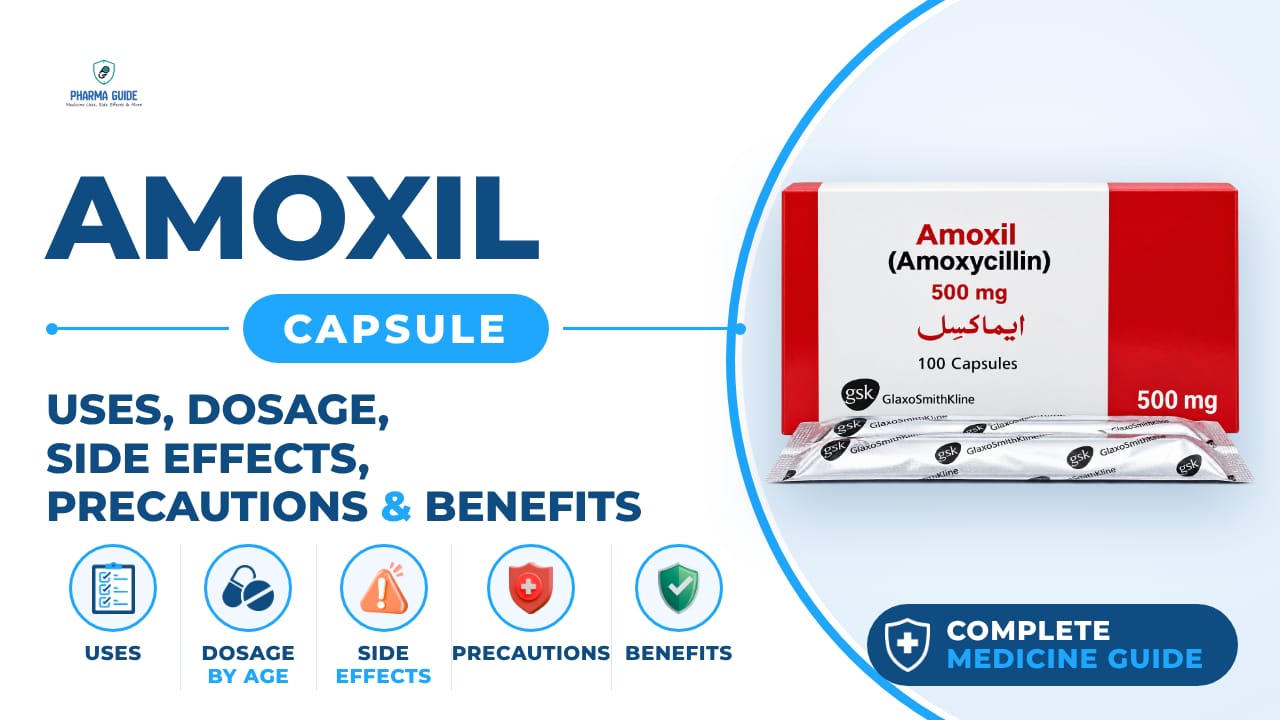
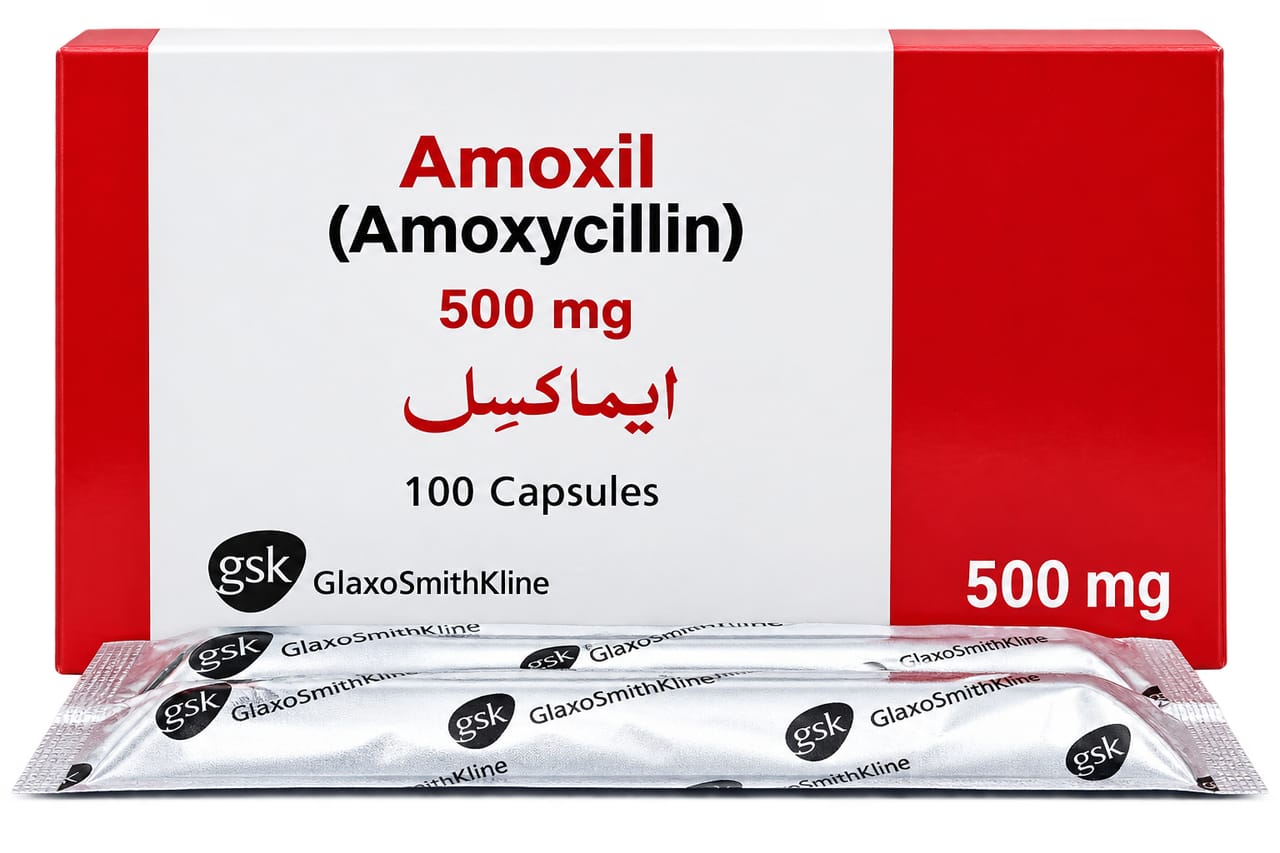
| Generic name | Amoxicillin (as amoxicillin trihydrate) |
|---|---|
| Drug class | Penicillin antibiotic |
| Forms | Capsule, Chewable tablet, Oral tablet, Liquid (oral suspension) |
Quick overview
Amoxil Capsule contains amoxicillin, a penicillin antibiotic that helps the body fight infections caused by certain bacteria. It is used to treat infections such as those of the chest, ear, nose, throat, urinary tract, and skin, but it does not work against viral infections like the common cold or flu. It is taken as capsules with or without food, following the course length your doctor has set. Common side effects include diarrhea and nausea, while serious reactions such as allergic responses require prompt medical attention.
What is Amoxil Capsule
Amoxil is a penicillin antibiotic that helps your body fight infections caused by certain bacteria. It treats many types of infection such as chest, ear, nose, throat, urinary tract, and skin infections. It does not work against viral infections like the common cold or flu.
Amoxil Capsule uses
- Ear, nose, and throat infections
- Typhoid and paratyphoid fever
- Gastrointestinal tract infections
- Urinary tract infections
- Skin infections
- Septicaemia
- Bone infections
- Pelvic infections
- Gonorrhoea
- Pneumonia
- Meningitis
- Dental abscess
- Digestive tract infections caused by H. pylori
- Tonsillitis
- Bronchitis
- Sinusitis
- Preventing infection
Benefits of Amoxil Capsule
- Helps clear bacterial infections so your immune system can fight them more effectively
- Can be taken with or without food
How Amoxil Capsule works
Amoxil kills certain bacteria by stopping them from being able to build their cell wall, which stops the infection from growing.
Amoxil Capsule dosage
Swallow the capsule whole with a glass of water. It can be taken with or without food. Space your doses evenly throughout the day, for example every eight hours if taking it three times a day. Keep taking it until the course is finished or for as long as your doctor tells you. Do not stop taking it just because you feel better, as the infection may return. Do not stop taking it or change the dose without first checking with your doctor.
If you miss a dose, take it as soon as you remember; if it is almost time for your next dose, skip the missed dose and do not take a double dose. Shake the oral suspension (liquid) before measuring a dose and use an accurate measuring device, not a household spoon.
| Age group | Dose |
|---|---|
| Under 3 months | Weight-based dosing only, under medical supervision |
| 3 months–11 years | Usually 20–40 mg/kg/day, divided into 3 doses; some infections require higher doses |
| 12–17 years | If adult-sized, commonly 250–500 mg every 8 hours, depending on the infection |
| 18–64 years | Commonly 250–500 mg every 8 hours; some infections may require 500–875 mg every 12 hours |
| 65+ years | Generally adult dosing, but kidney function may require dose adjustment |
Available forms and strengths
- Capsule
- Chewable tablet
- Oral tablet
- Liquid (oral suspension)
Side effects of Amoxil Capsule
Common
- Diarrhea
- Nausea and vomiting
- Skin rash
- Headache
- Indigestion
- Soreness of the mouth or tongue
- Overgrowth of yeast infections (thrush)
Serious
- Severe allergic reactions (including DRESS)
- Severe skin reactions (SJS, TEN, AGEP)
- Clostridioides difficile (antibiotic-associated) diarrhea
- Liver problems
- Yellowing of the skin or eyes
- Dark urine or pale stools
- Unusual bleeding or bruising
- Difficulty or pain passing urine
- Excessive abnormal muscle movements
- Dizziness or convulsions
- Drug-induced enterocolitis syndrome (DIES)
Warnings and precautions
- Do not use Amoxil if you are allergic to amoxicillin or to any other penicillin antibiotic, or to similar antibiotics such as cephalosporins.
- Amoxicillin can make birth control pills less effective, so you may need to use an extra, non-hormonal method of birth control such as a condom.
- Antibiotics can cause diarrhea, which may happen while taking Amoxil or within a few months after stopping. If your diarrhea is watery or bloody, stop taking it, call your doctor, and do not use anti-diarrhea medicine unless your doctor tells you to.
- Do not share this medicine with anyone else, even if they have the same symptoms, and use it only for the infection it was prescribed for.
- Complete the full prescribed course even if you feel better, because stopping early can let the infection return and increase the risk of resistant infections.
- Tell your doctor if you are pregnant or plan to become pregnant. Amoxil may be used during pregnancy, but only under your doctor's advice.
- Amoxicillin passes into breast milk. Tell your doctor if you are breastfeeding or plan to breastfeed so they can advise you.
- Tell your doctor if you have kidney problems, as your dose may need to be changed or you may need a different medicine.
- Tell your doctor if you have liver problems, as your dose may need to be changed or you may need a different medicine.
- It is not known if drinking alcohol affects amoxicillin, but heavy drinking can slow your immune response and make it harder for your body to fight infection.
Storage
- Store in a cool, dry place, away from moisture or heat, where the temperature stays below 25°C
- Keep away from direct sunlight, and do not store it in the bathroom, near a sink, or in a car on a hot day
- Keep capsules in the blister pack until it is time to take them
- Keep out of reach of children
- Once mixed, liquid amoxicillin must be used within 14 days and then thrown away; it may be stored at room temperature or in the refrigerator but not frozen
- If you no longer need the medicine or it is out of date, take it to any pharmacy for safe disposal
When to see a doctor
- Stop taking Amoxil and get help right away if you have signs of a serious allergic reaction, such as breathing problems or wheezing, swelling of the face, lips, mouth, tongue, or throat, or hives.
- Get emergency help if you develop a severe skin reaction such as painful red or purple skin that peels, blisters, or fluid-filled bumps.
- Call your doctor immediately if you develop severe diarrhea, itching, swelling, or a skin rash while taking Amoxil.
- If you take too much Amoxil, get urgent medical attention, call your local poison control center, contact your doctor, or go to your nearest hospital emergency department, even if you feel well.
Alternatives
- Ampicillin
- Amoxicillin-Clavulanate
- Cephalexin
- Cefuroxime
- Cefixime
- Cefpodoxime
- Cefdinir
Watch the video
FAQs
What is Amoxil Capsule used for?
Amoxil is a penicillin antibiotic used to treat bacterial infections such as those of the chest, ear, nose, throat, urinary tract, and skin, as well as conditions like typhoid fever, pneumonia, meningitis, dental abscess, tonsillitis, bronchitis, sinusitis, and infections caused by H. pylori. It does not work against viral infections like the common cold or flu.
How should I take Amoxil Capsule?
Swallow the capsule whole with a glass of water, with or without food. Space doses evenly throughout the day, such as every eight hours if taking it three times daily, and complete the full course even if you feel better, as stopping early may let the infection return.
What should I do if I miss a dose of Amoxil?
If you miss a dose, take it as soon as you remember. If it is almost time for your next dose, skip the missed dose and do not take a double dose.
What are the common side effects of Amoxil Capsule?
Common side effects include diarrhea, nausea and vomiting, skin rash, headache, indigestion, soreness of the mouth or tongue, and overgrowth of yeast infections (thrush).
Can Amoxil affect birth control pills?
Yes, amoxicillin can make birth control pills less effective, so you may need to use an extra, non-hormonal method of birth control such as a condom.
General information, not medical advice
Your prescriber and the leaflet in your pack know your situation. This page does not.
- Follow your prescriber and the leaflet
- Don't start, stop, or change a dose on your own
- Doses and warnings differ by country and product
Sources
Video
Related medicines

Amoxicillin Capsule: Uses, Dosage, Side Effects, Precautions and Alternates
Penicillin antibiotic
Amoxicillin Capsule treats bacterial infections like chest, ear, and urinary infections. Learn uses, dosage, side effects, and precautions.

Injectafer Injection: Uses, Dosage, Side Effects, Precautions and Alternates
Iron products
Injectafer (ferric carboxymaltose) treats iron deficiency anemia and heart failure-related iron deficiency via IV. Learn uses, dosage, side effects, and