
Safety
General information, not medical advice
Your prescriber and the leaflet in your pack know your situation. This page does not.
- Follow your prescriber and the leaflet
- Don't start, stop, or change a dose on your own
- Doses and warnings differ by country and product
Amphotericin B Injection: Uses, Dosage, Side Effects, Precautions and Alternates

| Generic name | Amphotericin B |
|---|---|
| Drug class | Antifungal (polyene antibiotic) |
| Forms | Injection (powder for solution, given into a vein) |
Quick overview
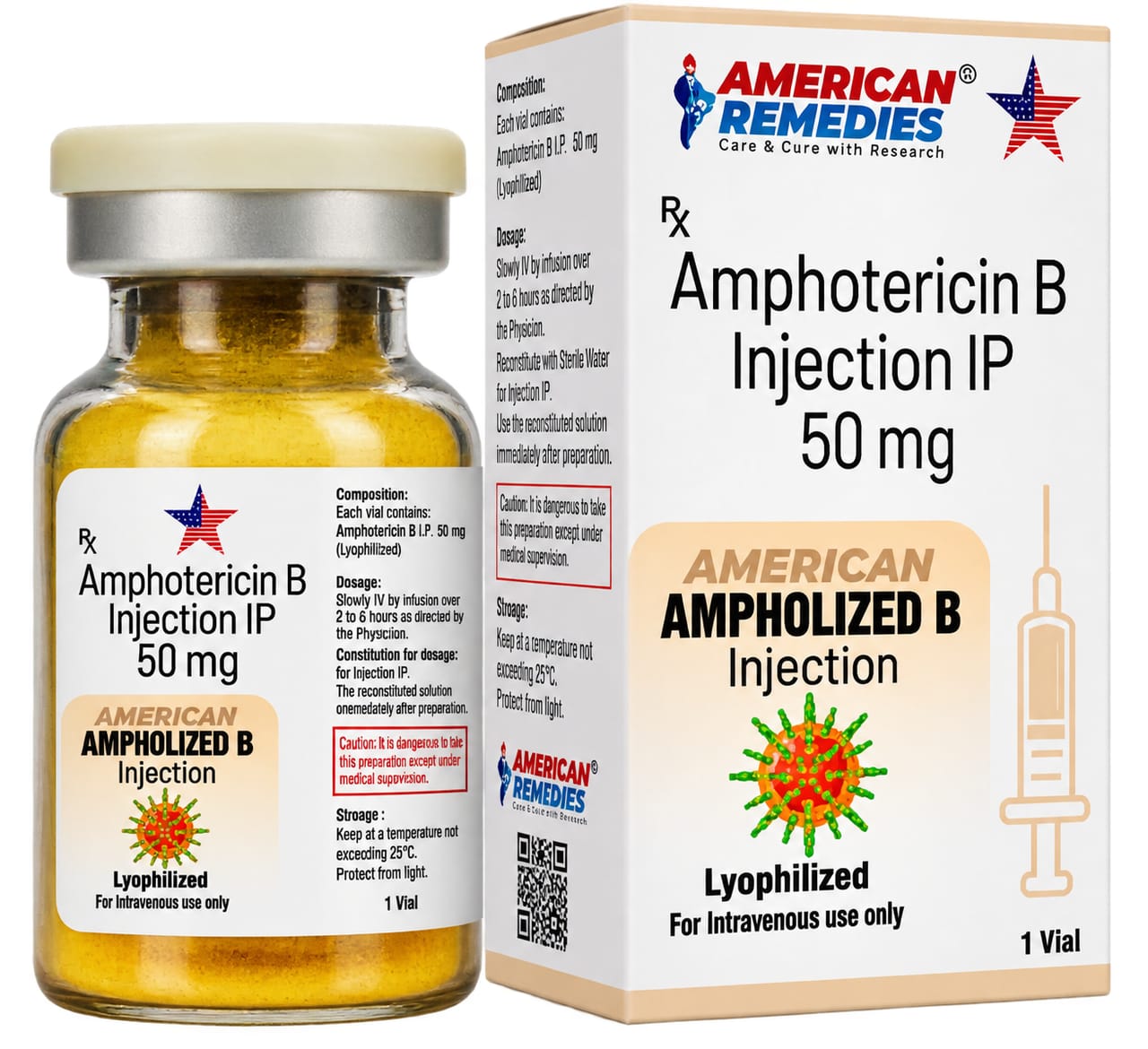
Amphotericin B Injection is an antifungal medication belonging to the polyene antibiotic class. It is used to treat serious and potentially life-threatening fungal infections and is given as an injection into a vein, usually by a nurse or doctor. It works by damaging the fungal cell membrane, which slows or stops the growth of the fungus.
What is Amphotericin B Injection
Amphotericin B injection is an antifungal medication used to treat serious and potentially life-threatening fungal infections. It is given as an injection into a vein, usually by a nurse or doctor.
Amphotericin B Injection uses
- Treats serious and potentially life-threatening fungal infections such as aspergillosis, cryptococcosis, North American blastomycosis, systemic candidiasis, coccidioidomycosis, histoplasmosis, and mucormycosis
- May be used to treat infections caused by certain parasites, including American mucocutaneous leishmaniasis (though it is not the first-choice treatment for this)
- Not meant to treat less serious fungal infections of the mouth, throat, or vagina in people with a normal immune system
Benefits of Amphotericin B Injection
- Amphotericin B is often the only effective treatment available for potentially life-threatening fungal disease
How Amphotericin B Injection works
Amphotericin B slows or stops the growth of fungi by attaching to a substance in the fungal cell membrane, causing the membrane to leak and the fungal cell to be damaged.
Amphotericin B Injection dosage
This medicine is given as a slow infusion into a vein, usually once a day. You may be given a smaller test dose first to see how you tolerate the medication. You may receive this medication in a hospital, or you may be taught to give it to yourself at home. If used at home, use exactly as directed and at the same time each day; do not stop unless your care team tells you to.
Reactions to the infusion often happen a few hours after starting and tend to be worse with the first few doses. Continue your normal diet unless your doctor tells you otherwise. Talk to your care team about using this medicine in children, as special care may be needed.
If you give yourself a dose at home and miss it, take it as soon as you can, but if it is almost time for your next dose, just take that dose — do not double up. Put used needles and syringes in a proper sharps container rather than the trash.
| Age group | Dose |
|---|---|
| Under 1 month | Safety/effectiveness not established |
| 1 month–11 years | 3–5 mg/kg once daily, depending on infection |
| 12–17 years | 3–5 mg/kg once daily, depending on infection |
| 18–64 years | 3–5 mg/kg once daily, depending on infection |
| 65+ years | Usually same adult weight-based dose; close monitoring required |
Available forms and strengths
- Injection (powder for solution, given into a vein)
Side effects of Amphotericin B Injection
Common
- Stomach pain or cramping
- Heartburn
- Diarrhea
- Weight loss
- Bone, muscle, or joint pain
- Lack of energy
- Redness or swelling at the injection site
- Pale skin
- Shortness of breath
- Dizziness
- Headache
- Coldness in the hands and feet
- Fever
- Flushing
- General discomfort and fatigue
- Nausea
Serious
- Rash, blisters, or hives
- Flushing with wheezing or difficulty breathing
- Itching
- Yellowing of the skin or eyes
- Decreased urination
- Allergic reactions such as swelling of the face, lips, tongue, or throat
- Dizziness, loss of balance or coordination, confusion, or trouble speaking
- High potassium level: muscle weakness, fast or irregular heartbeat
- Infusion reactions: chest pain, shortness of breath or trouble breathing, feeling faint or lightheaded
- Kidney injury: decrease in urine amount, swelling of the ankles, hands, or feet
- Low magnesium level: muscle pain or cramps, unusual weakness or fatigue, fast or irregular heartbeat, tremors
- Low potassium level: muscle pain or cramps, unusual weakness or fatigue, fast or irregular heartbeat, constipation
Warnings and precautions
- This medicine can cause serious side effects and should only be used for potentially life-threatening fungal infections, not for milder fungal infections of the mouth, throat, or vagina in people with a normal immune system.
- Giving too much of this medicine can cause dangerous, potentially fatal heart problems. The dose must never be higher than the maximum recommended amount, and the product name and dose should always be double-checked before it is given.
- Reactions such as fever, chills, low blood pressure, loss of appetite, nausea, vomiting, headache, and fast breathing are common in the first few hours of an infusion and tend to be worse with the first few doses.
- Giving the infusion too quickly can cause low blood pressure, low potassium, irregular heartbeats, and shock, so it should be avoided.
- A brain condition called leukoencephalopathy has been reported with this medicine, and people who have had total body irradiation may be more at risk.
- If treatment is stopped for more than a week, it should be restarted at the lowest dose and increased gradually again.
- Tell your doctor if you are pregnant or planning to become pregnant. This medicine should be used during pregnancy only if clearly needed, and you should contact your doctor if you become pregnant while receiving it.
- It is not known if this medicine passes into breast milk. Because of its potential toxicity, nursing mothers are advised to stop breastfeeding while receiving this medicine.
- This medicine should be used carefully in people with reduced kidney function, and kidney function should be checked often during treatment.
- Liver function should be monitored regularly during treatment with this medicine.
Storage
- Store in the refrigerator
- Protect from light
- Get rid of any unused medication after the expiration date
- Take the medication to a medication take-back program if possible
- If you cannot return the medication, ask your pharmacist or care team how to safely dispose of it
When to see a doctor
- Tell your doctor right away if you have fever, chills, loss of appetite, nausea, vomiting, dizziness, breathing problems, or headache while receiving this medicine.
- Get emergency help or call your doctor right away if you get a rash, blisters or hives, flushing, wheezing, difficulty breathing, itching, yellowing of the skin or eyes, or decreased urination.
- If you think you may have taken too much of this medicine, contact a poison control center or go to an emergency room right away.
- Seek emergency care for chest pain, shortness of breath, dizziness, loss of consciousness, or a fast, irregular, or pounding heartbeat, as these may be signs of overdose.
- Report allergic reactions such as skin rash, itching, hives, or swelling of the face, lips, tongue, or throat to your care team as soon as possible.
Alternatives
- Liposomal Amphotericin B
- Amphotericin B Lipid Complex
Watch the video
FAQs
What is Amphotericin B Injection used for?
It treats serious and potentially life-threatening fungal infections such as aspergillosis, cryptococcosis, North American blastomycosis, systemic candidiasis, coccidioidomycosis, histoplasmosis, and mucormycosis. It may also be used for certain parasitic infections like American mucocutaneous leishmaniasis, though it is not the first-choice treatment for that. It is not meant for less serious fungal infections of the mouth, throat, or vagina in people with a normal immune system.
How is Amphotericin B Injection given?
It is given as a slow infusion into a vein, usually once a day, often by a nurse or doctor, though some people are taught to give it to themselves at home. A smaller test dose may be given first to check tolerance.
What should I do if I miss a dose at home?
If you miss a dose, take it as soon as you can, but if it is almost time for your next dose, just take that dose. Do not double up on doses.
What are common side effects of Amphotericin B Injection?
Common side effects include stomach pain, heartburn, diarrhea, weight loss, bone or muscle pain, fatigue, redness or swelling at the injection site, shortness of breath, dizziness, headache, fever, flushing, and nausea.
How should Amphotericin B Injection be stored?
It should be stored in the refrigerator and protected from light. Unused medication should be disposed of after the expiration date, preferably through a medication take-back program.
General information, not medical advice
Your prescriber and the leaflet in your pack know your situation. This page does not.
- Follow your prescriber and the leaflet
- Don't start, stop, or change a dose on your own
- Doses and warnings differ by country and product
Sources
- https://medlineplus.gov/druginfo/meds/a682643.html
- file:///C:/Users/thede/Downloads/20220121_a0a54943-9ce4-4f3e-b681-a1a9144c16ce.pdf
- https://my.clevelandclinic.org/health/drugs/18966-amphotericin-b-for-infusion
Video
Related medicines

Injectafer Injection: Uses, Dosage, Side Effects, Precautions and Alternates
Iron products
Injectafer (ferric carboxymaltose) treats iron deficiency anemia and heart failure-related iron deficiency via IV. Learn uses, dosage, side effects, and

Gliclazide Tablet: Uses, Dosage, Side Effects, Precautions and Alternates
Sulfonylurea (hypoglycemic/antidiabetic agent)
Gliclazide Tablet is a sulfonylurea for type 2 diabetes that boosts insulin release. Learn about dosage, side effects, warnings, and precautions.