
Safety
General information, not medical advice
Your prescriber and the leaflet in your pack know your situation. This page does not.
- Follow your prescriber and the leaflet
- Don't start, stop, or change a dose on your own
- Doses and warnings differ by country and product
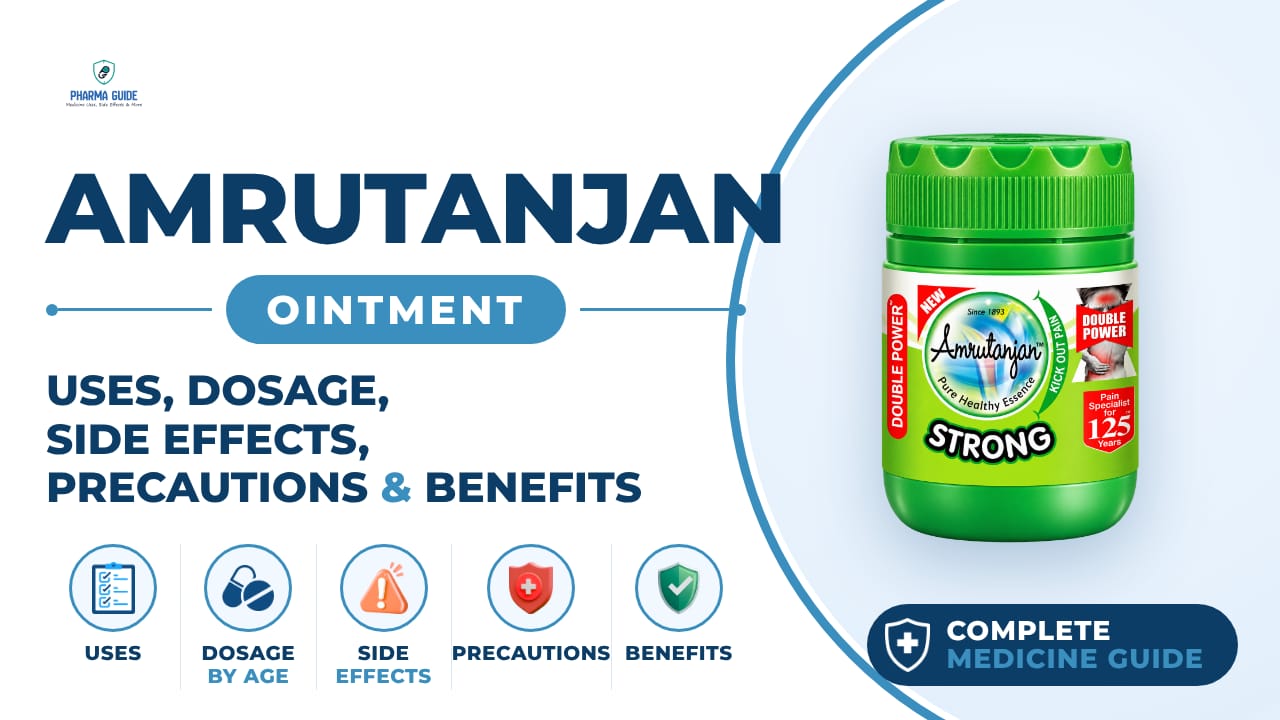
Amrutanjan Ointment: Uses, Dosage, Side Effects, Precautions and Alternates
| Drug class | Topical counterirritant / rubefacient analgesic |
|---|---|
| Forms | ointment, cream, balm |
Quick overview
Amrutanjan Ointment is a topical counterirritant analgesic containing menthol, camphor, and methyl salicylate. It is applied to the skin to relieve headaches, body aches, muscle and joint pain, and cold-related nasal congestion. It works by producing a cooling or warming sensation and increasing local blood flow to ease pain. It is for external use only and comes with specific precautions around application and skin sensitivity.
What is Amrutanjan Ointment
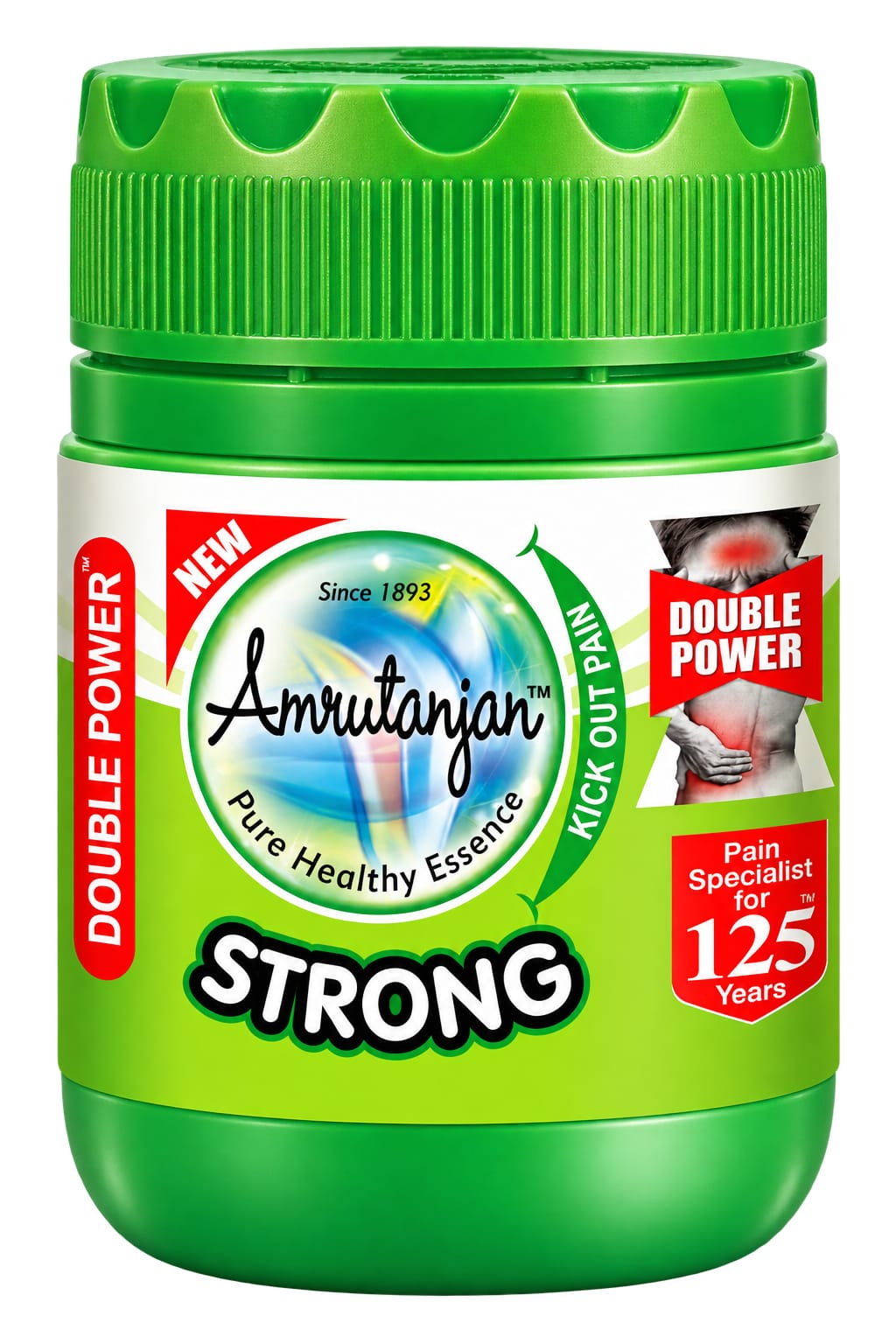
Amrutanjan is a topical pain-relief ointment/balm containing menthol, camphor, and methyl salicylate. It is applied to the skin to relieve headaches, body aches, muscle and joint pain, and cold-related nasal congestion. It belongs to the topical counterirritant/rubefacient analgesic drug class.
Amrutanjan Ointment uses
- Temporary relief of headache
- Relief of cold symptoms and related discomfort
- Relief of body ache
- Relief of minor pains of muscles and joints
- Relief of nasal congestion
- Backache and muscular strain
- Joint pain and stiffness
Benefits of Amrutanjan Ointment
- Offers fast relief from headaches, backaches, and body pain
- Soothing, non-greasy, and non-irritating formula
- Effective for nasal congestion and cold-related discomfort
- Provides quick and long-lasting musculoskeletal pain relief
- Helps reduce muscle and joint pain
- Soothes sprains and backache
How Amrutanjan Ointment works
This is a topical counterirritant balm. Its ingredients produce a cooling or warming sensation on the skin and increase local blood flow, which helps reduce the feeling of pain. When inhaled, the vapors may also help clear a stuffy nose.
Amrutanjan Ointment dosage
For external use only. Apply a small amount and massage gently onto the affected area. Repeat two to three times daily, or as directed by a doctor. For headache, apply on the forehead or temples, avoiding the eyes. Wash your hands thoroughly after use to avoid accidental contact with the eyes. Avoid applying to broken, irritated, or sensitive skin. Children 12 years or younger should only use it if a doctor advises it, and it is not recommended for children under 5 years without medical advice.
| Age group | Dose |
|---|---|
| Under 12 Years | Use only if recommended by a healthcare professional |
| 12–17 Years | Apply a small amount to the affected area 2–3 times daily |
| Adults (18–64 Years) | Apply a small amount 2–3 times daily as needed |
| Older Adults (65+ Years) | Apply a small amount 2–3 times daily; use cautiously on sensitive skin |
Available forms and strengths
- Ointment
- Cream
- Balm
Side effects of Amrutanjan Ointment
Common
- Skin irritation
- Redness
- Burning or stinging sensation
- Itching
- Mild skin sensitivity in some individuals
Serious
- Rash
- Allergic reaction
- Swelling of the face or lips
- Wheezing or difficulty breathing
Warnings and precautions
- For external use only. Avoid getting it in your eyes.
- Do not heat the product, microwave it, or use it near an open flame. Do not add it to hot water, as this may cause splattering and burns.
- Avoid contact with wounds, mucous membranes, or broken or irritated skin. Do not bandage tightly or use with a heating pad.
- Do not apply on cuts, wounds, eczema, or damaged skin, and avoid using it with heating pads or tight bandaging, since excessive use can cause skin burns or irritation.
- If the product contains salicylates, use it cautiously if you are allergic to aspirin, have asthma, or are taking blood thinners.
- Using it excessively over large areas with blood-thinning medicines like warfarin, aspirin, or clopidogrel may increase bleeding risk if the product contains methyl salicylate. Avoid combining it with other salicylate-containing products on the same area.
- Do not use with heating pads or tight bandages.
- Do not apply to cuts, wounds, infected, or irritated skin.
- Apply a small amount 2–3 times daily; use cautiously on sensitive skin.
If you are pregnant, talk to a doctor before using this product. If you are breastfeeding, talk to a doctor before using this product. There is no known interaction between this product and alcohol.
Storage
- Store in a cool, dry place away from direct sunlight and heat.
- Store at room temperature.
- Keep container tightly closed and away from moisture.
- Keep out of the reach of children.
When to see a doctor
- Stop using the product and see a doctor if your condition gets worse, or if redness or irritation develops.
- Stop use and see a doctor if symptoms last more than 7 days, go away and come back within a few days, or come with fever, rash, or ongoing headaches.
- If swallowed, get medical help right away or contact a poison control center.
- Stop the medicine and get help right away if you notice a rash, swelling of the face or lips, wheezing, or difficulty breathing.
- If you suspect an overdose, contact a doctor or go to the nearest emergency department right away, and bring the pack or container with you.
Alternatives
- Moov Spray
- Tiger Balm
- Zandu Balm
- Iodex Ointment
Watch the video
FAQs
What is Amrutanjan Ointment used for?
It is used for temporary relief of headache, cold symptoms, body ache, minor muscle and joint pain, nasal congestion, backache, muscular strain, and joint stiffness.
How should Amrutanjan Ointment be applied?
Apply a small amount externally and massage gently onto the affected area 2-3 times daily, or as directed by a doctor. For headache, apply on the forehead or temples, avoiding the eyes, and wash hands thoroughly after use.
Can children use Amrutanjan Ointment?
Children 12 years or younger should only use it if a doctor advises it, and it is not recommended for children under 5 years without medical advice.
What are the side effects of Amrutanjan Ointment?
Common side effects include skin irritation, redness, burning or stinging sensation, itching, and mild skin sensitivity. Serious effects include rash, allergic reaction, swelling of the face or lips, and wheezing or difficulty breathing.
What precautions should be followed when using Amrutanjan Ointment?
It is for external use only; avoid contact with eyes, wounds, mucous membranes, or broken skin. Do not heat it, use it near flames, or combine it with heating pads or tight bandages, and use cautiously if allergic to aspirin, have asthma, or take blood thinners.
General information, not medical advice
Your prescriber and the leaflet in your pack know your situation. This page does not.
- Follow your prescriber and the leaflet
- Don't start, stop, or change a dose on your own
- Doses and warnings differ by country and product
Sources
Video
Related medicines

Injectafer Injection: Uses, Dosage, Side Effects, Precautions and Alternates
Iron products
Injectafer (ferric carboxymaltose) treats iron deficiency anemia and heart failure-related iron deficiency via IV. Learn uses, dosage, side effects, and

Gliclazide Tablet: Uses, Dosage, Side Effects, Precautions and Alternates
Sulfonylurea (hypoglycemic/antidiabetic agent)
Gliclazide Tablet is a sulfonylurea for type 2 diabetes that boosts insulin release. Learn about dosage, side effects, warnings, and precautions.