
Safety
General information, not medical advice
Your prescriber and the leaflet in your pack know your situation. This page does not.
- Follow your prescriber and the leaflet
- Don't start, stop, or change a dose on your own
- Doses and warnings differ by country and product
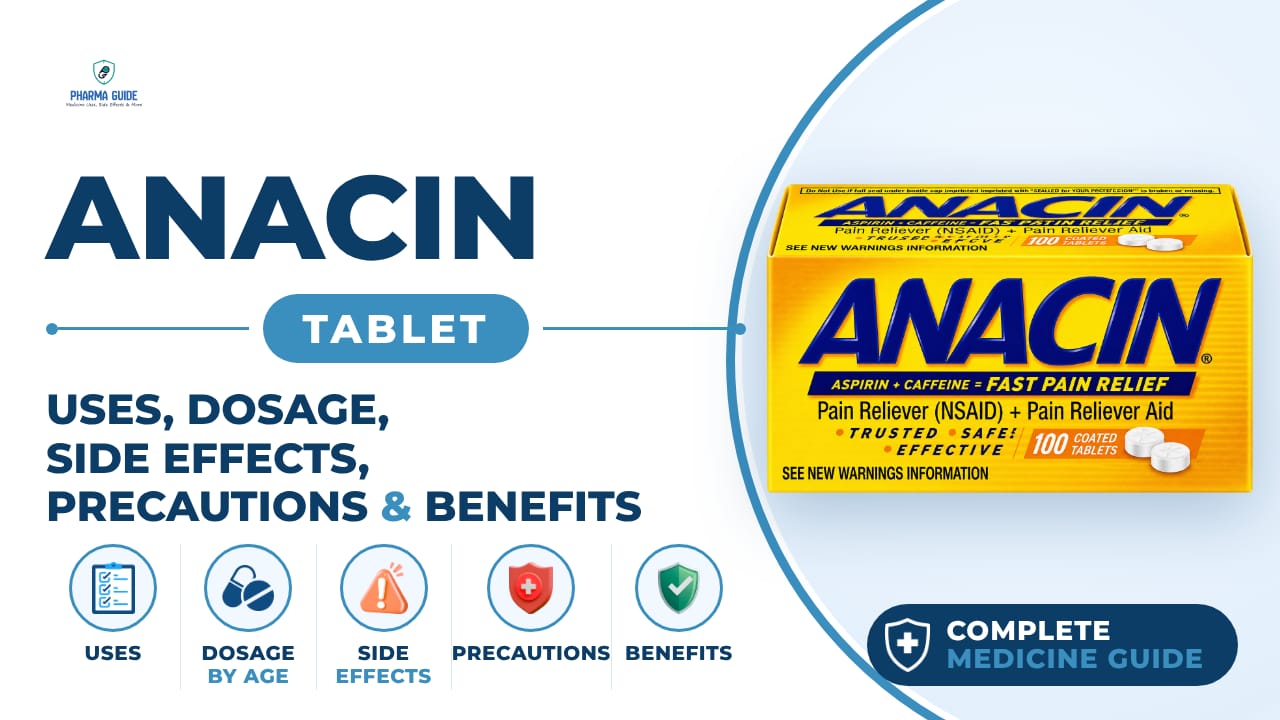
Anacin Tablet: Uses, Dosage, Side Effects, Precautions and Alternates
| Generic name | aspirin/caffeine |
|---|---|
| Drug class | nonsteroidal anti-inflammatory drug (NSAID)/pain reliever aid salicylate/pain reliever aid |
| Forms | oral tablets, powder, effervescent tablet |
Quick overview
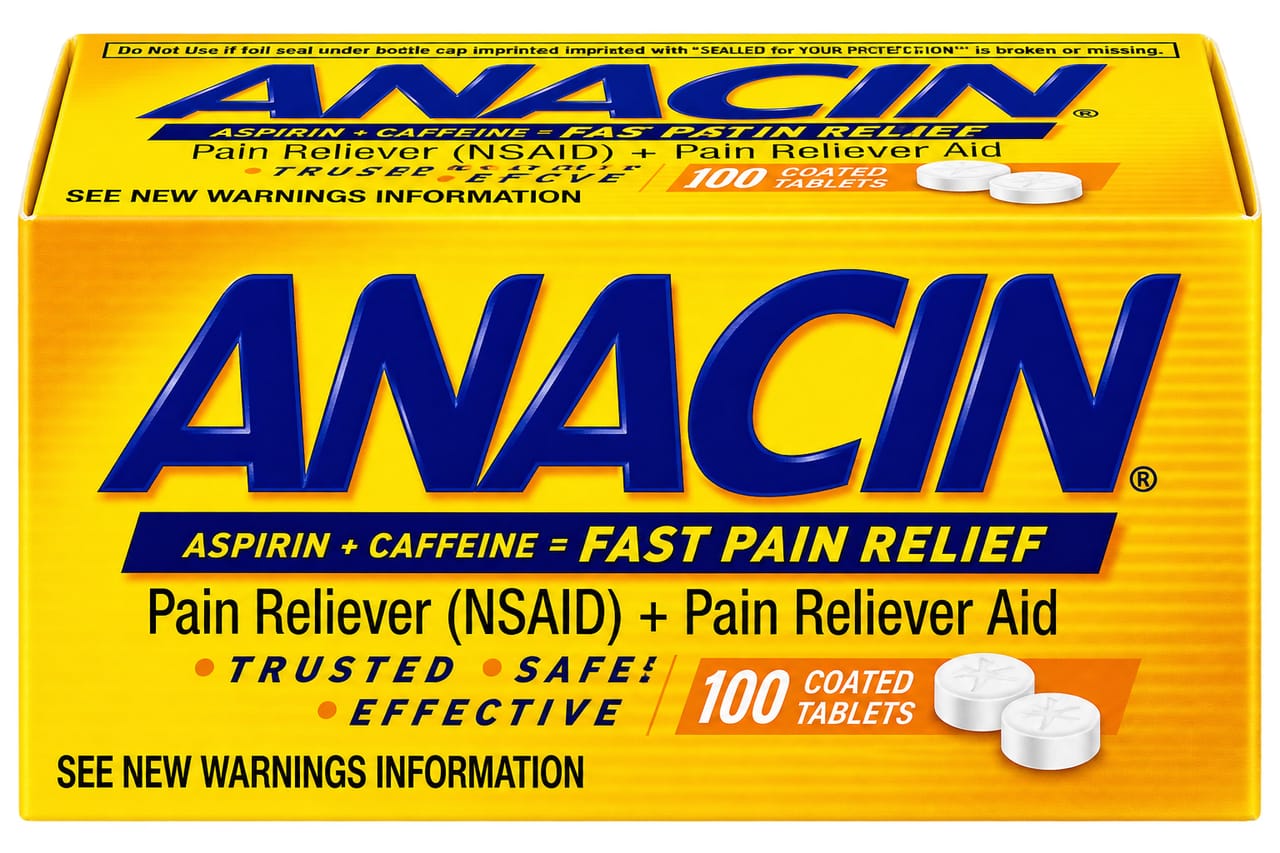
Anacin Tablet is an over-the-counter pain reliever that combines aspirin, a nonsteroidal anti-inflammatory drug (NSAID), with caffeine, a stimulant. It is used to treat minor aches and pains such as headaches, muscle aches, and menstrual cramps. The caffeine in Anacin helps increase the pain-relieving effects of aspirin. It is available as oral tablets, powder, and effervescent tablets.
What is Anacin Tablet
Anacin is an over-the-counter pain reliever that combines aspirin, a nonsteroidal anti-inflammatory drug, with caffeine, a stimulant. It is used to treat minor aches and pains.
Anacin Tablet uses
- Headaches, including tension headaches and migraines
- Minor arthritis pain
- Muscle aches
- Toothaches
- Menstrual cramps
- Fever or body aches caused by the common cold
- Sometimes used to treat or prevent heart attacks, strokes, and chest pain (angina) under a doctor's supervision
Benefits of Anacin Tablet
- Relieves minor aches and pains from headaches, menstrual cramps, arthritis, and muscle aches
- Caffeine increases the pain relieving effects of aspirin
- Combines aspirin with caffeine
- Provides temporary relief of minor pain
- Caffeine can enhance aspirin's pain-relieving effect
How Anacin Tablet works
Anacin contains two medicines, aspirin and caffeine. Aspirin blocks substances in the body that cause pain, inflammation, and fever. Caffeine helps narrow blood vessels, which may help with certain headaches, and also helps the body absorb aspirin better.
Anacin Tablet dosage
Take Anacin with food if it upsets your stomach. Swallow the tablet whole with a glass of water; do not crush or chew it. Drink a full glass of water with each dose. If using the powder or effervescent tablet form, dissolve it in water and drink right away. Anacin is taken only when needed, not necessarily on a regular schedule. Do not take more than the recommended dose or for longer than directed.
Children and teens with a fever, flu symptoms, or chickenpox should not take this medicine. People age 60 or older may be at greater risk of side effects and should talk to their health care provider.
| Age group | Dose |
|---|---|
| 12–17 years | 2 tablets every 6 hours as needed; maximum 8 tablets in 24 hours |
| 18–39 years | 2 tablets every 6 hours as needed; maximum 8 tablets in 24 hours |
| 40–64 years | 2 tablets every 6 hours as needed; maximum 8 tablets in 24 hours |
Available forms and strengths
- Oral tablets
- Powder
- Effervescent tablet
Side effects of Anacin Tablet
Common
- Stomach problems, including pain or nausea
- Rash
- Trouble sleeping (especially if taken later in the day or close to bedtime)
- Nervousness, restlessness, or crankiness
- Increased heart rate
- Upset stomach, heartburn
- Drowsiness
- Mild headache
- Dizziness or light-headedness
- Ringing in the ears (tinnitus)
Serious
- Severe allergic reaction: breathing problems or wheezing, racing heart, fever or general ill feeling, swollen lymph nodes, swelling of the face, lips, mouth, tongue, or throat, trouble swallowing or throat tightness, itching or skin rash, hives, nausea or vomiting, dizziness or fainting, stomach cramps, joint pain
- Stomach bleeding: vomiting blood, bloody, black, or tarry stools, stomach pain that does not go away, feeling faint
- Hearing loss or ringing/roaring sound in the ears
- Reye's syndrome in children and teens (signs include changes in behavior along with nausea and vomiting)
- Confusion, hallucinations, rapid breathing, seizures
Warnings and precautions
- Anacin can cause stomach or intestinal bleeding, which can be fatal, and this can happen without warning.
- Do not give this medicine to a child or teenager who has a fever, flu symptoms, or chickenpox because of the risk of a rare but serious condition called Reye's syndrome.
- Do not use Anacin if you have an active bleeding disorder such as hemophilia.
- Anacin contains caffeine. Since caffeine is also found in many foods and drinks, keep track of all your caffeine sources to avoid getting too much, as too much caffeine can be harmful.
- People age 60 or older may have a greater risk of side effects from Anacin.
- Do not take Anacin at 20 weeks or later in pregnancy without talking to your health care provider, as it may harm the baby or cause complications during delivery. Always tell your doctor if you are pregnant or planning to become pregnant.
- Anacin passes into breast milk and may harm a nursing baby. Talk to your doctor before breastfeeding while using this medicine.
- If you have kidney disease, use Anacin with caution. Your doctor may need to adjust how you use it.
- People with liver disease should use caution with this medicine, and those with severe liver disease should avoid it altogether.
- Drinking alcohol while taking Anacin is considered unsafe and may increase the risk of stomach bleeding, so it is best to avoid or limit alcohol during treatment.
- It isn't known exactly how Anacin affects driving ability, but if you feel symptoms that affect concentration or reaction time, be careful when driving or operating machinery.
Storage
- Anacin should be stored at room temperature, between 59 F and 77 F (15 C and 25 C). Store it in a cool, dry place. Protect it from moisture.
- Store at room temperature away from moisture and heat.
- Do not take this medication if you smell a strong vinegar odor in the Anacin bottle. The medicine may no longer be effective.
- Protect the medicine from light and moisture.
- Keep it out of reach and sight of children.
- Use the product before its expiry date.
When to see a doctor
- Stop taking Anacin and get help right away if you have signs of a serious allergic reaction, such as breathing problems, wheezing, racing heart, swelling of the face, lips, mouth, tongue or throat, or hives.
- Stop taking Anacin and get emergency help if you vomit blood, have bloody, black, or tarry stools, have stomach pain that doesn't go away, or feel faint.
- Stop taking Anacin and tell your health care provider right away if you have hearing loss or hear ringing or roaring in your ears.
- Stop taking Anacin and contact your health care provider right away if you notice behavior changes along with nausea and vomiting in a child, as these may be early signs of Reye's syndrome.
- Stop taking Anacin and call your health care provider if your pain gets worse or lasts more than 10 days, your fever gets worse or lasts more than 3 days, the painful area is red or swollen, or you have any new symptoms.
- If you or someone else has taken too much Anacin, get medical help right away or contact a poison control center.
Alternatives
- Acetaminophen / paracetamol
- Ibuprofen
- Naproxen
Watch the video
FAQs
What is Anacin Tablet used for?
Anacin is used to treat minor aches and pains such as headaches, muscle aches, toothaches, menstrual cramps, minor arthritis pain, and fever or body aches from the common cold. It may also be used under a doctor's supervision to help prevent heart attacks, strokes, and chest pain.
How does Anacin Tablet work?
Anacin contains aspirin and caffeine. Aspirin blocks substances in the body that cause pain, inflammation, and fever, while caffeine helps narrow blood vessels and improves the body's absorption of aspirin, enhancing its pain-relieving effect.
What is the dosage of Anacin Tablet?
For ages 12 to 64, the typical dose is 2 tablets every 6 hours as needed, with a maximum of 8 tablets in 24 hours. It should be taken with a full glass of water and only as needed, not on a regular schedule.
What are the serious side effects of Anacin Tablet?
Serious side effects include severe allergic reactions, stomach bleeding (vomiting blood or black, tarry stools), hearing loss or ringing in the ears, Reye's syndrome in children and teens, and confusion, hallucinations, rapid breathing, or seizures.
Can children take Anacin Tablet?
Children and teens with a fever, flu symptoms, or chickenpox should not take Anacin because of the risk of Reye's syndrome, a rare but serious condition.
General information, not medical advice
Your prescriber and the leaflet in your pack know your situation. This page does not.
- Follow your prescriber and the leaflet
- Don't start, stop, or change a dose on your own
- Doses and warnings differ by country and product
Sources
Video
Related medicines

Injectafer Injection: Uses, Dosage, Side Effects, Precautions and Alternates
Iron products
Injectafer (ferric carboxymaltose) treats iron deficiency anemia and heart failure-related iron deficiency via IV. Learn uses, dosage, side effects, and

Gliclazide Tablet: Uses, Dosage, Side Effects, Precautions and Alternates
Sulfonylurea (hypoglycemic/antidiabetic agent)
Gliclazide Tablet is a sulfonylurea for type 2 diabetes that boosts insulin release. Learn about dosage, side effects, warnings, and precautions.