
Safety
General information, not medical advice
Your prescriber and the leaflet in your pack know your situation. This page does not.
- Follow your prescriber and the leaflet
- Don't start, stop, or change a dose on your own
- Doses and warnings differ by country and product
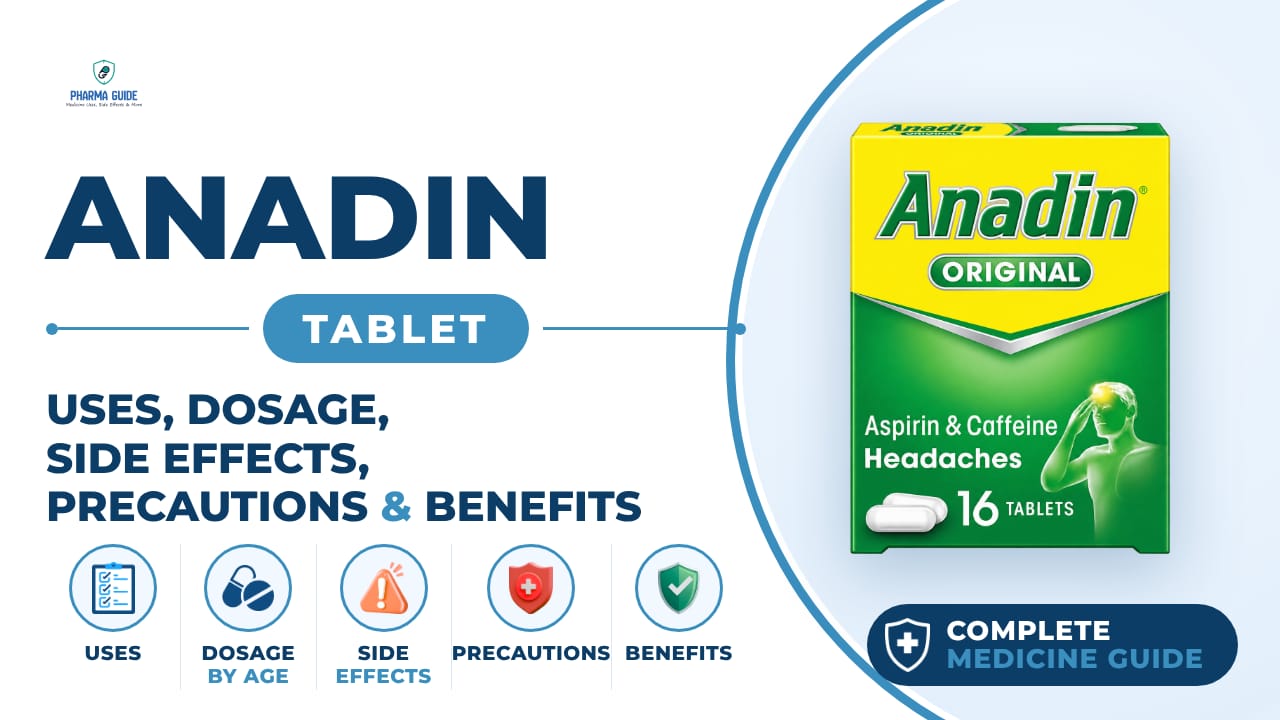
Anadin Tablet: Uses, Dosage, Side Effects, Precautions and Alternates
| Generic name | aspirin and caffeine |
|---|---|
| Forms | Caplets, Tablet |
Quick overview
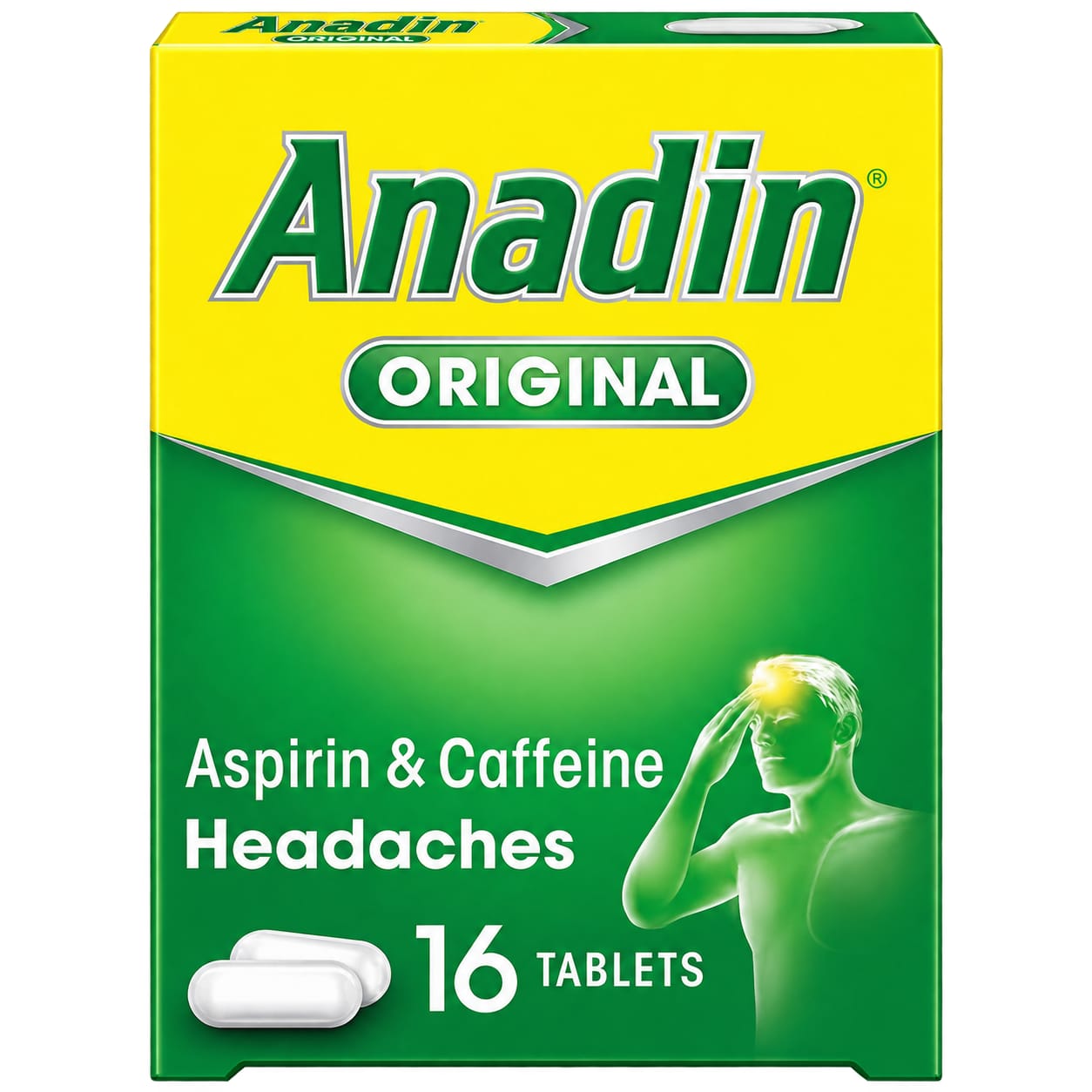
Anadin Tablet is a pain relief product containing aspirin (325mg) and caffeine (15mg) per caplet. It does not contain paracetamol, unlike Anadin Extra. It is used for conditions such as headache, migraine, dental pain, and the aches and fever of colds and influenza.
What is Anadin Tablet
Anadin Original Caplets are a classic British pain relief product containing two active ingredients: aspirin (325mg per caplet) and a modest amount of caffeine (15mg per caplet). Unlike Anadin Extra, it does not contain paracetamol.
Anadin Tablet uses
- Headache
- Migraine
- Dental pain
- Period pain
- Backache
- Neuralgia
- Sore throat
- Aching and feverishness of colds and influenza
Benefits of Anadin Tablet
- Provides effective aspirin-based pain relief without paracetamol, simplifying use alongside other paracetamol-containing medicines
- Caffeine acts as a mild analgesic adjuvant that boosts the pain-relieving effect of aspirin
How Anadin Tablet works
Aspirin works by permanently blocking certain enzymes (COX-1 and COX-2) in the body, which lowers the production of substances called prostaglandins. This reduces pain, inflammation, and fever. Caffeine adds a small boost to the pain-relieving effect.
Anadin Tablet dosage
Take with food and a full glass of water. Never take on an empty stomach, as aspirin can irritate the stomach lining, cause nausea, and increase bleeding risk. Swallow caplets whole. Do not crush or chew.
Repeat dosing every 4 hours as needed, but do not use more often than directed. Do not use for more than 3 consecutive days without advice. If pain or fever persists, consult your pharmacist or GP.
Taking with a meal or a glass of milk can help reduce the risk of stomach irritation. Avoid alcohol during treatment, as it increases the risk of gastrointestinal bleeding with aspirin.
This product contains no paracetamol, so you do not need to check other medicines for paracetamol content, but you should still check for other aspirin and NSAID-containing products.
| Age group | Dose |
|---|---|
| Under 16 years | Not recommended |
| 6–17 years | 2 tablets initially, then 1–2 tablets every 4–6 hours as needed; maximum 8 tablets in 24 hours |
| 18 years and older | 2 tablets initially, then 1–2 tablets every 4–6 hours as needed; maximum 8 tablets in 24 hours |
Available forms and strengths
- Caplets (aspirin 325mg, caffeine 15mg)
- Tablet
Side effects of Anadin Tablet
Common
- Nausea or stomach discomfort
- Nausea or vomiting
- Stomach pain or indigestion
- Dizziness
- Headache
- Nervousness or restlessness
- Difficulty sleeping
- Increased heart rate or palpitations
Serious
- Stomach irritation or bleeding
- Allergic reactions such as rash, swelling, or breathing difficulty
- Heartburn, vomiting
- Increased bleeding tendency due to aspirin's antiplatelet effect on platelets
- Gastrointestinal ulceration or bleeding (black or tarry stools, blood in vomit, or severe stomach pain)
- Tinnitus, which may indicate aspirin toxicity
- Bronchospasm or worsening of asthma in aspirin-sensitive individuals
- Skin rash, urticaria, or hypersensitivity reaction
Warnings and precautions
- Do not use in the third trimester of pregnancy. Use with caution or seek advice if pregnant in the first or second trimester. Use with caution and seek advice first if breastfeeding.
- Do not use if you have severe kidney failure. Use with caution and seek advice if you have kidney impairment.
- Do not use if you have severe liver failure. Use with caution and seek advice if you have liver impairment.
- Avoid alcohol during treatment, as it increases the risk of stomach bleeding with aspirin.
- Must not be given to anyone under 16 years of age because of the risk of a serious condition called Reye's syndrome, which is linked to aspirin use in children.
- Do not use if you have a known allergy to aspirin or NSAIDs, an active peptic ulcer, a history of serious stomach bleeding, or a bleeding disorder such as haemophilia.
- If you take warfarin or other blood-thinning medicines, aspirin can significantly increase their effect, raising bleeding risk.
- Do not combine with other aspirin, salicylate, or NSAID-containing products, as this raises the risk of side effects and bleeding.
- Do not take this product alongside low-dose aspirin taken for heart protection without medical advice, as it greatly increases bleeding risk.
Storage
- Store below 25°C. Keep away from direct sunlight and heat sources.
- Keep in the original blister pack inside the outer carton.
- Do not refrigerate.
- Keep out of the sight and reach of children. Contains aspirin, which is dangerous in overdose in children.
- Do not use after the expiry date on the blister and outer carton.
- Return unused caplets to your pharmacy for safe disposal.
When to see a doctor
- Get urgent medical help if you notice black or tarry stools, vomit blood, or have severe stomach pain, as these can be signs of bleeding in the stomach or gut.
- Stop taking the medicine right away and seek advice if you hear ringing in your ears (tinnitus), as this may be a sign of aspirin toxicity.
- Seek urgent help if your breathing gets worse or you have a severe asthma attack.
- Call emergency services immediately if you notice signs of a serious allergic reaction.
- If you think you have taken too much, get emergency help right away, even if you don't notice any signs of poisoning, because treatment needs to start quickly to prevent liver damage.
Alternatives
- Paracetamol
- Naproxen
- Diclofenac
Watch the video
FAQs
What are the active ingredients in Anadin Tablet?
Anadin Tablet contains aspirin (325mg) and caffeine (15mg) per caplet. It does not contain paracetamol, unlike Anadin Extra.
What is Anadin Tablet used for?
It is used for headache, migraine, dental pain, period pain, backache, neuralgia, sore throat, and the aching and feverishness of colds and influenza.
What is the dosage of Anadin Tablet for adults?
Adults should take 2 tablets initially, then 1-2 tablets every 4-6 hours as needed, with a maximum of 8 tablets in 24 hours.
Can children take Anadin Tablet?
No, it must not be given to anyone under 16 years of age due to the risk of Reye's syndrome, which is linked to aspirin use in children.
What are the serious side effects of Anadin Tablet?
Serious side effects include stomach irritation or bleeding, allergic reactions, increased bleeding tendency, gastrointestinal ulceration, tinnitus, and bronchospasm in aspirin-sensitive individuals.
General information, not medical advice
Your prescriber and the leaflet in your pack know your situation. This page does not.
- Follow your prescriber and the leaflet
- Don't start, stop, or change a dose on your own
- Doses and warnings differ by country and product
Sources
Video
Related medicines

Injectafer Injection: Uses, Dosage, Side Effects, Precautions and Alternates
Iron products
Injectafer (ferric carboxymaltose) treats iron deficiency anemia and heart failure-related iron deficiency via IV. Learn uses, dosage, side effects, and

Gliclazide Tablet: Uses, Dosage, Side Effects, Precautions and Alternates
Sulfonylurea (hypoglycemic/antidiabetic agent)
Gliclazide Tablet is a sulfonylurea for type 2 diabetes that boosts insulin release. Learn about dosage, side effects, warnings, and precautions.