
Safety
General information, not medical advice
Your prescriber and the leaflet in your pack know your situation. This page does not.
- Follow your prescriber and the leaflet
- Don't start, stop, or change a dose on your own
- Doses and warnings differ by country and product
Anafranil Capsule: Uses, Dosage, Side Effects, Precautions and Alternates

| Generic name | Clomipramine hydrochloride |
|---|---|
| Drug class | Tricyclic antidepressant |
| Forms | Capsule (25 mg, 50 mg, 75 mg), Coated tablet (25 mg), Slow-release tablet (75 mg) |
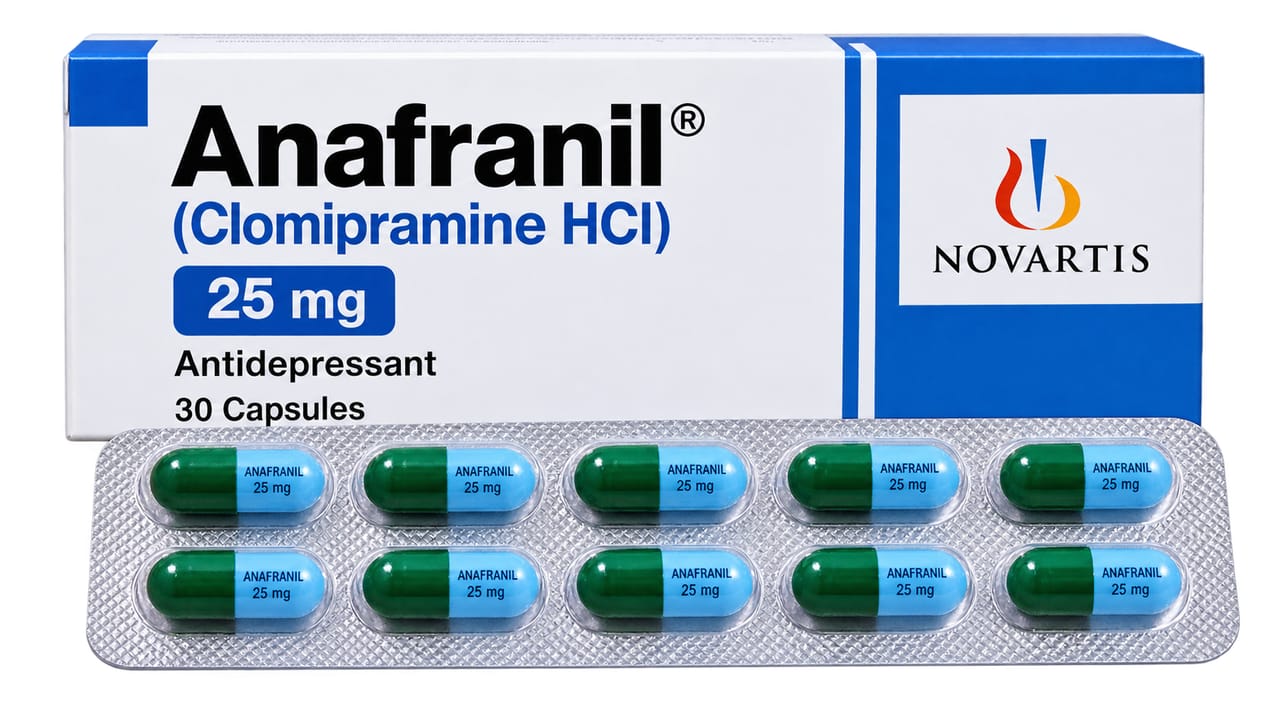
Quick overview
Anafranil Capsule contains clomipramine hydrochloride, a tricyclic antidepressant. It is used to treat obsessive-compulsive disorder (OCD), depression, phobias, and muscle weakness linked to narcolepsy. It comes as capsules in 25 mg, 50 mg, and 75 mg strengths that are swallowed with water. It should be taken exactly as directed and not stopped suddenly.
What is Anafranil Capsule
Anafranil is a tricyclic antidepressant medicine. It comes as capsules (25 mg, 50 mg, and 75 mg) that you swallow.
Anafranil Capsule uses
- Treats obsessive-compulsive disorder (OCD) in adults and in children and teens 10 years and older
- Treats depression
- Treats phobias in adults
- Treats muscle weakness linked to a sleep disorder called narcolepsy
Benefits of Anafranil Capsule
- May reduce unwanted, recurring thoughts
- May help reduce compulsive behaviors
- May lessen distress caused by obsessive thoughts
- May improve daily functioning
- May help manage symptoms of obsessive-compulsive disorder (OCD)
How Anafranil Capsule works
Clomipramine is believed to work by increasing the levels of two brain chemicals, serotonin and norepinephrine, which help regulate mood and reduce obsessive-compulsive symptoms.
Anafranil Capsule dosage
Swallow the capsule with a full glass of water. It can be taken with or without food; if your stomach is upset after taking it, take it with a meal or snack. During the first weeks, doses are usually spread out over the day in divided doses; later your doctor may have you take the full daily dose once, at bedtime, to reduce daytime sleepiness. If you have narcolepsy and trouble sleeping at night, take your last dose before evening so it does not make your insomnia worse.
Keep taking this medicine until your doctor tells you to stop, even if you start feeling better, since it can take several weeks to see the full benefit. Do not stop taking this medicine suddenly; your doctor will usually lower your dose gradually. Do not let yourself run out of this medicine over a weekend or holiday.
| Age group | Dose |
|---|---|
| Under 18 years | Not recommended |
| 18–64 years | 25 mg, once/day |
| 65+ years | 25 mg, once/day |
Available forms and strengths
- Capsule (25 mg, 50 mg, 75 mg)
- Coated tablet (25 mg)
- Slow-release tablet (75 mg)
Side effects of Anafranil Capsule
Common
- Drowsiness, dizziness, tiredness, or nervousness
- Blurred vision or difficulty focusing
- Dry mouth
- Constipation
- Nausea, vomiting, or diarrhea
- Increased or decreased appetite and weight changes
- Tremor or shaky movements
- Sweating or hot flushes
- Difficulty urinating
- Reduced sex drive or difficulty with orgasm
- Headache
Serious
- Signs of allergic reaction: rash, itching, hives, swelling of face/lips/tongue/throat, difficulty breathing
- Thoughts of suicide or self-harm, or suicide attempts
- New or worsening depression, anxiety, panic attacks, agitation, irritability, aggression, or unusual changes in mood or behaviour
- Fast or irregular heartbeat, fainting, or seizures
- Confusion, hallucinations, or extreme fear
- Serotonin syndrome symptoms: agitation, hallucinations, fever, sweating, shivering, fast heart rate, muscle stiffness, twitching, loss of coordination, nausea, vomiting, diarrhea
- Neuroleptic malignant syndrome symptoms: sudden high body temperature, very high blood pressure, severe muscle stiffness, and convulsions
- Low sodium level: headache, confusion, slurred speech, severe weakness, vomiting, loss of coordination, feeling unsteady
- Eye problems: pain, blurred or tunnel vision, seeing halos around lights, swelling or redness in or around the eye
- Signs of a blood disorder: fever, sore throat, unusual bruising or bleeding, tiredness
- Yellowing of the skin or eyes (jaundice)
- Painful or burning urination
Warnings and precautions
- Antidepressants can increase the risk of suicidal thoughts and behaviour in children, teenagers, and young adults, especially in the first few months of treatment or when the dose changes.
- Do not take this medicine together with, or within about two weeks of stopping, a monoamine oxidase inhibitor (MAOI), as this combination can cause a dangerous reaction with high fever, extremely high blood pressure, and seizures.
- Do not take this medicine if you are recovering from a recent heart attack, as it may make your condition worse.
- This medicine carries a risk of seizures, and the risk increases with higher doses.
- This medicine can cause a rare but potentially life-threatening reaction called serotonin syndrome, especially when combined with other serotonergic medicines.
- Do not stop taking this medicine suddenly, as it can cause withdrawal symptoms and your condition may worsen.
- This medicine can cause pupil dilation that may trigger a dangerous rise in eye pressure (angle-closure glaucoma) in people with narrow eye angles.
- Rare but serious skin reactions with fever and organ involvement (DRESS) have been reported; stop the medicine right away if this occurs.
- Check with your doctor before taking this medicine if you are pregnant or planning to become pregnant.
- It should only be used in pregnancy if your doctor says it's needed, and taking it late in pregnancy may cause withdrawal symptoms in the newborn baby.
- Breastfeeding is not recommended while taking this medicine because the active ingredient passes into breast milk and could affect your baby.
- Use this medicine with caution if you have kidney disease; your doctor may want to monitor you.
- Use this medicine with caution if you have liver disease. It should not be used in severe liver disease.
- Tell your doctor if you drink alcohol, since this medicine can increase the drowsiness caused by alcohol.
- Be careful before driving or using machines until you know how this medicine affects you, since it may cause tiredness, dizziness, drowsiness, or blurred vision.
Storage
- Keep your medicine in the original container until it is time to take a dose
- Store it in a cool dry place at room temperature away from moisture, heat or sunlight
- Do not store it in the bathroom, near a sink, in the car, or on window sills
- Keep it where young children cannot reach it; a locked cupboard at least one-and-a-half metres above the ground is a good place to store medicines
- If your doctor tells you to stop taking this medicine or the expiry date has passed, ask your pharmacist what to do with any leftover medicine
- Take unwanted or expired medicine to any pharmacy for safe disposal
- Do not use this medicine after the expiry date
When to see a doctor
- Get emergency help right away if you have signs of a severe allergic reaction, such as hives, difficulty breathing, or swelling of the face, lips, tongue, or throat.
- Call your doctor straight away if you or someone you know has thoughts about suicide, attempts suicide, or develops new or worse depression, anxiety, panic attacks, trouble sleeping, aggression, or other unusual changes in mood or behaviour.
- Seek medical attention right away if you have symptoms of serotonin syndrome, such as agitation, hallucinations, fever, sweating, shivering, fast heart rate, muscle stiffness, twitching, loss of coordination, nausea, vomiting, or diarrhea.
- Call your doctor at once if you notice a low sodium level: headache, confusion, slurred speech, severe weakness, vomiting, loss of coordination, or feeling unsteady.
- Call your doctor straight away or go to the Emergency Department if you have fast or irregular heartbeat, severe dizziness or drowsiness, fainting, seizures, confusion, hallucinations, yellowing of the skin or eyes, or eye pain.
- If you think you have taken too much of this medicine, get urgent medical attention right away, even if you feel fine, by contacting your doctor, calling your local poison control center, or going to the nearest hospital emergency department.
Alternatives
- Fluvoxamine
- Paroxetine
- Sertraline
Watch the video
FAQs
What is Anafranil Capsule used for?
It treats obsessive-compulsive disorder (OCD) in adults and children 10 and older, depression, phobias in adults, and muscle weakness linked to narcolepsy.
How should I take Anafranil Capsule?
Swallow the capsule with a full glass of water, with or without food. Doses may be divided during the first weeks, then later taken as a single dose at bedtime to reduce daytime sleepiness. Do not stop taking it suddenly.
What are the common side effects of Anafranil Capsule?
Common side effects include drowsiness, dizziness, dry mouth, constipation, nausea, blurred vision, tremor, sweating, difficulty urinating, reduced sex drive, and headache.
Can I drink alcohol while taking Anafranil Capsule?
Tell your doctor if you drink alcohol, since this medicine can increase the drowsiness caused by alcohol.
What strengths does Anafranil Capsule come in?
It is available as capsules in 25 mg, 50 mg, and 75 mg strengths, along with coated tablets (25 mg) and slow-release tablets (75 mg).
General information, not medical advice
Your prescriber and the leaflet in your pack know your situation. This page does not.
- Follow your prescriber and the leaflet
- Don't start, stop, or change a dose on your own
- Doses and warnings differ by country and product
Sources
Video
Related medicines
Tryptomer Tablet: Uses, Dosage, Side Effects, Precautions and Alternates
Tricyclic antidepressant
Tryptomer Tablet (Amitriptyline) treats depression, nerve pain, migraine, and tension headaches. Learn about its uses, dosage, side effects, and precautions.
Norpramin Tablet: Uses, Dosage, Side Effects, Precautions and Alternates
Tricyclic antidepressant
Norpramin Tablet (desipramine) treats depression by restoring brain chemical balance. Learn uses, dosage, side effects, warnings, and precautions.