
Safety
General information, not medical advice
Your prescriber and the leaflet in your pack know your situation. This page does not.
- Follow your prescriber and the leaflet
- Don't start, stop, or change a dose on your own
- Doses and warnings differ by country and product
Norpramin Tablet: Uses, Dosage, Side Effects, Precautions and Alternates
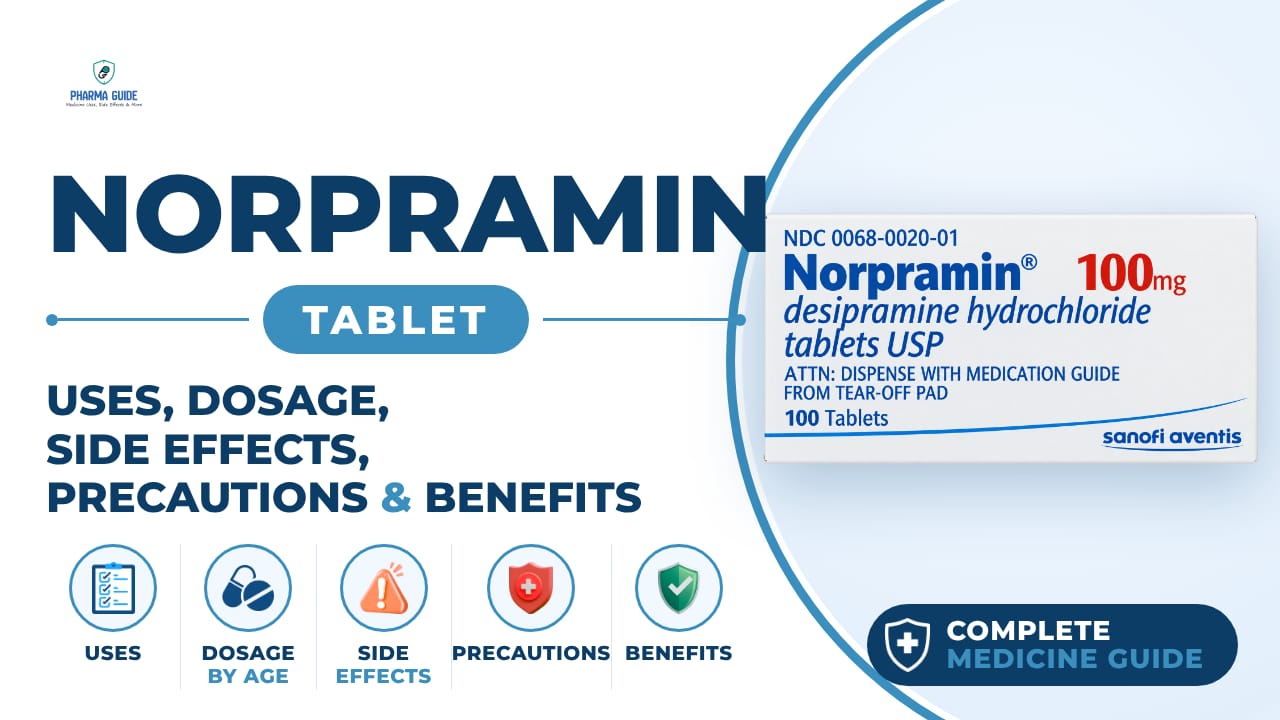
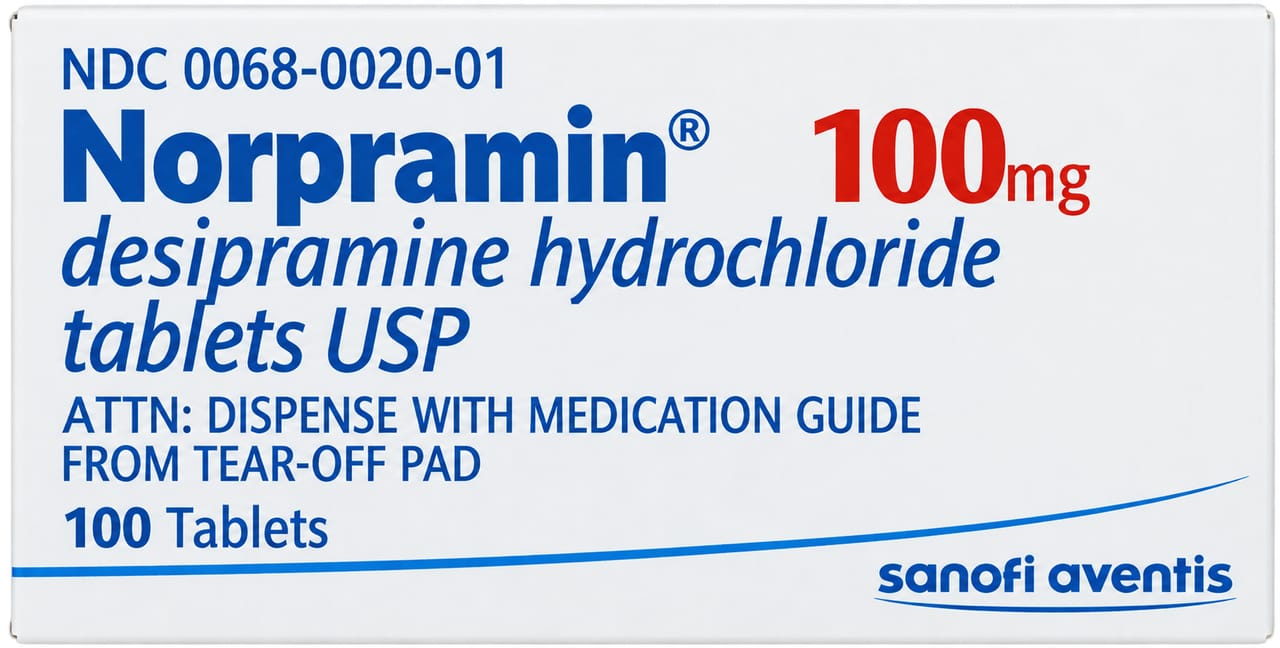
| Generic name | desipramine hydrochloride |
|---|---|
| Drug class | Tricyclic antidepressant |
| Forms | Tablet |
Quick overview
Norpramin Tablet contains desipramine hydrochloride, a tricyclic antidepressant (TCA) used to treat depression. It works by helping to restore the balance of natural brain chemicals. It is available as a tablet and is taken by mouth, one or more times a day, with or without food.
What is Norpramin Tablet
Norpramin is a tricyclic antidepressant (TCA) tablet used to treat depression. It works by helping to restore the balance of natural brain chemicals.
Norpramin Tablet uses
- Treatment of depression, including endogenous depressive illness, the depressed phase of manic-depressive illness, involutional melancholia, and psychotic depression
- Management of non-psychotic depression such as some cases of depressive neurosis
Benefits of Norpramin Tablet
- May improve mood and emotional well-being
- May reduce persistent sadness
- May help manage depression symptoms
- May help treat bedwetting in eligible children
- May improve daily functioning when symptoms improve
How Norpramin Tablet works
Norpramin is thought to work by blocking the reabsorption (reuptake) of the brain chemicals norepinephrine and serotonin, which helps restore more normal levels of these chemicals and improve mood.
Norpramin Tablet dosage
Norpramin is taken by mouth, one or more times a day, with or without food. Take it at the same time each day. Follow your doctor's instructions exactly and ask your pharmacist to explain anything on the label you don't understand. It may take several weeks of treatment before you notice the full benefit.
Do not stop taking this medicine suddenly without talking to your doctor, since stopping abruptly can cause withdrawal symptoms like nausea, headache, and feeling unwell. If you miss a dose, take it as soon as you remember; if it is almost time for your next dose, skip the missed dose and go back to your normal schedule — do not take two doses at once.
Lower doses are generally used for adolescents and older adults compared with other adults. Initial treatment may be given as a single daily dose or split into smaller doses through the day; once your condition is stable, your doctor may switch you to a once-daily schedule.
| Age group | Dose |
|---|---|
| Under 18 years | Not recommended |
| 18–64 years | 75 mg/day |
| 65+ years | 30–40 mg/day |
Available forms and strengths
- Tablet
Side effects of Norpramin Tablet
Common
- Dry mouth
- Constipation
- Blurred vision or trouble focusing eyes
- Drowsiness or dizziness
- Increased sweating
- Mild tremor
- Trouble sleeping
- Nausea and vomiting
- Loss of appetite
- Weight gain or loss
- Sexual problems
- Breast swelling or tenderness
Serious
- Irregular, fast, or pounding heartbeat
- Chest pain or discomfort
- Fainting or severe dizziness when standing up
- Seizures or convulsions
- Weakness or numbness on one side of the body, trouble speaking
- Eye pain, vision changes, or redness or swelling around the eye
- Fever with sore throat, unusual bruising or bleeding (possible blood disorder)
- Yellowing of skin or eyes, dark urine, loss of appetite (possible liver problem)
- Signs of serotonin syndrome such as agitation, hallucinations, fast heartbeat, fever, muscle twitching or stiffness, and diarrhea
- New or worsening depression, thoughts of suicide, or unusual changes in mood or behavior
- Extreme increase in energy, racing thoughts, or reckless behavior (mania)
- Severe allergic reaction with swelling of face, lips, mouth, or throat, trouble breathing, or hives
Warnings and precautions
- Antidepressants can increase the risk of suicidal thoughts and behavior in children, teenagers, and young adults, especially during the first few months of treatment or after dose changes. This medicine is not approved for use in children.
- Taking this medicine together with MAOI medicines, or within 14 days of stopping either drug, is dangerous and can cause a life-threatening reaction called serotonin syndrome. This combination must be avoided.
- This medicine should not be used right after a heart attack, because of possible serious heart effects.
- Taking this medicine can cause mild pupil dilation, which in some people may trigger a serious eye condition called angle-closure glaucoma.
- People with heart disease, a family history of sudden cardiac death, thyroid problems, urinary retention, glaucoma, or seizure disorders should use this medicine with extreme caution because of the risk of serious complications.
- Overdose of this medicine can be fatal, and desipramine has been linked to a higher death rate in overdose than some other tricyclic antidepressants.
- It is not known for certain if Norpramin is safe to use during pregnancy. Tell your doctor if you are pregnant or planning to become pregnant so the benefits and risks can be weighed.
- It is not known for certain if Norpramin is safe while breastfeeding. Tell your doctor if you are breastfeeding so the benefits and risks can be weighed.
- This medicine is removed from the body mainly by the kidneys, so people with reduced kidney function may be more likely to have toxic reactions. Care should be taken with dosing, and kidney function may need to be checked.
- Tell your doctor if you have liver problems, since this may affect how the medicine is processed in your body.
- Avoid alcohol while taking this medicine, as it can increase sleepiness and may make your response to alcohol stronger than usual.
- This medicine may affect your mental alertness or physical coordination, so be careful when driving or operating machinery until you know how it affects you.
Storage
- Store at room temperature, with brief exposure to higher or lower temperatures allowed during transport
- Protect from excessive heat
- Keep in a tightly closed container
- Dispense in the smallest quantity reasonable and keep out of reach of children, ideally in a container with a child-resistant cap
- Storage of this medicine in the home must be supervised responsibly
When to see a doctor
- Get help right away if you or a family member has thoughts of suicide or dying, or has attempted suicide.
- Call your healthcare provider right away if you notice new or worsening depression, anxiety, agitation, panic attacks, trouble sleeping, irritability, aggression, acting on dangerous impulses, or an extreme increase in activity and talking.
- Seek medical help right away if you have eye pain, changes in vision, or swelling or redness in or around the eye.
- Get emergency help for symptoms of a severe allergic reaction such as trouble breathing, swelling of the face, lips, mouth, or throat, or hives.
- Seek help immediately if you develop symptoms of serotonin syndrome, including agitation, hallucinations, fast heartbeat, fever, sweating, muscle stiffness or twitching, or seizures.
- If you think you or someone else has taken too much of this medicine, get medical help right away, as overdose can be life-threatening.
Alternatives
- Desipramine
- Nortriptyline
- Amitriptyline
Watch the video
FAQs
What is Norpramin Tablet used for?
Norpramin is a tricyclic antidepressant used to treat depression, including endogenous depressive illness, the depressed phase of manic-depressive illness, involutional melancholia, psychotic depression, and some cases of depressive neurosis.
How does Norpramin Tablet work?
It works by blocking the reuptake of norepinephrine and serotonin in the brain, helping restore more normal levels of these chemicals and improve mood.
What is the dosage of Norpramin for adults?
For adults aged 18–64 years, the typical dose is 75 mg/day, while older adults aged 65 and above generally take 30–40 mg/day. It is not recommended for those under 18 years.
What are the common side effects of Norpramin Tablet?
Common side effects include dry mouth, constipation, blurred vision, drowsiness or dizziness, increased sweating, mild tremor, trouble sleeping, nausea, vomiting, loss of appetite, weight changes, sexual problems, and breast swelling or tenderness.
Can Norpramin Tablet be taken with MAOI medicines?
No, taking Norpramin with MAOI medicines, or within 14 days of stopping either drug, is dangerous and can cause a life-threatening reaction called serotonin syndrome.
General information, not medical advice
Your prescriber and the leaflet in your pack know your situation. This page does not.
- Follow your prescriber and the leaflet
- Don't start, stop, or change a dose on your own
- Doses and warnings differ by country and product
Sources
Video
Related medicines
Tryptomer Tablet: Uses, Dosage, Side Effects, Precautions and Alternates
Tricyclic antidepressant
Tryptomer Tablet (Amitriptyline) treats depression, nerve pain, migraine, and tension headaches. Learn about its uses, dosage, side effects, and precautions.
Doxepin Capsule: Uses, Dosage, Side Effects, Precautions and Alternates
Tricyclic antidepressant
Doxepin Capsule is a tricyclic antidepressant for major depressive disorder in adults. Learn uses, dosage, side effects, and safety warnings.