
Safety
General information, not medical advice
Your prescriber and the leaflet in your pack know your situation. This page does not.
- Follow your prescriber and the leaflet
- Don't start, stop, or change a dose on your own
- Doses and warnings differ by country and product
Doxepin Capsule: Uses, Dosage, Side Effects, Precautions and Alternates
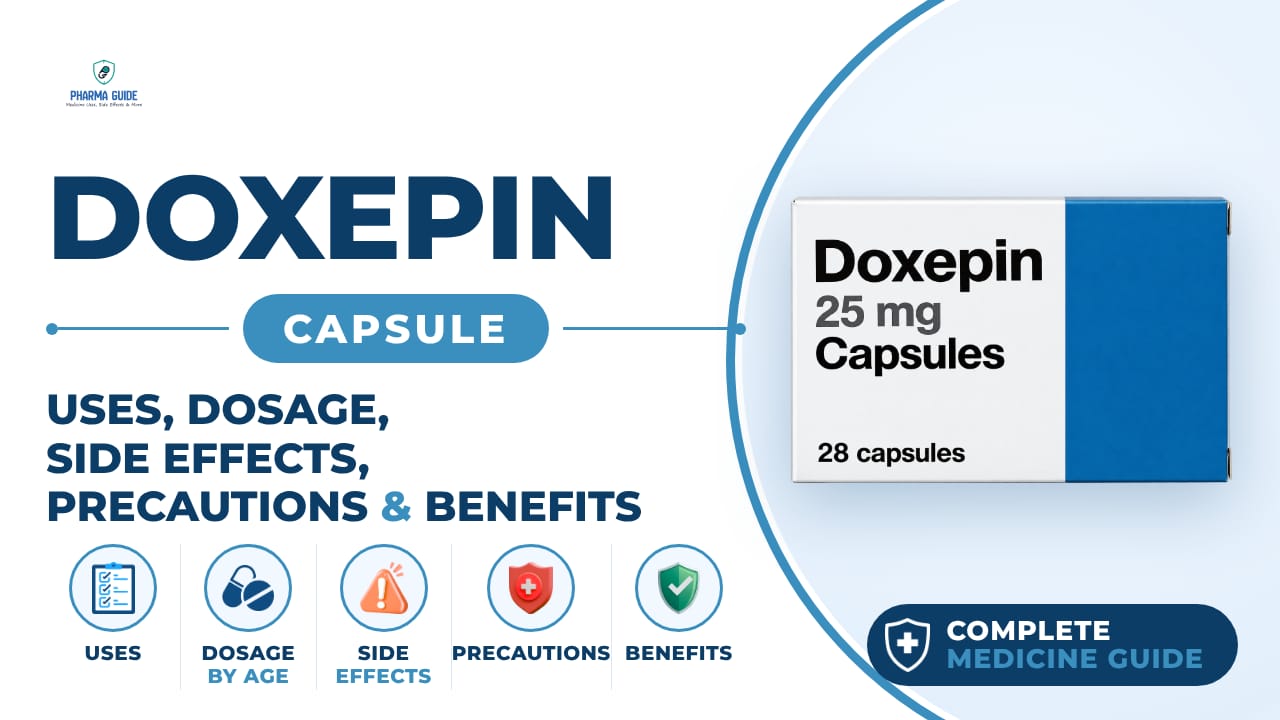
| Generic name | doxepin |
|---|---|
| Drug class | Tricyclic antidepressant |
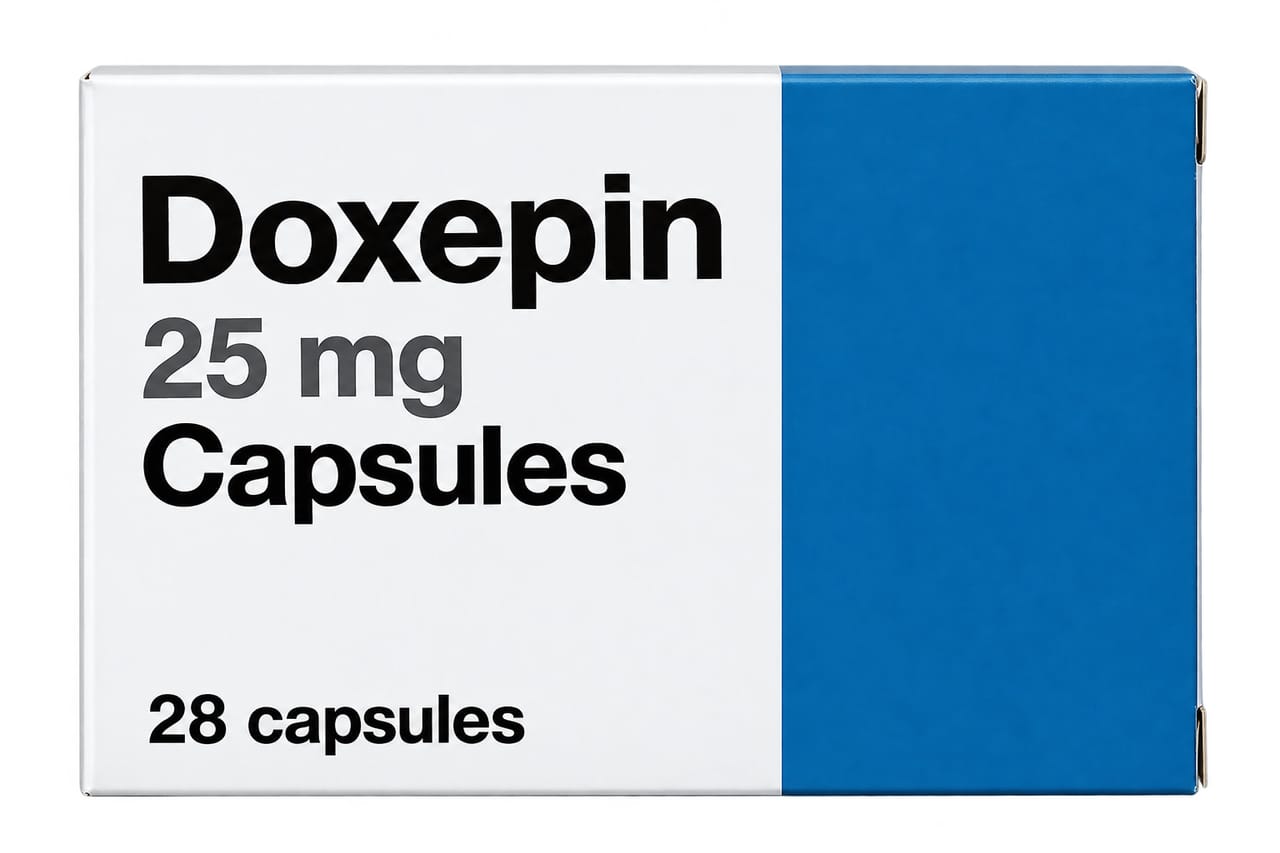
| Forms | Oral capsule (10 mg, 25 mg, 50 mg, 75 mg, 100 mg) |
Quick overview
Doxepin Capsule (generic name: doxepin) is a tricyclic antidepressant approved to treat major depressive disorder in adults, and it may also be used off-label for conditions like anxiety. It is thought to work mainly by increasing the activity of norepinephrine and other mood-related brain chemicals. Common side effects include sleepiness, dry mouth, and dizziness, and it carries important warnings, including a risk of increased suicidal thoughts in younger people.
What is Doxepin Capsule
Doxepin capsules are a tricyclic antidepressant medicine approved to treat major depressive disorder (severe depression) in adults. They may also be used off-label for conditions like anxiety.
Doxepin Capsule uses
- Treatment of major depressive disorder (severe depression) in adults
- Depression and/or anxiety, including when associated with alcoholism or organic disease
- Psychotic depressive disorders with associated anxiety, including involutional depression and manic-depressive disorders
- May be used off-label to treat other conditions, such as anxiety
- Sometimes used to treat chronic hives without a known cause
Benefits of Doxepin Capsule
- May improve mood and emotional well-being
- May reduce anxiety associated with depression
- May help improve sleep when symptoms improve
- May reduce persistent sadness
- May support daily functioning as depression improves
How Doxepin Capsule works
Doxepin is thought to work mainly by blocking the reabsorption (reuptake) of a brain chemical called norepinephrine, which increases its activity at nerve connections. It also affects other brain chemicals related to mood, including serotonin and histamine.
Doxepin Capsule dosage
Doxepin is taken by mouth as a capsule or liquid, usually one to three times a day, with or without food. Try to take it at around the same time each day. Follow your prescription label exactly; do not take more, less, or more often than prescribed.
If using the oral liquid, measure your dose with the specially marked dropper and mix it with water, whole or skim milk, or certain juices just before taking it. Do not mix it with carbonated drinks.
It may take several weeks or longer to feel the full effect. Keep taking it even if you feel well, and do not stop without talking to your doctor. Your doctor will likely want to lower your dose gradually if you need to stop.
| Age group | Dose |
|---|---|
| Under 18 years | Not recommended |
| 18–64 years | 75 mg, once/day |
| 65+ years | 75 mg, once/day |
Available forms and strengths
- Oral capsule: 10 mg, 25 mg, 50 mg, 75 mg, 100 mg
Side effects of Doxepin Capsule
Common
- Feeling overly sleepy
- Dry mouth
- Dizziness
- Constipation
- Tiredness
- Nausea
- Weakness
- Increase in pupil size
- Mouth sores
- Skin more sensitive to sunlight
- Flushing
- Changes in appetite or weight
- Changes in taste
- Indigestion
- Diarrhea
- Difficulty urinating
- Excessive thirst and urination
- Ringing in the ears
- Changes in sex drive
- Swollen testicles
- Increased breast size
- Milky discharge from nipples in females
- Excessive sweating
- Chills
- Headache
- Hair loss
Serious
- Increased risk of suicidal thoughts and actions, especially in people 24 and younger
- Serotonin syndrome (agitation, confusion, fast heartbeat, dizziness, flushing, shaking/stiff muscles, seizures, hallucinations, coma, blood pressure changes, sweating, high body temperature, loss of coordination, nausea/vomiting/diarrhea)
- Angle-closure glaucoma (eye pain, vision changes, swelling or redness around the eye)
- Manic episodes in people with bipolar disorder
- Seizures
- Yellowing of the skin or eyes (possible liver problem)
- Fast heartbeat
- Unusual bleeding or bruising
- Skin rash, itching, or swelling (allergic reaction)
- Blood disorders such as agranulocytosis, low platelets, or low white blood cells (fever, easy bruising or bleeding, frequent infections, unusual weakness or tiredness)
- Dangerous heart rhythm changes (QT prolongation, torsade de pointes)
Warnings and precautions
- Doxepin and other antidepressants may increase the risk of suicidal thoughts and actions in people 24 years of age and younger, especially in the first few months of treatment or when the dose is changed. This medicine is not meant for use in children.
- Do not take doxepin if you are allergic to it, have glaucoma, have trouble urinating, or are taking (or recently stopped taking within 14 days) a medicine called an MAOI, including the antibiotic linezolid or intravenous methylene blue.
- Doxepin can cause serotonin syndrome, a potentially life-threatening condition, especially when combined with certain other medicines.
- Doxepin may cause a type of eye problem called angle-closure glaucoma in people with certain eye conditions.
- Manic episodes can occur in people with bipolar disorder who take doxepin.
- Doxepin used for depression may increase the risk of seizures.
- Doxepin may cause fertility problems in females and males.
- Do not stop taking doxepin suddenly without talking to your doctor, as stopping too quickly may cause withdrawal symptoms like headache, nausea, and feeling unwell.
- Doxepin can make your skin more sensitive to sunlight, increasing the risk of severe sunburn.
- Older adults may be at greater risk of side effects and should discuss the risks and benefits of taking doxepin with their doctor.
- Taking doxepin during the third trimester of pregnancy may harm the unborn baby, possibly causing sedation-related symptoms in the newborn such as breathing problems, sluggishness, low muscle tone, feeding problems, and withdrawal symptoms. Talk to your healthcare provider if you are or may become pregnant.
- Doxepin can pass into breast milk and may harm the baby, so breastfeeding is not recommended during treatment. Talk to your healthcare provider about the best way to feed your baby.
- Tell your doctor if you have kidney problems before taking doxepin, since this may affect how the medicine is used.
- Tell your doctor if you have liver problems before taking doxepin, since this may affect how the medicine is used.
- Do not drink alcohol while taking doxepin, as it can increase the risk of serious side effects and intensify sleepiness.
- Do not drive or operate heavy machinery while taking doxepin, since it can cause sleepiness and affect your ability to think clearly or react quickly.
Storage
- Store doxepin at room temperature between 20°C and 25°C (68°F and 77°F)
- Keep in a tightly closed container, and away from light
- Keep this medication in the container it came in, tightly closed, and out of reach of children
- Store it at room temperature and away from excess heat and moisture (not in the bathroom)
- Safely throw away medicine that is out of date or no longer needed
- Do not flush this medication down the toilet; use a medicine take-back program
When to see a doctor
- Call your healthcare provider right away or get emergency help if you notice new or worsening depression, thoughts of suicide or dying, suicide attempts, acting aggressively or violently, panic attacks, mania, new or worse irritability or anxiety, feeling very agitated or restless, trouble sleeping, or other unusual changes in mood or behavior.
- Stop taking doxepin and call your healthcare provider or go to the nearest emergency room right away if you notice signs of serotonin syndrome, such as agitation, confusion, fast heartbeat, dizziness, flushing, shaking or stiff muscles, seizures, hallucinations, coma, blood pressure changes, sweating, high body temperature, loss of coordination, or nausea/vomiting/diarrhea.
- Call your healthcare provider if you have eye pain, changes in vision, or swelling or redness in or around the eye.
- Call your healthcare provider right away if you find out you have done an activity like driving, eating, or talking on the phone without being fully aware, after taking doxepin.
- If you take too much doxepin, call your healthcare provider or a poison control center right away, or go to the nearest hospital emergency room.
- Call your doctor immediately if you notice yellowing of the skin or eyes, fast heartbeat, unusual bleeding or bruising, or skin rash, itching, or swelling.
Alternatives
- Nortriptyline
- Imipramine
- Amitriptyline
Watch the video
FAQs
What is Doxepin Capsule used for?
Doxepin Capsule is approved to treat major depressive disorder in adults and may also be used off-label for conditions like anxiety. It is also used for depression and/or anxiety associated with alcoholism or organic disease, psychotic depressive disorders, and sometimes chronic hives without a known cause.
How does Doxepin Capsule work?
Doxepin is thought to work mainly by blocking the reuptake of norepinephrine, increasing its activity at nerve connections. It also affects other brain chemicals related to mood, including serotonin and histamine.
What is the typical dosage of Doxepin Capsule?
For adults aged 18-64 and for those 65 and older, the typical dose is 75 mg once a day. It is not recommended for use in people under 18 years old. Doxepin should be taken exactly as prescribed, with or without food.
What are the common side effects of Doxepin Capsule?
Common side effects include feeling overly sleepy, dry mouth, dizziness, constipation, tiredness, nausea, weakness, and headache, among others.
Can you drink alcohol while taking Doxepin Capsule?
No, alcohol should be avoided while taking doxepin, as it can increase the risk of serious side effects and intensify sleepiness.
General information, not medical advice
Your prescriber and the leaflet in your pack know your situation. This page does not.
- Follow your prescriber and the leaflet
- Don't start, stop, or change a dose on your own
- Doses and warnings differ by country and product
Sources
Video
Related medicines
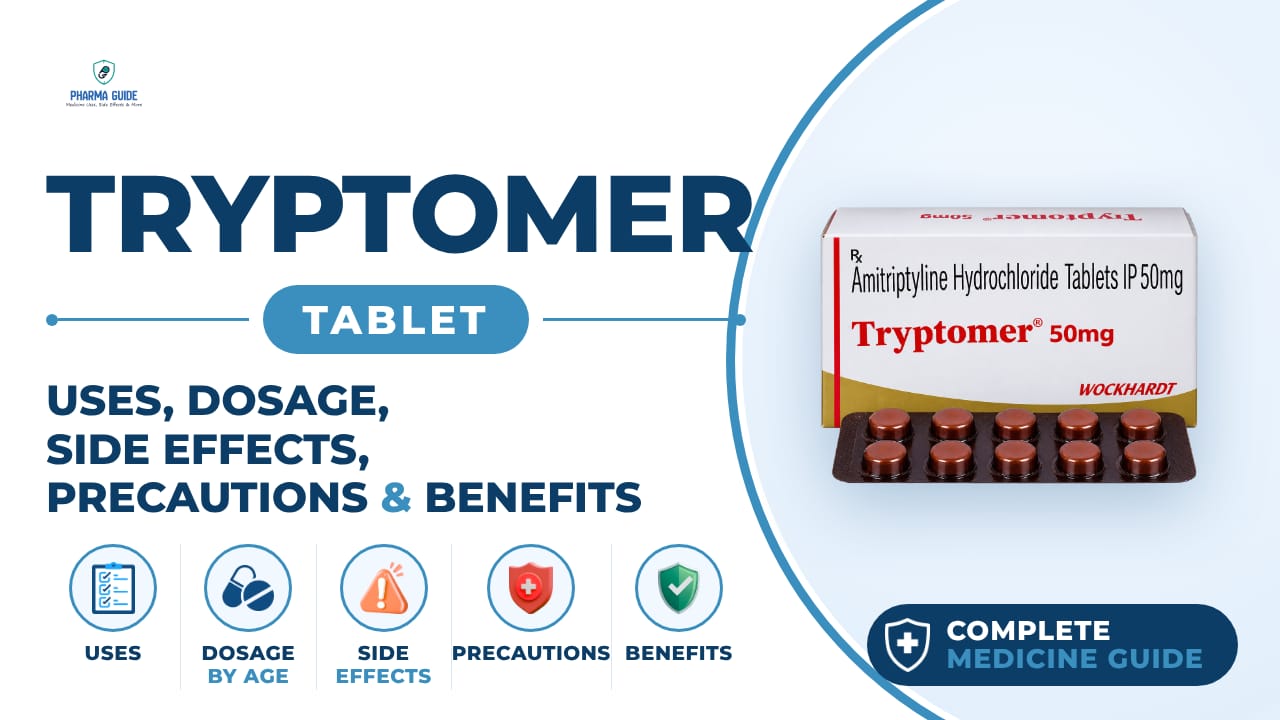
Tryptomer Tablet: Uses, Dosage, Side Effects, Precautions and Alternates
Tricyclic antidepressant
Tryptomer Tablet (Amitriptyline) treats depression, nerve pain, migraine, and tension headaches. Learn about its uses, dosage, side effects, and precautions.
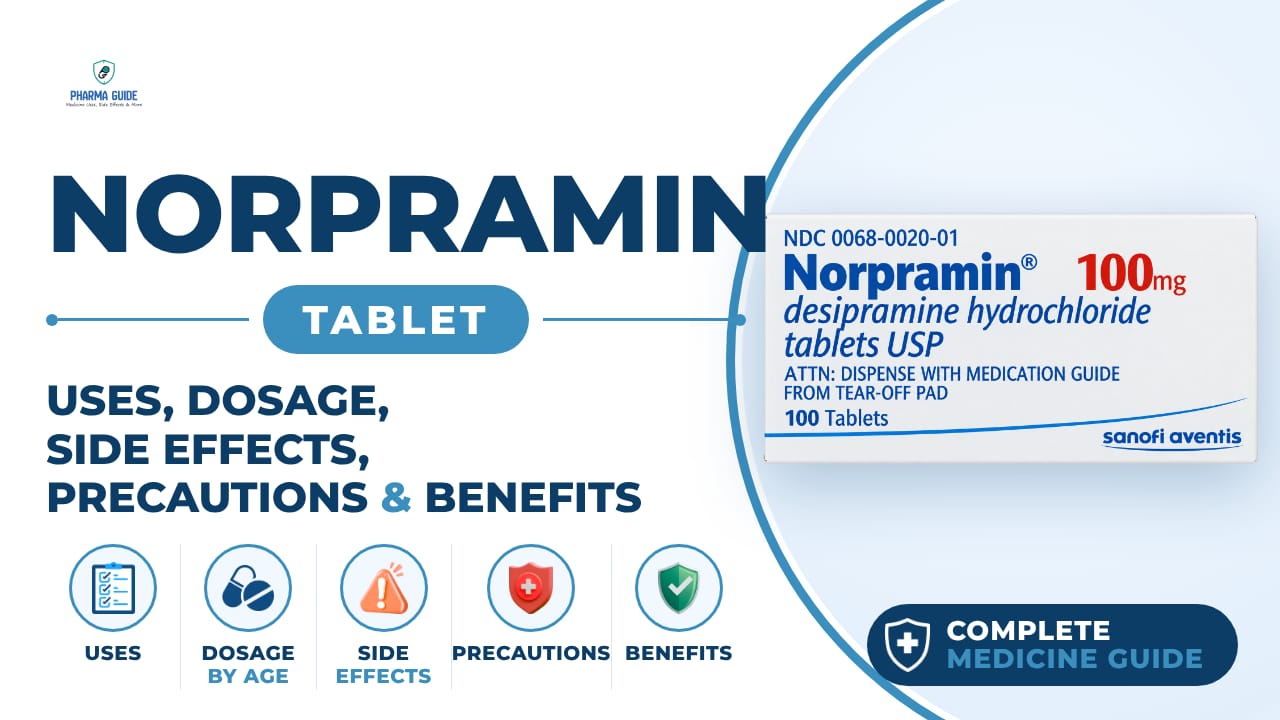
Norpramin Tablet: Uses, Dosage, Side Effects, Precautions and Alternates
Tricyclic antidepressant
Norpramin Tablet (desipramine) treats depression by restoring brain chemical balance. Learn uses, dosage, side effects, warnings, and precautions.