
Safety
General information, not medical advice
Your prescriber and the leaflet in your pack know your situation. This page does not.
- Follow your prescriber and the leaflet
- Don't start, stop, or change a dose on your own
- Doses and warnings differ by country and product
Anbesol Gel: Uses, Dosage, Side Effects, Precautions and Alternates
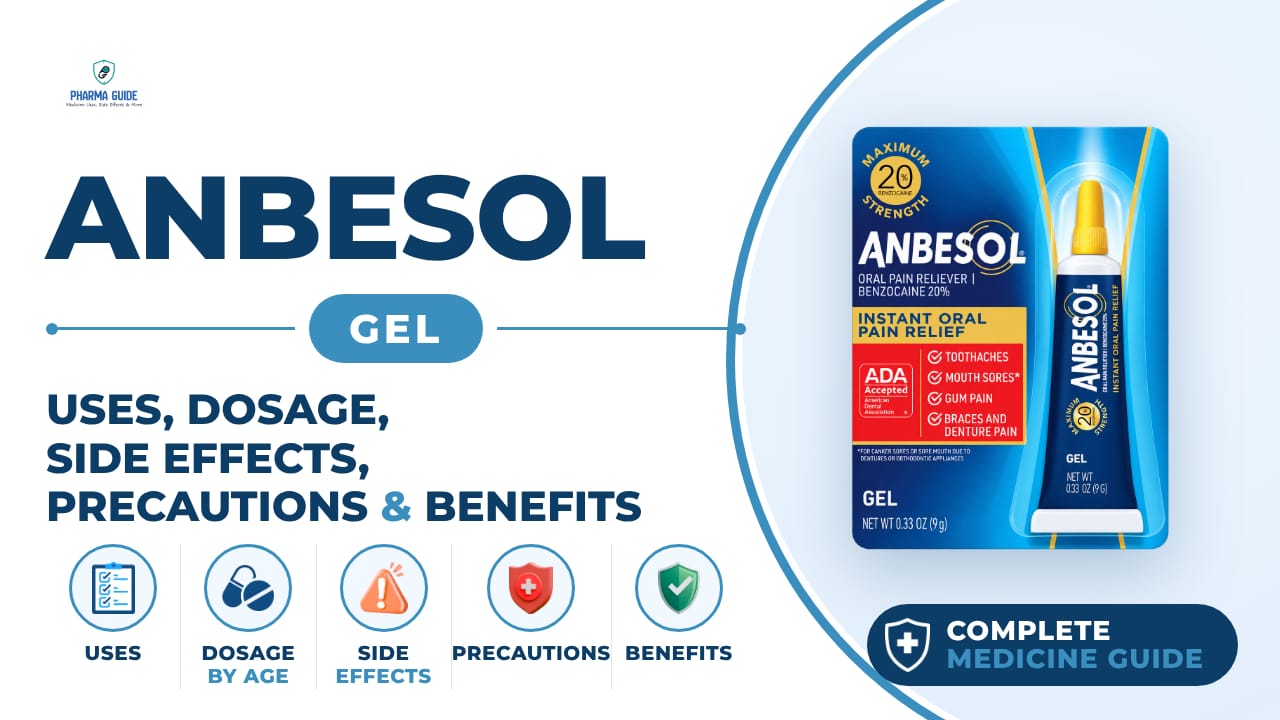
| Generic name | benzocaine topical |
|---|---|
| Drug class | Topical anesthetics |
| Forms | Gel |
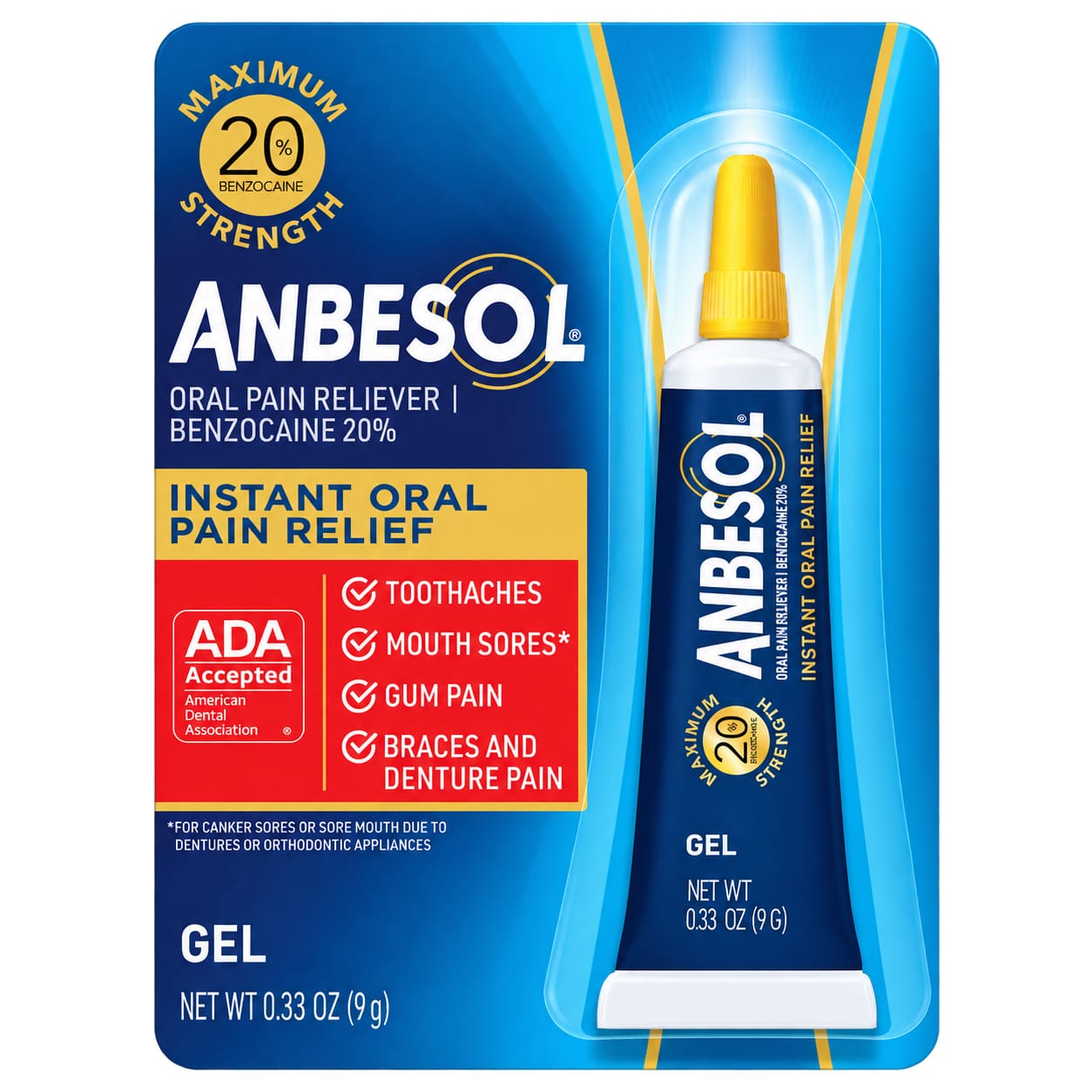
Quick overview
Anbesol Gel is a topical anesthetic gel containing benzocaine, used to numb the skin or the inside of the mouth to relieve pain. It is commonly used for sore throat pain, canker sores, fever blisters, and minor mouth or gum irritation. The gel works by blocking nerve signals to numb the treated area. It should be used in the smallest amount needed and is not for use in children younger than 2 years old.
What is Anbesol Gel
Anbesol Gel is a numbing gel that contains a local anesthetic. It is used on the skin or inside the mouth to relieve pain. Its generic name is benzocaine topical, and it belongs to the topical anesthetics drug class.
Anbesol Gel uses
- Temporary relief of pain from sore throat
- Canker sores
- Fever blisters
- Minor irritation or injury of the mouth and gums
Benefits of Anbesol Gel
- Temporarily relieves toothache
- Helps reduce gum pain
- Numbs minor mouth irritation
- Provides short-term local pain relief
How Anbesol Gel works
Anbesol Gel contains a local anesthetic that blocks nerve signals in your body, which numbs the area and stops pain.
Anbesol Gel dosage
Use Anbesol Gel exactly as directed on the label, or as prescribed by your doctor, and read all instructions. Use only the smallest amount needed to numb the skin or relieve pain; do not use large amounts. Do not cover treated skin with a bandage or plastic wrap without medical advice, since this can make your body absorb more medicine.
Do not use on large skin areas or deep puncture wounds, and avoid skin that is raw or blistered. Avoid eating for about an hour after using the gel on your gums or inside your mouth. Avoid getting the gel in your eyes, and avoid swallowing it while applying to your gums or inside your mouth. Do not use in a child younger than 2 years old.
If a dose is missed, simply skip it since this medicine is used as needed rather than on a fixed schedule.
Call your doctor if symptoms do not improve, get worse within the first 7 days, or come back after clearing up. If treating a sore throat, call your doctor if pain is severe, lasts more than 2 days, or comes with fever, headache, rash, swelling, nausea, vomiting, cough, or breathing problems.
| Age group | Dose |
|---|---|
| 2–11 years | Apply a small amount to the affected area up to 4 times daily, with adult supervision and only if the product label allows pediatric use |
| 12–17 years | Apply a small amount up to 4 times daily as needed |
| 18 years and older | Apply a small amount up to 4 times daily as needed |
Available forms and strengths
- Gel
Side effects of Anbesol Gel
Common
- Mild stinging, burning, or itching where the medicine is applied
- Skin tenderness or redness
- Dry white flakes where the medicine was applied
Serious
- Signs of methemoglobinemia: headache, tiredness, confusion, fast heartbeats, feeling light-headed or short of breath, and pale, blue, or gray skin, lips, or fingernails
- Signs of an allergic reaction: hives, difficult breathing, swelling of face, lips, tongue, or throat
- Severe burning, stinging, or sensitivity where applied
- Swelling, warmth, or redness
- Oozing, blistering, or signs of infection
Warnings and precautions
- Used in the mouth, this medicine may cause a rare but potentially fatal condition called methemoglobinemia, where oxygen in body tissues becomes dangerously low. Do not use if you have ever had this condition.
- An overdose of this numbing medicine can be fatal if too much is absorbed through the skin into the blood. Always use the smallest amount needed.
- Do not use on a child younger than 2 years old.
- Fatal overdoses have happened when numbing medicines were used without a doctor's advice, such as during cosmetic procedures.
- Ask a doctor or pharmacist before use if you have a personal or family history of methemoglobinemia or certain enzyme deficiencies, asthma or other breathing disorders, heart disease, or if you smoke.
- Do not use more than the recommended amount, as this may let the active ingredients be absorbed into the body and cause serious side effects such as convulsions.
- Do not use if you have porphyria, a disease that causes stomach pain, constipation, changes in urine color, skin rashes, and disturbed behavior.
- Talk to a doctor or pharmacist before use if you have open wounds or damaged areas inside the mouth, as this may cause too much of the medicine to be absorbed.
- Ask a doctor before using this medicine if you are pregnant. Ask a doctor before using this medicine if you are breast-feeding. If used as directed, only very small amounts of the active ingredient pass into breast milk and should not harm the baby.
- No routine dose adjustment for topical use regarding the kidneys. This product contains alcohol, which should be taken into account for people with liver disease, and this gel may be harmful for those suffering from alcoholism. This medicine is unlikely to affect your ability to drive or use machines.
Storage
- Store at room temperature away from moisture and heat.
- Do not freeze.
When to see a doctor
- Get emergency medical help right away if you have signs of methemoglobinemia: headache, tiredness, confusion, fast heartbeats, feeling light-headed or short of breath, and pale, blue, or gray skin, lips, or fingernails.
- Get emergency medical help if you have signs of an allergic reaction such as hives, difficulty breathing, or swelling of the face, lips, tongue, or throat.
- Stop using the gel and call your doctor right away if you have severe burning, stinging, or sensitivity where it was applied, swelling, warmth, or redness, or oozing, blistering, or signs of infection.
- If you think someone has used too much or swallowed a large amount, contact a doctor or your nearest emergency department right away, bringing the leaflet and pack with you.
- Seek emergency medical attention if too much benzocaine is absorbed, as it can cause life-threatening effects such as uneven heartbeats, seizures, coma, slowed breathing, or breathing failure.
Alternatives
- Oral pain-relief gel without benzocaine
- Salt-water mouth rinse
- Paracetamol/acetaminophen
Watch the video
FAQs
What is Anbesol Gel used for?
It is used for temporary relief of sore throat pain, canker sores, fever blisters, and minor irritation or injury of the mouth and gums.
How does Anbesol Gel work?
It contains a local anesthetic (benzocaine) that blocks nerve signals in the body, numbing the treated area and stopping pain.
Can Anbesol Gel be used in children?
It should not be used in children younger than 2 years old. For ages 2–11, it should be applied with adult supervision and only if the product label allows pediatric use.
What are the serious side effects of Anbesol Gel?
Serious side effects include signs of methemoglobinemia (headache, tiredness, confusion, fast heartbeats, light-headedness, or pale, blue, or gray skin), allergic reactions, severe burning or stinging, swelling, and signs of infection.
Is it safe to use Anbesol Gel while pregnant or breastfeeding?
You should ask a doctor before using it if pregnant or breastfeeding, though if used as directed, only very small amounts pass into breast milk and should not harm the baby.
General information, not medical advice
Your prescriber and the leaflet in your pack know your situation. This page does not.
- Follow your prescriber and the leaflet
- Don't start, stop, or change a dose on your own
- Doses and warnings differ by country and product
Sources
Video
Related medicines

Injectafer Injection: Uses, Dosage, Side Effects, Precautions and Alternates
Iron products
Injectafer (ferric carboxymaltose) treats iron deficiency anemia and heart failure-related iron deficiency via IV. Learn uses, dosage, side effects, and

Gliclazide Tablet: Uses, Dosage, Side Effects, Precautions and Alternates
Sulfonylurea (hypoglycemic/antidiabetic agent)
Gliclazide Tablet is a sulfonylurea for type 2 diabetes that boosts insulin release. Learn about dosage, side effects, warnings, and precautions.