
Safety
General information, not medical advice
Your prescriber and the leaflet in your pack know your situation. This page does not.
- Follow your prescriber and the leaflet
- Don't start, stop, or change a dose on your own
- Doses and warnings differ by country and product
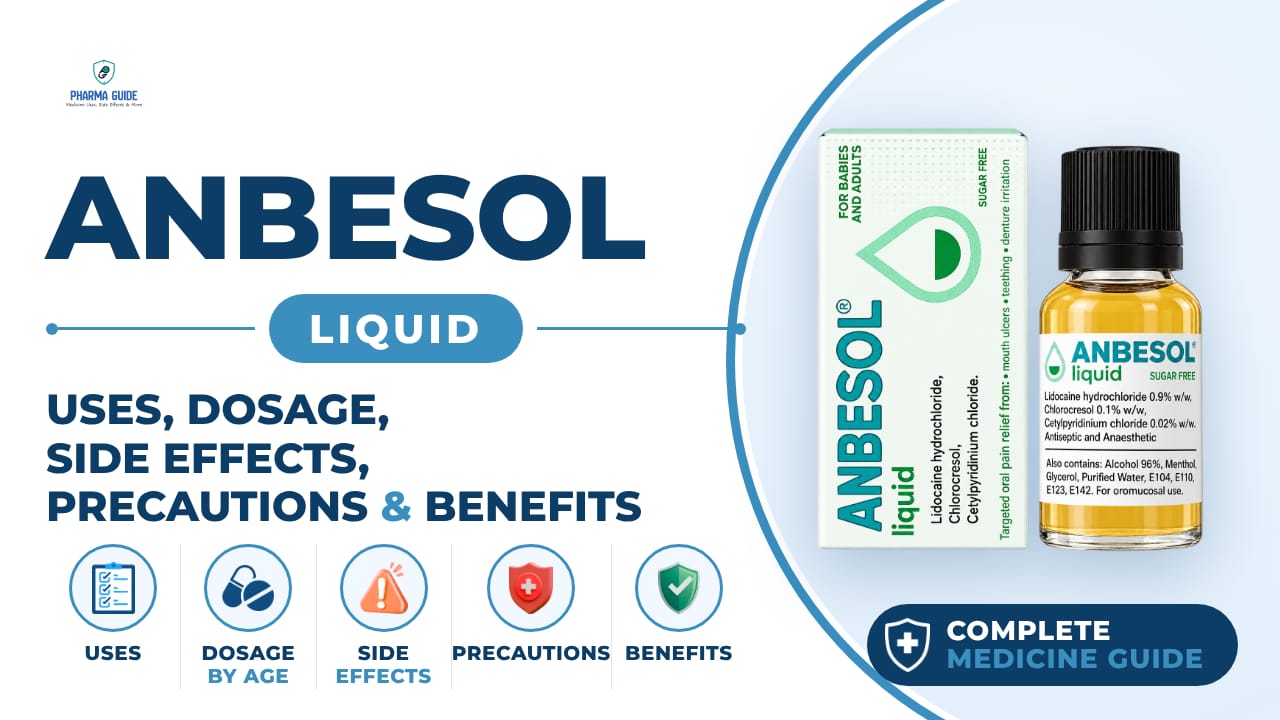
Anbesol Liquid: Uses, Dosage, Side Effects, Precautions and Alternates
| Generic name | Lidocaine hydrochloride |
|---|---|
| Drug class | Topical anesthetic |
| Forms | Oromucosal solution (liquid) |
Quick overview
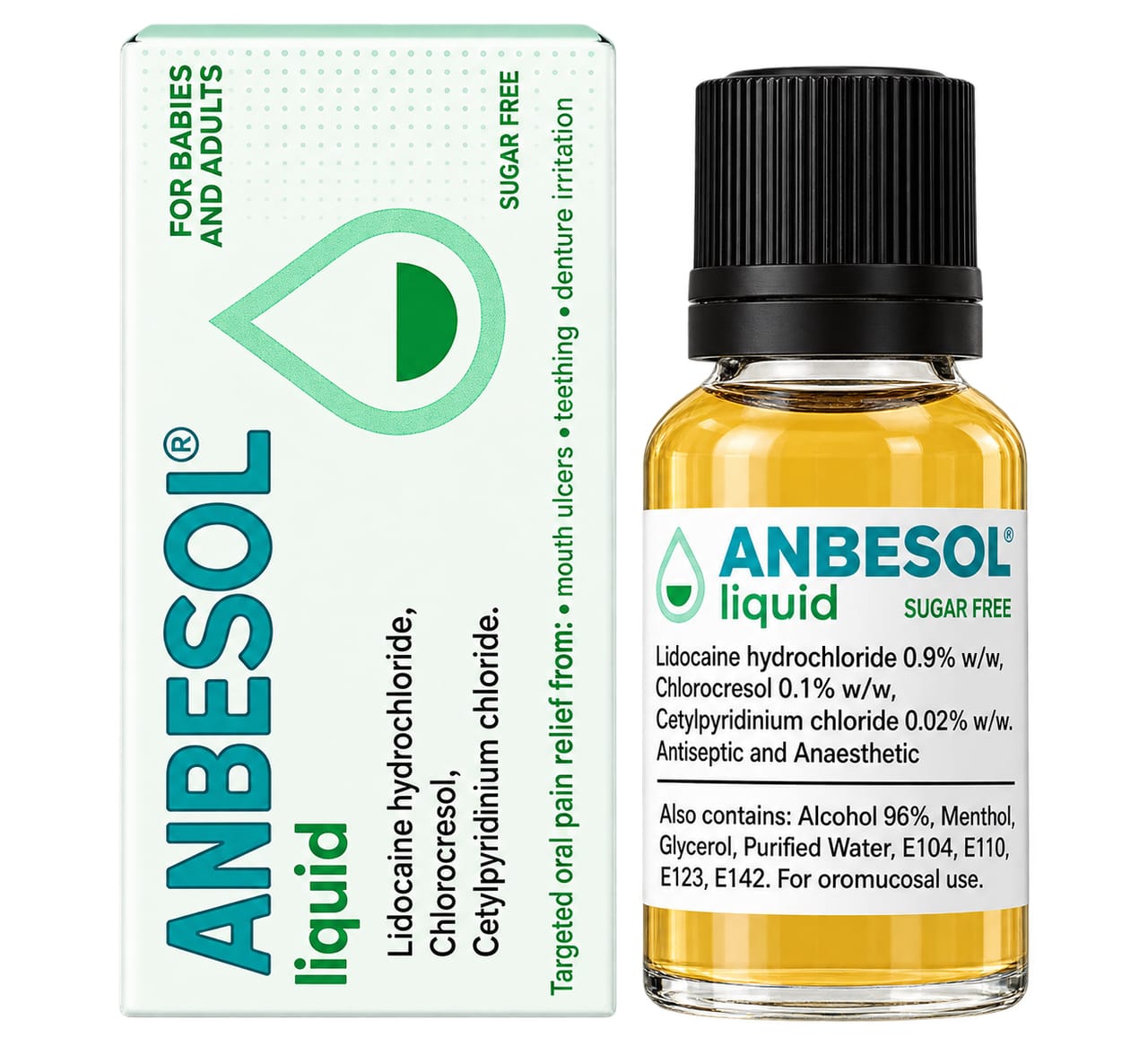
Anbesol Liquid is an oromucosal solution containing lidocaine hydrochloride, chlorocresol, and cetylpyridinium chloride. It is used to numb pain and fight germs in the mouth, including discomfort from mouth ulcers, sore gums, toothache, and canker sores. It works by blocking pain signals and reducing bacteria at the application site. It should be used undiluted, applied with a clean fingertip, and not more often than every 3 hours.
What is Anbesol Liquid
Anbesol Liquid is an oromucosal solution containing lidocaine hydrochloride, chlorocresol, and cetylpyridinium chloride. It is used to numb pain and fight germs in the mouth.
Anbesol Liquid uses
- Relief of pain caused by mouth ulcers
- Relief of sore gums
- Relieves minor toothache
- Relieves gum pain
- Relieves discomfort from canker sores
- Relieves minor irritation from dentures or braces
Benefits of Anbesol Liquid
- Numbs sore areas within minutes
- Helps reduce germs and bacteria at the application site
- Provides rapid local numbing
- Acts directly at the painful area
- Easy topical application
- Can provide short-term relief while the underlying cause is being treated
How Anbesol Liquid works
Lidocaine hydrochloride is a local anesthetic that stops pain signals from being felt. Chlorocresol and cetylpyridinium chloride kill bacteria.
Anbesol Liquid dosage
Apply the solution undiluted to the affected area using a clean fingertip. Two applications right away are normally enough for pain relief. Do not apply more often than every 3 hours, or as directed by your doctor or dentist. If symptoms continue after 3 days, speak to your doctor or dentist. Do not keep using this medicine if it does not seem to be working, unless your doctor tells you to. Numbing the mouth or throat can temporarily affect swallowing, so avoid eating or drinking until the numbness wears off.
| Age group | Dose |
|---|---|
| Under 2 years | Do not use benzocaine oral products because of the risk of methemoglobinemia |
| 2–11 years | Use only under adult supervision and according to the specific product label; apply a small amount to the affected area, usually up to 4 times daily |
| 12–17 years | Apply a small amount to the affected area, generally up to 4 times daily according to the product label |
| 18–64 years | Apply a small amount to the painful area, generally up to 4 times daily |
Available forms and strengths
- Oromucosal solution (liquid)
Side effects of Anbesol Liquid
Common
- Stinging or burning where applied
- Mild irritation at the application site
- Mouth ulcers (reported by some people)
- Dermatitis (inflamed, red, itchy, scaly skin)
Serious
- Allergic reactions such as difficulty breathing, rash, or itching
- Bluish or pale, gray colored skin, lips, or nails
- Dark urine
- Difficulty breathing
- Dizziness or lightheadedness
- Headache
- High fever
- Nausea or vomiting
- Rapid heart rate
- Sore throat
- Unusual bleeding or bruising
- Unusual tiredness or weakness
- Worsening of pain, redness, swelling, or irritation in or around the mouth
- Convulsions (fits) from too much medicine being absorbed into the body
Warnings and precautions
- Do not use if you are allergic to lidocaine hydrochloride, chlorocresol, cetylpyridinium chloride, similar anaesthetics, or any other ingredient in this medicine.
- Do not use if you have porphyria, a disease causing stomach pain, constipation, changes in urine color, skin rashes, and disturbed behavior.
- Talk to your doctor or pharmacist before use if you have open wounds or damaged areas in the lining of your mouth, as this may cause too much of the active ingredients to be absorbed.
- Do not use more than the recommended amount, as this can cause the active ingredients to be absorbed into the body and cause serious side effects such as convulsions.
- Tell your doctor or pharmacist about other medicines you take, including other anaesthetics, certain antibiotics and antifungals, heart rhythm medicines, stomach ulcer or heartburn medicines, beta-blockers, calcium chloride, certain painkillers, quinine, methylcellulose, or certain surfactants, as they may interact with this medicine.
- This medicine contains chlorocresol, which may cause allergic reactions.
- Watch children carefully after applying this medicine to make sure none gets into the eyes or mouth, since swallowing it can cause serious side effects, especially in children.
- This medicine may cause a rare but serious blood problem called methemoglobinemia, especially in children under 2, elderly patients, or those with certain inborn conditions.
- Tell your doctor if you take medicines containing nitrates or nitrites, as these may interact with this medicine.
- If you are pregnant or think you may be pregnant, ask your doctor or pharmacist for advice before using this medicine.
- Small amounts of lidocaine pass into breast milk, but in such small amounts that it should not harm your baby if used as directed. Still, ask your doctor or pharmacist for advice before use.
- No routine kidney-specific adjustment is generally required for limited topical use.
- No routine liver-specific adjustment is generally required.
- This medicine contains a small amount of alcohol, roughly equal to less than 4 ml of beer or 2 ml of wine per dose, which should not cause noticeable effects.
- This medicine is unlikely to affect your ability to drive or use machines.
Storage
- Keep this medicine out of the sight and reach of children
- Do not store above 25°C
- Do not use this medicine after the expiry date which is stated on the carton and bottle after EXP. The expiry date refers to the last day of that month
- Do not throw away any medicines via wastewater or household waste. Ask your pharmacist how to throw away medicines you no longer use
When to see a doctor
- Call your doctor right away if you or your child have pale, gray, or blue-colored skin, lips, or nails, confusion, headache, lightheadedness, fast heartbeat, or unusual tiredness or weakness after using this medicine.
- Call your doctor right away if you develop a severe sore throat, or a sore throat along with high fever, headache, nausea, or vomiting, as these may be signs of infection.
- If your or your child's condition does not improve within 7 days, or gets worse, check with your doctor.
- If someone uses more than the recommended amount, or swallows a large amount of this medicine, contact your doctor or your nearest emergency department and bring this leaflet and pack with you.
- If you still have symptoms after 3 days, speak to your doctor or dentist.
Alternatives
- Orajel
- Benzocaine oral gel
- Oral pain-relief rinses
- Acetaminophen for appropriate dental pain
Watch the video
FAQs
What is Anbesol Liquid used for?
It relieves pain from mouth ulcers, sore gums, minor toothache, canker sores, and irritation from dentures or braces by numbing the area and reducing bacteria.
How often can I use Anbesol Liquid?
Apply it undiluted with a clean fingertip, no more often than every 3 hours, or as directed by your doctor or dentist. Two applications right away are usually enough for pain relief.
Can children use Anbesol Liquid?
Benzocaine oral products should not be used under 2 years due to the risk of methemoglobinemia. For children 2-17 years, use only under adult supervision and according to the product label, applying a small amount up to 4 times daily.
What are the serious side effects of Anbesol Liquid?
Serious effects include allergic reactions, bluish or pale skin, dark urine, difficulty breathing, dizziness, rapid heart rate, unusual bleeding or bruising, and convulsions from excessive absorption.
What should I do if symptoms don't improve?
If symptoms continue after 3 days, speak to your doctor or dentist, and stop using the medicine if it doesn't seem to be working unless advised otherwise.
General information, not medical advice
Your prescriber and the leaflet in your pack know your situation. This page does not.
- Follow your prescriber and the leaflet
- Don't start, stop, or change a dose on your own
- Doses and warnings differ by country and product
Sources
Video
Related medicines
Benzocaine Spray: Uses, Dosage, Side Effects, Precautions and Alternates
topical anesthetic
Benzocaine Spray numbs skin, mouth, and throat to relieve pain and itching. Learn uses, dosage, side effects, warnings, and storage tips here.

Injectafer Injection: Uses, Dosage, Side Effects, Precautions and Alternates
Iron products
Injectafer (ferric carboxymaltose) treats iron deficiency anemia and heart failure-related iron deficiency via IV. Learn uses, dosage, side effects, and