
Safety
General information, not medical advice
Your prescriber and the leaflet in your pack know your situation. This page does not.
- Follow your prescriber and the leaflet
- Don't start, stop, or change a dose on your own
- Doses and warnings differ by country and product
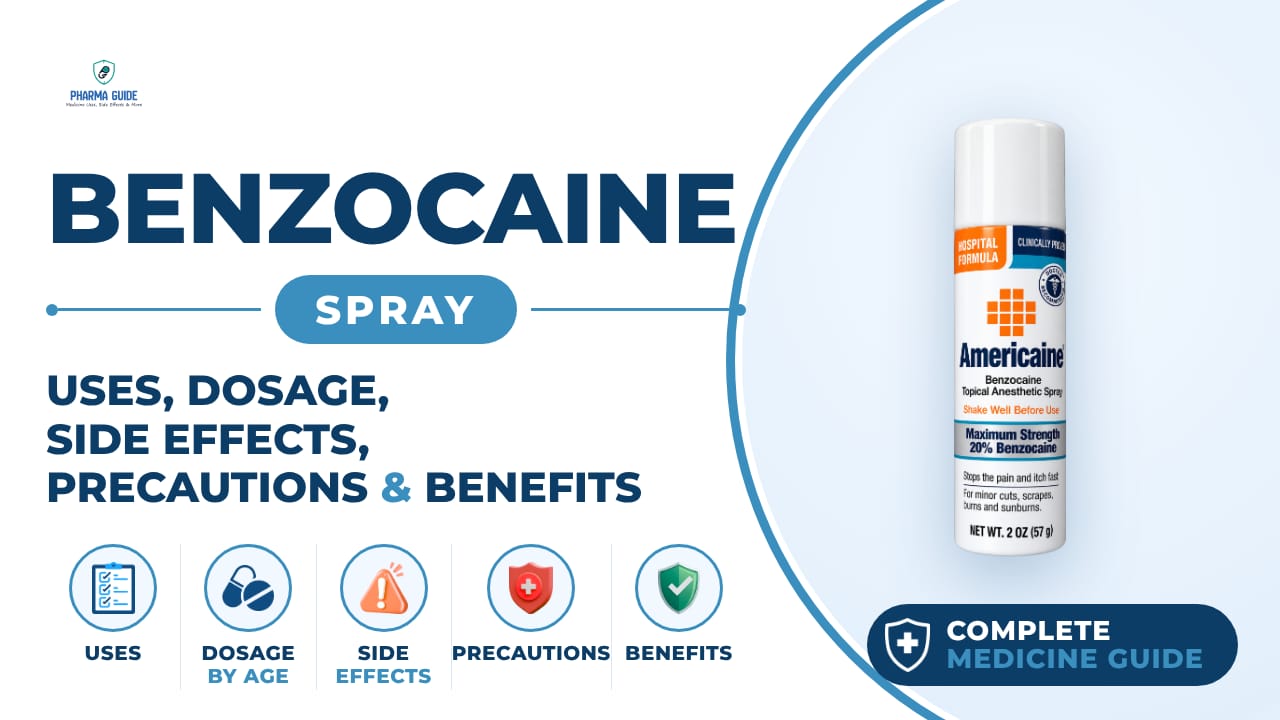
Benzocaine Spray: Uses, Dosage, Side Effects, Precautions and Alternates
| Generic name | benzocaine topical |
|---|---|
| Drug class | topical anesthetic |
| Forms | gel, topical solution/liquid, spray, lozenge, ointment |
Quick overview
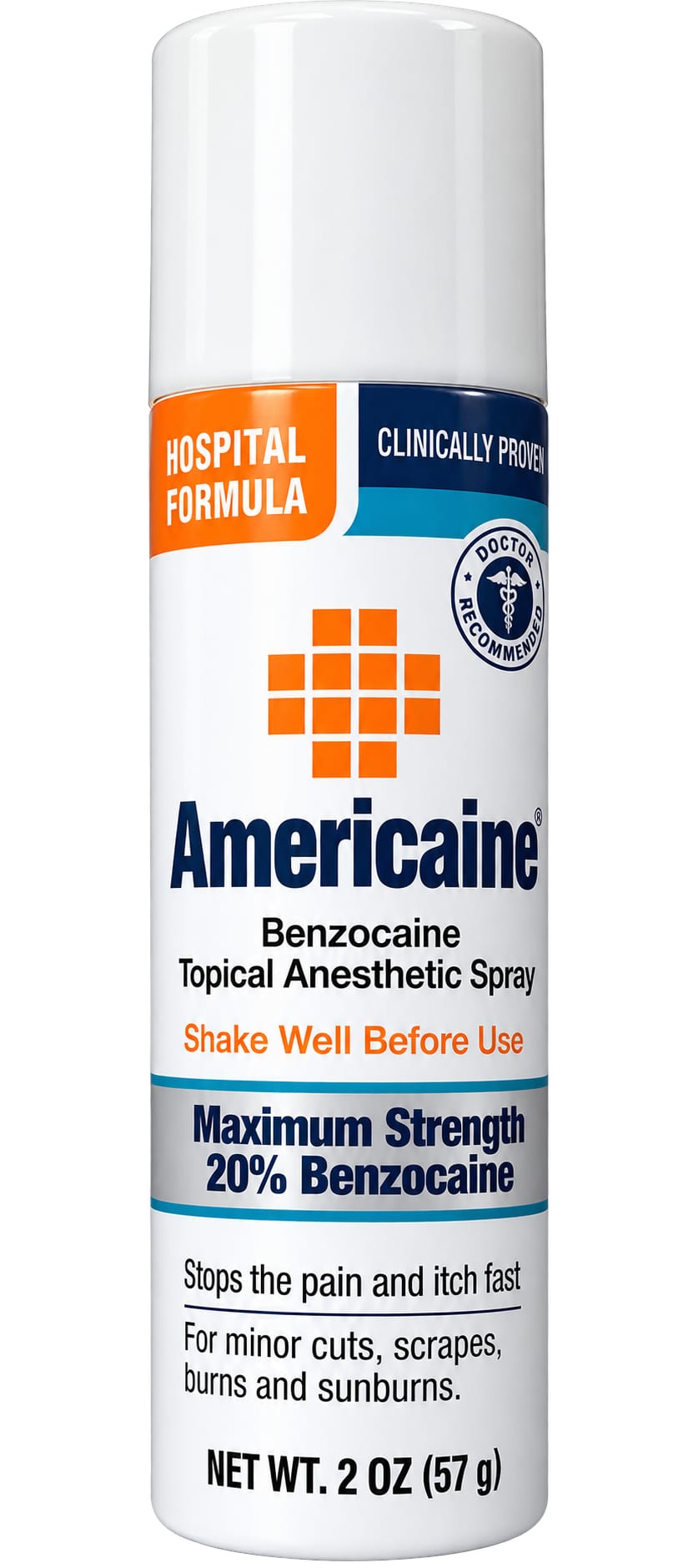
Benzocaine Spray contains benzocaine, a topical local anesthetic that temporarily numbs nerve endings in the skin, mouth, or throat to block pain and itching signals. It is used for minor skin injuries, sore throat and mouth discomfort, numbing before medical or dental procedures, and other topical uses. It works quickly and its numbing effect stays local to the area where it is applied.
What is Benzocaine Spray
Benzocaine spray is a topical local anesthetic that temporarily numbs nerve endings in the skin, mouth, or throat to block pain and itching signals.
Benzocaine Spray uses
- Relieves pain and itching of the skin from small cuts, scrapes, burns, or bug bites
- Soothes minor burns, sunburns, cuts, scrapes, and insect bites
- Eases discomfort from sore throat, canker sores, gum injuries, or minor dental procedures
- Numbs the mouth and throat before medical instrument insertion or intubation, or helps with adjusting to dentures
- Helps prevent premature ejaculation
- Used by dentists to numb the mouth before procedures like fillings or tooth extractions
- Used in ear drops and throat sprays to soothe earaches or sore throats
Benefits of Benzocaine Spray
- Starts working quickly, in about 15 to 30 seconds
- Provides fast, temporary numbing without the need for an injection
- Numbing effect stays local to the area applied and doesn't affect the rest of the body
How Benzocaine Spray works
Benzocaine works by blocking nerve signals that carry pain and itching messages, stopping nerves in the area from firing so you don't feel the pain.
Benzocaine Spray dosage
Apply only to the area needing relief; avoid using more than the recommended amount. For throat spray, spit out after about a minute and you may repeat as directed. Topical liquid should not be used while smoking until the product has dried. Not for use on infants or young children unless a healthcare provider directs it. Follow the instructions on the specific product label since forms and strengths vary.
| Age group | Dose |
|---|---|
| 2–11 years | Use only according to the specific product label and with adult/clinician supervision; dosing varies by oral vs skin formulation |
| 12–17 years | For 20% skin spray, many OTC labels allow application to the affected area up to 3–4 times daily |
| 18–64 years | For 20% skin spray, commonly apply to the affected area up to 3–4 times daily; oral/dental sprays have product-specific dosing |
Available forms and strengths
- Gel
- Topical solution/liquid
- Spray (20% strength for skin spray)
- Lozenge
- Ointment
Side effects of Benzocaine Spray
Common
- Mild stinging, burning, or itching where applied
- Skin tenderness
- Redness of the skin
- Dry white flakes where the medicine was applied
- Temporary stinging, burning, or redness where it is applied
Serious
- Hives
- Difficulty breathing
- Swelling of the face, lips, tongue, or throat
- Headache
- Tiredness
- Confusion
- Fast heartbeats
- Lightheadedness
- Shortness of breath
- Pale, blue, or gray appearance of the skin, lips, or fingernails
- Severe burning, stinging, or sensitivity where the medication is applied
- Swelling, warmth, redness, oozing, blistering, and signs of infection
- Methemoglobinemia (a rare blood disorder where blood carries less oxygen), with symptoms such as changes in skin color, headache, fast heartbeat, shortness of breath, lightheadedness, and tiredness or weakness
Warnings and precautions
- Do not use benzocaine in children younger than 2 years old because of a high risk of a serious blood condition called methemoglobinemia.
- Do not use on large areas of the body or on skin that is badly damaged, since this raises the risk of serious side effects.
- Only use on the outside of the skin and keep it away from your eyes; if it gets in your eye, rinse with water or saline right away and protect the eye until numbness wears off.
- Do not use on large areas of skin, for a long time, or under tight dressings, and avoid the eyes, since serious heart, breathing, and seizure problems have happened with unsupervised heavy use.
- People with heart disease, blood or enzyme problems, damaged mouth tissue, or breathing conditions like asthma, bronchitis, or emphysema should use caution and consider other options besides benzocaine sprays.
- Many benzocaine sprays are alcohol-based and flammable, so keep them away from open flames, heat, or smoking during use.
- Do not use if you are allergic to benzocaine or other ester-type local anesthetics, or if there is a bacterial infection in the area being treated.
- It is not known if or how topical benzocaine could affect pregnancy or harm an unborn baby, so tell your healthcare provider if you are or plan to become pregnant.
- It is not known if topical benzocaine passes into breast milk, so tell your healthcare provider if you are breastfeeding or plan to.
- No standard renal dose adjustment is established for limited topical use.
- No routine liver-specific adjustment is generally required for limited topical use.
- It isn't known if drinking alcohol will affect topical benzocaine.
- Usually does not affect driving when used topically as directed.
Storage
- Benzocaine topical spray should be stored between 59 F and 77 F (15 C to 25 C). Do not expose it to heat, flames, or fire.
- Benzocaine topical gel should be stored below 86 F (30 C). Store in a cool, dry place. Protect from light.
- Benzocaine topical liquid should be stored at room temperature, between 68 F to 77 F (20 C to 25 C). Store in a cool, dry place. Protect from heat. Do not expose it to flames or fire. Do not use it while smoking until the product has dried.
- Check the product label for specific storage information.
When to see a doctor
- Get medical help right away if you notice pale, gray, or blue-colored skin, lips, or nails, a headache, fast heartbeat, shortness of breath, lightheadedness, or unusual tiredness, as these can be signs of methemoglobinemia.
- Stop using the product and get help right away if you have signs of a serious allergic reaction, such as breathing problems, swelling of the face, lips, mouth, tongue, or throat, trouble swallowing, hives, dizziness, or fainting.
- Contact your healthcare professional if your symptoms get worse or last longer than seven days.
- If you think you've used too much benzocaine, get medical help right away or contact a poison control center.
Alternatives
- Lidocaine spray
- Lidocaine topical solution
- Phenol throat spray
Watch the video
FAQs
How fast does Benzocaine Spray start working?
It starts working quickly, in about 15 to 30 seconds, providing fast, temporary numbing without the need for an injection.
What is Benzocaine Spray used for?
It relieves pain and itching from minor cuts, scrapes, burns, sunburns, and insect bites, eases sore throat, canker sores, and gum injuries, numbs the mouth and throat before medical or dental procedures, and is used by dentists before fillings or extractions.
Can Benzocaine Spray be used on children?
It should not be used in children younger than 2 years old due to a high risk of methemoglobinemia, and it is not for use on infants or young children unless a healthcare provider directs it.
What are the serious side effects of Benzocaine Spray?
Serious side effects include hives, difficulty breathing, swelling of the face, lips, tongue, or throat, fast heartbeats, confusion, and methemoglobinemia, a rare blood disorder with symptoms like skin color changes, headache, and shortness of breath.
Is Benzocaine Spray flammable?
Many benzocaine sprays are alcohol-based and flammable, so they should be kept away from open flames, heat, or smoking during use.
General information, not medical advice
Your prescriber and the leaflet in your pack know your situation. This page does not.
- Follow your prescriber and the leaflet
- Don't start, stop, or change a dose on your own
- Doses and warnings differ by country and product
Sources
Video
Related medicines
Anbesol Liquid: Uses, Dosage, Side Effects, Precautions and Alternates
Topical anesthetic
Anbesol Liquid numbs mouth pain and fights germs for ulcers, sore gums, and toothache. Learn dosage, side effects, warnings, and usage tips.

Injectafer Injection: Uses, Dosage, Side Effects, Precautions and Alternates
Iron products
Injectafer (ferric carboxymaltose) treats iron deficiency anemia and heart failure-related iron deficiency via IV. Learn uses, dosage, side effects, and