
Safety
General information, not medical advice
Your prescriber and the leaflet in your pack know your situation. This page does not.
- Follow your prescriber and the leaflet
- Don't start, stop, or change a dose on your own
- Doses and warnings differ by country and product
Ancef Injection: Uses, Dosage, Side Effects, Precautions and Alternates

| Generic name | cefazolin sodium |
|---|---|
| Drug class | cephalosporin antibiotic |
| Forms | Injection (powder for reconstitution in vials, piggyback vials, and pharmacy bulk vials) |
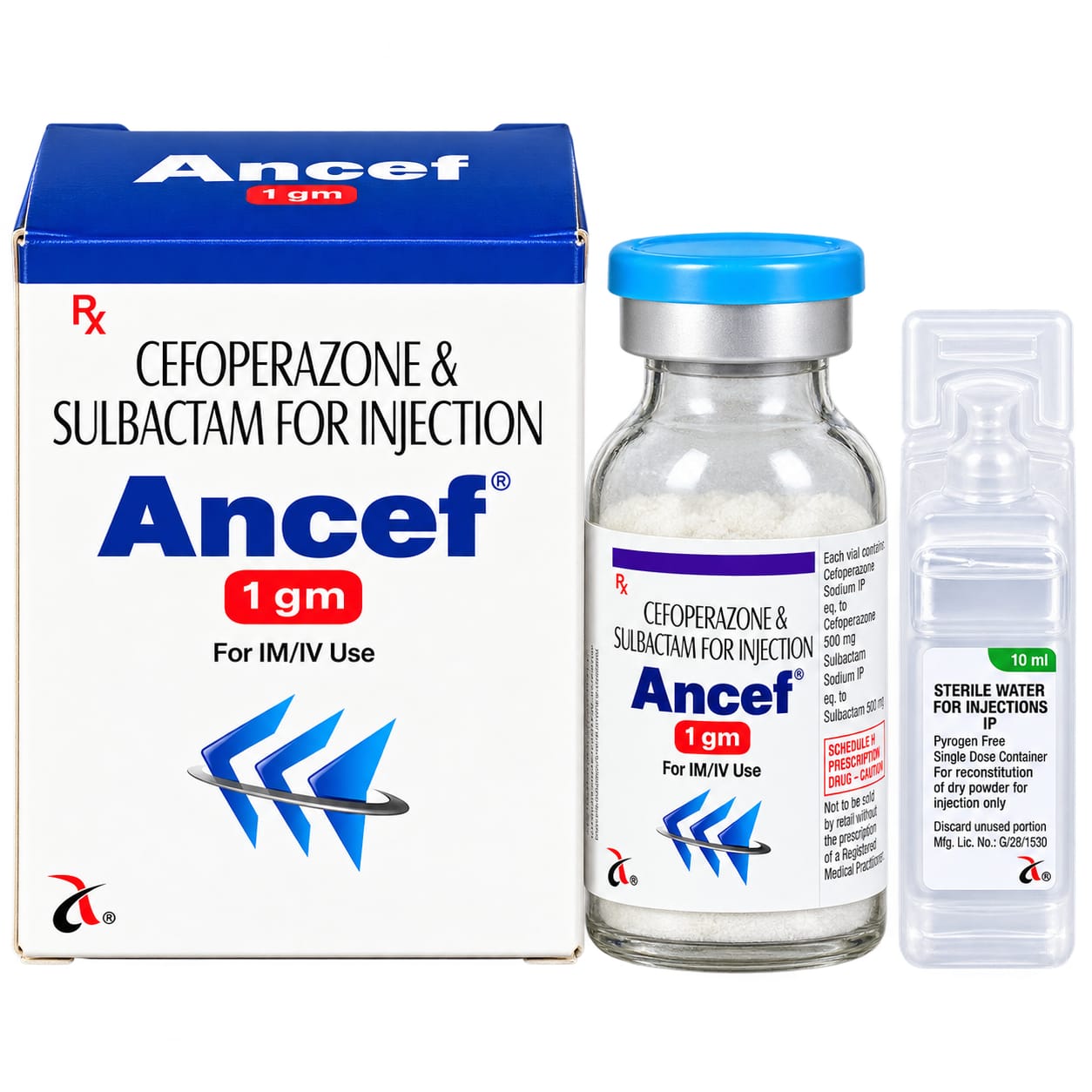
Quick overview
Ancef Injection (cefazolin sodium) is a cephalosporin antibiotic given by injection to treat or prevent infections caused by bacteria sensitive to it. It is used for infections such as respiratory, urinary, skin, biliary, bone and joint, and certain genital infections, as well as septicemia and endocarditis. It is also used to prevent infection around certain surgeries. It must be given by a healthcare professional and used exactly as directed.
What is Ancef Injection
Ancef is a semi-synthetic cephalosporin antibiotic given by injection. It is used only to treat or prevent infections caused by bacteria that are sensitive to it.
Ancef Injection uses
- Respiratory tract infections
- Urinary tract infections
- Skin and skin structure infections
- Biliary tract infections
- Bone and joint infections
- Genital infections (such as prostatitis and epididymitis)
- Septicemia (blood infection)
- Endocarditis (heart valve infection)
- Prevention of infection before, during, and after certain surgeries
Benefits of Ancef Injection
- Treats serious infections caused by bacteria that respond to this medicine
- Can help prevent infection after surgeries that carry a higher risk of contamination
- Treats susceptible bacterial infections
- Commonly used for skin and soft-tissue infections
- Treats certain bone and joint infections
- Used for some urinary and respiratory infections
- Frequently used for surgical infection prophylaxis
How Ancef Injection works
Ancef works by stopping bacteria from building their protective outer cell wall. Without a proper cell wall, the bacteria cannot survive, so the infection is killed off.
Ancef Injection dosage
This medicine is given by a healthcare professional as an injection into a muscle or into a vein; it is not taken by mouth. It should be used exactly as directed for the full course, even if you start feeling better, so the infection is fully treated and resistance is less likely to develop. When used to prevent infection before surgery, it is usually given shortly before the operation and may continue for a short period afterward. Dosing may need to be adjusted and spaced further apart in people with reduced kidney function.
| Age group | Dose |
|---|---|
| 1 month–11 years | Commonly 25–50 mg/kg/day IV or IM, divided into 3–4 doses; severe infections may require higher specialist-directed dosing |
| 18–64 years | Commonly 500 mg–1 g IV/IM every 6–8 hours, depending on infection severity |
Available forms and strengths
- Injection (powder for reconstitution in vials, piggyback vials, and pharmacy bulk vials)
Side effects of Ancef Injection
Common
- Diarrhea
- Oral thrush (yeast infection in the mouth)
- Vomiting and nausea
- Stomach cramps
- Loss of appetite
- Pain, redness, or swelling at the injection site
- Skin rash
- Itching
- Headache
- Dizziness
Serious
- Severe allergic reaction (anaphylaxis), including difficulty breathing
- Stevens-Johnson syndrome (a severe skin reaction)
- Pseudomembranous colitis (severe diarrhea caused by an overgrowth of harmful bacteria in the gut)
- Low white blood cell counts, low platelet counts, or other blood disorders
- Liver inflammation (hepatitis) and abnormal liver test results
- Kidney problems, including increased BUN and creatinine or kidney failure
- Seizures, especially in people with kidney problems given high doses
Warnings and precautions
- Do not use this medicine if you have a known allergy to cephalosporin antibiotics.
- Tell your doctor before starting treatment if you have ever had an allergic reaction to cefazolin, other cephalosporins, penicillins, or other drugs, since cross-reactions between these antibiotics are well documented and can happen in a notable share of people with penicillin allergy.
- Severe diarrhea linked to antibiotic use (pseudomembranous colitis) can occur during or after treatment and can range from mild to life-threatening.
- This medicine should be used with caution in people with a history of bowel conditions, especially colitis.
- Seizures have occurred when inappropriately high doses were given to people with reduced kidney function.
- This medicine can reduce blood clotting ability in some people, particularly those with kidney or liver problems, poor nutrition, or long courses of antibiotics, or those already on blood thinners; blood clotting tests may need to be monitored.
- A serious form of anemia caused by the immune system attacking red blood cells has been reported with this type of medicine.
- This medicine should only be used during pregnancy if your doctor decides it is clearly needed, since there isn't enough human data, though animal studies have not shown harm to the baby.
- Small amounts of this medicine pass into breast milk, so caution is needed if you are breastfeeding while taking it.
- People with reduced kidney function need lower doses, since the risk of toxic effects is higher when the kidneys cannot clear the drug properly.
- No routine liver-specific dose adjustment is generally required.
- It isn't known whether alcohol interacts with this medicine, so it's best to ask your doctor before drinking alcohol during treatment.
- This medicine may cause dizziness, which could affect your ability to drive or use machinery safely.
Storage
- Before reconstitution, protect from light and store at controlled room temperature of 20° to 25°C (68° to 77°F)
- Once mixed, the solution is stable for 24 hours at room temperature or for 10 days if kept refrigerated at 5°C (41°F)
- Reconstituted solution may range from pale yellow to yellow in color without loss of potency; discard if particles are seen in the solution
When to see a doctor
- Get emergency help right away if you notice signs of a serious allergic reaction, such as rash, swelling, itching, dizziness, or difficulty breathing.
- Contact your doctor if you develop diarrhea, especially if it is severe or watery, as this could be a sign of a serious bowel condition related to antibiotic use.
- Tell your doctor if you notice symptoms of anemia, such as unusual tiredness, fast heartbeat, dizziness, or shortness of breath with activity.
Alternatives
- Cephalexin
- Ceftriaxone
- Cefuroxime
Watch the video
FAQs
What is Ancef Injection used for?
Ancef is used to treat infections such as respiratory, urinary, skin, biliary, bone and joint, and certain genital infections, as well as septicemia and endocarditis. It is also used to prevent infection around certain surgeries.
How is Ancef Injection given?
Ancef is given by a healthcare professional as an injection into a muscle or into a vein; it is not taken by mouth.
How does Ancef Injection work?
Ancef works by stopping bacteria from building their protective outer cell wall, so without a proper cell wall the bacteria cannot survive and the infection is killed off.
What are the common side effects of Ancef Injection?
Common side effects include diarrhea, oral thrush, vomiting and nausea, stomach cramps, loss of appetite, pain or redness at the injection site, skin rash, itching, headache, and dizziness.
Who should not use Ancef Injection?
People with a known allergy to cephalosporin antibiotics should not use Ancef, and those with a history of allergic reactions to cefazolin, other cephalosporins, or penicillins should tell their doctor before starting treatment due to possible cross-reactions.
General information, not medical advice
Your prescriber and the leaflet in your pack know your situation. This page does not.
- Follow your prescriber and the leaflet
- Don't start, stop, or change a dose on your own
- Doses and warnings differ by country and product
Sources
Video
Related medicines
Duricef Capsule: Uses, Dosage, Side Effects, Precautions and Alternates
Cephalosporin antibiotic
Duricef Capsule (cefadroxil) treats UTIs, skin infections, and strep throat. Learn uses, dosage, side effects, warnings, and precautions before taking it.

Supacef Injection: Uses, Dosage, Side Effects, Precautions and Alternates
Cephalosporin antibiotic
Supacef Injection contains cefuroxime, used to treat respiratory, urinary, skin, bone and joint infections. Learn about dosage, side effects, and precautions.