
Safety
General information, not medical advice
Your prescriber and the leaflet in your pack know your situation. This page does not.
- Follow your prescriber and the leaflet
- Don't start, stop, or change a dose on your own
- Doses and warnings differ by country and product
Duricef Capsule: Uses, Dosage, Side Effects, Precautions and Alternates
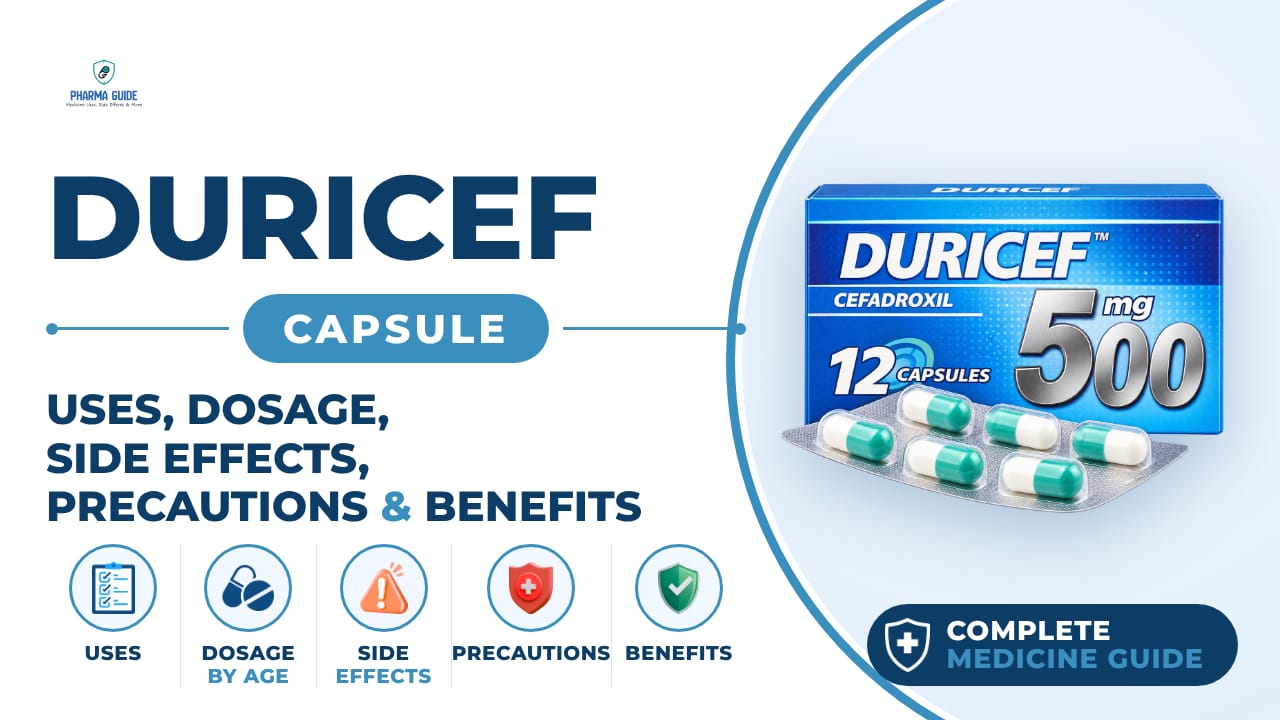
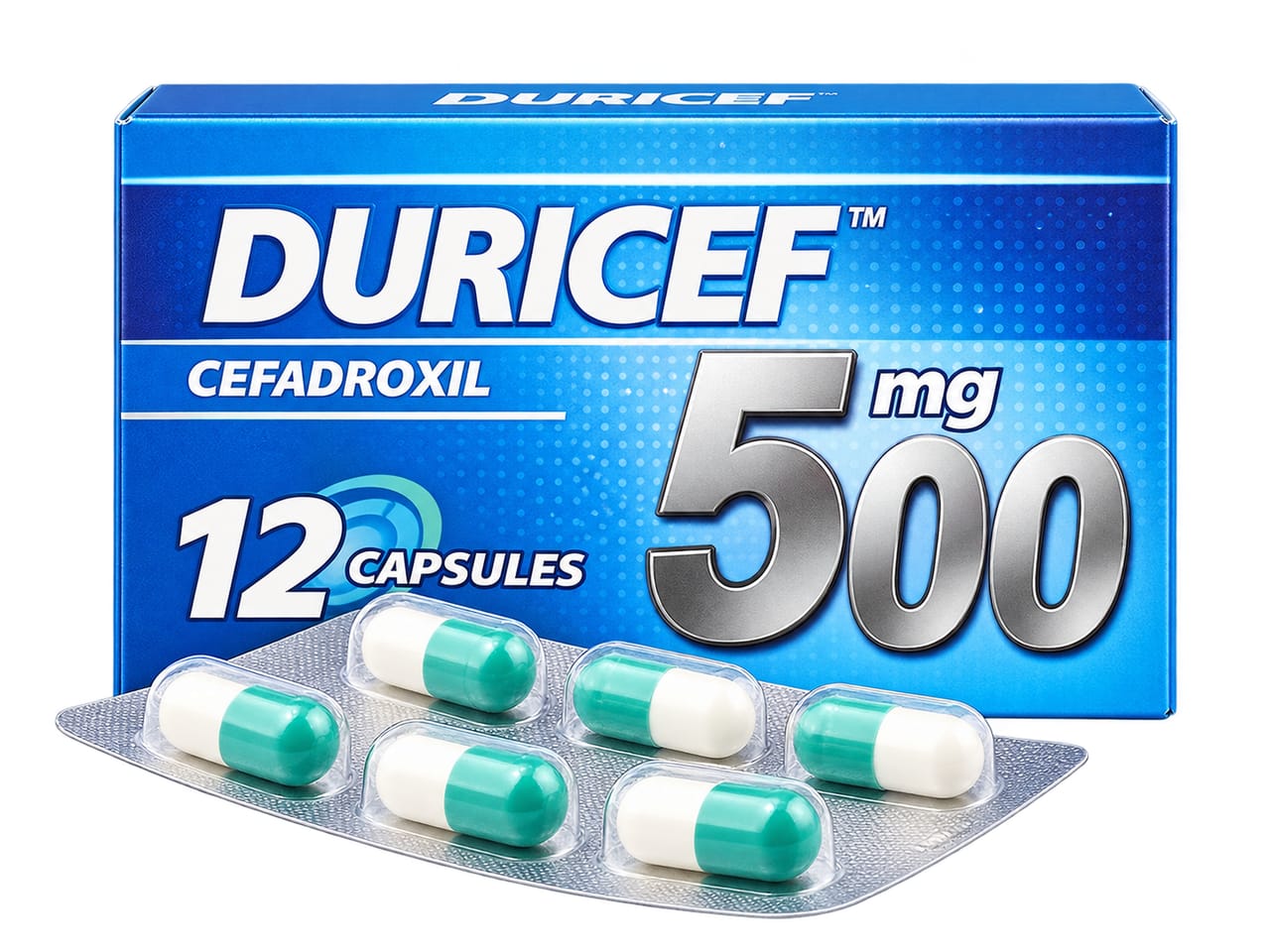
| Generic name | cefadroxil monohydrate |
|---|---|
| Drug class | Cephalosporin antibiotic |
| Forms | Capsules, Tablets (film-coated), Oral suspension |
Quick overview
Duricef Capsule contains cefadroxil monohydrate, a cephalosporin antibiotic used to treat bacterial infections. It is prescribed for urinary tract infections, skin and skin structure infections, pharyngitis and tonsillitis, and certain lower respiratory tract infections caused by susceptible bacteria. Duricef will not work against colds, flu, or other viral infections. It should be taken exactly as prescribed, with the full course completed even if symptoms improve early.
What is Duricef Capsule
Duricef is an antibiotic medicine used to treat infections caused by bacteria. It belongs to a group of medicines called cephalosporin antibiotics and will not work on colds, flu, or other infections caused by viruses.
Duricef Capsule uses
- Urinary tract infections caused by E. coli, P. mirabilis, and Klebsiella species
- Skin and skin structure infections caused by staphylococci and/or streptococci
- Pharyngitis and/or tonsillitis caused by group A beta-hemolytic streptococci
- Lower respiratory tract infections, including pneumonia, caused by certain bacteria (per Canadian product monograph)
Benefits of Duricef Capsule
- Clears bacterial infections of the urinary tract, skin, throat, and tonsils caused by susceptible bacteria
- Works against a range of common disease-causing bacteria
- Treats certain skin and soft-tissue infections
- Treats some urinary tract infections
- Treats streptococcal throat infections
- Covers susceptible Gram-positive and some Gram-negative bacteria
- Provides convenient once- or twice-daily oral dosing
How Duricef Capsule works
Duricef kills bacteria by stopping them from building their cell walls properly, which destroys the bacteria.
Duricef Capsule dosage
Duricef can be taken by mouth without regard to meals. Taking it with food may help lessen stomach upset that can occasionally happen with this type of antibiotic. Take it at the same time each day as directed on your prescription label, and take all of the medicine for the full course prescribed, even if you start feeling better, unless your care team tells you to stop. Treatment for infections caused by group A beta-hemolytic streptococci should last at least 10 days.
If you miss a dose, take it as soon as you remember, but if it's almost time for your next dose, skip the missed one and do not double up.
| Age group | Dose |
|---|---|
| Children under 12 years | Usually 30 mg/kg/day, given once daily or divided into 2 doses, depending on infection |
| 12–17 years | Commonly 500 mg every 12 hours or 1 g once daily, depending on infection |
| 18–64 years | Commonly 500 mg every 12 hours or 1 g once daily |
Available forms and strengths
- Capsules
- Tablets (film-coated)
- Oral suspension
Side effects of Duricef Capsule
Common
- Diarrhea
- Headache
- Nausea
- Dyspepsia
- Vomiting
Serious
- Allergic reactions such as skin rash, itching, hives, or swelling of the face, lips, tongue, or throat
- Severe or watery diarrhea with fever (possible sign of colitis)
- Unusual vaginal discharge, itching, or odor
- Serious skin reactions that can appear weeks to months after starting the medicine, including fever or flu-like symptoms with a rash that may blister or peel
- Anaphylaxis (severe whole-body allergic reaction)
Warnings and precautions
- Tell your doctor before starting this medicine if you have ever had an allergic reaction to cefadroxil, other cephalosporin antibiotics, penicillins, or other drugs. People allergic to penicillin have a higher chance of also reacting to this medicine.
- This medicine, like nearly all antibiotics, can cause a serious intestinal condition called Clostridium difficile-associated diarrhea, which can range from mild diarrhea to severe, life-threatening colitis. This can happen even two or more months after you stop taking the antibiotic.
- This medicine should only be used to treat infections that are proven or strongly suspected to be caused by bacteria, not viral infections like the common cold, to help prevent bacteria from becoming resistant to antibiotics.
- Take the full course of medicine exactly as prescribed, even if you feel better early on. Skipping doses or stopping early can make the treatment less effective and can help bacteria become resistant to this and other antibiotics in the future.
- This medicine should be used carefully in people with a history of stomach or intestine problems, especially colitis.
- The safety of this medicine during pregnancy hasn't been clearly established. It should only be used in pregnancy if your doctor decides it's clearly needed, weighing the possible benefits against risks to the baby.
- This medicine passes into breast milk, so it should be used carefully by nursing mothers.
- People with significant kidney problems need to use this medicine carefully, and doses may need to be adjusted, because the drug can build up in the body.
- No routine hepatic dose adjustment is usually required.
- Avoid or use cautiously with serious cephalosporin or penicillin allergy.
- Usually does not impair driving, but avoid driving if dizziness occurs.
Storage
- Store at controlled room temperature between 15 and 30 degrees C (59 to 86 degrees F)
- Store at room temperature between 20 and 25 degrees C (68 and 77 degrees F)
- Keep out of the reach of children and pets
- Get rid of any unused medication after the expiration date
- Take the medication to a medication take-back program when no longer needed
- If a take-back option isn't available, mix the medication with something like cat litter or coffee grounds, seal it in a bag, and put it in the trash unless the label says otherwise
When to see a doctor
- Get medical help right away if you develop watery or bloody diarrhea, with or without stomach cramps or fever, even if it happens weeks or months after you finish the antibiotic.
- Seek emergency care immediately if you have signs of a serious allergic reaction, such as rash, hives, swelling, or difficulty breathing — this may require urgent treatment.
- Contact your care team right away if you notice fever or flu-like symptoms along with a rash, especially if the rash turns into blisters or peeling skin, or if you have swelling of the face, lips, or lymph nodes — these can be signs of a serious skin reaction.
- If you think you have taken too much of this medicine, contact a poison control center or go to an emergency room right away.
Alternatives
- Cephalexin
- Cefuroxime
- Cefpodoxime
Watch the video
FAQs
What is Duricef Capsule used for?
Duricef is a cephalosporin antibiotic used to treat urinary tract infections, skin and skin structure infections, pharyngitis and tonsillitis caused by group A beta-hemolytic streptococci, and certain lower respiratory tract infections caused by susceptible bacteria.
How does Duricef Capsule work?
Duricef kills bacteria by stopping them from building their cell walls properly, which destroys the bacteria.
What is the usual dosage of Duricef Capsule?
Adults and adolescents 12 to 64 years commonly take 500 mg every 12 hours or 1 g once daily. Children under 12 usually take about 30 mg/kg/day, given once daily or divided into 2 doses, depending on the infection. Strep throat infections should be treated for at least 10 days.
What are the common side effects of Duricef Capsule?
Common side effects include diarrhea, headache, nausea, dyspepsia, and vomiting.
Can Duricef Capsule be taken during pregnancy or breastfeeding?
Safety in pregnancy hasn't been clearly established, so it should only be used if your doctor decides it's clearly needed. It also passes into breast milk, so it should be used carefully by nursing mothers.
General information, not medical advice
Your prescriber and the leaflet in your pack know your situation. This page does not.
- Follow your prescriber and the leaflet
- Don't start, stop, or change a dose on your own
- Doses and warnings differ by country and product
Sources
Video
Related medicines

Ancef Injection: Uses, Dosage, Side Effects, Precautions and Alternates
cephalosporin antibiotic
Ancef Injection (cefazolin) is a cephalosporin antibiotic used to treat infections and prevent surgical infections. Learn uses, dosage, and side effects.

Supacef Injection: Uses, Dosage, Side Effects, Precautions and Alternates
Cephalosporin antibiotic
Supacef Injection contains cefuroxime, used to treat respiratory, urinary, skin, bone and joint infections. Learn about dosage, side effects, and precautions.