
Safety
General information, not medical advice
Your prescriber and the leaflet in your pack know your situation. This page does not.
- Follow your prescriber and the leaflet
- Don't start, stop, or change a dose on your own
- Doses and warnings differ by country and product
Supacef Injection: Uses, Dosage, Side Effects, Precautions and Alternates

| Generic name | Cefuroxime Sodium |
|---|---|
| Drug class | Cephalosporin antibiotic |
| Forms | Injection, Powder for solution for injection |
Quick overview
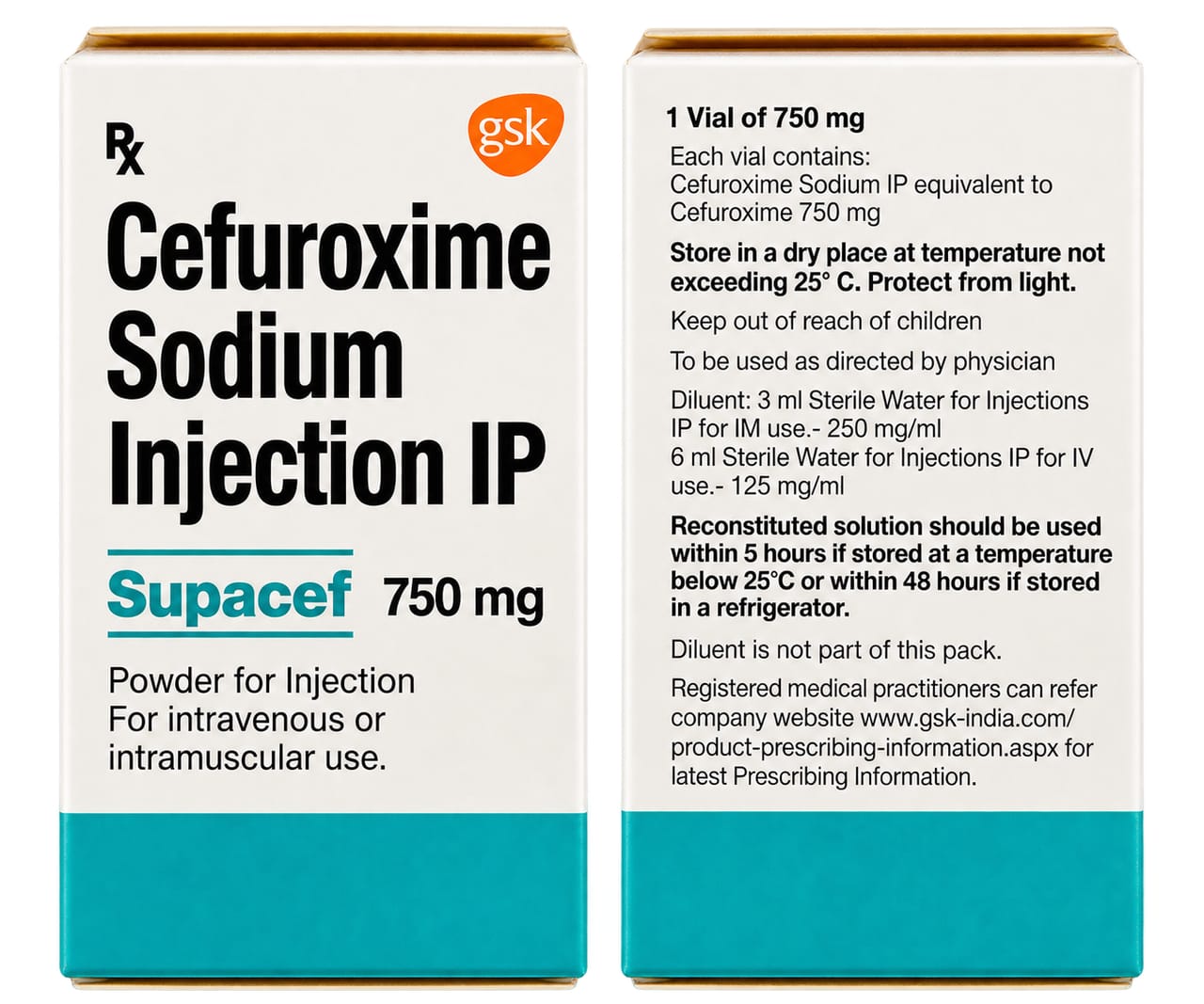
Supacef Injection contains cefuroxime sodium, a cephalosporin antibiotic that is bactericidal against a wide range of bacteria. It is given by a doctor or nurse as an injection into a muscle or as a drip into a vein to treat bacterial infections such as respiratory, ear/nose/throat, urinary, skin, bone and joint infections, among others. Dosage depends on age, body weight, and the severity of the infection.
What is Supacef Injection
Supacef Injection is an antibiotic medicine used to treat bacterial infections in the body. It contains cefuroxime, a bactericidal cephalosporin antibiotic that is active against a wide range of bacteria.
Supacef Injection uses
- Respiratory tract infections such as pneumonia, bronchitis, pharyngitis and tonsillitis
- Ear, nose and throat infections such as sinusitis, tonsillitis, pharyngitis and otitis media
- Urinary tract infections, both simple and complicated
- Skin and soft tissue infections such as cellulitis, abscesses and wound infections
- Bone and joint infections such as osteomyelitis and septic arthritis
- Uncomplicated sexually transmitted infections like gonorrhoea
- Early stages of Lyme disease
- Meningitis and septicaemia
- Preventing infections during surgery (surgical prophylaxis)
Benefits of Supacef Injection
- Bacterial Infection Treatment: Used for susceptible bacterial infections
- Broad-Spectrum Activity: Combines cefoperazone with sulbactam to cover a wider range of bacteria
- Respiratory Infection Support: May be used for serious bacterial respiratory infections
- Intra-Abdominal Infection Treatment: Can be used for certain complicated abdominal infections
- Urinary Infection Support: May treat selected serious urinary tract infections
- Hospital Infection Management: Often used for moderate-to-severe infections requiring injectable antibiotic therapy
How Supacef Injection works
Cefuroxime works by attaching to proteins inside bacteria that they need to build their cell wall. This stops the bacteria from forming a strong wall, which weakens and eventually destroys the bacteria.
Supacef Injection dosage
This medicine is given by a doctor or nurse as an injection into a muscle or as a drip into a vein; you should not give it to yourself. When given as a drip into a vein, it is usually given over a period of time rather than all at once. Use this medicine regularly at evenly spaced intervals as scheduled by your doctor. Do not skip doses and finish the full course of treatment even if you start to feel better, because stopping early may let the infection return or get worse. If a dose is missed, it should be given as soon as remembered, but if it is almost time for the next dose, the missed one should be skipped rather than doubling up.
| Age group | Dose |
|---|---|
| Newborns & Infants | Dose based on body weight and infection severity, under specialist supervision |
| Children | Usually weight-based dosing, divided into 2–4 doses daily |
| Adults (18–64 Years) | Commonly 1.5–3 g every 12 hours, adjusted according to infection severity |
| Older Adults (65+ years) | Dose individualized based on infection and liver/kidney function |
Available forms and strengths
- Injection
- Powder for solution for injection
Side effects of Supacef Injection
Common
- Pain, swelling, redness or discomfort at the injection site
- Nausea, vomiting, diarrhoea and abdominal pain
- Temporary rise in liver enzymes
- Increase in a type of white blood cell called eosinophils
- Decreased haemoglobin levels
- Rash
Serious
- Severe allergic reactions including anaphylaxis
- Severe skin reactions such as Stevens-Johnson syndrome and toxic epidermal necrolysis
- Kidney problems including interstitial nephritis and reduced kidney function
- Pseudomembranous colitis (severe diarrhoea from antibiotic use)
- Blood disorders such as haemolytic anaemia, low platelet count and low white blood cell count
- Hearing loss (reported in some children treated for meningitis)
- Kounis syndrome (an allergic reaction affecting the heart)
Warnings and precautions
- Serious and sometimes fatal allergic reactions can happen with this type of antibiotic. If you have a history of severe allergic reactions to cephalosporins or other beta-lactam antibiotics such as penicillins, tell your doctor before starting this medicine.
- Do not use this medicine if you are allergic to cephalosporin antibiotics or have had a severe allergic reaction to penicillins or similar antibiotics in the past.
- Using this medicine with strong diuretics like furosemide or with certain other antibiotics called aminoglycosides may increase the risk of kidney damage, especially in older people or those with existing kidney problems.
- This medicine can sometimes cause severe diarrhea from overgrowth of harmful bacteria in the gut, which can range from mild to life-threatening. Tell your doctor right away if you get ongoing diarrhea or stomach cramps.
- This injection should never be given directly into the eye, as it has caused serious eye damage including clouding of the cornea, retinal damage, and vision problems when used this way.
- Older patients should use this medicine under medical supervision as they may be more likely to experience side effects, especially those over 70 who may also have liver or kidney problems or take other medicines.
- There is no evidence that cefuroxime causes birth defects, but it should be used carefully during early pregnancy and only after talking to your doctor.
- Small amounts of cefuroxime pass into breast milk. Your doctor will help you decide whether to continue breastfeeding or continue the medicine, weighing the benefits of both.
- This medicine is removed from the body by the kidneys, so people with kidney problems may need a lower dose. Your doctor will monitor your kidney function.
- This medicine is mainly removed by the kidneys, so liver problems are not expected to change how it works in your body, but your doctor should still know about any liver conditions you have.
- It is not known how this medicine interacts with alcohol. Talk to your doctor if you have concerns about drinking alcohol during treatment.
- No effects on the ability to drive or use machines have been reported with this medicine.
Storage
- Store Supacef vials below 30°C.
- Keep away from light and moisture to prevent deterioration.
- Keep out of reach of children.
- Store in tightly-closed containers protected from moisture at a temperature not exceeding 30°C.
- Some increase in the colour of prepared solutions and suspensions of SUPACEF may occur on storage.
When to see a doctor
- Get medical help right away if you have signs of a severe allergic reaction, such as swelling, rash, or difficulty breathing, and stop the medicine immediately.
- Contact your doctor if you develop prolonged or severe diarrhea, or stomach cramps, as this could be a sign of a serious bowel condition linked to antibiotic use.
- Seek medical attention if you show signs of an overdose, such as confusion, seizures, or loss of consciousness, especially if you have kidney problems.
- If you notice any side effects during treatment, tell your doctor immediately.
Alternatives
- Ceftriaxone
- Piperacillin + Tazobactam
- Ceftazidime
Watch the video
FAQs
What is Supacef Injection used for?
Supacef Injection is used to treat bacterial infections such as respiratory tract infections, ear/nose/throat infections, urinary tract infections, skin and soft tissue infections, bone and joint infections, gonorrhoea, early Lyme disease, meningitis and septicaemia, and for preventing infections during surgery.
How is Supacef Injection given?
Supacef Injection is given by a doctor or nurse as an injection into a muscle or as a drip into a vein. It should not be self-administered, and when given into a vein, it is usually given over a period of time rather than all at once.
What are the common side effects of Supacef Injection?
Common side effects include pain, swelling, redness or discomfort at the injection site, nausea, vomiting, diarrhoea, abdominal pain, temporary rise in liver enzymes, increased eosinophils, decreased haemoglobin levels, and rash.
Who should not use Supacef Injection?
Supacef Injection should not be used by people who are allergic to cephalosporin antibiotics or who have had a severe allergic reaction to penicillins or similar antibiotics in the past.
Can Supacef Injection be used during pregnancy or breastfeeding?
There is no evidence that cefuroxime causes birth defects, but it should be used carefully during early pregnancy after talking to a doctor. Small amounts pass into breast milk, so a doctor will help decide whether to continue breastfeeding or the medicine.
General information, not medical advice
Your prescriber and the leaflet in your pack know your situation. This page does not.
- Follow your prescriber and the leaflet
- Don't start, stop, or change a dose on your own
- Doses and warnings differ by country and product
Sources
- Cefuroxime: Uses, interactions, mechanism of action | DrugBank Online
- Cefuroxime injection: MedlinePlus drug information
- DailyMed - CEFUROXIME injection, powder, for solution
- PubChem. Cefuroxime.
- GSK Supacef Prescribing Information (India)
Video
Related medicines

Duricef Capsule: Uses, Dosage, Side Effects, Precautions and Alternates
Cephalosporin antibiotic
Duricef Capsule (cefadroxil) treats UTIs, skin infections, and strep throat. Learn uses, dosage, side effects, warnings, and precautions before taking it.

Ancef Injection: Uses, Dosage, Side Effects, Precautions and Alternates
cephalosporin antibiotic
Ancef Injection (cefazolin) is a cephalosporin antibiotic used to treat infections and prevent surgical infections. Learn uses, dosage, and side effects.