
Safety
General information, not medical advice
Your prescriber and the leaflet in your pack know your situation. This page does not.
- Follow your prescriber and the leaflet
- Don't start, stop, or change a dose on your own
- Doses and warnings differ by country and product
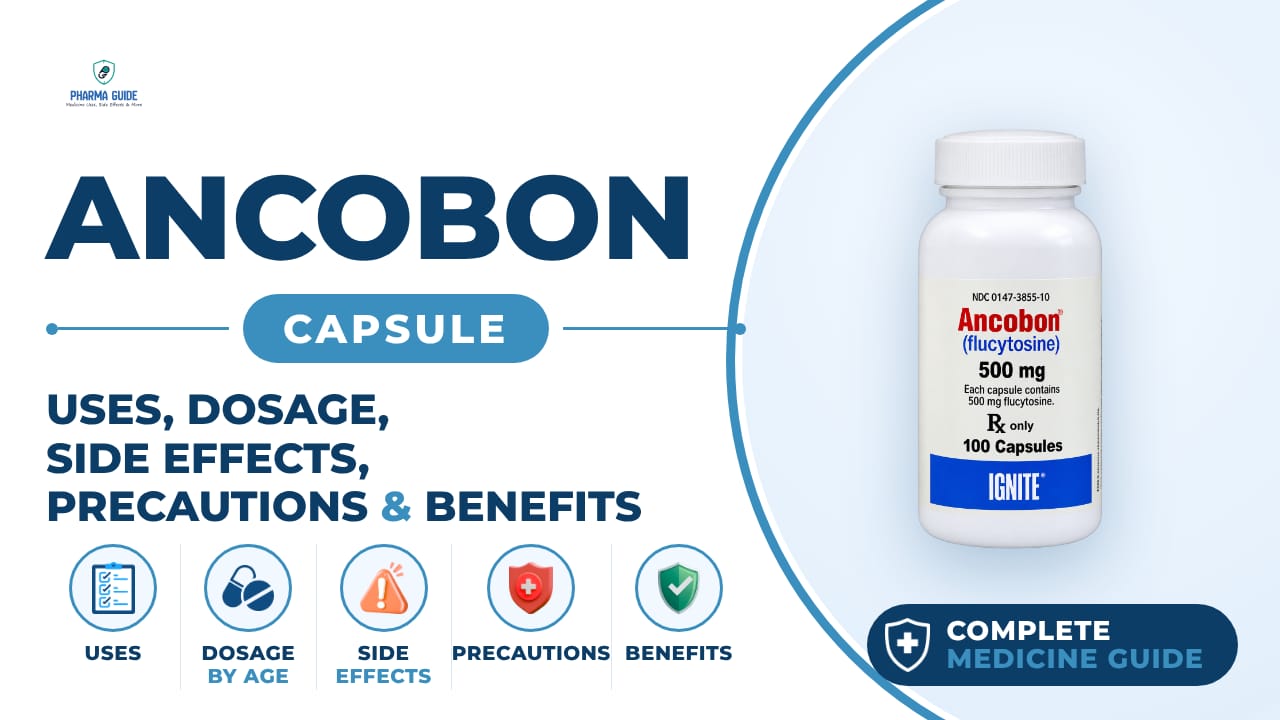
Ancobon Capsule: Uses, Dosage, Side Effects, Precautions and Alternates
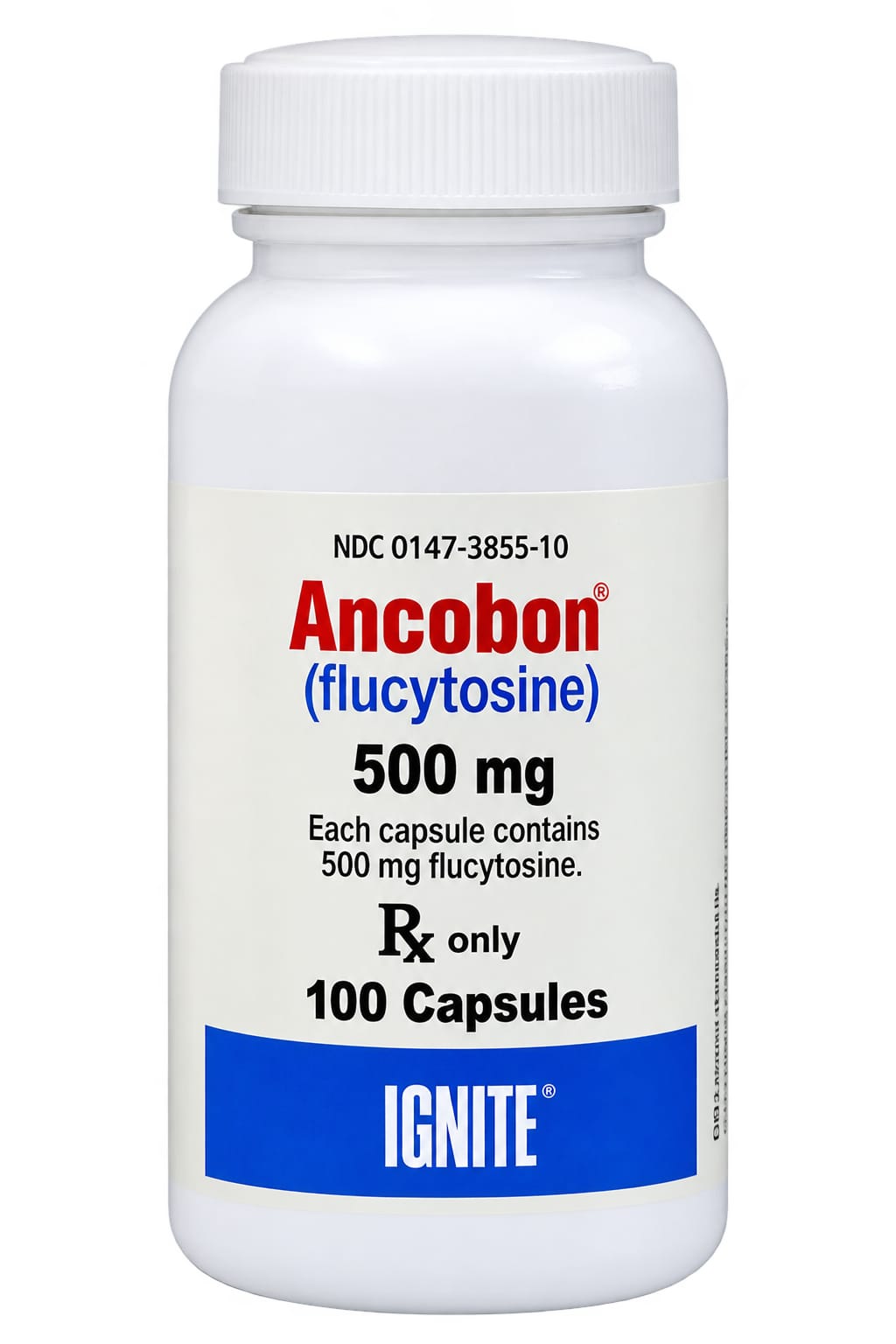
| Generic name | Flucytosine |
|---|---|
| Drug class | Antifungal (Antifungals, Systemic / Miscellaneous antifungals) |
| Forms | Capsule (250 mg and 500 mg) |
Quick overview
Ancobon Capsule contains flucytosine, a prescription antifungal medicine used to treat serious fungal infections caused by Candida or Cryptococcus. It is taken by mouth as a capsule and is often used together with amphotericin B. It requires careful monitoring of kidney, liver, and blood health during treatment.
What is Ancobon Capsule
Ancobon is a prescription antifungal medicine used to treat serious fungal infections caused by Candida or Cryptococcus. It comes as a capsule taken by mouth.
Ancobon Capsule uses
- Serious infections caused by Candida, such as blood infections, heart infections, and urinary tract infections
- Serious infections caused by Cryptococcus, such as meningitis and lung infections
- Serious fungal infections of the blood, lungs, heart, central nervous system, and urinary tract
Benefits of Ancobon Capsule
- Treats serious Candida infections.
- Helps treat Cryptococcus infections.
- Used in treatment of cryptococcal meningitis.
- Helps treat certain severe fungal infections.
- Works with other antifungal medicines to improve treatment.
How Ancobon Capsule works
Ancobon is absorbed by the fungus causing the infection. Once inside the fungal cells, it interferes with the fungal cell's chemistry and stops the fungus from growing and multiplying.
Ancobon Capsule dosage
Follow all directions on your prescription label and do not take more or less than recommended. Take each dose with a full glass of water. If you need to take several capsules at one time, swallow them one at a time over about 15 minutes to help prevent nausea and vomiting. Keep taking this medicine for the full length of time your doctor prescribes, even if you start to feel better, since stopping early can let the infection come back and become harder to treat. This medicine is usually given together with another medicine called amphotericin B. You may need frequent blood tests while taking this medicine. If you miss a dose, take it as soon as you remember, but skip it if it is almost time for your next dose — do not take extra medicine to make up for it.
Use exactly as prescribed by your doctor or pharmacist.
Available forms and strengths
- Capsule (250 mg and 500 mg)
Side effects of Ancobon Capsule
Common
- Nausea
- Vomiting
- Stomach pain
- Diarrhea
- Confusion
- Headache
- Loss of appetite
- Dry mouth
- Dizziness
- Drowsiness
- Numbness, tingling, or burning pain in hands or feet
- Skin rash
Serious
- Kidney failure or kidney problems (little or no urination, painful or difficult urination, swelling in feet or ankles, feeling tired or short of breath)
- Liver failure or liver problems (nausea, upper stomach pain, itching, tiredness, loss of appetite, dark urine, clay-colored stools, jaundice)
- Bone marrow damage (pale skin, easy bruising, unusual bleeding, sudden weakness or ill feeling, fever, chills, sore throat, mouth sores)
- Heart attack or heart problems (slow heart rate, weak pulse, fainting, slow breathing, chest pain)
- Allergic reactions (hives, difficulty breathing, swelling of face, lips, tongue, or throat)
- Gastrointestinal (GI) bleeding
- Confusion, hallucinations
- Seizures (convulsions)
- Hearing problems
- Low potassium (leg cramps, constipation, irregular heartbeats, fluttering in chest, increased thirst or urination, numbness or tingling, muscle weakness)
Warnings and precautions
- It is not known whether this medicine will harm an unborn baby. It should only be used during pregnancy if your doctor decides the benefits outweigh the possible risks, and it is not recommended during the first three months of pregnancy.
- It is not known if this medicine passes into breast milk. Because of the risk of serious side effects in a nursing baby, you and your doctor should decide whether you should stop breastfeeding or stop taking this medicine.
- This medicine must be used with extreme caution if you have kidney problems, since it is removed from the body by the kidneys and can build up to harmful levels if they aren't working well. Your doctor will need to monitor your kidney function and blood levels of the drug closely, and may need to lower your dose.
- This medicine can rarely cause serious, life-threatening liver damage. Your doctor will likely order blood tests before and during treatment to check your liver function.
- This medicine must be used with extreme caution in people with reduced kidney function, and close monitoring of blood, kidney, and liver function is essential for everyone taking it.
- This medicine can damage the bone marrow, which can reduce the body's production of blood cells. This can be life-threatening for people with weakened immune systems. It must be used with extreme caution in people with blood disorders or those who have had treatments that affect bone marrow.
- This medicine should not be used in people who are allergic to it, or in people who completely lack a certain enzyme (DPD) needed to break down one of the drug's breakdown products, as this increases the risk of severe toxicity.
- Taking this medicine alone (without amphotericin B) makes it more likely that the fungus will become resistant to treatment.
Storage
- Store at room temperature as stated on the package.
- Keep in a dry place, away from moisture.
- Protect from direct sunlight and heat.
- Keep the capsules in their original packaging.
- Keep out of reach of children.
When to see a doctor
- Get emergency help right away if you have signs of a severe allergic reaction, such as hives, trouble breathing, or swelling of your face, lips, tongue, or throat.
- Call your doctor right away if you have signs of kidney problems, such as little or no urination, painful urination, swelling in your feet or ankles, or feeling tired or short of breath.
- Call your doctor right away if you have signs of liver problems, such as nausea, upper stomach pain, itching, tiredness, loss of appetite, dark urine, clay-colored stools, or yellowing of the skin or eyes.
- Call your doctor right away if you have a slow heart rate, weak pulse, fainting, slow breathing, or chest pain.
- Call your doctor right away if you have confusion, hallucinations, or a seizure.
- Call your doctor right away if you notice pale skin, easy bruising, or unusual bleeding from your nose, mouth, or elsewhere, or if you have sudden weakness, fever, chills, sore throat, or mouth sores.
- If you think you've taken too much of this medicine, seek emergency medical help or contact a poison control center right away.
Alternatives
- Posaconazole
- Amphotericin B
- Flucytosine
Watch the video
FAQs
What is Ancobon Capsule used for?
Ancobon is used to treat serious fungal infections caused by Candida or Cryptococcus, including infections of the blood, heart, lungs, urinary tract, and central nervous system such as cryptococcal meningitis.
How does Ancobon Capsule work?
Ancobon is absorbed by the fungus causing the infection. Once inside the fungal cells, it interferes with the fungal cell's chemistry and stops the fungus from growing and multiplying.
Is Ancobon Capsule taken alone or with other medicines?
Ancobon is usually given together with another medicine called amphotericin B. Taking it alone makes it more likely that the fungus will become resistant to treatment.
What are the serious side effects of Ancobon Capsule?
Serious side effects include kidney or liver problems, bone marrow damage, heart problems, allergic reactions, GI bleeding, confusion or hallucinations, seizures, hearing problems, and low potassium.
What monitoring is needed while taking Ancobon Capsule?
Your doctor will need to monitor your kidney function, liver function, and blood levels of the drug closely, as frequent blood tests are often required during treatment.
General information, not medical advice
Your prescriber and the leaflet in your pack know your situation. This page does not.
- Follow your prescriber and the leaflet
- Don't start, stop, or change a dose on your own
- Doses and warnings differ by country and product
Sources
Video
Related medicines

Injectafer Injection: Uses, Dosage, Side Effects, Precautions and Alternates
Iron products
Injectafer (ferric carboxymaltose) treats iron deficiency anemia and heart failure-related iron deficiency via IV. Learn uses, dosage, side effects, and

Gliclazide Tablet: Uses, Dosage, Side Effects, Precautions and Alternates
Sulfonylurea (hypoglycemic/antidiabetic agent)
Gliclazide Tablet is a sulfonylurea for type 2 diabetes that boosts insulin release. Learn about dosage, side effects, warnings, and precautions.