
Safety
General information, not medical advice
Your prescriber and the leaflet in your pack know your situation. This page does not.
- Follow your prescriber and the leaflet
- Don't start, stop, or change a dose on your own
- Doses and warnings differ by country and product
Andexxa Injection: Uses, Dosage, Side Effects, Precautions and Alternates
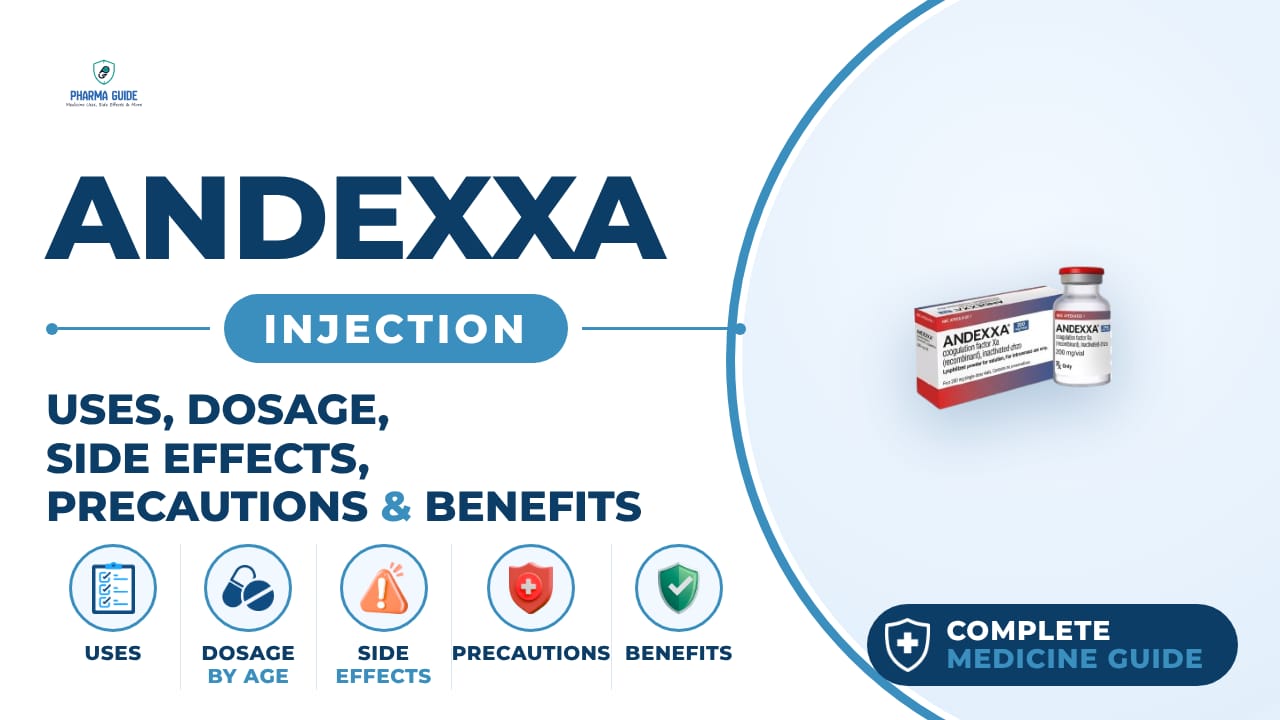
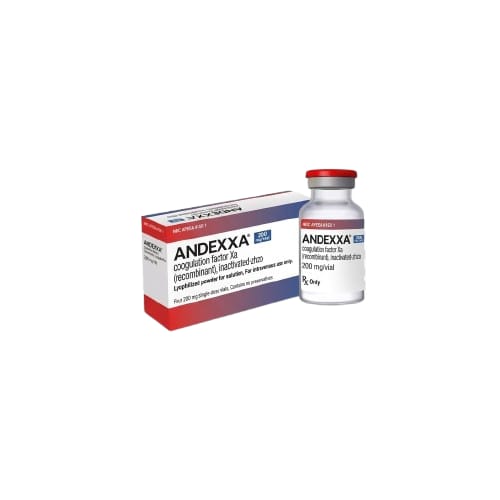
| Generic name | coagulation factor Xa (recombinant), inactivated-zhzo (andexanet alfa) |
|---|---|
| Drug class | Factor Xa Inhibitor Antidote |
| Forms | Injection |
Quick overview
Andexxa Injection (andexanet alfa) is a Factor Xa Inhibitor Antidote given through a vein in a hospital or clinic. It is used to quickly reverse the blood-thinning effects of rivaroxaban or apixaban in people with life-threatening or uncontrolled bleeding. It works by acting as a decoy that traps these blood thinners and by blocking a natural protein that helps the body increase clot-forming activity. Andexxa carries a boxed warning for serious and sometimes fatal blood clot and heart-related events.
What is Andexxa Injection
Andexxa is a recombinant (lab-made) protein that is given through a vein in a hospital or clinic. It is used to quickly reverse the blood-thinning effects of the medicines rivaroxaban or apixaban when a person has life-threatening or uncontrolled bleeding.
Andexxa Injection uses
- Reversing the anticoagulant (blood-thinning) effect of rivaroxaban or apixaban in people who have life-threatening or uncontrolled bleeding
Benefits of Andexxa Injection
- Helps control serious bleeding
- Helps restore the blood's ability to clot
- Used in emergency bleeding treatment
- May help with anticoagulant-related life-threatening bleeding
How Andexxa Injection works
Andexxa works by acting as a decoy that attaches to and traps the blood-thinning medicines rivaroxaban and apixaban, blocking their effect. It also binds to and blocks a natural protein called Tissue Factor Pathway Inhibitor, which helps the body increase clot-forming activity.
Andexxa Injection dosage
Andexxa is only given in a hospital or clinic by a doctor or nurse, through a vein. It is given first as a quick injection (bolus), followed by a longer infusion lasting up to two hours. Your doctor will decide the right amount based on which blood thinner you were taking, how much you took, and how long ago you took it. After treatment, your doctor will decide when it is safe to restart your blood-thinning medicine. Do not stop treatment with Andexxa unless you have discussed this with your doctor.
| Age group | Dose |
|---|---|
| Under 18 years | Not recommended |
| 18–64 years | 400 mg, once/day |
| 65+ years | 400 mg, once/day |
Available forms and strengths
- Injection
Side effects of Andexxa Injection
Common
- Urinary tract infection
- Pneumonia
- Infusion-related reactions (such as flushing, feeling hot, cough, altered taste, shortness of breath)
- Sweating or chills (fever)
- Nausea
Serious
- Hives, difficulty breathing, swelling of the face, lips, tongue or throat (allergic reaction)
- Sudden numbness or weakness, especially on one side of the body, or problems with vision or speech (stroke)
- Chest pain or pressure, pain spreading to jaw or shoulder, nausea, sweating (heart attack)
- Rapid or irregular heartbeat, loss of consciousness (cardiac arrest)
- Swelling, redness, or pain in an arm or leg, or sudden trouble breathing (blood clot)
- Continued bleeding after treatment
- Fever, chills, cough with mucus, pain or burning when urinating
Warnings and precautions
- Andexxa carries a boxed warning (the strongest FDA warning) because it has been linked to serious and sometimes fatal blood clot and heart-related events.
- Reversing the blood thinner's effect can raise your risk of dangerous blood clots, so your doctor will restart blood-thinning treatment as soon as it is safe to do so.
- The blood-thinning effect can return or not be fully reversed after treatment.
- Andexxa may stop heparin from working properly, so tell your doctor if you need heparin or urgent surgery.
- In December 2025, the FDA announced that Andexxa's risks, particularly an increased risk of blood clots, were found to outweigh its benefits, and the manufacturer agreed to stop selling it in the U.S. by the end of December 2025.
- It is not known whether Andexxa can harm an unborn baby. Tell your doctor if you are pregnant or planning to become pregnant.
- It is not known if Andexxa passes into breast milk, so breastfeeding is not recommended during treatment.
- Andexxa is used only for emergency hospital treatment.
- Risk of blood clots may increase.
- Andexxa is given only under the supervision of trained medical staff.
- Andexxa is not expected to affect your ability to drive or use machines, but be careful if you feel tired, dizzy, or have a headache.
Storage
- Unopened vials should be stored refrigerated at 2°C to 8°C (36°F to 46°F)
- Do not freeze
- Protect from light
- Andexxa will be stored by your healthcare providers at the hospital or clinic where you receive treatment
When to see a doctor
- Call your doctor right away or go to the emergency department if you notice sudden numbness or weakness on one side of your body, vision or speech problems, chest pain or pressure spreading to the jaw or shoulder, a rapid or irregular heartbeat, loss of consciousness, or swelling, color change, or trouble breathing in an arm or leg.
- Call your doctor right away if you have signs of a serious allergic reaction, such as swelling of the face, tongue, or mouth, trouble breathing, or feeling faint, dizzy, or lightheaded.
- Tell your doctor right away if you have a sudden or severe headache, problems with vision or speech, chest pain, shortness of breath, or numbness or weakness, since these can be signs of a stroke or heart attack within 30 days of treatment.
Alternatives
- Vitamin K
- Kcentra
- Praxbind
Watch the video
FAQs
What is Andexxa Injection used for?
Andexxa is used to quickly reverse the blood-thinning effects of rivaroxaban or apixaban in people with life-threatening or uncontrolled bleeding.
How does Andexxa work?
Andexxa acts as a decoy that attaches to and traps rivaroxaban and apixaban, blocking their effect. It also binds to and blocks Tissue Factor Pathway Inhibitor, a natural protein that helps the body increase clot-forming activity.
How is Andexxa given?
Andexxa is given only in a hospital or clinic by a doctor or nurse through a vein, first as a quick bolus injection followed by a longer infusion lasting up to two hours.
What is the boxed warning for Andexxa?
Andexxa carries a boxed warning because it has been linked to serious and sometimes fatal blood clot and heart-related events, since reversing the blood thinner can raise the risk of dangerous clots.
Is Andexxa still available in the U.S.?
In December 2025, the FDA announced that Andexxa's risks, particularly an increased risk of blood clots, outweighed its benefits, and the manufacturer agreed to stop selling it in the U.S. by the end of December 2025.
General information, not medical advice
Your prescriber and the leaflet in your pack know your situation. This page does not.
- Follow your prescriber and the leaflet
- Don't start, stop, or change a dose on your own
- Doses and warnings differ by country and product
Sources
Video
Related medicines

Injectafer Injection: Uses, Dosage, Side Effects, Precautions and Alternates
Iron products
Injectafer (ferric carboxymaltose) treats iron deficiency anemia and heart failure-related iron deficiency via IV. Learn uses, dosage, side effects, and

Gliclazide Tablet: Uses, Dosage, Side Effects, Precautions and Alternates
Sulfonylurea (hypoglycemic/antidiabetic agent)
Gliclazide Tablet is a sulfonylurea for type 2 diabetes that boosts insulin release. Learn about dosage, side effects, warnings, and precautions.