
Safety
General information, not medical advice
Your prescriber and the leaflet in your pack know your situation. This page does not.
- Follow your prescriber and the leaflet
- Don't start, stop, or change a dose on your own
- Doses and warnings differ by country and product
Angiomax Injection: Uses, Dosage, Side Effects, Precautions and Alternates
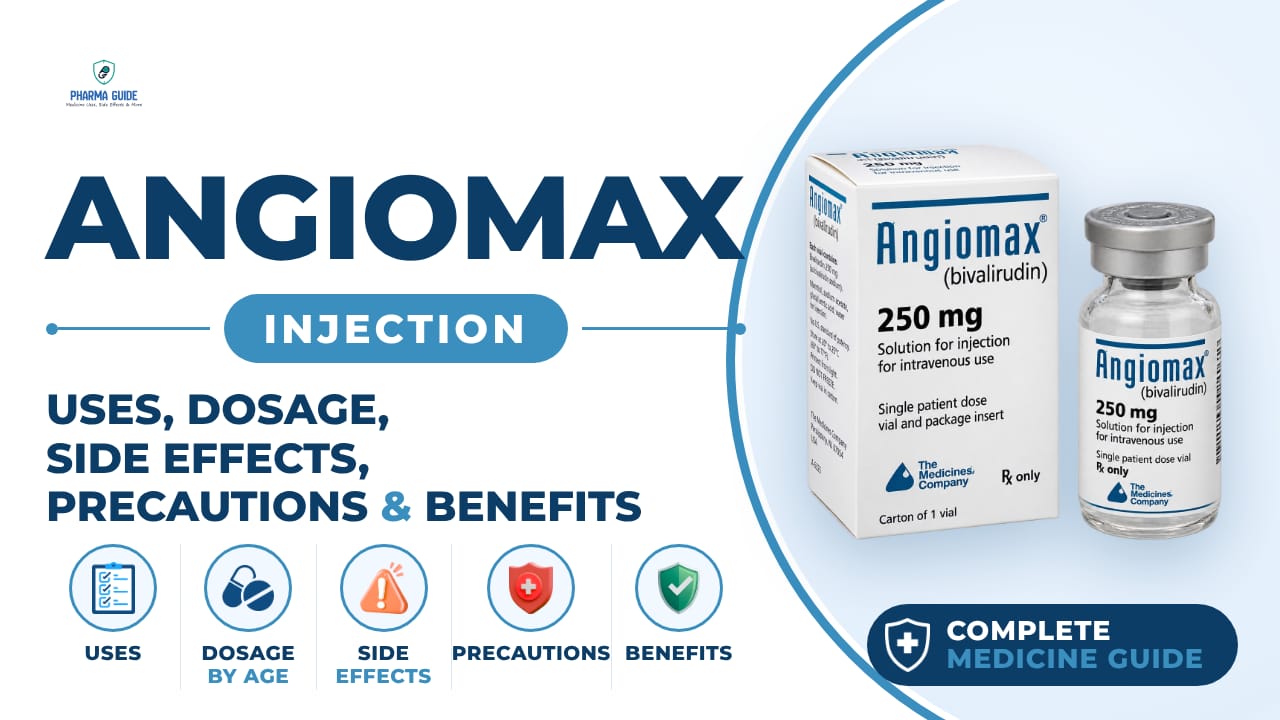
| Generic name | bivalirudin |
|---|---|
| Drug class | Anticoagulants, Cardiovascular (Direct Thrombin Inhibitor) |
| Forms | Injection |
Quick overview
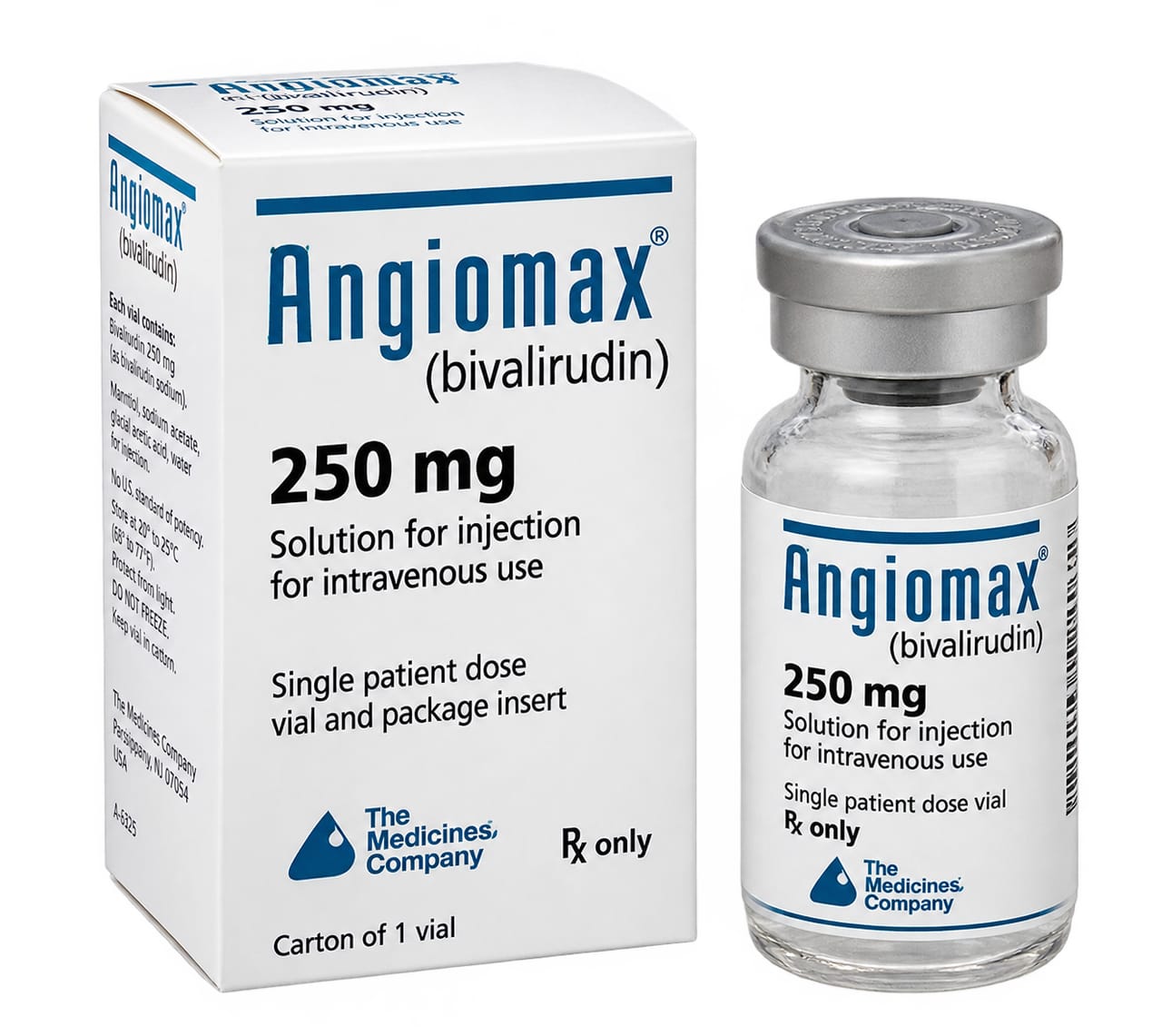
Angiomax Injection contains bivalirudin, a direct thrombin inhibitor from the anticoagulant class used in cardiovascular care. It is given through a vein to help prevent blood clots during procedures such as angioplasty (PCI) and heart surgery. It is often used together with aspirin, and sometimes clopidogrel, and is administered only by trained healthcare professionals in a hospital or clinic setting.
What is Angiomax Injection
Angiomax is a medicine given through a vein that helps stop blood from clotting. It is a reversible direct thrombin inhibitor, meaning it blocks a substance in the blood called thrombin that causes clots to form. It is given only by a trained healthcare professional through an intravenous line in a hospital or clinic setting, typically as an initial injection (bolus) followed by a continuous infusion for the length of the procedure. Your doctor may continue a lower-dose infusion for some time after the procedure if needed.
Angiomax Injection uses
- Preventing blood clots in people having a procedure called angioplasty (PCI) to open blocked heart arteries
- Used in people with severe chest pain (unstable angina) or heart attack having PCI
- Used in people with or at risk of heparin-induced thrombocytopenia (HIT) or HIT with thrombosis syndrome who need PCI or heart surgery
- Used with aspirin, and sometimes clopidogrel, during these procedures
Benefits of Angiomax Injection
- Helps prevent blood clots from forming during and after procedures like angioplasty or heart surgery
- May cause less major bleeding than heparin-based treatment in some studies
How Angiomax Injection works
Angiomax works by directly attaching to thrombin, a substance in the blood that helps clots form. By blocking thrombin, it stops it from turning fibrinogen into fibrin, which is needed to build and stabilize a blood clot. This blocking effect wears off over time as the body breaks down the drug.
Angiomax Injection dosage
Use exactly as prescribed by your doctor or pharmacist.
Available forms and strengths
- Injection
Side effects of Angiomax Injection
Common
- Back or pelvic pain
- Nausea
- Vomiting
- Stomach pain or upset
- Restlessness, nervousness, or anxiety
- Headache
- Fever
- Trouble sleeping (insomnia)
- Pain, bleeding, or irritation where the injection was given
- Low blood pressure
- Bruising or hematoma (localized swelling filled with blood)
Serious
- Signs of internal bleeding: coughing up blood, vomit that looks like coffee grounds, black or bloody stools, pink or red urine
- Sudden vision loss, blurred vision, eye pain or swelling, or seeing halos around lights
- Fast, irregular, or pounding heartbeats; fluttering in the chest; shortness of breath; sudden dizziness or passing out
- Severe headache, confusion, slurred speech, arm or leg weakness, trouble walking, loss of coordination, very stiff muscles, high fever, profuse sweating, or tremors
- Signs of an allergic reaction: hives, difficulty breathing, swelling of face, lips, tongue, or throat
- Uncontrolled bleeding that will not stop
- Stroke
- Blood clot formation (thrombosis), which can be serious or fatal
Warnings and precautions
- This medicine should not be injected into a muscle.
- There is no specific reversal agent (antidote) for this medicine if bleeding becomes a problem, although the drug can be removed from the blood by dialysis.
- This medicine is not recommended for use during a radiation treatment procedure called brachytherapy because of an increased risk of blood clots, including some that were fatal.
- Blood clots in the stent can form suddenly, especially within the first hours to days after the procedure, in people having primary PCI for a severe heart attack (STEMI). Patients need to be watched closely in a hospital for at least 24 hours afterward.
- This medicine should not be used in people with active major bleeding or who are allergic to it or its ingredients.
- Using this medicine together with other blood thinners such as heparin, warfarin, or clot-dissolving drugs increases the risk of major bleeding.
- This medicine should only be used under the supervision of trained medical staff in a hospital setting.
- Blood clotting and bleeding must be monitored during the injection.
- Tell your doctor if you are pregnant or planning to become pregnant. This medicine is usually given with aspirin, which can increase bleeding risk late in pregnancy and may affect a newborn baby. Angiomax should only be used in pregnancy if clearly needed.
- It is not known if this medicine passes into breast milk. Talk to your doctor before breastfeeding while receiving this medicine.
- People with reduced kidney function may need a lower infusion dose, and their anticoagulant status should be checked more often. People on dialysis need an even lower infusion dose. Inform your medical team if you have kidney problems.
Storage
- Store Angiomax dosage units at controlled room temperature (15 to 25°C or 20 to 25°C depending on product)
- Do not freeze
- After mixing with water, the reconstituted solution may be stored in a refrigerator (2 to 8°C) for up to 24 hours
- Once further diluted, the solution is stable at room temperature for up to 24 hours
- Do not freeze reconstituted or diluted solution
- Discard any unused portion of reconstituted solution remaining in the vial
When to see a doctor
- Get emergency help right away if you have signs of a severe allergic reaction, such as hives, trouble breathing, or swelling of your face, lips, tongue, or throat.
- Tell your healthcare team right away about a light-headed feeling like you might pass out, easy bruising or bleeding, bloody or tarry stools, coughing up blood or vomit that looks like coffee grounds, sudden numbness or weakness, problems with vision or speech, red/pink/brown urine, swelling or redness in an arm or leg, or any bleeding that won't stop.
- Talk to your doctor immediately if you are concerned about your risk for bleeding or notice early signs such as nose or gum bleeds, blood in urine or stool, easy bruising, or a rash of small round red spots under the skin.
Alternatives
- Enoxaparin
- Heparin
- Bivalirudin
Watch the video
FAQs
What is Angiomax Injection used for?
It is used to prevent blood clots in people having angioplasty (PCI), including those with unstable angina, heart attack, or heparin-induced thrombocytopenia (HIT), and is often given with aspirin and sometimes clopidogrel.
How does Angiomax Injection work?
It directly attaches to thrombin, a substance in the blood that helps clots form, blocking it from turning fibrinogen into fibrin, which is needed to build and stabilize a blood clot.
What are the common side effects of Angiomax Injection?
Common side effects include back or pelvic pain, nausea, vomiting, stomach upset, nervousness, headache, fever, insomnia, injection site pain or bleeding, low blood pressure, and bruising.
Is there an antidote for Angiomax Injection if bleeding occurs?
No, there is no specific reversal agent for this medicine if bleeding becomes a problem, although the drug can be removed from the blood by dialysis.
Can Angiomax Injection be used during pregnancy?
It should only be used in pregnancy if clearly needed, since it is usually given with aspirin, which can increase bleeding risk late in pregnancy and may affect a newborn baby.
General information, not medical advice
Your prescriber and the leaflet in your pack know your situation. This page does not.
- Follow your prescriber and the leaflet
- Don't start, stop, or change a dose on your own
- Doses and warnings differ by country and product
Sources
Video
Related medicines

Injectafer Injection: Uses, Dosage, Side Effects, Precautions and Alternates
Iron products
Injectafer (ferric carboxymaltose) treats iron deficiency anemia and heart failure-related iron deficiency via IV. Learn uses, dosage, side effects, and

Gliclazide Tablet: Uses, Dosage, Side Effects, Precautions and Alternates
Sulfonylurea (hypoglycemic/antidiabetic agent)
Gliclazide Tablet is a sulfonylurea for type 2 diabetes that boosts insulin release. Learn about dosage, side effects, warnings, and precautions.