
Safety
General information, not medical advice
Your prescriber and the leaflet in your pack know your situation. This page does not.
- Follow your prescriber and the leaflet
- Don't start, stop, or change a dose on your own
- Doses and warnings differ by country and product
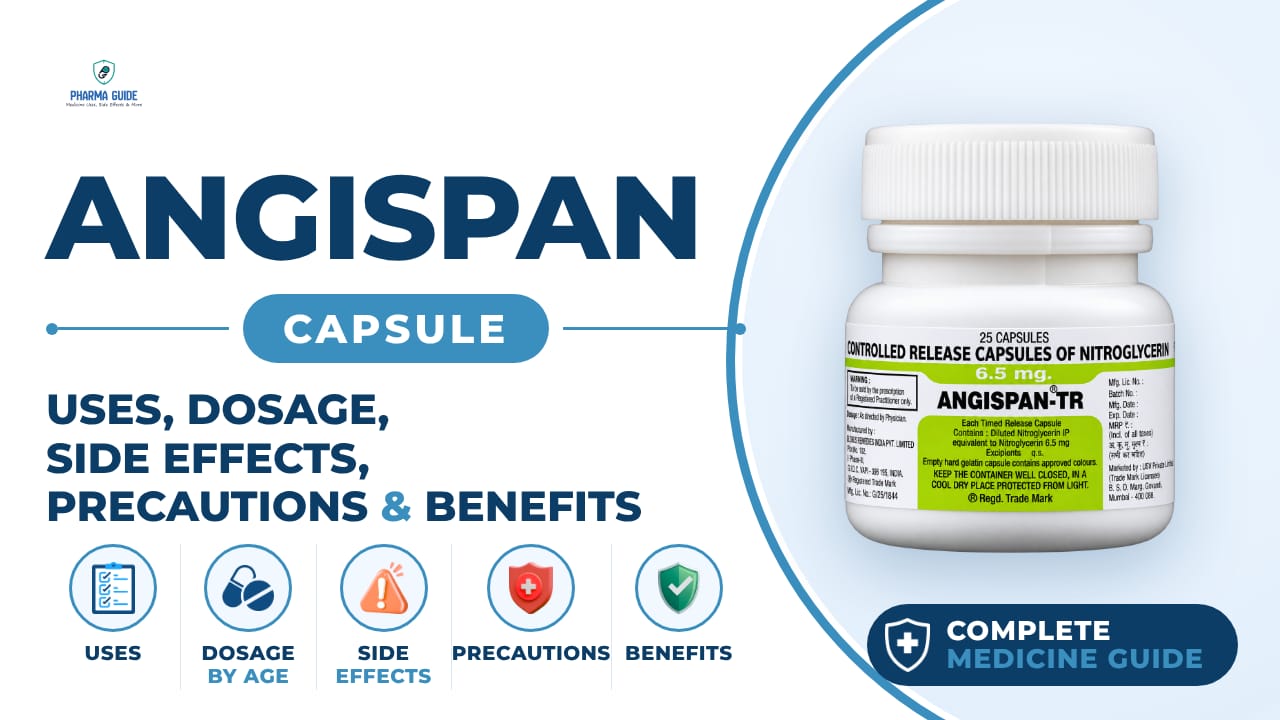
Angispan Capsule: Uses, Dosage, Side Effects, Precautions and Alternates
| Generic name | Glyceryl Trinitrate (Nitroglycerin) |
|---|---|
| Drug class | Vasodilator / Antianginal |
| Forms | Capsule |
Quick overview
Angispan Capsule contains glyceryl trinitrate (nitroglycerin), a vasodilator and antianginal medicine. It is used to prevent and relieve angina, a type of chest pain caused by reduced blood flow to the heart. It works by relaxing blood vessels to improve blood flow and reduce the heart's workload. It is a prescription medicine, and the dose must be individualized by a doctor.
What is Angispan Capsule
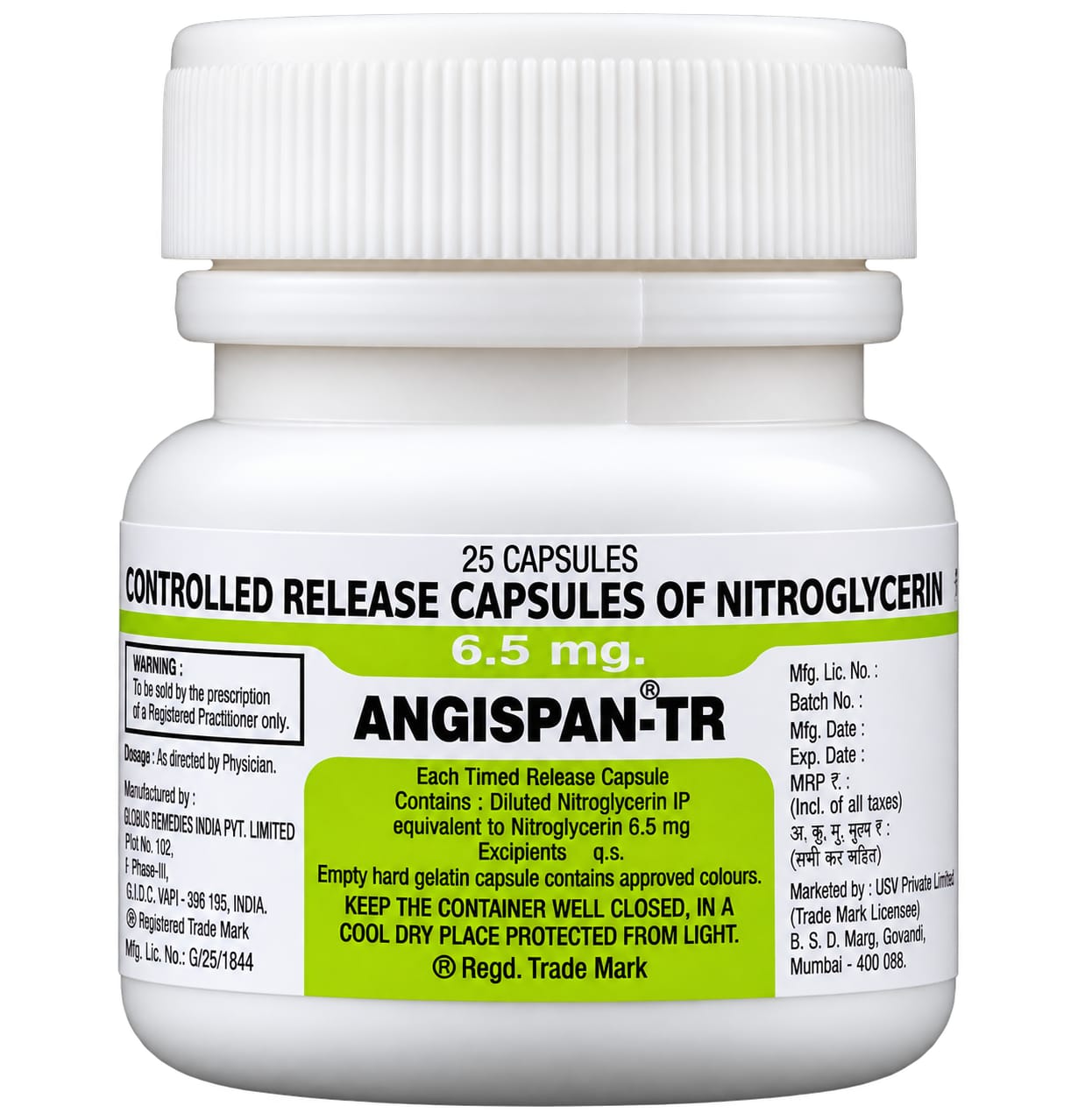
Angispan is a prescription capsule medicine that contains glyceryl trinitrate (nitroglycerin). It is used to prevent and relieve angina, which is chest pain caused by reduced blood flow to the heart.
Angispan Capsule uses
- Prevent and relieve episodes of chest pain (angina pectoris) caused by reduced blood flow to the heart
- Reduce how often future angina episodes happen with regular use
- Help the heart work with less effort so people can tolerate physical activity better
- Anal fissure (secondary/off-label use mentioned in one source)
Benefits of Angispan Capsule
- Angina Prevention: Helps prevent heart-related chest pain.
- Blood Vessel Relaxation: Widens blood vessels, improving blood flow.
- Heart Workload Reduction: Reduces the amount of work required by the heart.
- Chest Pain Support: Helps reduce episodes of angina when used as prescribed.
How Angispan Capsule works
The medicine releases nitric oxide in the body, which relaxes and widens the smooth muscles of blood vessels. This improves blood flow to the heart muscle and reduces the oxygen the heart needs, which relieves chest pain and can also lower blood pressure.
Angispan Capsule dosage
Swallow the capsule whole with a full glass of water; do not crush, chew, or break it. It can be taken with or without food, as advised by your doctor. Take it at the same time each day and keep taking it for as long as your doctor recommends, even if you feel well, since it works to prevent future episodes rather than treat an ongoing attack. Do not stop taking it suddenly without talking to your doctor, as this can trigger a severe angina attack or withdrawal symptoms. If you miss a dose, take it as soon as you remember; if it is almost time for the next dose, skip the missed one and continue your normal schedule instead of doubling up. Avoid standing up suddenly, since this medicine can occasionally cause light-headedness. It is not recommended for use in children.
| Age group | Dose |
|---|---|
| Under 18 Years | Use only under specialist medical supervision |
| 18–64 Years | Dose must be individualized by a doctor according to the condition and strength |
| Older Adults (65+ Years) | Dose individualized by a doctor, considering blood pressure and other health conditions |
Available forms and strengths
Capsule
Side effects of Angispan Capsule
Common
- Headache (throbbing or persistent)
- Dizziness or spinning sensation
- Weakness or lack of energy
- Drowsiness or sleepiness
- Increased heart rate
- Flushing (redness of face and neck)
- Nausea or vomiting
- Heartburn
- Restlessness
Serious
- Severe allergic reaction with rash, itching or swelling of the face, tongue or throat, severe dizziness, and breathing difficulty
- Withdrawal symptoms such as anxiety, fatigue, sweating, vomiting, depression, seizures and hallucinations if the medicine is stopped suddenly
- Signs of methemoglobinemia, a blood disorder that lowers oxygen reaching tissues, such as blue-coloured skin, headache and fatigue
- Severe drop in blood pressure, especially if combined with alcohol or erectile dysfunction medicines
Warnings and precautions
- Do not take this medicine if you have anemia, as it can worsen the condition by affecting how your blood carries oxygen.
- Do not take this medicine if you have glaucoma, as it may increase pressure inside the eyes and potentially lead to blindness.
- Do not combine this medicine with erectile dysfunction drugs like sildenafil, as they work in opposite ways and the combination can be dangerous.
- Do not stop this medicine suddenly; stopping abruptly can cause withdrawal symptoms or trigger a severe angina attack.
- This medicine should not be used for chest pain caused by other heart conditions like an enlarged heart muscle, as it can worsen the condition.
- Regular use can lead to the body getting used to the medicine (tolerance); a gap of at least 12 hours between doses of nitrate medicines is recommended.
- Avoid this medicine if you are malnourished, as it is not recommended in this condition.
- Should not be taken by people with low blood pressure, aortic stenosis, or anemia unless specifically advised by a doctor.
- The effect of this medicine in pregnancy is not well studied. Use only with caution and after talking to your doctor.
- It is not known whether this medicine passes into breast milk, so breastfeeding mothers should use it only with caution and medical advice.
- People with kidney disease should use this medicine with caution and consult their doctor for guidance.
- People with liver disease should use this medicine with caution and consult their doctor for advice.
- Avoid alcohol while taking this medicine, as it can increase the risk of a severe drop in blood pressure, dizziness, and breathing difficulty.
- Do not drive or operate heavy machinery if you feel dizzy or drowsy after taking this medicine.
Storage
- Store below 30°C (one source says below 25°C)
- Protect it from light and moisture by keeping it in a tightly closed container
- Keep the medicine out of reach of children
- Use before the expiry date on the packaging
When to see a doctor
- Get medical help right away if you notice signs of a severe allergic reaction, such as rash, itching, swelling of the face/tongue/throat, severe dizziness, or trouble breathing.
- Seek immediate medical attention if you take too much of this medicine and experience severe headache, dizziness, or very low blood pressure.
- Talk to your doctor if your chest pain does not ease with rest or gets worse.
- Contact your doctor if you notice symptoms like confusion, fever, changes in heartbeat, nausea, or vomiting, which can indicate an overdose.
Alternatives
- Other prescribed nitrate medicines containing nitroglycerin
- Isosorbide mononitrate
- Isosorbide dinitrate
Watch the video
FAQs
What is Angispan Capsule used for?
It is used to prevent and relieve episodes of angina (chest pain caused by reduced blood flow to the heart) and helps the heart work with less effort so physical activity is better tolerated.
How does Angispan Capsule work?
It releases nitric oxide in the body, which relaxes and widens blood vessels. This improves blood flow to the heart muscle and reduces the oxygen the heart needs, relieving chest pain and lowering blood pressure.
How should Angispan Capsule be taken?
Swallow the capsule whole with a full glass of water without crushing, chewing, or breaking it, at the same time each day, with or without food as advised by your doctor. Do not stop suddenly without consulting your doctor.
What are the common side effects of Angispan Capsule?
Common side effects include headache, dizziness, weakness, drowsiness, increased heart rate, flushing, nausea or vomiting, heartburn, and restlessness.
Can Angispan Capsule be taken with erectile dysfunction medicines?
No, it should not be combined with erectile dysfunction drugs like sildenafil, as they work in opposite ways and the combination can cause a severe drop in blood pressure.
General information, not medical advice
Your prescriber and the leaflet in your pack know your situation. This page does not.
- Follow your prescriber and the leaflet
- Don't start, stop, or change a dose on your own
- Doses and warnings differ by country and product
Sources
- US Food and Drug Administration (FDA). Package leaflet information for the user; Nitrostat (Nitroglycerin Sublingual)
- KD Tripathi. Seventh Edition. New Delhi, India: Jaypee Brothers Medical Publishers; 2013: Page No 540
- U. S. Food and Drug Administration. (2011). HIGHLIGHTS OF PRESCRIBING INFORMATION
- Drugs and Lactation Database. (2006). Nitroglycerin - LactMed - NCBI Bookshelf
- Katzung, B. G., & Chatterjee, K. (2009). Vasodilator & the Treatment of Angina Pectoris. Basic and Clinical Pharmacology (11th ed.)
- Page, D. P., et al. (1975). Stability study of nitroglycerin sublingual tablets. Journal of pharmaceutical sciences
- Winsor, T., & Berger, H. J. (1975). Oral nitroglycerin as a prophylactic antianginal drug. American heart journal
- National Library of Medicine. Nitroglycerin sublingual. MedlinePlus
- Central Drugs Standard Control Organisation (CDSCO). New Drugs Approved by CDSCO
- Goodhart, F. W., et al. (1976). Stabilized compressed nitroglycerin tablets. Journal of Pharmaceutical Sciences
- Bhatt, H. R., et al. (1989). Controlled release nitroglycerin capsules. Journal of controlled release
- Pubchem.ncbi.nlm.nih.gov. Nitroglycerin
- Dailymed.nlm.nih.gov. NITROGLYCERIN ER - nitroglycerin capsule
Video
Related medicines

Injectafer Injection: Uses, Dosage, Side Effects, Precautions and Alternates
Iron products
Injectafer (ferric carboxymaltose) treats iron deficiency anemia and heart failure-related iron deficiency via IV. Learn uses, dosage, side effects, and

Gliclazide Tablet: Uses, Dosage, Side Effects, Precautions and Alternates
Sulfonylurea (hypoglycemic/antidiabetic agent)
Gliclazide Tablet is a sulfonylurea for type 2 diabetes that boosts insulin release. Learn about dosage, side effects, warnings, and precautions.