
Safety
General information, not medical advice
Your prescriber and the leaflet in your pack know your situation. This page does not.
- Follow your prescriber and the leaflet
- Don't start, stop, or change a dose on your own
- Doses and warnings differ by country and product
Anidulafungin Injection: Uses, Dosage, Side Effects, Precautions and Alternates
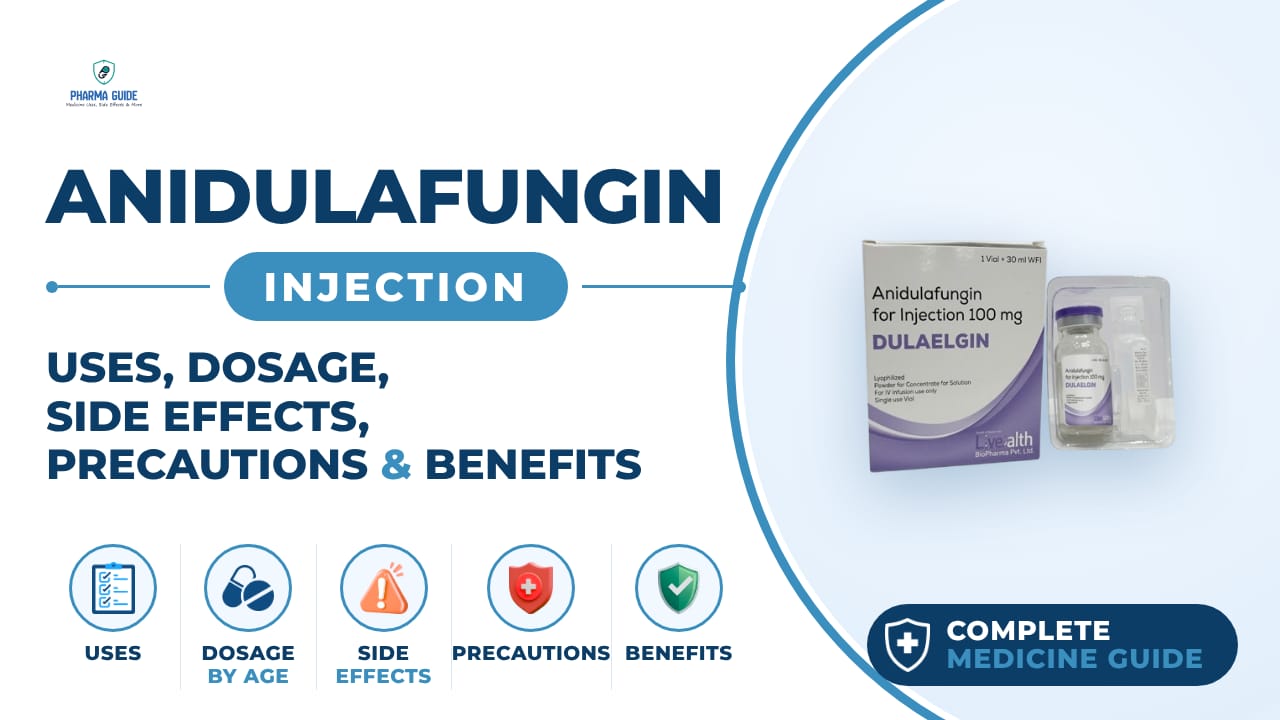
| Generic name | Anidulafungin |
|---|---|
| Drug class | Echinocandin antifungal |
| Forms | Injection |
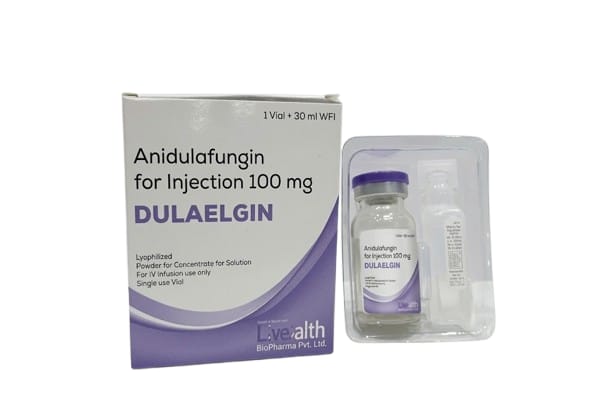
Quick overview
Anidulafungin Injection (generic name: anidulafungin) is an echinocandin antifungal medicine given through a vein (IV). It is used to treat serious fungal infections caused by Candida yeast, including infections of the blood, abdomen, and esophagus. It works by breaking down the fungal cell wall, leading to fungal cell death, and is typically given once daily by a healthcare provider.
What is Anidulafungin Injection
Anidulafungin is an antifungal medicine given through a vein (IV). It belongs to a group of medicines called echinocandins and is used to treat serious fungal infections caused by Candida yeast.
Anidulafungin Injection uses
- Treatment of candidemia (Candida infection in the blood)
- Treatment of invasive candidiasis, including intra-abdominal abscess and peritonitis
- Treatment of esophageal candidiasis (Candida infection of the esophagus)
- Treatment of candida infections of the blood or stomach in adults and children at least 1 month old
Benefits of Anidulafungin Injection
- Active against most species of Candida with rare resistance
- Fungicidal (kills fungal cells) rather than just stopping growth
- Does not require dose adjustment for liver or kidney problems
- Can be used in patients who cannot take oral antifungal therapy
- Once-daily dosing supports patient convenience
How Anidulafungin Injection works
Anidulafungin blocks an enzyme called glucan synthase, which fungal cells need to build their cell wall. Without this enzyme working properly, the fungal cell wall breaks down and the fungal cells die. This enzyme is found in fungi but not in human cells, so it specifically targets the fungus.
Anidulafungin Injection dosage
Anidulafungin is given as an infusion into a vein by a healthcare provider; it should not be self-administered. It must be mixed with a diluent and further diluted before use, and should not be mixed with other medicines or solutions. The infusion must be given slowly, and it generally takes at least 45 minutes to 3 hours to complete. Do not use the solution if it has changed color or has particles in it.
Treatment is usually continued for a period of time after symptoms clear up or after lab tests show the infection has cleared, as directed by your doctor. Use for the full length of time prescribed, even after you feel better. You may need frequent blood tests to check liver function during treatment. After treatment for esophageal candidiasis, your doctor may prescribe additional antifungal medicine to prevent the infection from returning.
| Age group | Dose |
|---|---|
| Under 18 years | Not recommended |
| 18–64 years | 100 mg, once/day |
| 65+ years | 100 mg, once/day |
Available forms and strengths
- Injection
Side effects of Anidulafungin Injection
Common
- Low blood potassium (hypokalemia)
- Diarrhea
- Nausea and vomiting
- Headache
- Abnormal liver function tests
- Low blood sugar
- Sore or white patches in mouth or throat
- Low blood pressure, feeling light-headed
- Anemia, bruising or bleeding, nosebleed
- Fever
- Stomach pain, indigestion
- Trouble sleeping
- Rash
- Injection site reactions like pain, swelling, or redness
Serious
- Signs of an allergic reaction: hives, difficulty breathing, swelling of face, lips, tongue, or throat
- Anaphylactic reactions, including shock
- Trouble breathing, light-headed feeling like you might pass out
- Little or no urination, dark urine, pain or burning when urinating
- Stomach pain and bloating
- Easy bruising, unusual bleeding, purple or red spots under the skin
- Severe low potassium: leg cramps, constipation, irregular heartbeats, fluttering in chest, increased thirst or urination, numbness or tingling, muscle weakness
- Low red blood cells (anemia): pale skin, unusual tiredness, cold hands and feet
- In a baby: severe drowsiness, fussiness, feeding problems, or vomiting
- Seizures (convulsions)
- Liver dysfunction, hepatitis, or hepatic failure (rare)
- Infusion-related reactions possibly caused by histamine release: rash, hives, flushing, itching, wheezing, difficulty breathing, low blood pressure
Warnings and precautions
- Serious allergic (anaphylactic) reactions, including shock, have happened with this medicine. If this occurs, the medicine must be stopped and treated right away.
- Reactions related to the infusion itself, possibly caused by histamine release, can occur, including rash, hives, flushing, itching, wheezing, trouble breathing, and low blood pressure. Giving the infusion too fast increases this risk.
- Liver problems, including serious liver dysfunction, hepatitis, or liver failure, have been reported in some patients, although it isn't proven that the medicine caused them. Liver tests should be monitored.
- This medicine contains fructose and can cause a dangerous metabolic crisis, including life-threatening low blood sugar, in people with hereditary fructose intolerance (HFI).
- This medicine should not be used by people who are allergic to it, its ingredients, or other echinocandin antifungals, or by people with known or suspected hereditary fructose intolerance.
- Anidulafungin is not recommended during pregnancy because animal studies showed it may harm the developing baby. There isn't enough information on its use in pregnant women. Tell your doctor if you are pregnant or think you might be pregnant.
- It is not known if anidulafungin passes into human breast milk or how it might affect a nursing baby. Talk to your doctor about the benefits of breastfeeding compared with your need for this medicine.
- No dose changes are needed for people with kidney problems, including those on dialysis, because the medicine is barely removed by the kidneys or by dialysis.
- No dose changes are generally needed for any degree of liver problems, but your doctor may watch your liver function closely during treatment, since liver test changes and rare serious liver problems have been reported.
- It isn't known how alcohol interacts with this medicine. Check with your doctor before drinking alcohol during treatment.
- No studies have looked at whether this medicine affects your ability to drive or use machines.
Storage
- Store unused vials in a refrigerator at 2°C to 8°C (36°F to 46°F). Do not freeze.
- Excursions for 96 hours up to 25°C (77°F) are permitted, and the vial can be returned to refrigerator storage.
- After mixing with diluent, the vial can be kept at room temperature for up to 24 hours before further dilution.
- The final diluted infusion solution can be stored at temperatures up to 25°C (77°F) for up to 48 hours. Do not freeze.
- Each vial is for one use only; throw it away after use even if medicine remains inside.
- Use a needle and syringe only once, then place them in a puncture-proof sharps container and dispose of according to local rules, keeping it out of reach of children and pets.
When to see a doctor
- Get emergency help right away if you have signs of a serious allergic reaction, such as hives, difficulty breathing, or swelling of your face, lips, tongue, or throat.
- Tell your caregiver right away if, during the infusion, you feel light-headed, itchy, warm, tingly, sweaty, or have chest tightness or trouble breathing.
- Call your doctor right away if you have a light-headed feeling like you might pass out, trouble breathing, little or no urination, dark urine, pain or burning when urinating, stomach pain and bloating, easy bruising, unusual bleeding, or purple/red spots under the skin.
- Contact your physician immediately if you notice symptoms like shortness of breath, breathing difficulties, lightheadedness, or dizziness during treatment.
- If you suspect an overdose, seek emergency medical attention or contact your local poison control center for guidance.
Alternatives
- Voriconazole
- Amphotericin B
- Caspofungin
Watch the video
FAQs
What is Anidulafungin Injection used for?
It treats serious Candida infections including candidemia (blood infection), invasive candidiasis such as intra-abdominal abscess and peritonitis, and esophageal candidiasis, in adults and children at least 1 month old.
How is Anidulafungin Injection given?
It is given as a slow IV infusion by a healthcare provider, usually once daily, taking at least 45 minutes to 3 hours to complete. It should not be self-administered.
Does Anidulafungin Injection require dose adjustments for kidney or liver problems?
No dose changes are needed for kidney problems, including dialysis patients, or for any degree of liver problems, since the medicine is barely removed by the kidneys or dialysis, though liver function may still be monitored.
What are common side effects of Anidulafungin Injection?
Common side effects include low blood potassium, diarrhea, nausea and vomiting, headache, abnormal liver function tests, low blood sugar, low blood pressure, anemia, fever, stomach pain, trouble sleeping, rash, and injection site reactions.
Can Anidulafungin Injection be used during pregnancy?
It is not recommended during pregnancy because animal studies showed it may harm the developing baby, and there isn't enough information on its use in pregnant women.
General information, not medical advice
Your prescriber and the leaflet in your pack know your situation. This page does not.
- Follow your prescriber and the leaflet
- Don't start, stop, or change a dose on your own
- Doses and warnings differ by country and product
Sources
Video
Related medicines
Micafungin Injection: Uses, Dosage, Side Effects, Precautions and Alternates
Echinocandin antifungal
Micafungin Injection is an antifungal medicine used to treat Candida infections and prevent them in stem cell transplant patients. Learn dosage, side effects,
Cancidas Injection: Uses, Dosage, Side Effects, Precautions and Alternates
Echinocandin antifungal
Cancidas Injection (caspofungin) is an IV antifungal for serious Candida and Aspergillus infections. Learn its uses, dosage, side effects, and precautions.