
Safety
General information, not medical advice
Your prescriber and the leaflet in your pack know your situation. This page does not.
- Follow your prescriber and the leaflet
- Don't start, stop, or change a dose on your own
- Doses and warnings differ by country and product
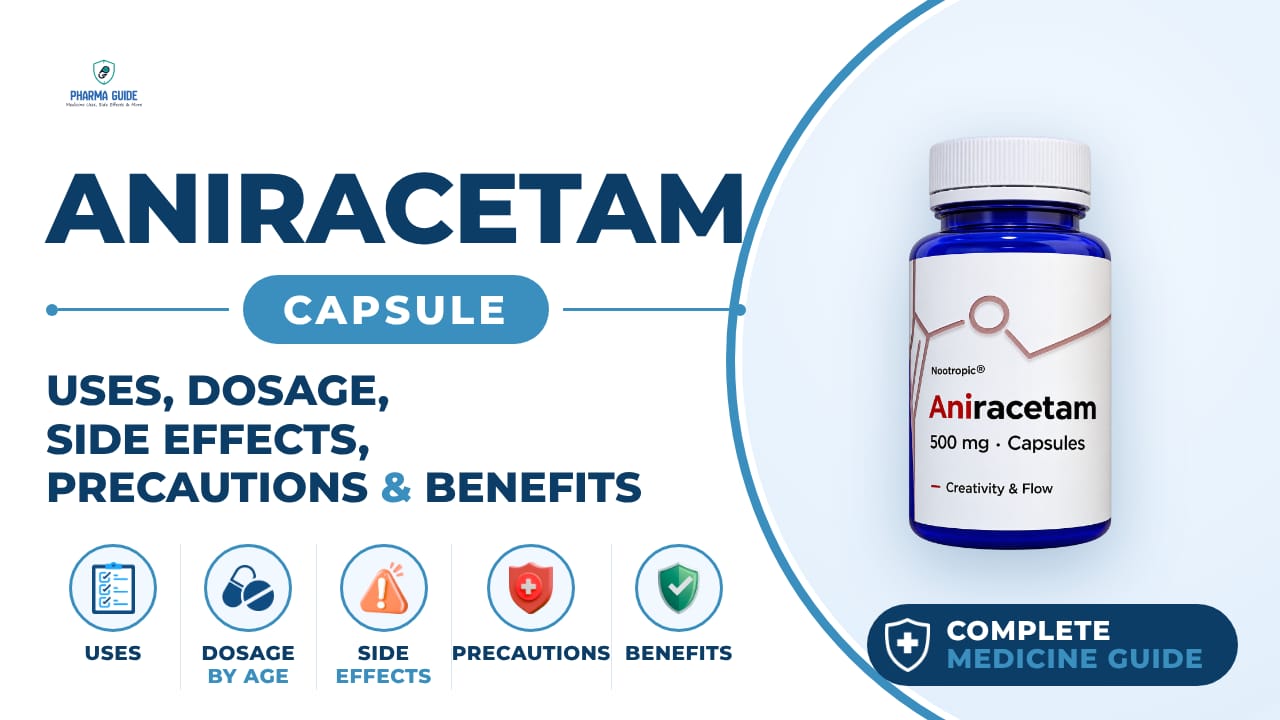
Aniracetam Capsule: Uses, Dosage, Side Effects, Precautions and Alternates
| Generic name | Aniracetam |
|---|---|
| Drug class | Racetam / ampakine nootropic (cognitive enhancer) |
| Forms | Capsule, Tablet, Powder |
Quick overview
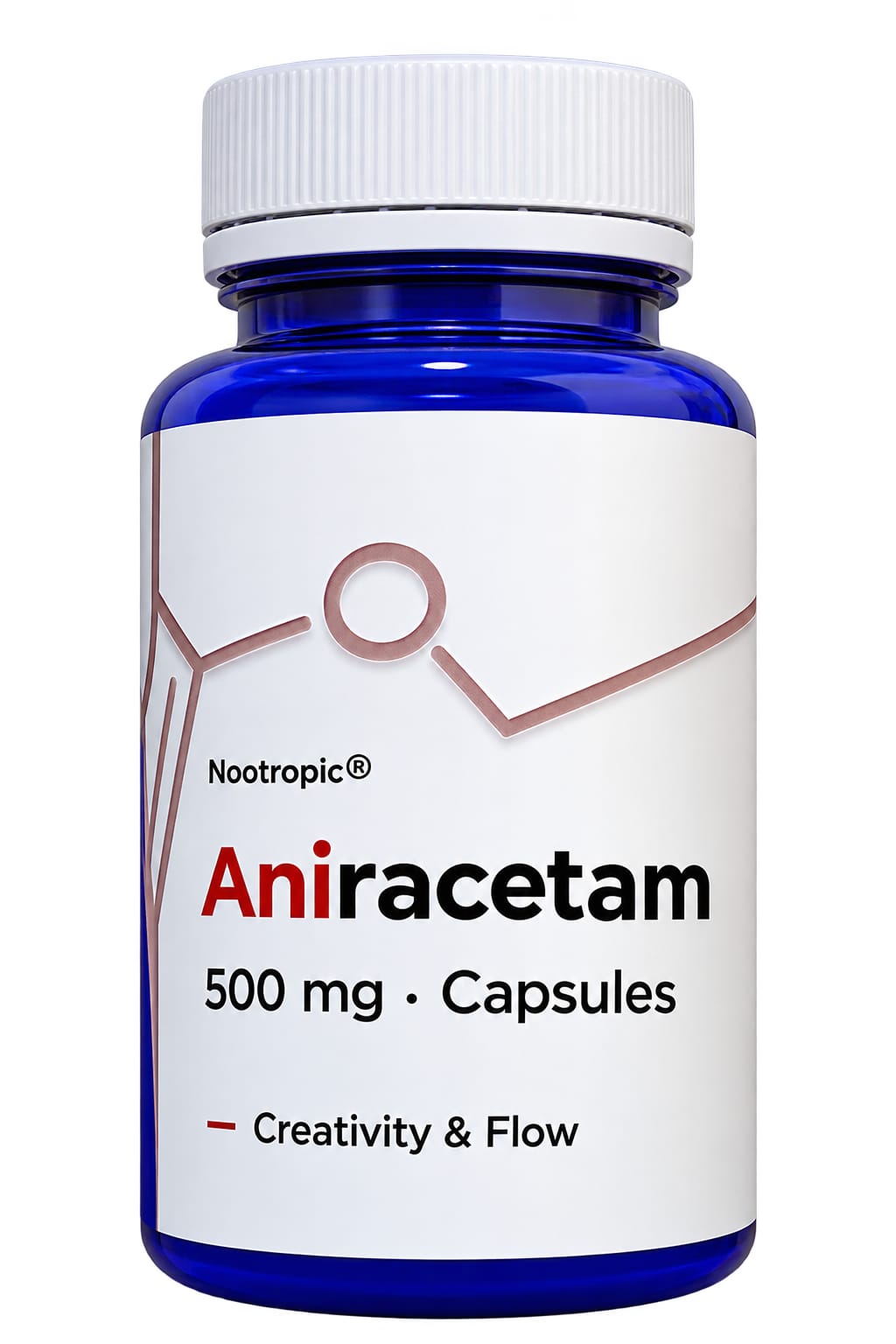
Aniracetam Capsule contains the generic medicine Aniracetam, a racetam-class nootropic sometimes called an ampakine cognitive enhancer. It is sold as a prescription medicine in Europe and parts of Asia under brand names, but it is not FDA approved in the United States, where it is available only as an unregulated supplement. It has been studied for memory, mood, anxiety, and focus support.
What is Aniracetam Capsule
Aniracetam is a synthetic nootropic (brain-enhancing) compound in the racetam family. It is sold as a prescription drug in Europe and some parts of Asia under brand names, but it is not approved by the FDA in the United States, where it is sold as an unregulated supplement.
Aniracetam Capsule uses
- Memory and learning support
- Mood support, including possible help with depression
- Anxiety reduction
- Attention, focus, and concentration support
- Possible support for people with dementia or Alzheimer's disease symptoms
- Investigated for learning and language problems in children with ADHD
Benefits of Aniracetam Capsule
- May improve memory, learning, and recall
- May increase attention span and alertness
- May reduce anxiety, depression, and fear and improve sociability
- May improve verbal fluency and ease of speaking
- Reported to increase enjoyment of music and visual perception
- May help the brain recover after injury such as stroke
- May support emotional stability in people with dementia
How Aniracetam Capsule works
Aniracetam is thought to work by making the brain chemical glutamate more effective at its receptors, which improves signaling between brain cells. It also boosts the release of acetylcholine, a chemical involved in memory and focus, and may affect dopamine and serotonin, which can improve mood and sociability.
Aniracetam Capsule dosage
Aniracetam is usually taken by mouth as a capsule or powder. Because it is fat-soluble, it is often taken with a meal containing healthy fats, or with a source of fat like coconut oil or olive oil, to help absorption. It is often split into two doses during the day, such as one in the morning and one in the early afternoon. It is sometimes combined with a choline supplement to help prevent headaches. It is not intended for children without medical guidance, and most product labels are aimed at adults. Older adults have been included in research but may be more sensitive to side effects, so caution is advised.
| Age group | Dose |
|---|---|
| Under 18 years | Not recommended |
| 18–64 years | 400 mg, once/day |
| 65+ years | 400 mg, once/day |
Available forms and strengths
- Capsule
- Tablet
- Powder
Side effects of Aniracetam Capsule
Common
- Anxiety
- Fatigue
- Headaches (often linked to low choline levels)
- Nervousness
- Nausea
- Irritability
- Sleeping problems (insomnia)
- Vomiting
- Jitteriness
- Urinary urgency
- Vertigo
- Mild stomach pain
- Diarrhea
- Rash
Serious
- Severe allergic reaction, including breathing difficulties, itchiness, and rash
- Mood changes and severe insomnia at very high doses
- Increased heart rate and blood pressure, similar to stimulant medications
Warnings and precautions
- Aniracetam is not approved by the FDA for any use in the United States, and safety and effectiveness are not fully confirmed.
- It should not be used by people who have had a severe allergic reaction to it or its ingredients in the past.
- Children should only use aniracetam under a healthcare provider's guidance, as research in children is limited. Aniracetam may interact with medications for ADHD, allergies, mental health conditions, overactive bladder, and blood pressure.
- Taking too much aniracetam may cause mood changes, severe insomnia, and increased heart rate or blood pressure.
- Most aniracetam products are not intended for use during pregnancy. Talk with a healthcare provider about the benefits and risks before use.
- Most aniracetam products are not intended for use while breastfeeding. Talk with a healthcare provider about the benefits and risks before use.
- People with kidney problems should use aniracetam cautiously, since the kidneys are involved in removing the drug from the body.
- People with liver problems should use aniracetam cautiously, since the liver is involved in breaking down the drug.
Storage
- Keep tightly closed and out of the reach and sight of children and pets, ideally locked in a cabinet or closet
- Store in a cool, dry place
- Discard after one year or as indicated on the packaging
- Avoid putting unused and expired medicine down the drain or in the toilet; use a take-back disposal location instead
When to see a doctor
- Get emergency medical help right away if you have signs of a severe allergic reaction, such as trouble breathing, itching, or rash.
Alternatives
- Pramiracetam
- Oxiracetam
- Piracetam
Watch the video
FAQs
Is Aniracetam Capsule FDA approved?
No, Aniracetam is not FDA approved in the United States, where it is sold only as an unregulated supplement, though it is a prescription medicine in Europe and parts of Asia.
What is Aniracetam Capsule used for?
It is used for memory and learning support, mood support including possible help with depression, anxiety reduction, attention and focus support, and possible support for dementia or Alzheimer's symptoms.
What is the dosage for Aniracetam Capsule?
For adults aged 18 to 64 and adults 65 and older, the typical dose is 400 mg once a day. It is not recommended for people under 18 years old.
Why is Aniracetam often combined with choline?
Aniracetam is sometimes combined with a choline supplement to help prevent headaches, which are a common side effect often linked to low choline levels.
What are common side effects of Aniracetam Capsule?
Common side effects include anxiety, fatigue, headaches, nervousness, nausea, irritability, insomnia, vomiting, jitteriness, urinary urgency, vertigo, mild stomach pain, diarrhea, and rash.
General information, not medical advice
Your prescriber and the leaflet in your pack know your situation. This page does not.
- Follow your prescriber and the leaflet
- Don't start, stop, or change a dose on your own
- Doses and warnings differ by country and product
Sources
Video
Related medicines

Injectafer Injection: Uses, Dosage, Side Effects, Precautions and Alternates
Iron products
Injectafer (ferric carboxymaltose) treats iron deficiency anemia and heart failure-related iron deficiency via IV. Learn uses, dosage, side effects, and

Gliclazide Tablet: Uses, Dosage, Side Effects, Precautions and Alternates
Sulfonylurea (hypoglycemic/antidiabetic agent)
Gliclazide Tablet is a sulfonylurea for type 2 diabetes that boosts insulin release. Learn about dosage, side effects, warnings, and precautions.