
Safety
General information, not medical advice
Your prescriber and the leaflet in your pack know your situation. This page does not.
- Follow your prescriber and the leaflet
- Don't start, stop, or change a dose on your own
- Doses and warnings differ by country and product
Antacid (Al/Mg Hydroxide) Suspension: Uses, Dosage, Side Effects, Precautions and Alternates
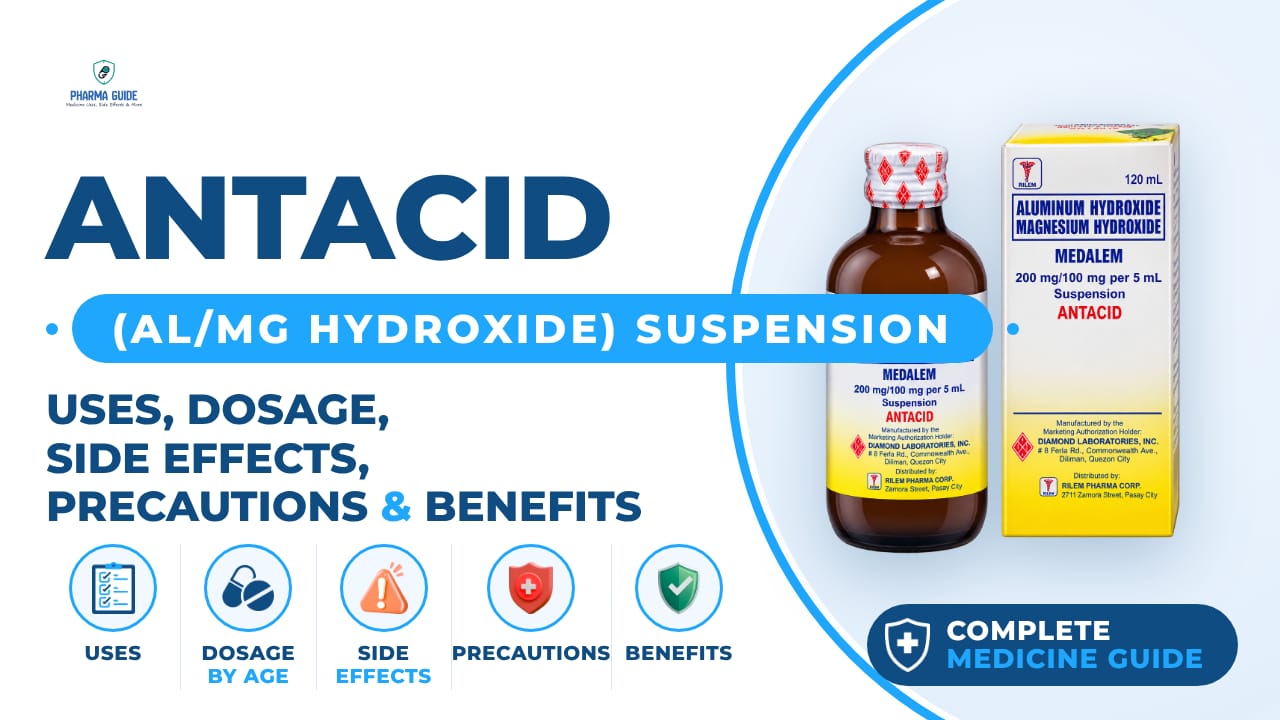
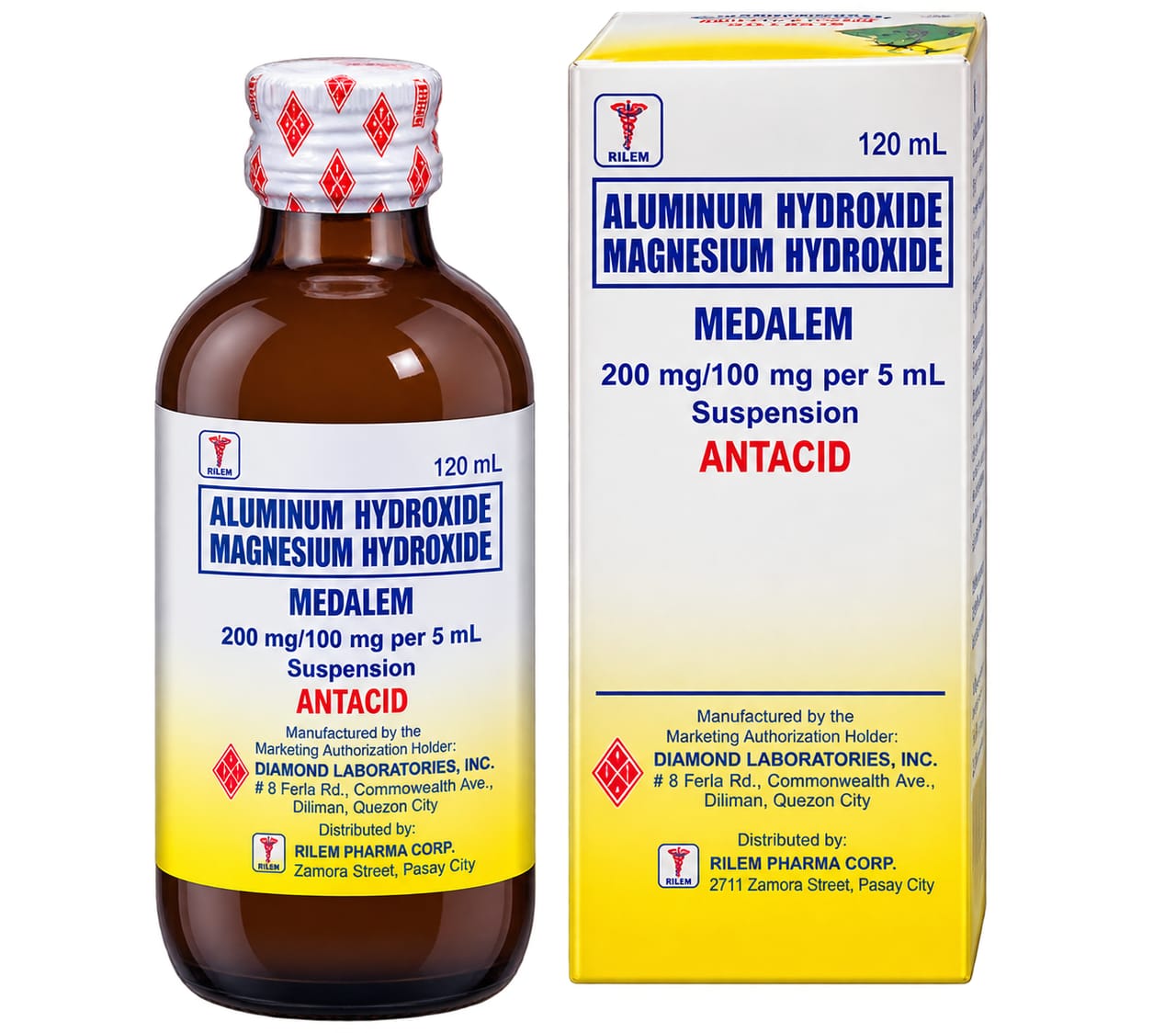
| Generic name | Aluminum Hydroxide and Magnesium Hydroxide |
|---|---|
| Drug class | Antacids, Phosphate binders |
| Forms | Chewable tablet, Oral liquid/suspension, Capsule, Ointment |
Quick overview
Antacid (Al/Mg Hydroxide) Suspension combines Aluminum Hydroxide and Magnesium Hydroxide to relieve heartburn, acid indigestion, and upset stomach. It works by neutralizing excess stomach acid and is also used to manage symptoms of peptic ulcer, gastritis, esophagitis, hiatal hernia, and gastric hyperacidity, as well as to reduce phosphate levels in certain kidney conditions. It is intended for short-term use, generally not longer than 1 to 2 weeks unless a doctor directs otherwise.
What is Antacid (Al/Mg Hydroxide) Suspension
Aluminum is a naturally occurring mineral, and aluminum hydroxide is an antacid. Aluminum Hydroxide and Magnesium Hydroxide are antacids used together to relieve heartburn, acid indigestion, and upset stomach.
Antacid (Al/Mg Hydroxide) Suspension uses
- Relieve heartburn, acid indigestion, and upset stomach
- Treat symptoms in patients with peptic ulcer, gastritis, esophagitis, hiatal hernia, or too much acid in the stomach (gastric hyperacidity)
- Reduce phosphate levels in people with certain kidney conditions
- Ease too much gas in the stomach (when combined with simethicone)
Benefits of Antacid (Al/Mg Hydroxide) Suspension
- Provides relief from heartburn
- Reduces acid indigestion and sour stomach
- Neutralizes excess stomach acid
- Helps relieve acid-related stomach discomfort
- Provides relatively quick, short-term symptom relief
How Antacid (Al/Mg Hydroxide) Suspension works
The medicine combines with the acid produced in your stomach and neutralizes it, which relieves symptoms such as heartburn and sour stomach.
Antacid (Al/Mg Hydroxide) Suspension dosage
Chew tablets thoroughly; do not swallow them whole, and drink a full glass of water after taking the tablets. Shake the oral liquid well before each use to mix the medicine evenly. The liquid may be mixed with water or milk. Follow the directions on the package label or your prescription label carefully.
Do not take antacids for more than 1 to 2 weeks unless your doctor tells you to. This medicine is usually taken between meals or at bedtime, or after meals and at bedtime as your doctor directs. Take with a full glass of water.
Measure liquid doses carefully using the measuring device that comes with the drug, not a kitchen spoon. If your doctor tells you to take other medicines while taking this antacid, avoid taking them within 2 hours of taking the antacid, since it can make it harder for your body to absorb other medicines taken by mouth.
If you miss a dose, take it as soon as you remember, but skip it if it is almost time for your next dose; do not double up.
| Age group | Dose |
|---|---|
| 6–11 years | Product-specific pediatric dosing; use under medical/pharmacist guidance |
| 12–17 years | Commonly 10–20 mL per dose, depending on product concentration |
| 18–64 years | Commonly 10–20 mL, usually between meals and/or at bedtime as directed |
| 65+ years | Adult dose when appropriate; use cautiously with kidney impairment |
Available forms and strengths
- Chewable tablet
- Oral liquid/suspension
- Capsule
- Ointment
Side effects of Antacid (Al/Mg Hydroxide) Suspension
Common
- Diarrhea
- Constipation
- Loss of appetite
- Unusual tiredness
- Muscle weakness
- Nausea and vomiting
- Redness of skin
- Itching of skin
Serious
- Severe stomach pain or constipation, loss of appetite
- Pain when you urinate
- Muscle weakness, tiredness
- Extreme drowsiness
- Bloody or tarry stools, coughing up blood or vomit that looks like coffee grounds
- Signs of an allergic reaction: hives; difficult breathing; swelling of your face, lips, tongue, or throat
Warnings and precautions
- This medicine is not recommended for use during pregnancy unless absolutely necessary. Talk with your doctor about the risks and benefits before using it, or if you become pregnant while taking it.
- This medicine is not recommended for use during breastfeeding. Discuss the risks and benefits with your doctor before taking it.
- Ask your doctor before taking this medicine if you have kidney disease or a history of kidney stones. Aluminum levels in the blood may rise, especially in people with kidney problems, which can lead to weak bones, bone pain, fractures, and brain disorders.
- It is not known how this medicine interacts with alcohol. It is advisable to consult your doctor before drinking alcohol while taking it, and ask a doctor or pharmacist first if you drink alcohol frequently.
- This medicine does not cause sleepiness.
- Do not take this medicine for longer than 1 to 2 weeks unless your doctor tells you to.
- This medicine may make it harder for your body to absorb other medicines taken by mouth. If you take other oral drugs, you may need to take them at a different time than this medicine, spaced at least 2 hours apart.
- Do not use this medicine if you have severe constipation, since it may worsen the condition and could lead to a blockage of the intestine.
- This medicine may cause fecal impaction (a hardened mass of stool stuck in the rectum or lower colon), and this risk is especially high in elderly people, so it should be used with caution.
- Heartburn can feel like the early symptoms of a heart attack. Get emergency medical help if you have chest pain spreading to your jaw or shoulder along with anxiety or light-headedness.
- If you have phenylketonuria (PKU), talk with your doctor, since some products may contain phenylalanine.
Storage
- Keep this medication in the container it came in, tightly closed, and out of reach of children
- Store it at room temperature and away from excess heat and moisture (not in the bathroom)
- Store in a dry place
- Do not freeze the liquid (suspension)
- Dispose of unneeded medications in a way so that pets, children, and other people cannot take them
- Do not flush this medication down the toilet
- Use a medicine take-back program; talk to your pharmacist about take-back programs in your community
When to see a doctor
- Get emergency medical help right away if you have signs of an allergic reaction, such as hives, difficulty breathing, or swelling of your face, lips, tongue, or throat.
- Stop using the medicine and call your doctor right away if you have severe stomach pain or constipation, loss of appetite, pain when urinating, muscle weakness or tiredness, extreme drowsiness, or bloody or tarry stools, or if you cough up blood or vomit that looks like coffee grounds.
- Seek immediate medical attention if you notice signs of an allergic reaction such as skin rash, itching or swelling of the face, tongue, or throat, or breathing difficulty.
- If you think there has been an overdose, contact your local poison control center or get medical care right away, and be ready to describe what was taken, how much, and when it happened. Overdose symptoms may include severe constipation, weight loss, confusion, mood changes, or urinating less than usual or not at all.
Alternatives
- Pantoprazole
- Alginate + Antacid
- Sodium Bicarbonate
- Magnesium Carbonate
- Calcium Carbonate
Watch the video
FAQs
How long can I use Antacid (Al/Mg Hydroxide) Suspension?
It is intended for short-term use, generally not longer than 1 to 2 weeks, unless a doctor directs otherwise.
What is Antacid (Al/Mg Hydroxide) Suspension used for?
It is used to relieve heartburn, acid indigestion, and upset stomach, and to treat symptoms of peptic ulcer, gastritis, esophagitis, hiatal hernia, and gastric hyperacidity. It also helps reduce phosphate levels in certain kidney conditions and, when combined with simethicone, eases excess gas.
How does Antacid (Al/Mg Hydroxide) Suspension work?
It combines with the acid produced in your stomach and neutralizes it, which relieves symptoms such as heartburn and sour stomach.
What are the common side effects of this medicine?
Common side effects include diarrhea, constipation, loss of appetite, unusual tiredness, muscle weakness, nausea and vomiting, and redness or itching of the skin.
Can I take other medicines with this antacid?
This medicine may make it harder for your body to absorb other oral medicines, so you should avoid taking them within 2 hours of taking the antacid.
General information, not medical advice
Your prescriber and the leaflet in your pack know your situation. This page does not.
- Follow your prescriber and the leaflet
- Don't start, stop, or change a dose on your own
- Doses and warnings differ by country and product
Sources
Video
Related medicines

Injectafer Injection: Uses, Dosage, Side Effects, Precautions and Alternates
Iron products
Injectafer (ferric carboxymaltose) treats iron deficiency anemia and heart failure-related iron deficiency via IV. Learn uses, dosage, side effects, and

Gliclazide Tablet: Uses, Dosage, Side Effects, Precautions and Alternates
Sulfonylurea (hypoglycemic/antidiabetic agent)
Gliclazide Tablet is a sulfonylurea for type 2 diabetes that boosts insulin release. Learn about dosage, side effects, warnings, and precautions.