
Safety
General information, not medical advice
Your prescriber and the leaflet in your pack know your situation. This page does not.
- Follow your prescriber and the leaflet
- Don't start, stop, or change a dose on your own
- Doses and warnings differ by country and product
Antiseptic Liquid: Uses, Dosage, Side Effects, Precautions and Alternates
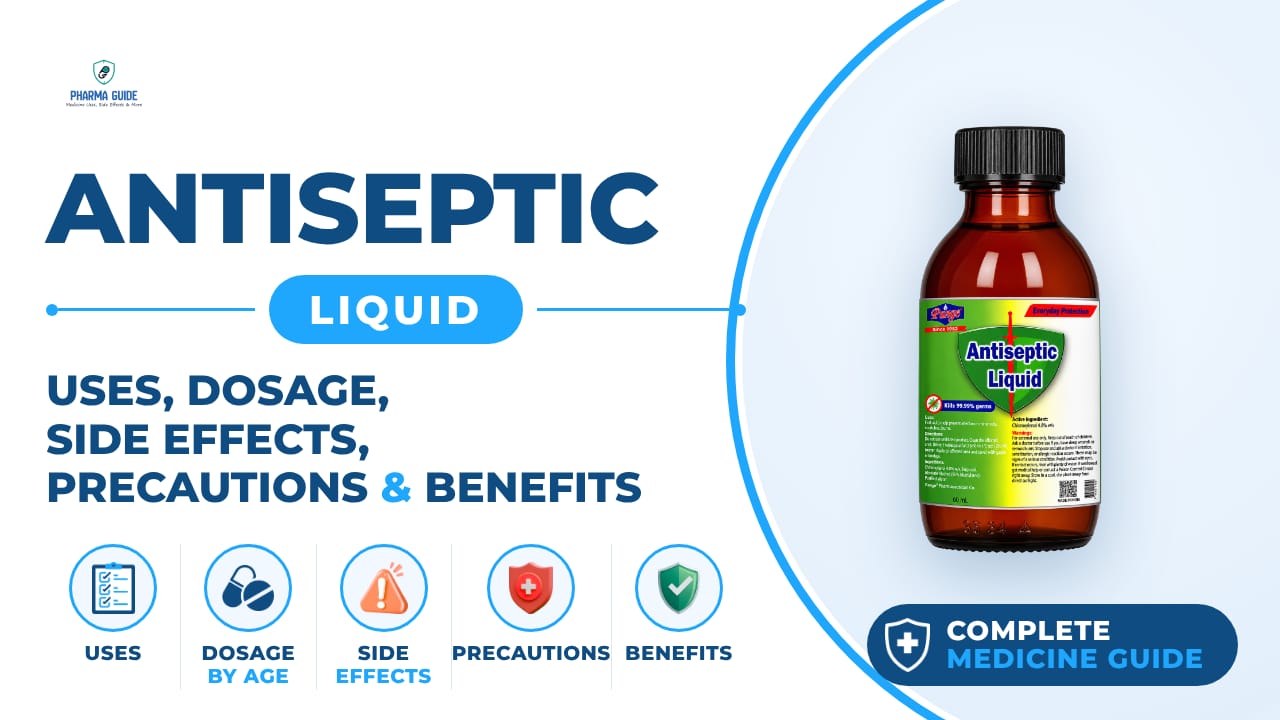
| Drug class | Antiseptics and Cleansing agents |
|---|---|
| Forms | Liquid, Cream |
Quick overview
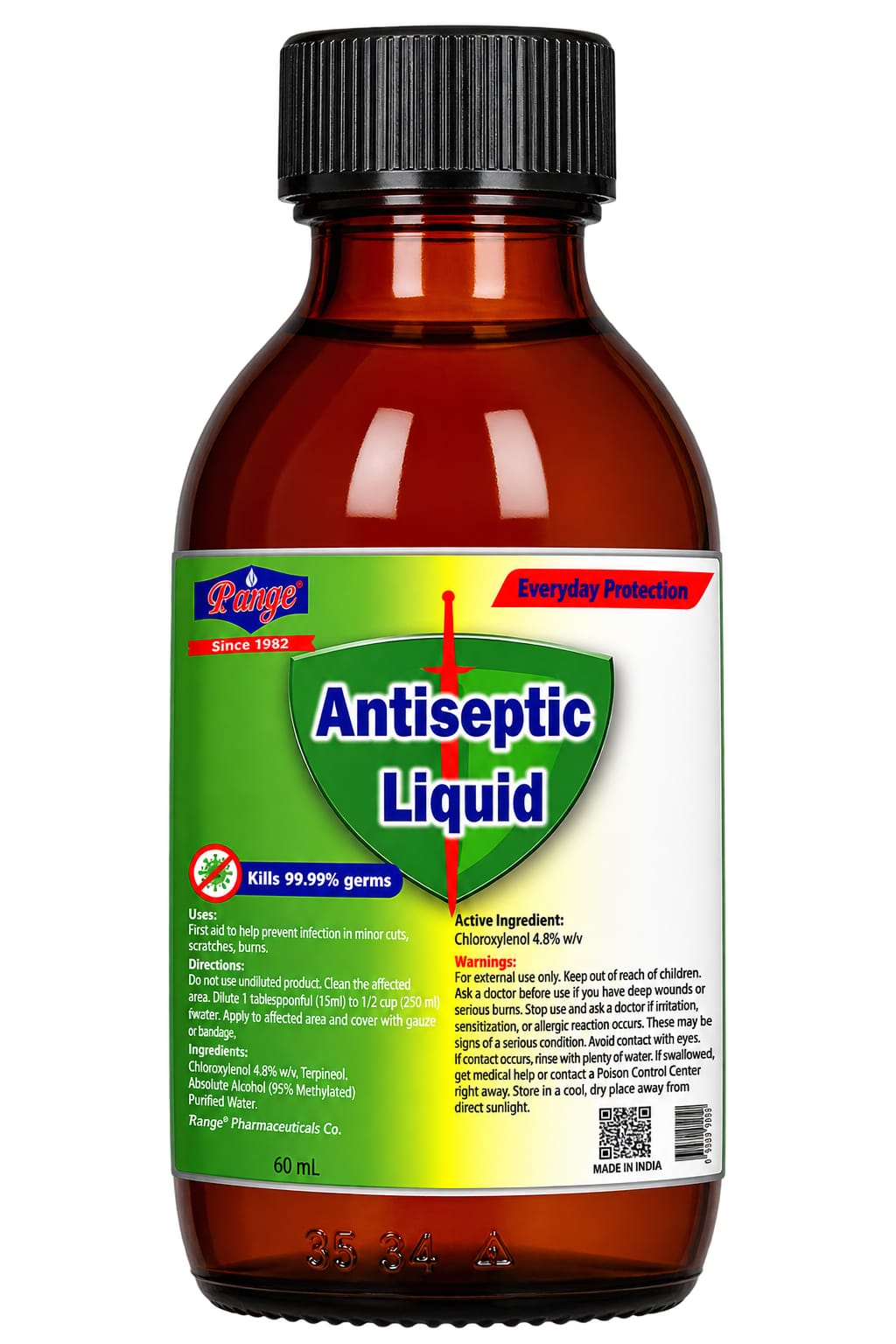
Antiseptic Liquid is a disinfectant solution used on the skin to help kill or reduce germs and prevent infection in cuts, wounds, and other minor injuries. Different brands contain different active ingredients, such as chlorinated phenols, phenol, iodinated phenols, sodium salicylate, or chloroxylenol. It works by disinfecting the skin and killing or stopping the growth of germs like bacteria, viruses, and fungi that can grow around wounds and cuts.
What is Antiseptic Liquid
Antiseptic Liquid belongs to the drug class Antiseptics and Cleansing agents. It is a disinfectant solution used on the skin to help kill or reduce germs and prevent infection in cuts, wounds, and other minor injuries. Different brands contain different active ingredients, such as chlorinated phenols, phenol, iodinated phenols, sodium salicylate, or chloroxylenol.
Antiseptic Liquid uses
- Helps destroy bacteria and germs associated with throat and mouth infections
- Helps heal cuts, grazes, wounds, insect bites and burns on the skin through its disinfectant action
- Can be used for personal hygiene, including as a vaginal douche
- Can be used as a general disinfectant around the home where germs are a danger to health
- Fights bad breath by acting on odour-causing bacteria in the mouth
- Prevents and controls infections in living tissues, including skin and mucous membranes
Benefits of Antiseptic Liquid
- Disinfects wounds that are exposed to dirt, unwashed hands, and microorganisms in the air
- Helps prevent wounds from becoming infected
- Can speed up the recovery process for wounds and cuts
- Can be used for cleaning household items to protect them from bacteria, viruses, and fungi
How Antiseptic Liquid works
The antiseptic liquid works by disinfecting the skin and killing or stopping the growth of germs like bacteria, viruses, and fungi that can grow around wounds and cuts.
Antiseptic Liquid dosage
Wash the affected area first, then clean thoroughly with the diluted antiseptic liquid. For gargling for mouth and throat infections, dilute before use and do not swallow. Do not use heavy bandaging over treated wounds, as wounds heal faster when air can reach them. Wash your hands before applying antiseptic liquid to a wound. Keep the area dry before applying a dressing to the wound. Avoid any contact with the eyes. Do not drink or swallow antiseptic liquid.
| Age group | Dose |
|---|---|
| Under 2 years | Doctor-directed only |
| 2–11 years | Apply a small amount to the affected area 1–3 times daily |
| 12–64 years | Apply a small amount to the affected area 1–3 times daily |
| 65+ years | Apply a small amount to the affected area 1–3 times daily |
Available forms and strengths
- Liquid
- Cream
Side effects of Antiseptic Liquid
Common
- Skin irritation
- Allergic skin reactions such as dermatitis, itch, redness, eczema, rash, hives, and blisters
Serious
- Difficulty breathing
- Swelling of the face, tongue or throat
- Dizziness
- Corneal injury and permanent eye damage including permanent visual impairment if it gets into the eyes
- Adverse effects on the kidneys if drunk in large quantities
Warnings and precautions
- Do not swallow the product; it is for external use only.
- Avoid letting the product contact the brain, the membranes around the brain and spinal cord, or the middle ear.
- The product must not come into contact with the eyes because of the risk of serious eye damage. If it gets in the eyes, rinse out immediately and thoroughly with water.
- Stop using the product if you notice irritation or other unwanted effects.
- Avoid contact with the eyes when using antiseptic liquid; if contact occurs, rinse immediately with plenty of water and seek medical advice.
- If you are pregnant or think you may be pregnant, ask your doctor or pharmacist for advice before using this product.
- If you are breastfeeding, ask your doctor or pharmacist for advice before use, and rinse the treated area thoroughly with water before breastfeeding.
- Do not drink large quantities of antiseptic liquid, as this may cause adverse reactions on the kidneys.
- Use only according to the product label and recommended dilution.
- Do not use on deep wounds, severe burns, or large areas of damaged skin without medical advice.
Storage
- Store below 30°C
- Keep out of reach of children
When to see a doctor
- If you or a child accidentally swallow some of the cream, contact your doctor or local accident and emergency department immediately.
- Seek medical advice promptly if there is irritation, redness, pain, or visual disturbance in the eye after contact.
- Stop using the cream and seek medical advice if you notice difficulty breathing, swelling of the face, tongue or throat, or dizziness.
- If infection persists, consult your doctor immediately.
- If the wound has not healed or improved, or there is a large or deep wound, burn, or abrasion with embedded particles, or an animal or human bite, seek medical attention.
Alternatives
- Povidone-Iodine Solution
- Chlorhexidine Solution
- Isopropyl Alcohol
Watch the video
FAQs
What is Antiseptic Liquid used for?
It is used to destroy bacteria and germs linked to throat and mouth infections, heal cuts, grazes, wounds, insect bites and burns, support personal hygiene, act as a household disinfectant, fight bad breath, and prevent and control infections in skin and mucous membranes.
How do you use Antiseptic Liquid on a wound?
Wash the affected area first, then clean thoroughly with the diluted antiseptic liquid. Wash your hands before applying it, keep the area dry before dressing, avoid heavy bandaging so air can reach the wound, and avoid contact with the eyes.
What are the side effects of Antiseptic Liquid?
Common side effects include skin irritation and allergic reactions such as dermatitis, itch, redness, eczema, rash, hives, and blisters. Serious effects include difficulty breathing, swelling of the face, tongue or throat, dizziness, corneal injury if it gets in the eyes, and kidney effects if swallowed in large quantities.
Is Antiseptic Liquid safe to use during pregnancy or breastfeeding?
If you are pregnant or think you may be pregnant, ask your doctor or pharmacist for advice before use. If breastfeeding, seek advice before use and rinse the treated area thoroughly with water before breastfeeding.
What should I do if Antiseptic Liquid gets in my eyes or is swallowed?
If it gets in the eyes, rinse immediately and thoroughly with water and seek medical advice. If swallowed, contact your doctor or local accident and emergency department immediately.
General information, not medical advice
Your prescriber and the leaflet in your pack know your situation. This page does not.
- Follow your prescriber and the leaflet
- Don't start, stop, or change a dose on your own
- Doses and warnings differ by country and product
Sources
Video
Related medicines

Injectafer Injection: Uses, Dosage, Side Effects, Precautions and Alternates
Iron products
Injectafer (ferric carboxymaltose) treats iron deficiency anemia and heart failure-related iron deficiency via IV. Learn uses, dosage, side effects, and

Gliclazide Tablet: Uses, Dosage, Side Effects, Precautions and Alternates
Sulfonylurea (hypoglycemic/antidiabetic agent)
Gliclazide Tablet is a sulfonylurea for type 2 diabetes that boosts insulin release. Learn about dosage, side effects, warnings, and precautions.