
Safety
General information, not medical advice
Your prescriber and the leaflet in your pack know your situation. This page does not.
- Follow your prescriber and the leaflet
- Don't start, stop, or change a dose on your own
- Doses and warnings differ by country and product
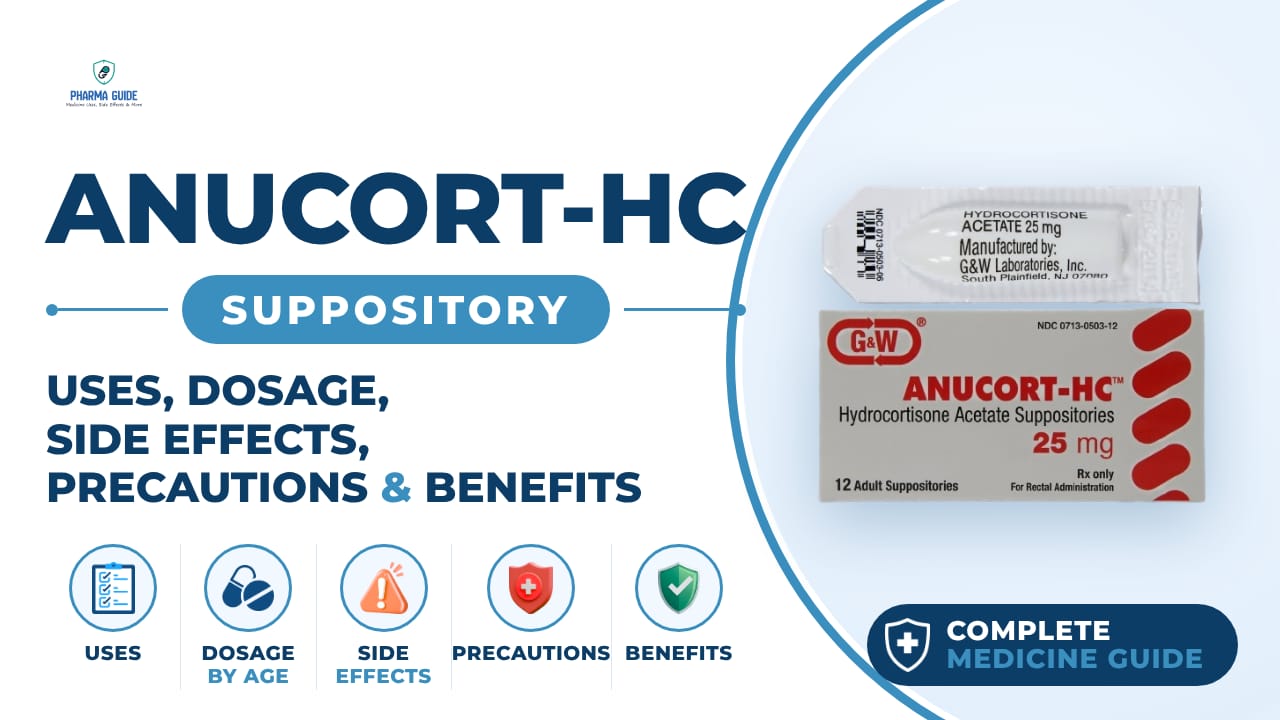
Anucort-HC Suppository: Uses, Dosage, Side Effects, Precautions and Alternates
| Generic name | Hydrocortisone Acetate |
|---|---|
| Drug class | Corticosteroid (topical steroid/glucocorticoid) |
| Forms | Rectal suppository, Rectal cream |
Quick overview
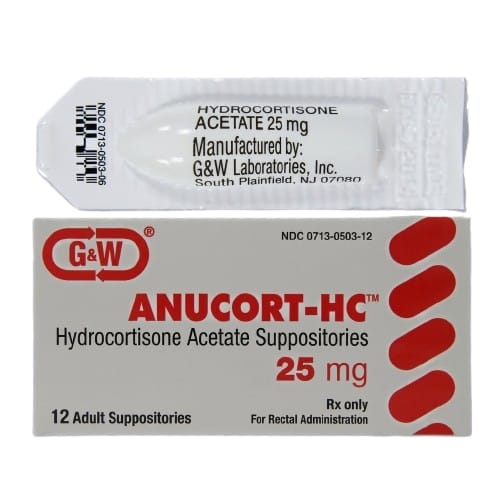
Anucort-HC Suppository contains hydrocortisone acetate, a corticosteroid, and is inserted into the rectum to relieve short-term swelling, itching, and irritation from hemorrhoids and other inflamed conditions of the anus or rectum. It is also used for ulcerative proctitis, cryptitis, post-irradiation proctitis, and as part of treatment for ulcerative colitis. It is available as a rectal suppository and a rectal cream, and dosing differs by age group.
What is Anucort-HC Suppository
Anucort-HC is a prescription suppository that contains hydrocortisone acetate, a steroid medicine. It is inserted into the rectum to give short-term relief from swelling, itching, and irritation caused by hemorrhoids and other inflamed conditions of the anus or rectum.
Anucort-HC Suppository uses
- Relief of symptoms from inflamed hemorrhoids
- Ulcerative proctitis (inflammation of the anus and rectal lining)
- Cryptitis (inflammation of parts of the intestine called crypts)
- Post-irradiation (factitial) proctitis, which is rectal inflammation after radiation treatment
- Used together with other medicines to help treat ulcerative colitis
Benefits of Anucort-HC Suppository
- Reduces rectal inflammation
- Helps relieve itching and irritation
- Helps reduce swelling
- Eases anorectal discomfort
- Helps soothe inflamed tissues
How Anucort-HC Suppository works
The medicine is a corticosteroid that acts on cells in the rectal area to calm inflammation. It blocks chemical signals that cause swelling, itching, and irritation, and it also narrows swollen blood vessels, which further reduces swelling.
Anucort-HC Suppository dosage
This suppository is meant for rectal use only; do not swallow it and do not use it on other parts of the body. Try to empty your bowels and bladder before using the suppository, and wash your hands before and after inserting it. Remove the wrapper before inserting the suppository, then insert it with the pointed end first, using gentle pressure; do not push it in too far.
Avoid handling the suppository more than necessary since it is designed to melt quickly at body temperature. Stay still for a few minutes after inserting so it can dissolve and be absorbed. A doctor should do a proper rectal exam before this medicine is started.
If you forget a dose, insert it as soon as you remember, but skip it if it is almost time for your next dose — do not use two doses at once. Call your doctor if your symptoms do not improve or if they get worse. The suppository may stain clothing or fabric it touches.
| Age group | Dose |
|---|---|
| Under 18 years | Not recommended |
| 18–64 years | 25 mg, twice/day |
| 65+ years | 25 mg, twice/day |
Available forms and strengths
- Rectal suppository (25 mg)
- Rectal cream
Side effects of Anucort-HC Suppository
Common
- Burning sensation at the application site
- Itching
- Irritation
- Dryness
- Folliculitis (inflamed hair follicles)
- Hypopigmentation (lightening of the skin)
- Flushing or redness of the skin
- Unusually warm skin
- Acne or pimples
Serious
- Signs of an allergic reaction such as hives, difficulty breathing, or swelling of the face, lips, tongue, or throat
- Severe rectal pain or burning, or bleeding from the rectum
- New or worsening rectal irritation
- Fever or other signs of infection
- Severe headaches, ringing in the ears, or pain behind the eyes
- Secondary infection in the treated area
- Signs of adrenal gland suppression or Cushing's syndrome with prolonged or extensive use
- Thinning of the skin with easy bruising, or reddish-purple lines on the skin
- Vision problems such as blurred vision, eye pain, or signs of cataracts or glaucoma
Warnings and precautions
- Do not use this medicine if you are allergic to hydrocortisone or to any of its ingredients, including palm oil.
- Avoid use if there are tubercular, fungal, or viral infections (such as herpes simplex) in the area being treated.
- A proper rectal examination must be done before starting treatment to rule out more serious problems.
- Stop using the suppository if irritation develops or if an infection in the area isn't being controlled.
- Using too much of this medicine, or using it for a long time, can raise the risk of adrenal or pituitary gland problems, especially in children.
- This medicine is not recommended for children because its safety and effectiveness have not been established in this age group.
- Do not stop using this medicine suddenly after long-term or high-dose use without talking to your doctor, as this can cause serious withdrawal-type symptoms.
- This medicine is Pregnancy Category C. It should only be used in pregnancy if the benefit outweighs the risk, and should not be used in large amounts or for a long time.
- It isn't known if this medicine passes into breast milk. You and your doctor will need to decide whether to stop breastfeeding or stop using the medicine.
- Consult your doctor before use during pregnancy or breastfeeding.
- Seek medical advice if rectal bleeding or irritation worsens.
- It isn't known whether alcohol affects this medicine, and no specific food or alcohol interactions are documented for it.
- Avoid use if allergic to hydrocortisone.
Storage
- Store at Controlled Room Temperature, 20 to 25°C (68 to 77°F), with brief excursions permitted up to 30°C (86°F)
- Protect from freezing and keep away from heat because the suppository has a low melting point
- Keep this and all medicines out of the reach of children
- In case of accidental ingestion, contact a poison control center or seek medical help immediately
- Dispose of unused or expired suppositories according to local requirements for medicines
When to see a doctor
- Get emergency help right away if you have signs of a serious allergic reaction, such as hives, trouble breathing, or swelling of the face, lips, tongue, or throat.
- Call your doctor immediately if you have severe rectal pain or burning, rectal bleeding, worsening rectal irritation, fever or other signs of infection, or severe headaches, ringing in the ears, or pain behind the eyes.
- If someone accidentally swallows the suppository, get medical help right away or contact a poison control center immediately.
- Seek medical help right away if you think you have used too much of this medicine.
Alternatives
- Procto-Med HC
- Proctocort
- Anusol-HC
Watch the video
FAQs
What is Anucort-HC Suppository used for?
It relieves swelling, itching, and irritation from hemorrhoids and other inflamed anal or rectal conditions, and is also used for ulcerative proctitis, cryptitis, post-irradiation proctitis, and as part of ulcerative colitis treatment.
How do you use Anucort-HC Suppository?
Insert it rectally with the pointed end first using gentle pressure, after emptying your bowels and bladder and washing your hands. Avoid handling it too much since it melts quickly, and stay still for a few minutes after insertion.
What is the dosage of Anucort-HC Suppository?
For adults aged 18 to 64 and those 65 and older, the dose is 25 mg twice a day. It is not recommended for anyone under 18 years.
What are the side effects of Anucort-HC Suppository?
Common side effects include burning, itching, irritation, dryness, folliculitis, skin lightening, flushing, warm skin, and acne. Serious effects include allergic reactions, severe rectal pain or bleeding, infection signs, and vision problems.
Can Anucort-HC Suppository be used during pregnancy?
It is Pregnancy Category C and should only be used if the benefit outweighs the risk, avoiding large amounts or long-term use; consult your doctor before use.
General information, not medical advice
Your prescriber and the leaflet in your pack know your situation. This page does not.
- Follow your prescriber and the leaflet
- Don't start, stop, or change a dose on your own
- Doses and warnings differ by country and product
Sources
Video
Related medicines

Injectafer Injection: Uses, Dosage, Side Effects, Precautions and Alternates
Iron products
Injectafer (ferric carboxymaltose) treats iron deficiency anemia and heart failure-related iron deficiency via IV. Learn uses, dosage, side effects, and

Gliclazide Tablet: Uses, Dosage, Side Effects, Precautions and Alternates
Sulfonylurea (hypoglycemic/antidiabetic agent)
Gliclazide Tablet is a sulfonylurea for type 2 diabetes that boosts insulin release. Learn about dosage, side effects, warnings, and precautions.