
Safety
General information, not medical advice
Your prescriber and the leaflet in your pack know your situation. This page does not.
- Follow your prescriber and the leaflet
- Don't start, stop, or change a dose on your own
- Doses and warnings differ by country and product
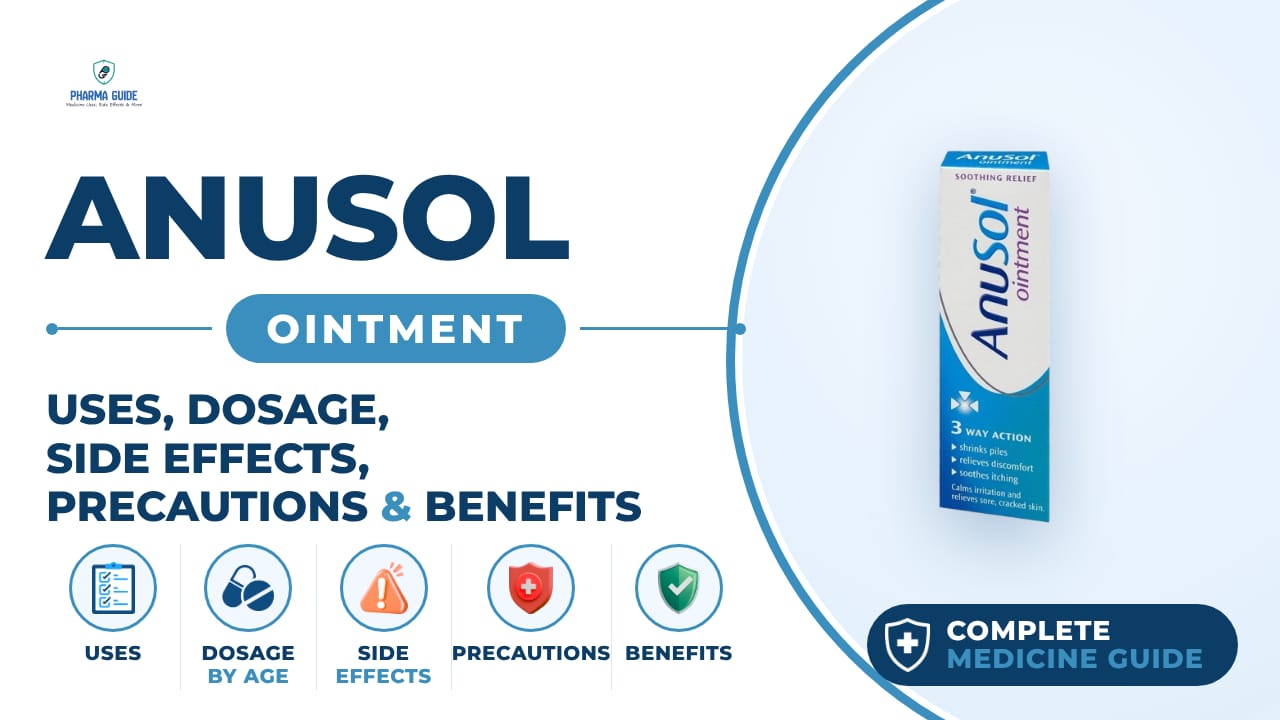
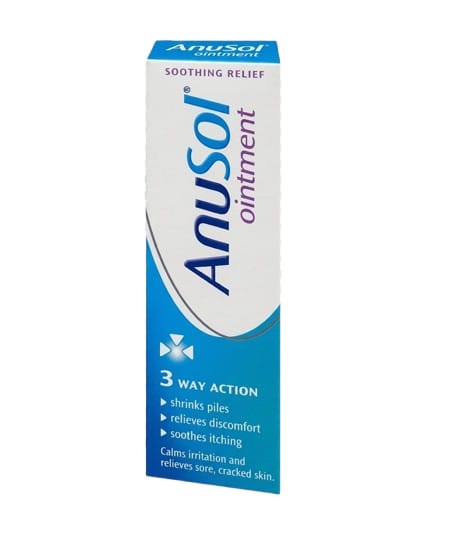
Anusol Ointment: Uses, Dosage, Side Effects, Precautions and Alternates
| Generic name | Zinc oxide, bismuth oxide, bismuth subgallate, and balsam of Peru |
|---|---|
| Drug class | Topical haemorrhoidal preparation / protectant. |
| Forms | Ointment |
Quick overview
Anusol Ointment contains zinc oxide, bismuth oxide, bismuth subgallate, and balsam of Peru, and belongs to the topical haemorrhoidal preparation/protectant class. It is an over-the-counter treatment that soothes and protects sore, itchy, or cracked skin around the back passage caused by haemorrhoids (piles) and anal fissures. It has an oily base that lubricates and protects the area and comes with a rectal nozzle for use inside the rectum as well as on the skin outside.
What is Anusol Ointment
Anusol Ointment is an over-the-counter treatment that soothes and protects sore, itchy, or cracked skin around the back passage caused by haemorrhoids (piles) and anal fissures. It has an oily base that lubricates and protects the area, and it comes with a rectal nozzle so it can be used inside the rectum as well as on the skin outside.
Anusol Ointment uses
- Internal and external haemorrhoids (piles)
- Anal fissures
- Anal itching (pruritus ani)
- Minor ano-rectal irritation
Benefits of Anusol Ointment
- Relieves both internal and external haemorrhoids (piles)
- Soothes itching, irritation, and inflammation
- Helps shrink swollen piles
- Astringent and antiseptic action protects raw, sore areas and helps prevent bacterial growth
- Oily base lubricates and soothes cracked, sensitive skin
- Can also ease anal fissures and anal itching
- Comes with a rectal nozzle for easy internal use
How Anusol Ointment works
Zinc oxide acts as an astringent and mild antiseptic that soothes and protects raw skin and reduces moisture and friction. Bismuth oxide and bismuth subgallate are mild astringents and antiseptics that protect raw surfaces, and Balsam Peru is a mild antiseptic that supports healing of sore areas.
Anusol Ointment dosage
Wash and gently dry the affected area before applying the ointment. For use on the outside, apply a small amount directly to the affected area at night, in the morning, and after each bowel movement; it can be applied on a gauze dressing if preferred. For use inside the rectum, attach the rectal nozzle to the tube, remove the nozzle cap, gently insert the nozzle into the back passage, and squeeze the tube gently to release the ointment; clean the nozzle thoroughly and replace the cap after use.
Adults and elderly people apply at night, in the morning, and after each bowel movement until symptoms are controlled. Wash your hands thoroughly before and after each application. Do not swallow the ointment; it is for use on the skin and rectum only. If symptoms persist, worsen, or if you notice rectal bleeding, speak with your doctor or pharmacist.
| Age group | Dose |
|---|---|
| Under 18 years | Not recommended |
| 18–60 years | Thin layer, 2 times/day |
| 60+ years | Thin layer, 2 times/day |
Available forms and strengths
- Ointment
Side effects of Anusol Ointment
Common
- Temporary stinging
- Mild discomfort
- Local irritation
Serious
- Mild burning
- Itching
- Skin irritation
- Redness
- Rash
Warnings and precautions
- If you are pregnant, speak with your GP or pharmacist before using this product. If you are breastfeeding, speak with your GP or pharmacist before using this product.
- Apply a thin layer to the affected area. Wash hands before and after application. Do not use if you are allergic to any ingredient. Stop use if irritation worsens.
- This product is for use on the skin and rectum only — do not swallow it.
- Do not use this product if you are allergic to any of its ingredients, including lanolin or cocoa butter.
- This product is meant for adults aged 18 and over.
- The product is not likely to work well for severe haemorrhoids or anal fissures.
- Swallowing this product by accident can cause fever, nausea, vomiting, stomach cramps, and diarrhea appearing hours after ingestion, and needs urgent medical assessment.
Storage
- Store below 25°C in a cool, dry place.
- Keep out of the sight and reach of children.
- Do not use after the expiry date printed on the packaging.
When to see a doctor
- Always see your doctor if you have rectal bleeding or blood in your stool, as this can sometimes be a sign of a more serious condition.
- If your symptoms continue, get worse, or keep coming back, talk to your doctor for further advice.
- Contact your midwife or GP if your condition worsens or your symptoms persist, and seek further advice if there is no improvement after three days of treatment.
- If you accidentally swallow this product, it needs urgent medical assessment and treatment.
Alternatives
- Procto-Glyvenol Cream
- Germoloids Ointment
- Zinc Oxide Ointment
Watch the video
FAQs
What is Anusol Ointment used for?
It is used to treat internal and external haemorrhoids (piles), anal fissures, anal itching (pruritus ani), and minor ano-rectal irritation.
How do you use Anusol Ointment?
Wash and dry the area first, then apply a small amount at night, in the morning, and after each bowel movement. It can be applied externally or inserted into the rectum using the attached nozzle.
Can Anusol Ointment be used inside the rectum?
Yes, it comes with a rectal nozzle that attaches to the tube so the ointment can be gently inserted and squeezed into the back passage.
What are the side effects of Anusol Ointment?
Common side effects include temporary stinging, mild discomfort, and local irritation. More serious effects can include burning, itching, skin irritation, redness, and rash.
When should I see a doctor while using Anusol Ointment?
See a doctor if you notice rectal bleeding or blood in your stool, if symptoms persist or worsen, or if there is no improvement after three days of treatment.
General information, not medical advice
Your prescriber and the leaflet in your pack know your situation. This page does not.
- Follow your prescriber and the leaflet
- Don't start, stop, or change a dose on your own
- Doses and warnings differ by country and product
Sources
Video
Related medicines

Injectafer Injection: Uses, Dosage, Side Effects, Precautions and Alternates
Iron products
Injectafer (ferric carboxymaltose) treats iron deficiency anemia and heart failure-related iron deficiency via IV. Learn uses, dosage, side effects, and

Gliclazide Tablet: Uses, Dosage, Side Effects, Precautions and Alternates
Sulfonylurea (hypoglycemic/antidiabetic agent)
Gliclazide Tablet is a sulfonylurea for type 2 diabetes that boosts insulin release. Learn about dosage, side effects, warnings, and precautions.