
Safety
General information, not medical advice
Your prescriber and the leaflet in your pack know your situation. This page does not.
- Follow your prescriber and the leaflet
- Don't start, stop, or change a dose on your own
- Doses and warnings differ by country and product
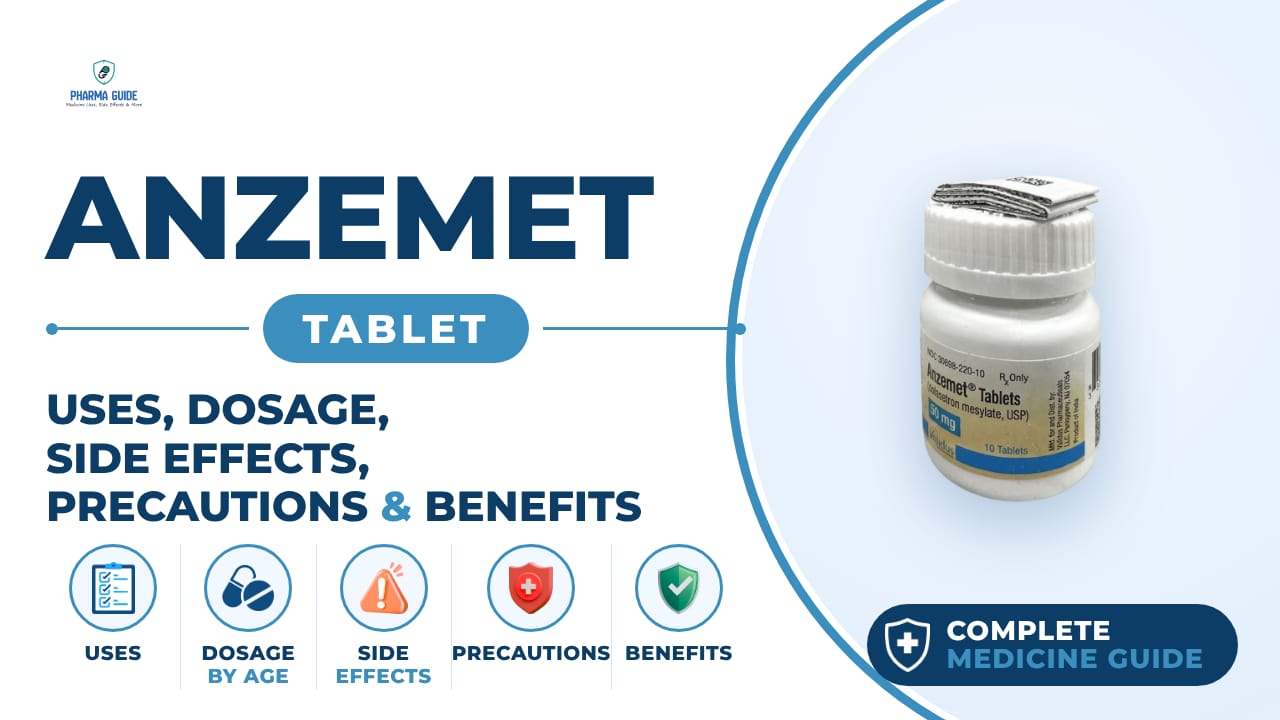
Anzemet Tablet: Uses, Dosage, Side Effects, Precautions and Alternates
| Generic name | dolasetron |
|---|---|
| Drug class | Antiemetic (selective 5-HT3 receptor antagonist) |
| Forms | Tablet (50 mg and 100 mg strengths) |
Quick overview
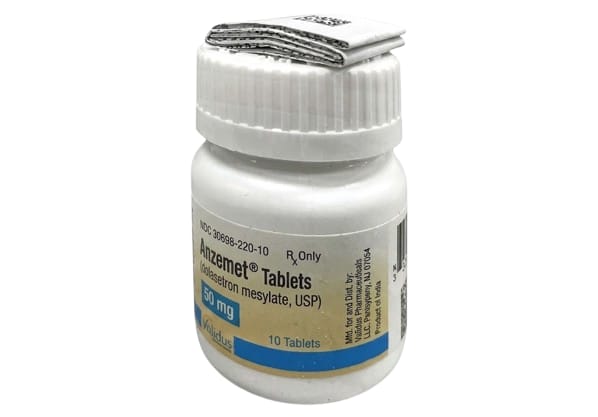
Anzemet Tablet (dolasetron) is a prescription antiemetic that helps prevent nausea and vomiting caused by moderately emetogenic chemotherapy. It works by blocking serotonin signals in the gut and brain that trigger vomiting. It is taken before chemotherapy and comes as 50 mg and 100 mg tablets.
What is Anzemet Tablet
Anzemet is a prescription medicine that helps prevent nausea (feeling sick) and vomiting (being sick). It contains dolasetron mesylate and belongs to a group of medicines called antiemetics, specifically selective 5-HT3 receptor antagonists.
Anzemet Tablet uses
- Prevention of nausea caused by moderately emetogenic chemotherapy.
- Prevention of vomiting associated with chemotherapy.
- Prevention of chemotherapy-related nausea during initial treatment courses.
- Prevention of chemotherapy-related vomiting during repeat treatment courses.
Benefits of Anzemet Tablet
- Helps prevent nausea.
- Helps prevent vomiting.
- Supports fluid intake by reducing vomiting.
- Helps patients tolerate chemotherapy more comfortably.
- May reduce the need for additional anti-nausea treatment.
How Anzemet Tablet works
Anzemet blocks the action of a natural body chemical called serotonin in the gut and in the part of the brain that triggers vomiting. By blocking these signals, it reduces the urge to feel or be sick.
Anzemet Tablet dosage
Take this medicine about 1 hour before your chemotherapy treatment, or as directed before surgery. It can be taken with or without food. Swallow the tablet whole; do not crush or chew it. It is not recommended for children or adolescents under 18 for the surgery-related use; for chemotherapy, it can be used in children 2 years and older who are able to swallow tablets. If you forget to take it within the recommended time before your procedure, tell your doctor.
| Age group | Dose |
|---|---|
| Under 18 years | Not recommended |
| 18–64 years | 100 mg, once before chemotherapy |
| 65+ years | 100 mg, once before chemotherapy |
Available forms and strengths
- Tablet (50 mg and 100 mg strengths)
Side effects of Anzemet Tablet
Common
- Headache
- Fatigue/tiredness
- Dizziness
- Drowsiness
- Constipation
- Diarrhea
- Upset stomach (indigestion)
- Loss of appetite
- Chills/shivering
- Numbness or tingling feeling
- Fever
- Sweating
- Rash
- Joint or muscle pain
Serious
- Signs of abnormal heart rhythm: chest pounding, shortness of breath, chest pain, feeling faint or lightheaded
- Slow heart rate or weak pulse
- Serotonin syndrome: fast heart rate, dizziness, sweating, flushing, tremor, muscle stiffness, muscle twitching or spasms, uncoordinated movement, agitation, hallucinations, seizures, confusion
- Serious allergic reaction: hives, trouble breathing, swelling of the face, lips, tongue, or throat
- Swelling in the hands or feet
- Little or no urinating
- Severe headache, confusion, slurred speech, arm or leg weakness, trouble walking, loss of coordination, very stiff muscles, high fever, profuse sweating, or tremors
Warnings and precautions
- This medicine can affect your heart's electrical rhythm, which can be serious and life-threatening, including a condition called QT prolongation that can lead to dangerous heart rhythms. The risk is higher in people with certain heart or electrolyte problems, or those taking other medicines that affect heart rhythm.
- This medicine should not be used in people with long QT syndrome (a heart rhythm condition), and you should tell your doctor if anyone in your family has had this condition.
- A rare but serious condition called serotonin syndrome can occur, especially when this medicine is combined with other medicines that raise serotonin levels, such as certain antidepressants and migraine medicines.
- Severe allergic reactions have occurred, including swelling of the face, lips, or throat and difficulty breathing, which can be life-threatening.
- This medicine can interact with many other drugs, including certain antibiotics, antidepressants, heart rhythm medicines, antipsychotic medicines, and medicines for cancer, malaria, or HIV, which can increase the risk of serious heart problems.
- It is not known if Anzemet is safe to use during pregnancy. There are no well-controlled studies in pregnant women, so tell your doctor if you are or might be pregnant. In some countries this medicine should not be taken at all during pregnancy.
- It is not known whether this medicine passes into breast milk, so breastfeeding is generally not recommended while taking it. Tell your doctor if you are breastfeeding or planning to.
- No dose change is usually needed for people with kidney problems, but heart monitoring (ECG) is recommended because kidney problems can raise the risk of heart rhythm issues with this medicine.
- No dose change is recommended for people with liver problems.
- This medicine can make you feel tired or dizzy, so be careful driving or using machinery until you know how it affects you.
Storage
- Store at controlled room temperature between 20-25°C (68-77°F)
- Protect from light
- Keep tablets in the blister pack until it is time to take them
- Keep in a cool, dry place where the temperature stays below 30°C
- Do not store in the bathroom, near a sink, or on a windowsill
- Do not leave in the car, as heat and damp can destroy some medicines
- Keep out of reach of children, ideally in a locked cupboard at least one-and-a-half metres above the ground
- Return any unused medicine to your pharmacist for disposal
When to see a doctor
- Get emergency medical help right away if you have signs of a serious allergic reaction, such as hives, trouble breathing, or swelling of your face, lips, tongue, or throat.
- Call your doctor right away if you have a headache with chest pain and severe dizziness, fainting, or fast or pounding heartbeats.
- Seek urgent medical help if you notice disturbances in your heart rhythm, such as palpitations or a pounding heart, since this could be a serious side effect.
- Get medical help immediately if you have symptoms of high serotonin levels in the body, such as agitation, hallucinations, fever, fast heart rate, overactive reflexes, nausea, vomiting, diarrhea, loss of coordination, or fainting.
- If you think you or someone else may have taken too much of this medicine, contact your doctor or your local poison control center right away, or go to the emergency department, even if there are no symptoms.
Alternatives
- Aprepitant
- Granisetron
- Ondansetron
Watch the video
FAQs
What is Anzemet Tablet used for?
Anzemet Tablet is used to prevent nausea and vomiting caused by moderately emetogenic chemotherapy, during both initial and repeat treatment courses.
How does Anzemet Tablet work?
It blocks the action of serotonin in the gut and in the part of the brain that triggers vomiting, reducing the urge to feel or be sick.
What is the dosage of Anzemet Tablet?
The usual dose is 100 mg taken once about 1 hour before chemotherapy, with or without food. It is not recommended for children or adolescents under 18 for surgery-related use, but can be used in children 2 years and older for chemotherapy-related nausea if they can swallow tablets.
What are the serious side effects of Anzemet Tablet?
Serious side effects include signs of abnormal heart rhythm (chest pounding, shortness of breath, chest pain, feeling faint), slow heart rate, serotonin syndrome, serious allergic reactions, swelling in the hands or feet, and little or no urinating.
Can Anzemet Tablet affect heart rhythm?
Yes, Anzemet can affect the heart's electrical rhythm, including causing QT prolongation that can lead to dangerous heart rhythms, especially in people with certain heart or electrolyte problems.
General information, not medical advice
Your prescriber and the leaflet in your pack know your situation. This page does not.
- Follow your prescriber and the leaflet
- Don't start, stop, or change a dose on your own
- Doses and warnings differ by country and product
Sources
Video
Related medicines

Injectafer Injection: Uses, Dosage, Side Effects, Precautions and Alternates
Iron products
Injectafer (ferric carboxymaltose) treats iron deficiency anemia and heart failure-related iron deficiency via IV. Learn uses, dosage, side effects, and

Gliclazide Tablet: Uses, Dosage, Side Effects, Precautions and Alternates
Sulfonylurea (hypoglycemic/antidiabetic agent)
Gliclazide Tablet is a sulfonylurea for type 2 diabetes that boosts insulin release. Learn about dosage, side effects, warnings, and precautions.