
Safety
General information, not medical advice
Your prescriber and the leaflet in your pack know your situation. This page does not.
- Follow your prescriber and the leaflet
- Don't start, stop, or change a dose on your own
- Doses and warnings differ by country and product
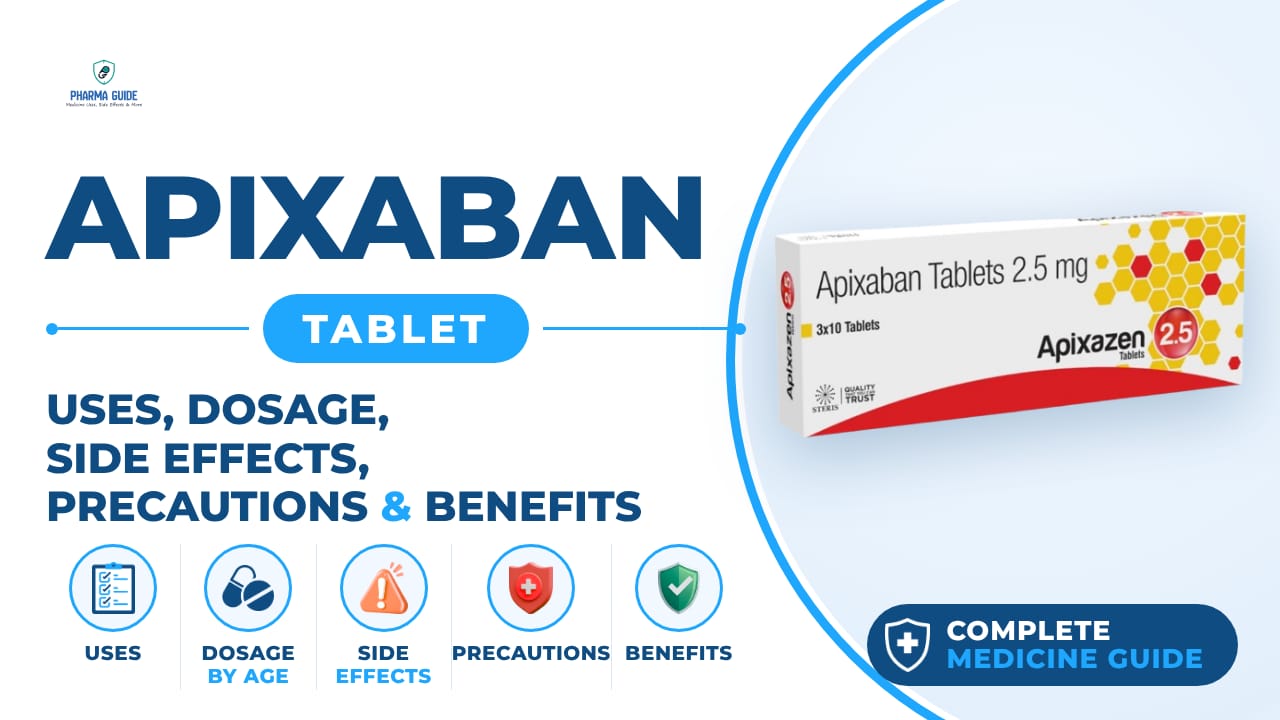
Apixaban Tablet: Uses, Dosage, Side Effects, Precautions and Alternates
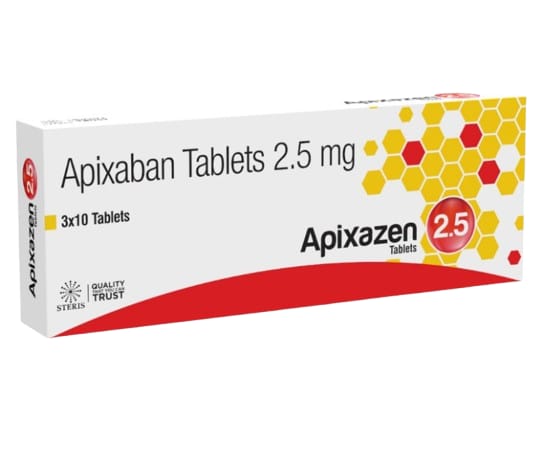
| Generic name | Apixaban |
|---|---|
| Drug class | Factor Xa inhibitor (anticoagulant / antithrombotic agent) |
| Forms | Tablet, Tablet or granules for oral suspension (liquid mixture) to be mixed with water |
Quick overview
Apixaban is an oral anticoagulant, or "blood thinner," that belongs to a group of medicines called factor Xa inhibitors. It is used to prevent strokes and blood clots in people with atrial fibrillation, to prevent and treat deep vein thrombosis (DVT) and pulmonary embolism (PE), and to help stop these clots from returning. It works by blocking Factor Xa, a substance the body needs to form blood clots, and is typically taken as a tablet twice daily with or without food.
What is Apixaban Tablet
Apixaban is an oral anticoagulant, sometimes called a 'blood thinner.' It belongs to a group of medicines called factor Xa inhibitors and helps prevent blood clots from forming by blocking a natural substance in the blood called Factor Xa that is needed for clotting.
Apixaban Tablet uses
- Prevent strokes or blood clots in people who have atrial fibrillation (an irregular heartbeat that can lead to blood clots and stroke)
- Prevent deep vein thrombosis (DVT, a blood clot usually in the leg) and pulmonary embolism (PE, a blood clot in the lung) after hip or knee replacement surgery
- Treat DVT and PE
- Prevent DVT and PE from happening again after initial treatment
Benefits of Apixaban Tablet
- Helps lower the risk of stroke and blood clots in people with atrial fibrillation
- Treats existing blood clots in the legs (DVT) and lungs (PE)
- Reduces the chance of blood clots forming again after treatment
- Can be taken as a tablet with or without food, without need for routine blood test monitoring
How Apixaban Tablet works
Apixaban blocks a substance in the blood called Factor Xa that is needed to form blood clots. By blocking Factor Xa, it stops the chain of events that leads to clot formation, which helps prevent or treat harmful blood clots.
Apixaban Tablet dosage
Take apixaban twice a day, at around the same times each day. It can be taken with or without food. Swallow the tablet whole with water; do not skip doses or take extra doses without talking to your doctor. If you cannot swallow tablets whole, they may be crushed and mixed with water, apple juice, or applesauce, and the mixture should be swallowed right away after preparing it.
Continue taking apixaban even if you feel well; do not stop without talking to your doctor first, because stopping suddenly can raise your risk of a blood clot or stroke. If you miss a dose, take it as soon as you remember; if it is almost time for your next dose, skip the missed dose and go back to your normal schedule — do not take two doses at once.
Tell your doctor if you are having any surgery, including dental surgery, because your doctor may tell you to stop taking apixaban for a short time beforehand.
| Age group | Dose |
|---|---|
| Under 18 years | Specialist-directed dosing required |
| 18–79 years | 5 mg twice daily for atrial fibrillation in most patients |
| 80 years & older | 5 mg twice daily, or 2.5 mg twice daily if dose-reduction criteria are met |
| Adults | 5 mg twice daily for atrial fibrillation in most patients |
Available forms and strengths
- Tablet
- Tablet or granules for oral suspension (liquid mixture) to be mixed with water
Side effects of Apixaban Tablet
Common
- Nausea
- Bruising more easily than usual
- Anemia (low red blood cells), which may cause tiredness, weakness, or paleness
- Minor bleeding such as nosebleeds or bleeding gums
Serious
- Bleeding gums, nosebleeds
- Heavy vaginal bleeding
- Red, pink, or brown urine
- Red or black, tarry stools
- Coughing up or vomiting blood or material that looks like coffee grounds
- Swelling or joint pain
- Severe headache
- Vomiting
- Rash or allergic reaction
- Chest pain or tightness
- Swelling of the face or tongue
- Trouble breathing or wheezing
- Feeling dizzy or faint
- Bleeding or bruising that is unusual, severe, or will not stop
- Signs of kidney damage from bleeding in the kidney (anticoagulant-related nephropathy), such as blood in urine or reduced urine output
Warnings and precautions
- Apixaban is not recommended during pregnancy because its effects on pregnancy and the unborn baby are not known.
- Contact your doctor immediately if you become pregnant while taking it.
- It is not known if apixaban passes into human breast milk.
- You and your doctor will need to decide whether you should stop breastfeeding or stop taking apixaban.
- Apixaban should be used with caution in people with kidney disease.
- It is not recommended in patients with very severe kidney impairment or those on dialysis. Your doctor may need to adjust your dose based on your kidney function.
- Apixaban should not be used in people with liver disease that causes bleeding problems, and should be used with caution in people with mild or moderate liver impairment.
- It is not recommended in people with severe liver impairment.
- Apixaban is not expected to affect your ability to drive or use machines, but use caution and tell your doctor if you notice any changes in how you feel.
- Stopping apixaban suddenly increases your risk of stroke or blood clots, which can be serious or life-threatening. Do not stop taking it without talking to your doctor first.
- If you have a tube or injection in your spine (such as for anesthesia or pain control) while taking apixaban, you could develop a blood clot near your spine that may cause paralysis.
- Tell your doctor about any spine problems, back surgery, or spinal injections.
- Apixaban should not be used by people who have an artificial heart valve or uncontrolled heavy bleeding.
- Certain medicines, including some antifungal drugs, HIV medicines, and other blood thinners, must not be combined with apixaban due to serious interaction risks.
- Falling or injuring yourself, especially hitting your head, while taking apixaban requires prompt medical evaluation because of bleeding risk.
Storage
- Keep this medication in the container it came in, tightly closed, and out of reach of children
- Store it at room temperature and away from light, excess heat, and moisture (not in the bathroom)
- Dispose of unneeded medications through a medicine take-back program rather than throwing them in household trash or flushing them
- Keep all medication out of sight and reach of children, as many containers are not child-resistant
When to see a doctor
- Call your doctor immediately or get emergency care if you notice signs of bleeding such as bleeding gums, nosebleeds, heavy vaginal bleeding, red/pink/brown urine, red or black tarry stools, or coughing up or vomiting blood or material like coffee grounds.
- Seek emergency help if you experience swelling of the face or tongue, trouble breathing or wheezing, or chest pain or tightness, as these may be signs of a serious allergic reaction.
- Get emergency medical treatment right away if you experience numbness or weakness in your legs or feet, or trouble controlling your bladder or bowels, which could indicate a blood clot near the spine.
- If you think you have taken more apixaban than prescribed, contact a healthcare professional, hospital emergency department, or your regional poison control center right away, even if you feel fine.
Alternatives
- Eliquis
- Eliquis Sprinkle
- Rivaroxaban
- Dabigatran
Watch the video
FAQs
What is Apixaban Tablet used for?
Apixaban is used to prevent strokes and blood clots in people with atrial fibrillation, to prevent and treat deep vein thrombosis (DVT) and pulmonary embolism (PE), and to help prevent these clots from returning.
How does Apixaban work?
Apixaban blocks a substance in the blood called Factor Xa that is needed to form blood clots, stopping the chain of events that leads to clot formation.
How should I take Apixaban Tablet?
Apixaban is taken twice a day at around the same times, with or without food. Swallow the tablet whole with water, or if unable to swallow whole, it may be crushed and mixed with water, apple juice, or applesauce and swallowed right away.
What should I do if I miss a dose of Apixaban?
If you miss a dose, take it as soon as you remember. If it is almost time for your next dose, skip the missed dose and go back to your normal schedule; do not take two doses at once.
What are the serious side effects of Apixaban?
Serious side effects include bleeding gums, nosebleeds, heavy vaginal bleeding, red/pink/brown urine, red or black tarry stools, coughing up or vomiting blood, swelling of the face or tongue, trouble breathing, chest pain, and signs of kidney damage from bleeding.
General information, not medical advice
Your prescriber and the leaflet in your pack know your situation. This page does not.
- Follow your prescriber and the leaflet
- Don't start, stop, or change a dose on your own
- Doses and warnings differ by country and product
Sources
- MedlinePlus (National Library of Medicine): https://medlineplus.gov/druginfo/meds/a613032.html
- NRA-Apixaban Tablets Product Monograph, Nora Pharma Inc.
- StatPearls (NCBI Bookshelf): Apixaban, https://www.ncbi.nlm.nih.gov/books/NBK507910/
- European Medicines Agency Summary of Product Characteristics, Apixaban Accord
- Australian Commission on Safety and Quality in Health Care, Medicine Finder: Apixaban Sandoz, https://www.safetyandquality.gov.au/medicine-finder/apixaban-sandoz
- Steris Healthcare Pvt. Ltd. product information for APIXAZEN 5 (Apixaban 5mg)
Video
Related medicines

Injectafer Injection: Uses, Dosage, Side Effects, Precautions and Alternates
Iron products
Injectafer (ferric carboxymaltose) treats iron deficiency anemia and heart failure-related iron deficiency via IV. Learn uses, dosage, side effects, and

Gliclazide Tablet: Uses, Dosage, Side Effects, Precautions and Alternates
Sulfonylurea (hypoglycemic/antidiabetic agent)
Gliclazide Tablet is a sulfonylurea for type 2 diabetes that boosts insulin release. Learn about dosage, side effects, warnings, and precautions.