
Safety
General information, not medical advice
Your prescriber and the leaflet in your pack know your situation. This page does not.
- Follow your prescriber and the leaflet
- Don't start, stop, or change a dose on your own
- Doses and warnings differ by country and product
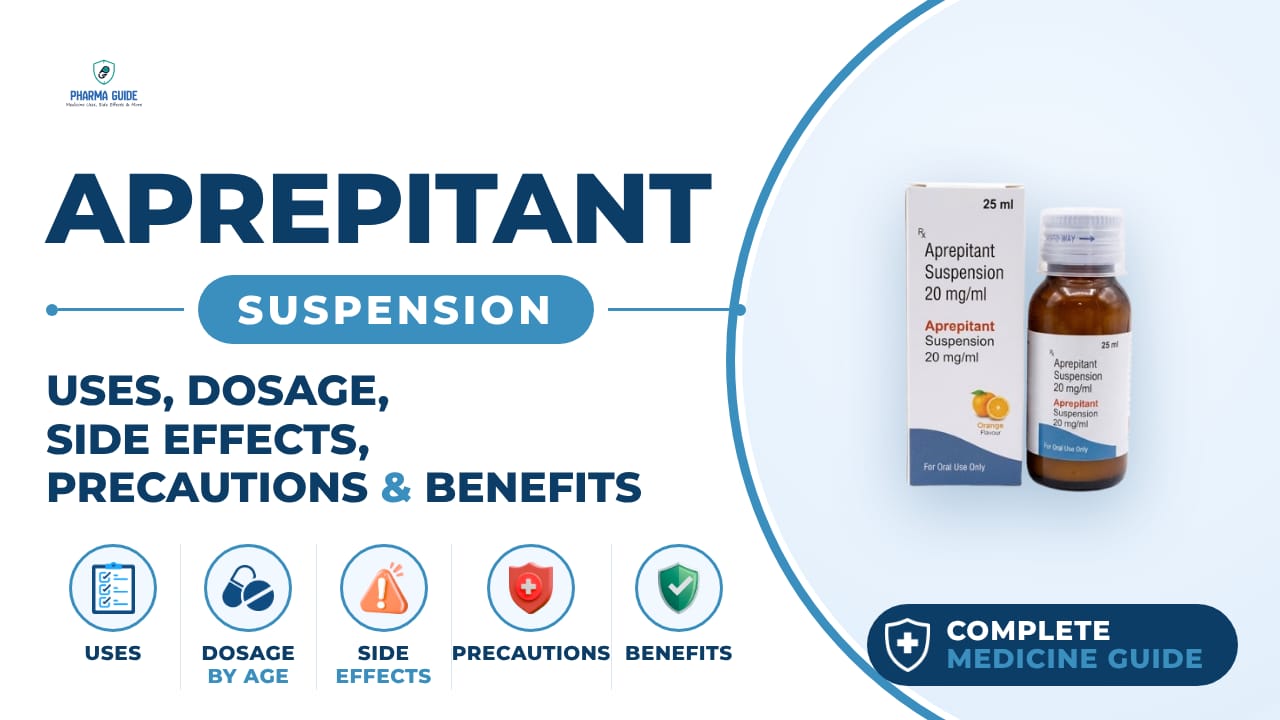
Aprepitant Suspension: Uses, Dosage, Side Effects, Precautions and Alternates
| Generic name | aprepitant |
|---|---|
| Drug class | NK1 receptor antagonists |
| Forms | Capsule, Oral suspension (liquid), Intravenous emulsion |
Quick overview
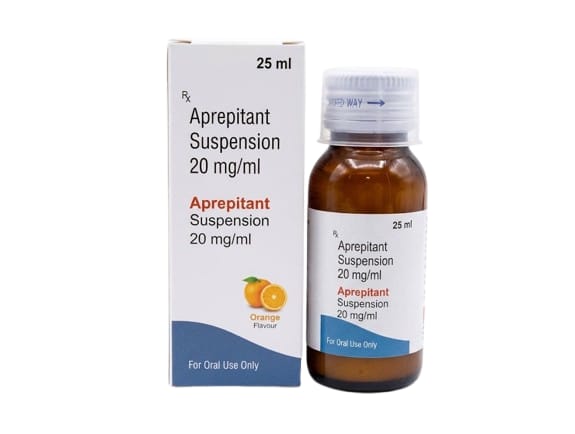
Aprepitant Suspension contains aprepitant, a medicine from the NK1 receptor antagonist class. It is used together with other anti-nausea medicines to help prevent nausea and vomiting caused by cancer chemotherapy, including both acute and delayed symptoms. It is not used to treat nausea and vomiting that has already started. It works by blocking a natural brain chemical involved in triggering these symptoms.
What is Aprepitant Suspension
Aprepitant is a prescription medicine used together with other anti-nausea medicines to help prevent nausea and vomiting caused by cancer chemotherapy. It is not used to treat nausea and vomiting you already have.
Aprepitant Suspension uses
- Prevention of chemotherapy-related nausea
- Prevention of chemotherapy-related vomiting
- Prevention of acute nausea and vomiting
- Prevention of delayed nausea and vomiting
- Use with other antiemetic medicines during chemotherapy
Benefits of Aprepitant Suspension
- Helps prevent nausea caused by chemotherapy
- Helps prevent vomiting
- Reduces delayed nausea after chemotherapy
- Supports comfort during cancer treatment
- May reduce the need for additional anti-nausea medicine
How Aprepitant Suspension works
Aprepitant blocks the action of a natural brain chemical called substance P/neurokinin, which is involved in triggering nausea and vomiting.
Aprepitant Suspension dosage
This medicine is taken once daily, with or without food. Capsules should be swallowed whole and should not be split, chewed, or crushed. The oral suspension (liquid) is prepared by a healthcare provider and given in a prefilled oral dispenser. When using the oral suspension, the cap is taken off the dispenser, placed in the mouth along the inner cheek, and the medicine is slowly released. It is usually taken only during the first 3 days of each chemotherapy treatment cycle, and should not be taken longer than your doctor tells you to.
If you forget a dose, take it as soon as you remember, but if it is almost time for the next dose, skip the missed dose and continue your regular schedule. Do not double up on doses.
| Age group | Dose |
|---|---|
| Under 18 years | Not recommended |
| 18–64 years | 80 mg once/day |
| 65+ years | 80 mg once/day |
Available forms and strengths
- Capsule
- Oral suspension (liquid)
- Intravenous emulsion
Side effects of Aprepitant Suspension
Common
- Tiredness or weakness
- Dizziness
- Headache
- Constipation
- Diarrhea
- Indigestion or heartburn
- Loss of appetite
- Gas or bloating
- Hiccups
- Stomach pain or discomfort
- Low blood pressure
- Decreased white or red blood cell counts
- Hair loss
- Acne
- Changes in walking pattern
Serious
- Slow, fast, or irregular heartbeat
- Severe upper stomach pain
- Symptoms of severe skin reactions such as redness, itching, pain, swelling, blistering, or skin peeling
- Signs of anemia such as shortness of breath or looking pale
- Frequent signs of infection such as fever, severe chills, sore throat, or mouth ulcers
- Signs of an allergic reaction such as swelling of the face, lips, mouth, throat, or tongue, hives, or difficulty breathing or swallowing
Warnings and precautions
- Aprepitant has not been well studied in pregnant women and may harm an unborn baby. It should only be used during pregnancy if clearly needed, and you should tell your doctor right away if you become pregnant while taking it.
- It is not known if aprepitant passes into breast milk. Talk with your doctor about the best way to feed your baby if you are taking this medicine.
- Tell your doctor if you have liver disease, including severe liver disease, before taking this medicine.
- Avoid alcohol, as it may make you feel more tired and drowsy while taking this medicine.
- Be careful driving or operating machinery until you know how this medicine affects you, since it may cause tiredness and dizziness in some people.
- Taking this medicine with cisapride, pimozide, terfenadine, astemizole, or St John's Wort may cause serious or life-threatening reactions, so these combinations should be avoided.
- This medicine can make hormonal birth control (pills, patches, rings, implants, or injections) less effective. Use a back-up, non-hormonal method of contraception during treatment and for one month after the last dose.
- If you take warfarin (a blood thinner), your doctor may need to monitor your blood clotting tests more closely after you take this medicine.
- Avoid grapefruit, pomelo, starfruit, and pomegranate while taking this medicine, as they may change how your body processes the drug and increase the risk of side effects.
- This medicine is not for long-term, continuous use; only take it as long as your doctor directs.
Storage
- Keep capsules in the blister pack until it is time to take them
- Keep in a cool, dry place where the temperature stays below 30°C; do not store in the bathroom or near a sink
- Do not leave it in the car or on window sills, as heat and dampness can damage the medicine
- Keep out of reach and sight of children, ideally in a locked cupboard at least one and a half metres above the ground
- Store the oral suspension dispenser in the refrigerator until time for the dose; it can be kept at room temperature for up to 3 hours before use
- The prepared oral suspension dose must be used within 72 hours of preparation; discard any unused doses after this time
- If your doctor tells you to stop taking it, or the medicine has expired, ask your pharmacist what to do with leftover medicine
- Do not flush medicine down the toilet; use a medicine take-back program if available
When to see a doctor
- Get emergency help right away if you have signs of a serious allergic reaction, such as swelling of the face, lips, mouth, throat or tongue, difficulty breathing or swallowing, or hives.
- Tell your doctor immediately if you notice a slow, fast, or irregular heartbeat, severe upper stomach pain, signs of severe sunburn-like skin reactions, signs of anemia, or frequent signs of infection.
- If you think you or someone else may have taken too much of this medicine, contact your doctor or local poison control immediately, or go to the nearest emergency room, even if there are no symptoms.
Alternatives
- Palonosetron
- Granisetron
- Ondansetron
Watch the video
FAQs
What is Aprepitant Suspension used for?
It is used together with other anti-nausea medicines to help prevent nausea and vomiting caused by cancer chemotherapy, including both acute and delayed symptoms. It is not used to treat nausea and vomiting that has already started.
How does Aprepitant Suspension work?
It blocks the action of a natural brain chemical called substance P/neurokinin, which is involved in triggering nausea and vomiting.
How is Aprepitant Suspension taken?
It is taken once daily, with or without food, usually during the first 3 days of each chemotherapy treatment cycle. The oral suspension is prepared by a healthcare provider and given in a prefilled oral dispenser, with the cap taken off and placed along the inner cheek to slowly release the medicine.
What should be avoided while taking Aprepitant Suspension?
Avoid alcohol, as it may increase tiredness and drowsiness. Also avoid grapefruit, pomelo, starfruit, and pomegranate, as they may change how your body processes the drug and increase the risk of side effects. Certain medicines like cisapride, pimozide, terfenadine, astemizole, or St John's Wort should also be avoided due to the risk of serious reactions.
Can Aprepitant Suspension affect birth control?
Yes, it can make hormonal birth control such as pills, patches, rings, implants, or injections less effective. A back-up, non-hormonal method of contraception should be used during treatment and for one month after the last dose.
General information, not medical advice
Your prescriber and the leaflet in your pack know your situation. This page does not.
- Follow your prescriber and the leaflet
- Don't start, stop, or change a dose on your own
- Doses and warnings differ by country and product
Sources
Video
Related medicines

Injectafer Injection: Uses, Dosage, Side Effects, Precautions and Alternates
Iron products
Injectafer (ferric carboxymaltose) treats iron deficiency anemia and heart failure-related iron deficiency via IV. Learn uses, dosage, side effects, and

Gliclazide Tablet: Uses, Dosage, Side Effects, Precautions and Alternates
Sulfonylurea (hypoglycemic/antidiabetic agent)
Gliclazide Tablet is a sulfonylurea for type 2 diabetes that boosts insulin release. Learn about dosage, side effects, warnings, and precautions.