
Safety
General information, not medical advice
Your prescriber and the leaflet in your pack know your situation. This page does not.
- Follow your prescriber and the leaflet
- Don't start, stop, or change a dose on your own
- Doses and warnings differ by country and product
Apresoline Tablet: Uses, Dosage, Side Effects, Precautions and Alternates
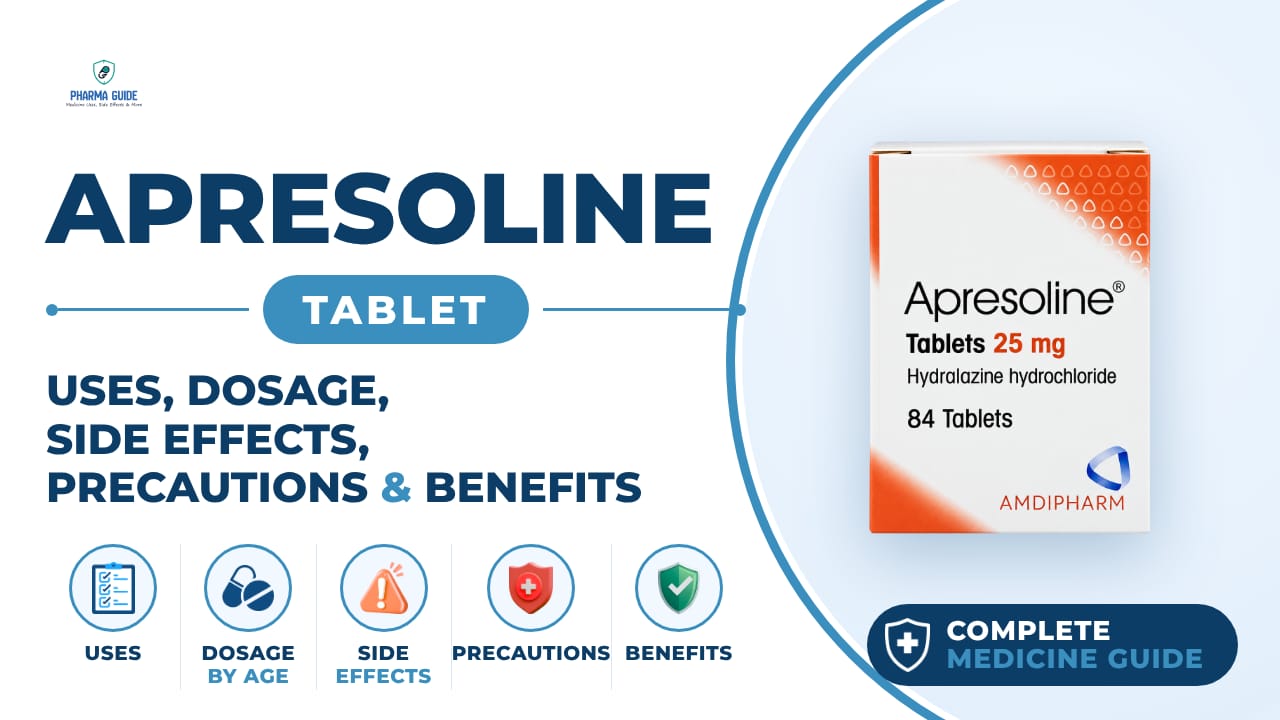
| Generic name | hydralazine hydrochloride |
|---|---|
| Drug class | Vasodilator (antihypertensive) |
| Forms | Tablet (coated), Injection (given into a vein or muscle) |
Quick overview
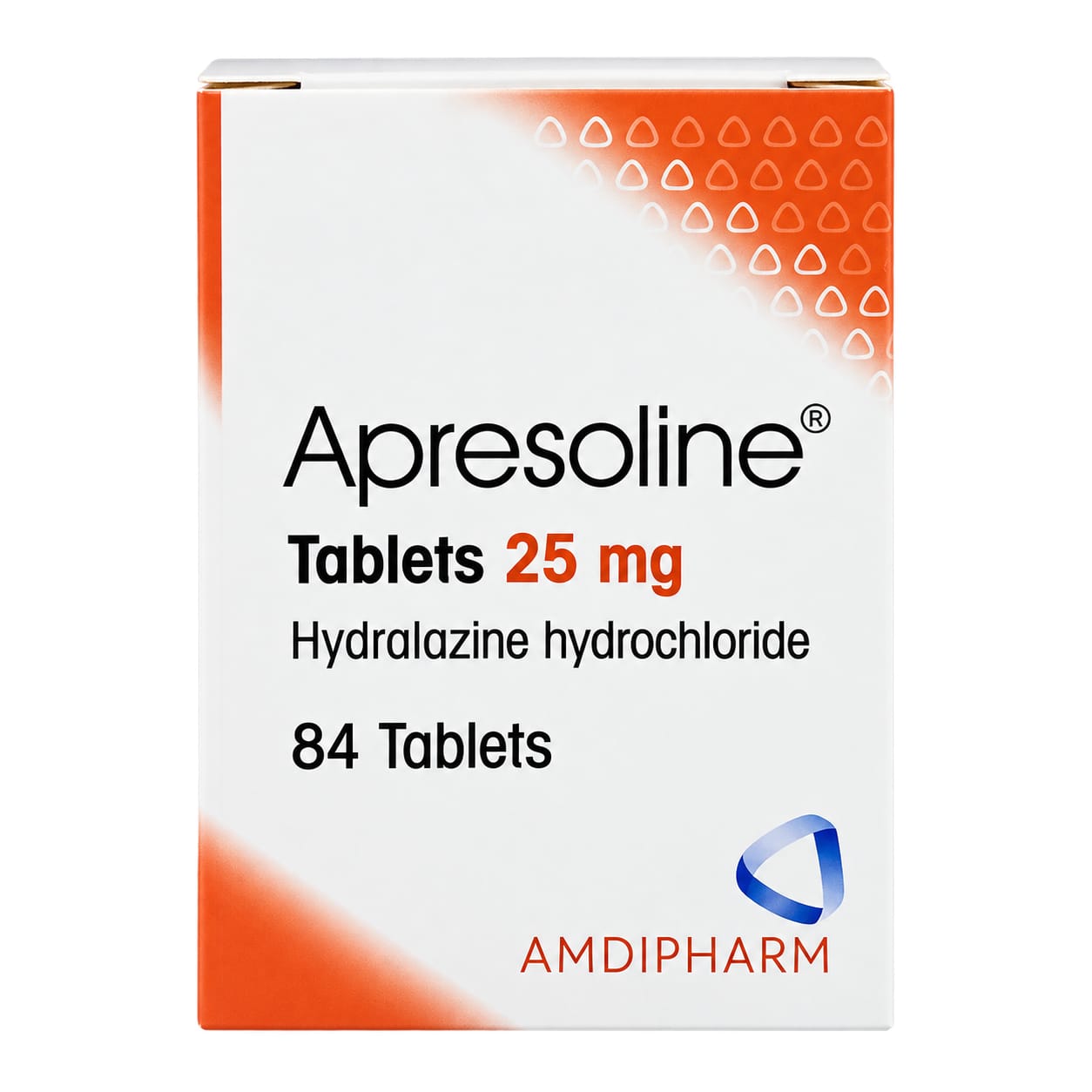
Apresoline Tablet contains hydralazine hydrochloride, a vasodilator used to treat high blood pressure. It works by relaxing and widening blood vessels, making it easier for blood to flow and reducing strain on the heart. It is available as a coated tablet or as an injection, and is used alone or together with other blood pressure medicines.
What is Apresoline Tablet
Apresoline is a prescription medicine that contains hydralazine. It is used to treat high blood pressure by relaxing and widening blood vessels.
Apresoline Tablet uses
- High blood pressure (hypertension)
- Used to reduce very high blood pressure quickly, especially in late pregnancy (injection form)
- Essential hypertension, alone or combined with other blood pressure medicines
Benefits of Apresoline Tablet
- Lowers blood pressure by relaxing blood vessels
- Helps blood and oxygen flow more easily to the heart, brain, spleen, and kidneys
- Can help reduce the risk of stroke or heart attack caused by high blood pressure
How Apresoline Tablet works
Apresoline relaxes the muscles in the walls of your blood vessels, causing them to widen. This makes it easier for blood to flow through and lowers your blood pressure.
Apresoline Tablet dosage
Follow all directions on your prescription label and do not change your dose without talking to your doctor. Take the medicine regularly and continuously as directed, even if you feel well, since high blood pressure often has no symptoms. Your blood pressure will need to be checked often, and you may also need regular blood tests. Taking this medicine with food can raise the amount of drug in your blood, so follow your doctor's instructions on timing with meals. If you miss a dose, take it as soon as you remember, but skip it if it is almost time for your next dose — do not double up.
| Age group | Dose |
|---|---|
| 12–17 years | Weight-based dosing, commonly starting around 0.75 mg/kg/day in divided doses |
| 18–39 years | 10 mg four times daily initially |
| 40–64 years | 10 mg four times daily initially |
Available forms and strengths
- Tablet (coated)
- Injection (given into a vein or muscle)
Side effects of Apresoline Tablet
Common
- Chest pain, fast heart rate
- Headache
- Nausea, vomiting, diarrhea, loss of appetite
- Decreased appetite
- Pounding or fast heartbeat
- Dizziness or light-headedness
- Feeling anxious or agitated
- Flushing of the skin
- Congested (blocked) nose
- Red, swollen, or teary eyes
- Shaking or tremors
- Numbness or tingling in hands or feet
Serious
- Chest pain or pressure, pain spreading to the jaw or shoulder
- Fast or pounding heartbeats
- A light-headed feeling like you might pass out
- Numbness, tingling, or burning pain in hands or feet
- Painful or difficult urination, or little or no urination
- Lupus-like syndrome: joint pain or swelling with fever, swollen glands, muscle aches, chest pain, vomiting, unusual thoughts or behavior, and patchy skin color
- Signs of a severe allergic reaction: hives, difficulty breathing, swelling of the face, lips, tongue, or throat
- Blood disorders: fever, shortness of breath, pale or yellowish skin, easy bruising or bleeding, frequent infection, unusual weakness or tiredness
- Yellow color to skin or eyes
- Unusual bruising or bleeding under the skin
- Swelling of feet or legs due to extra fluid
- Depression or hallucinations
Warnings and precautions
- Do not use this medicine if you have coronary artery disease or rheumatic heart disease affecting the mitral valve.
- This medicine can sometimes cause a lupus-like illness. Your doctor may need to do regular blood tests to check for this, even if you feel fine.
- This medicine must not be given to children because there isn't enough information about its safe use in them.
- Avoid standing up too quickly from sitting or lying down, as this can cause dizziness and increase the risk of falling.
- Tell your doctor if you are pregnant or planning to become pregnant. It is not known for certain how this medicine affects an unborn baby, though the injection form is sometimes used late in pregnancy to control very high blood pressure under medical supervision.
- This medicine can pass into breast milk. Tell your doctor if you are breastfeeding before using it.
- Tell your doctor if you have kidney disease, as this medicine should be used carefully in people with kidney problems.
- Tell your doctor if you have liver problems before taking this medicine.
- Be careful drinking alcohol while taking this medicine, since the combination can make your blood pressure drop further and cause dizziness or light-headedness.
- Be careful driving, operating machinery, or doing anything that requires alertness until you know how this medicine affects you, since it can cause dizziness.
Storage
- Store at room temperature away from moisture and heat.
- Do not store above 86°F (30°C).
- Dispense in tight, light-resistant container.
- Hydralazine should be stored at room temperature, between 68 F and 77 F (20 C and 25 C). It can be exposed to temperatures between 59 F and 86 F (15 C and 30 C), for shorter periods of time, such as when transporting it. Store in a cool, dry place. Keep tightly closed. Protect from light.
When to see a doctor
- Get emergency help right away if you have signs of a severe allergic reaction, such as hives, trouble breathing, or swelling of your face, lips, tongue, or throat.
- Call your doctor right away if you have chest pain or pressure, pain spreading to your jaw or shoulder, a fast or pounding heartbeat, or a feeling like you might pass out.
- Stop the medicine and contact your doctor if you get pain, burning, tingling, numbness, or weakness in your arms, hands, legs, or feet.
- If you think you have taken too much of this medicine, get emergency medical help or contact a poison control center right away.
Alternatives
- Losartan
- Hydrochlorothiazide
- Lisinopril
Watch the video
FAQs
What is Apresoline Tablet used for?
Apresoline Tablet is used to treat high blood pressure (hypertension) by relaxing and widening blood vessels. It can be used alone or with other blood pressure medicines, and the injection form is used to reduce very high blood pressure quickly, especially in late pregnancy.
How does Apresoline Tablet work?
Apresoline relaxes the muscles in the walls of blood vessels, causing them to widen. This makes it easier for blood to flow through and lowers blood pressure.
What are the common side effects of Apresoline Tablet?
Common side effects include chest pain, fast heart rate, headache, nausea, vomiting, diarrhea, loss of appetite, dizziness, anxiety, flushing, congested nose, red or teary eyes, shaking, and numbness or tingling in hands or feet.
Can Apresoline Tablet be taken during pregnancy?
It is not known for certain how this medicine affects an unborn baby, though the injection form is sometimes used late in pregnancy to control very high blood pressure under medical supervision. You should tell your doctor if you are pregnant or planning to become pregnant.
What precautions should be followed when taking Apresoline Tablet?
Avoid standing up too quickly to prevent dizziness, be careful with alcohol as it can further lower blood pressure, and avoid driving or operating machinery until you know how the medicine affects you. It should not be used in children, and people with kidney or liver problems should inform their doctor before use.
General information, not medical advice
Your prescriber and the leaflet in your pack know your situation. This page does not.
- Follow your prescriber and the leaflet
- Don't start, stop, or change a dose on your own
- Doses and warnings differ by country and product
Sources
Video
Related medicines

Injectafer Injection: Uses, Dosage, Side Effects, Precautions and Alternates
Iron products
Injectafer (ferric carboxymaltose) treats iron deficiency anemia and heart failure-related iron deficiency via IV. Learn uses, dosage, side effects, and

Gliclazide Tablet: Uses, Dosage, Side Effects, Precautions and Alternates
Sulfonylurea (hypoglycemic/antidiabetic agent)
Gliclazide Tablet is a sulfonylurea for type 2 diabetes that boosts insulin release. Learn about dosage, side effects, warnings, and precautions.