
Safety
General information, not medical advice
Your prescriber and the leaflet in your pack know your situation. This page does not.
- Follow your prescriber and the leaflet
- Don't start, stop, or change a dose on your own
- Doses and warnings differ by country and product
Apriso Capsule: Uses, Dosage, Side Effects, Precautions and Alternates
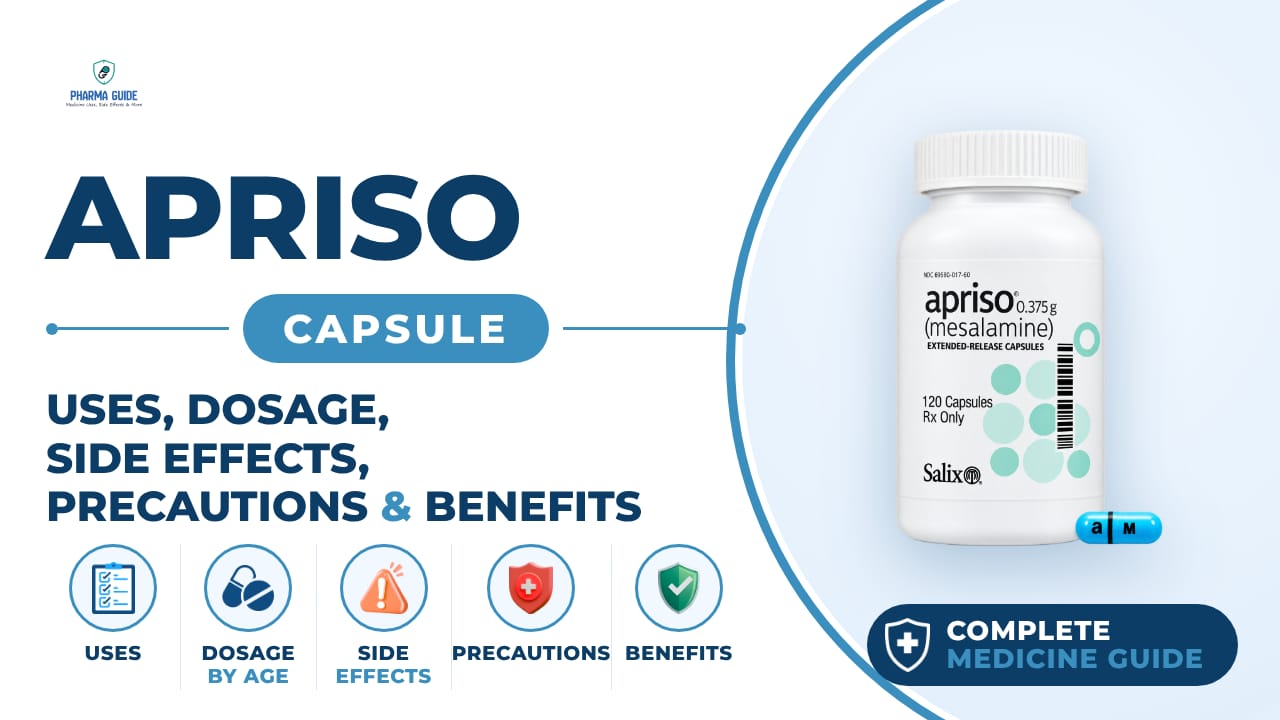
| Generic name | mesalamine |
|---|---|
| Drug class | aminosalicylate (5-aminosalicylate) |
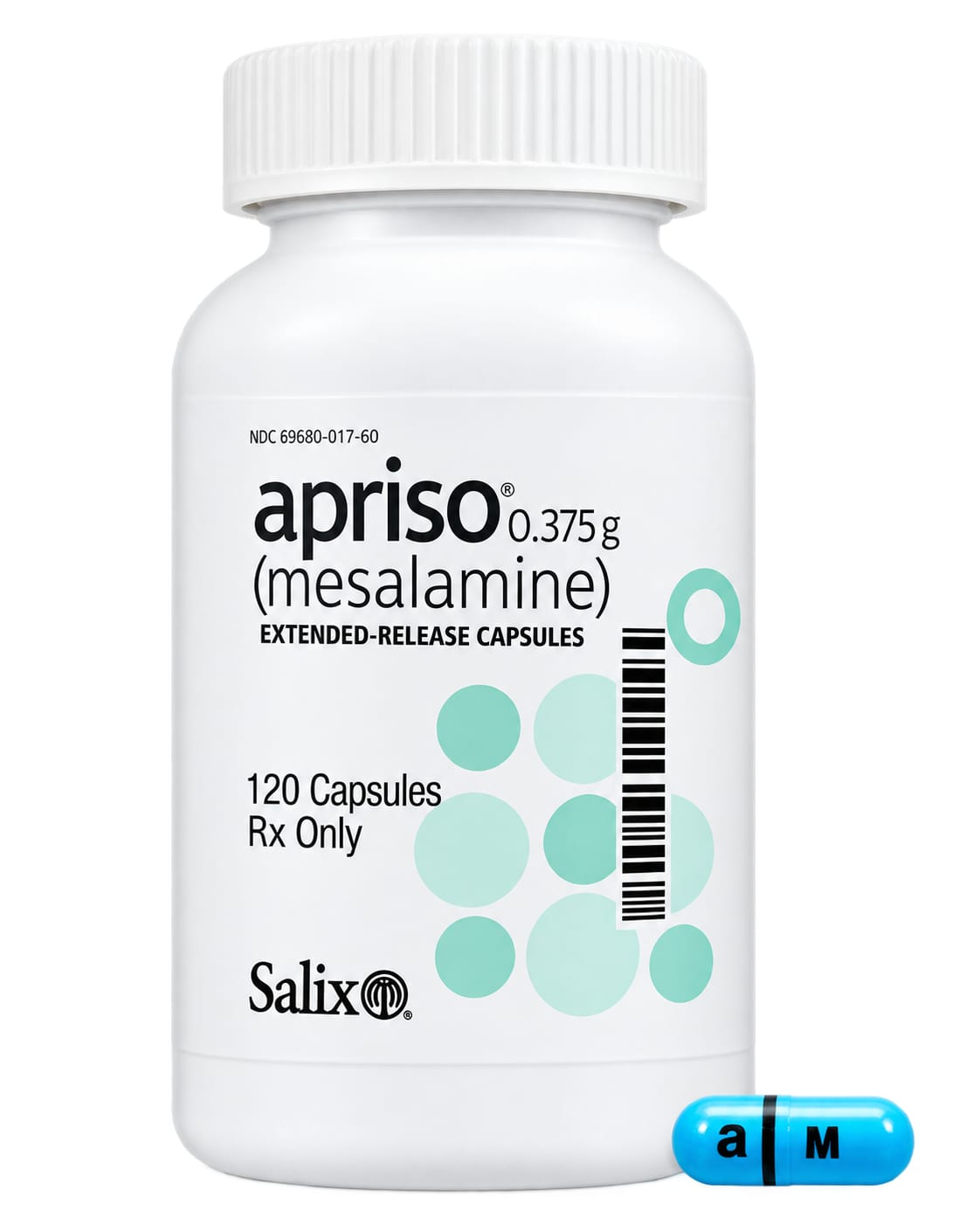
| Forms | Extended-release capsules (0.375 g) |
Quick overview
Apriso Capsule is a prescription medicine containing mesalamine, an aminosalicylate. It is used in adults to help keep ulcerative colitis under control once it is in remission. Apriso works directly in the lining of the intestine and is taken once daily in the morning as an extended-release capsule.
What is Apriso Capsule
Apriso is a prescription capsule medicine containing mesalamine. It is used in adults to help keep ulcerative colitis under control once it is in remission.
Apriso Capsule uses
- Maintenance of remission of ulcerative colitis in adults
- Used to prevent the symptoms of ulcerative colitis from coming back
- Maintains remission of ulcerative colitis in adults
- Helps control inflammation in the colon
- Helps reduce the risk of recurrence of ulcerative-colitis symptoms
- Used as maintenance treatment after active disease has been brought under control
- Apriso's labeled indication is specifically maintenance of remission, rather than treatment of an acute flare
Benefits of Apriso Capsule
- Helps patients with ulcerative colitis stay symptom-free for longer
- In studies, more people stayed relapse-free on Apriso than on placebo over six months
- Provides once-daily dosing
- Delivers mesalamine through an extended-release formulation
- Helps maintain control of ulcerative colitis
- May reduce recurrence of diarrhea, rectal bleeding, and other symptoms associated with disease relapse
- Can be taken with or without food
How Apriso Capsule works
Doctors do not fully know how Apriso works, but it seems to act directly in the lining of the intestine rather than throughout the body. It may reduce swelling by blocking the production of certain substances that cause inflammation in the gut.
Apriso Capsule dosage
Take Apriso once a day in the morning. It can be taken with or without food, but take it the same way every day for consistency. Swallow the capsule whole; do not chew, crush, break, or split it. Do not take with antacids, as this can change how the medicine dissolves and works. If you miss a dose, take it as soon as you remember that day, but skip it if it is almost time for your next dose; do not take two doses at once. Drink plenty of fluids while taking this medicine to help prevent kidney stones. Apriso is not approved for use in children or anyone younger than 18 years old.
| Age group | Dose |
|---|---|
| Under 17 years | Not established. Safety and effectiveness of Apriso have not been established in pediatric patients. |
| 18–74 years | 1,500 mg once daily in the morning (four 375 mg extended-release capsules) |
Available forms and strengths
- Extended-release capsules (0.375 g)
Side effects of Apriso Capsule
Common
- Headache
- Diarrhea
- Upper abdominal pain
- Nausea
- Common cold-like symptoms (stuffy nose, sneezing, sore throat)
- Flu or flu-like illness
- Sinusitis
- Burping, constipation, vomiting, gas
- Dizziness
- Back pain
- Rash
- Hair loss
- Fatigue
- Abnormal liver function test results
Serious
- Kidney problems, including kidney failure or kidney stones
- Mesalamine-induced acute intolerance syndrome (severe stomach pain, cramping, bloody diarrhea, sometimes with fever, headache, and rash)
- Inflammation around the heart (myocarditis or pericarditis)
- Severe skin reactions such as Stevens-Johnson syndrome or toxic epidermal necrolysis
- Liver problems, including liver failure
- Allergic reactions, including swelling of the face, lips, tongue, or throat, and trouble breathing
- Low white blood cell counts (fever, chills, mouth sores, sore throat, feeling light-headed)
Warnings and precautions
- People who are allergic to salicylates, aminosalicylates, or any ingredient in this medicine should not take it.
- This medicine contains phenylalanine, which can be harmful to people with phenylketonuria (PKU). People with PKU should account for all sources of phenylalanine in their diet.
- Do not take this medicine with antacids, since they can change the way it dissolves and works in the body.
- People with skin conditions like eczema may become more sensitive to sunlight while on this medicine and should protect their skin outdoors.
- Older adults taking this medicine may have a higher chance of certain blood cell problems, so blood counts should be monitored closely.
- It isn't known for certain whether this medicine can harm an unborn baby, but untreated ulcerative colitis during pregnancy can also cause problems. Talk with your doctor about the benefits and risks if you are pregnant or planning pregnancy.
- Small amounts of this medicine can pass into breast milk and may cause diarrhea in a breastfed baby. Talk to your doctor before breastfeeding while taking this medicine.
- This medicine can affect the kidneys, so your doctor should check your kidney function before you start and regularly during treatment. Tell your doctor if you have a history of kidney disease.
- People with existing liver disease should use this medicine carefully, as liver failure has been reported in such patients.
- This medicine isn't known to interact with alcohol, but it's a good idea to ask your doctor whether drinking alcohol is safe for you while being treated.
Storage
- Store at room temperature away from moisture and heat
- Store at 20° to 25°C (68° to 77°F); brief changes between 15° and 30°C (59° and 86°F) are allowed
When to see a doctor
- Stop taking this medicine and call your doctor right away if you get severe stomach pain, cramping, or bloody diarrhea, especially with fever, headache, or rash — this could be a reaction to the medicine.
- Get emergency medical help right away if you notice signs of a serious allergic reaction, such as hives, trouble breathing, or swelling of the face, lips, tongue, or throat.
- Call your doctor promptly if you notice signs of kidney problems, such as changes in how much you urinate, swelling, or weight gain, or signs of a kidney stone like severe side or back pain.
- Call your doctor if you notice signs of liver problems, such as loss of appetite, upper stomach pain, tiredness, easy bruising, dark urine, or yellowing of the skin or eyes.
- Call your doctor if your ulcerative colitis symptoms do not improve or get worse while taking this medicine.
Alternatives
- Lialda / mesalamine
- Asacol HD / mesalamine
- Delzicol / mesalamine
Watch the video
FAQs
What is Apriso Capsule used for?
Apriso is a prescription capsule containing mesalamine, used in adults to help keep ulcerative colitis under control once it is in remission. It helps prevent symptoms from coming back and controls inflammation in the colon.
How should I take Apriso Capsule?
Take Apriso once a day in the morning, with or without food, but consistently the same way every day. Swallow the capsule whole without chewing, crushing, breaking, or splitting it, and avoid taking it with antacids.
What is the dosage of Apriso Capsule for adults?
For adults aged 18 to 74 years, the dose is 1,500 mg once daily in the morning, taken as four 375 mg extended-release capsules.
What are the common side effects of Apriso Capsule?
Common side effects include headache, diarrhea, upper abdominal pain, nausea, cold-like symptoms, flu or flu-like illness, sinusitis, constipation, vomiting, gas, dizziness, back pain, rash, hair loss, fatigue, and abnormal liver function test results.
Can Apriso Capsule be used in children?
No, Apriso is not approved for use in children or anyone younger than 18 years old, as its safety and effectiveness have not been established in pediatric patients.
General information, not medical advice
Your prescriber and the leaflet in your pack know your situation. This page does not.
- Follow your prescriber and the leaflet
- Don't start, stop, or change a dose on your own
- Doses and warnings differ by country and product
Sources
Video
Related medicines
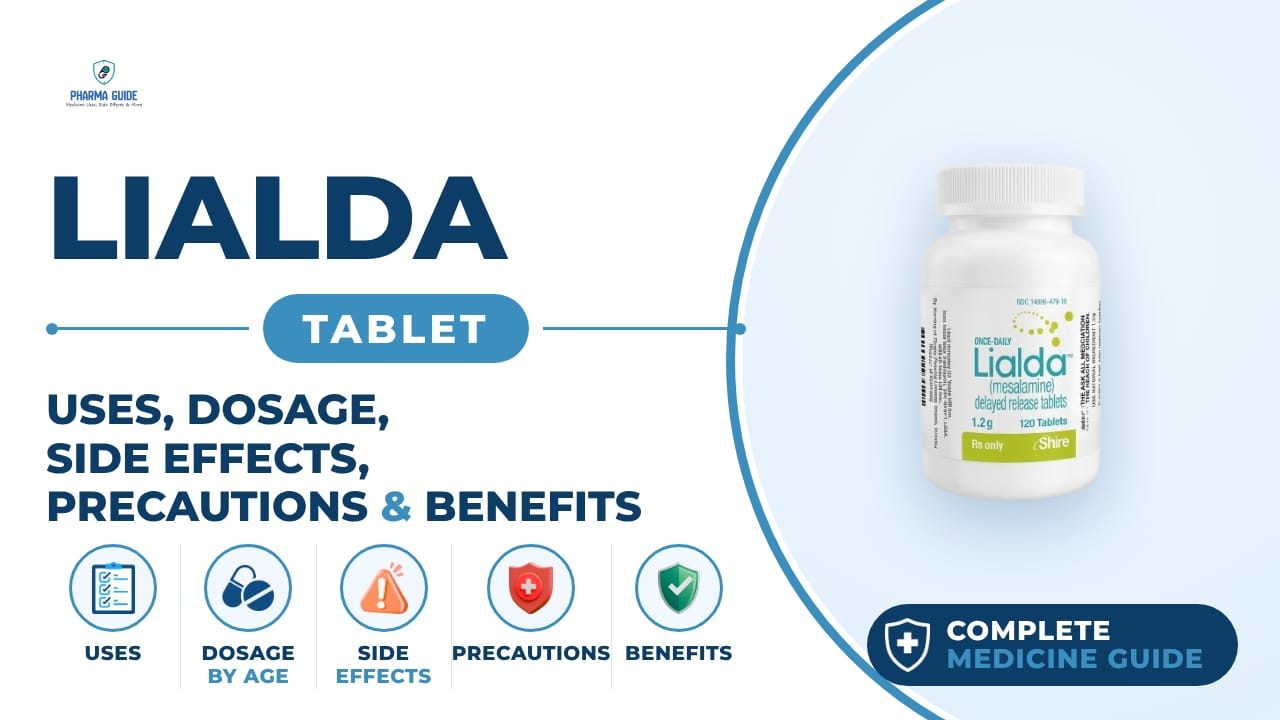
Lialda Tablet: Uses, Dosage, Side Effects, Precautions and Alternates
aminosalicylate (5-aminosalicylate)
Lialda (mesalamine) is used to induce and maintain remission of mild to moderate ulcerative colitis. Learn about dosage, side effects, and precautions.
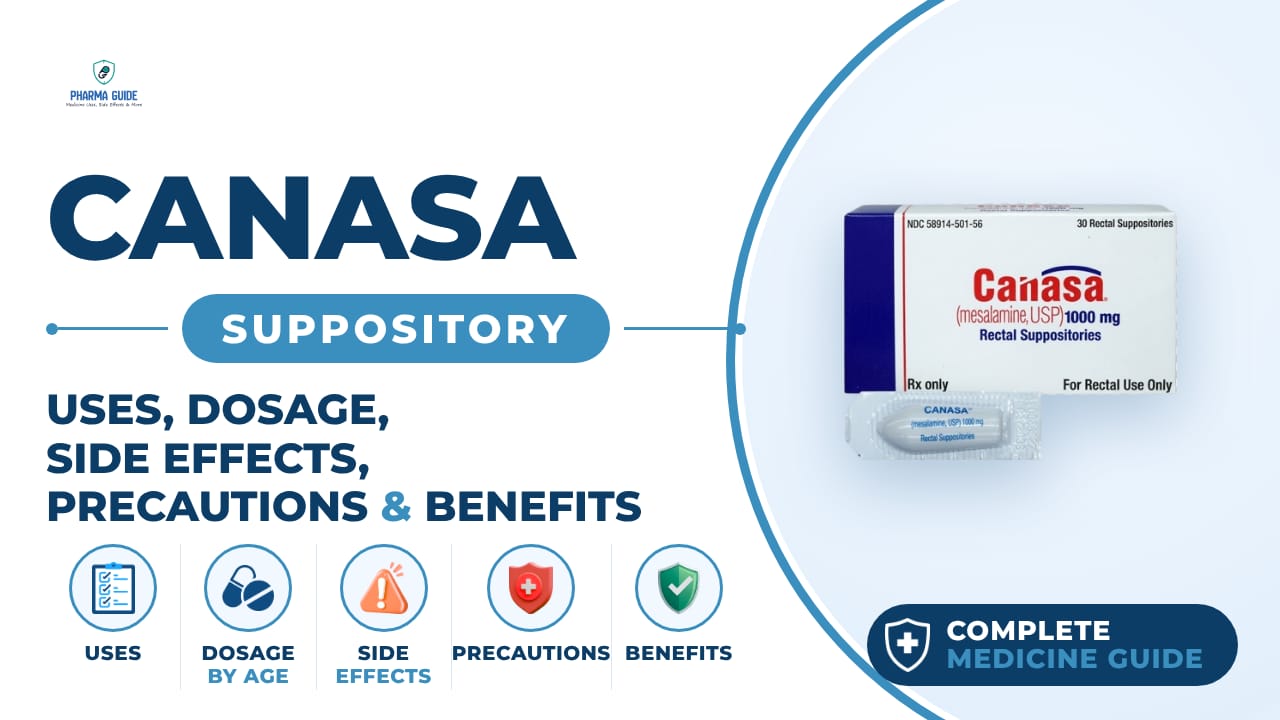
Canasa Suppository: Uses, Dosage, Side Effects, Precautions and Alternates
Aminosalicylate (5-aminosalicylate)
Canasa Suppository (mesalamine) treats ulcerative proctitis by reducing rectal inflammation, bleeding, and urgency. Learn dosage, side effects, and warnings.