
Safety
General information, not medical advice
Your prescriber and the leaflet in your pack know your situation. This page does not.
- Follow your prescriber and the leaflet
- Don't start, stop, or change a dose on your own
- Doses and warnings differ by country and product
Lialda Tablet: Uses, Dosage, Side Effects, Precautions and Alternates
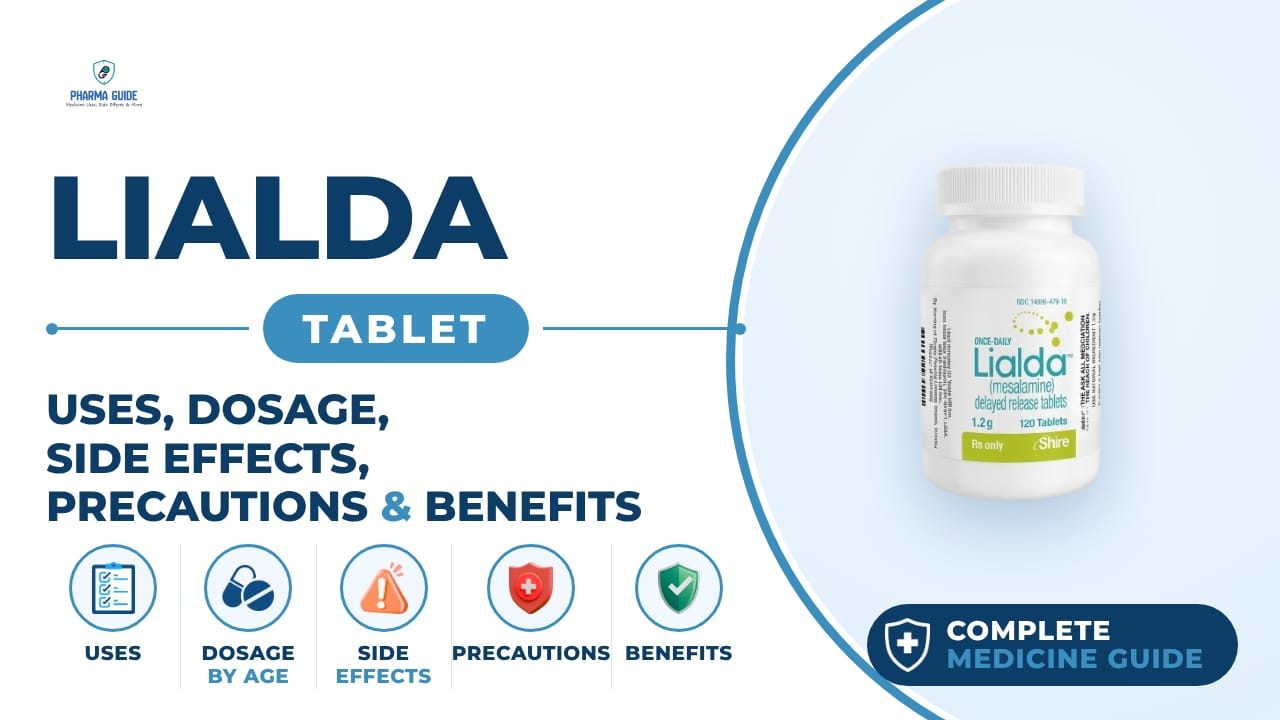
| Generic name | mesalamine |
|---|---|
| Drug class | aminosalicylate (5-aminosalicylate) |
| Forms | Delayed-release oral tablet |
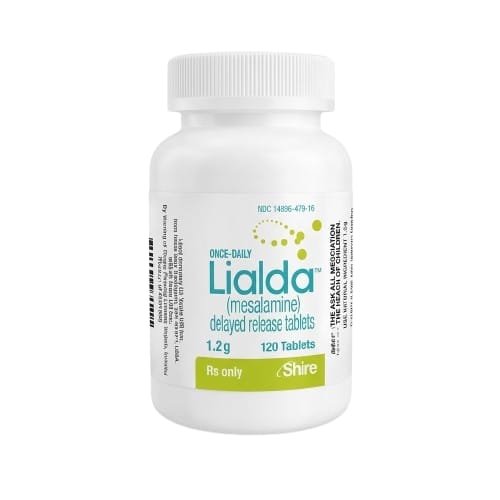
Quick overview
Lialda is a brand-name oral tablet that contains the active drug mesalamine, an aminosalicylate (5-aminosalicylate) medicine. It is used to treat ulcerative colitis, a condition that causes inflammation in the colon. Lialda is taken long term, usually once daily with food, to help induce and maintain remission of this ongoing digestive condition.
What is Lialda Tablet
Lialda is a brand-name oral tablet that contains the active drug mesalamine. It is used to treat ulcerative colitis, a condition that causes inflammation in the colon.
Lialda Tablet uses
- Inducing remission of active, mild to moderate ulcerative colitis in adults
- Maintaining remission of mild to moderate ulcerative colitis in adults
- Treating mild to moderately active ulcerative colitis in children who can swallow tablets whole and weigh at least 24 kilograms (about 53 pounds)
Benefits of Lialda Tablet
- Helps reduce bowel inflammation.
- May reduce rectal bleeding.
- Helps improve bowel movement consistency.
- Supports remission of ulcerative colitis.
- Helps maintain symptom control.
How Lialda Tablet works
Lialda's exact mechanism is not fully understood, but it is thought to work by blocking certain chemicals in the gut lining that cause swelling and irritation, which lowers inflammation in the colon.
Lialda Tablet dosage
Take Lialda with a meal or snack, not on an empty stomach. Try to take it at the same time each day to keep a steady level of the drug in your body. Swallow the tablet whole with a drink; do not crush, split, chew, or dissolve it. If you have trouble swallowing the tablet, tell your doctor.
If you miss a dose, take it as soon as you remember, but if it's almost time for your next dose, skip the missed one — never take two doses at once. Drink plenty of liquids while taking this medicine to help prevent kidney stones. This medicine is usually taken long term, even when you have no symptoms.
| Age group | Dose |
|---|---|
| Under 18 years | Not recommended |
| 18–64 years | 2.4–4.8 g, once/day |
| 65+ years | 2.4 g, once/day |
Available forms and strengths
- Delayed-release oral tablet
Side effects of Lialda Tablet
Common
- Headache
- Flatulence (passing gas)
- Abdominal (belly) pain
- Diarrhea
- Increased liver enzymes (shown on blood tests)
- Back pain or joint pain
- Fatigue
- Hair loss
- Itchiness
- Upset stomach/nausea
- Cold-like symptoms such as stuffy nose, sneezing, or sore throat
- Dizziness
Serious
- Liver problems, including liver failure in people who already have liver problems — symptoms include yellowing of skin or eyes, pain in the right side of the upper abdomen
- Mesalamine-induced acute intolerance syndrome — abdominal pain or cramping, bloody diarrhea, fever, headache, rash
- Kidney problems, including kidney failure and kidney stones — reduced urination, swollen ankles/feet/legs, shortness of breath, nausea, pain in abdomen/back/pelvis, blood in urine
- Pancreatitis — nausea, vomiting, diarrhea, abdominal swelling and tenderness, fever
- Severe skin reactions (Stevens-Johnson syndrome, toxic epidermal necrolysis, DRESS) — peeling or blistering rash, fever, body aches
- Severe allergic reaction — swelling of lips, tongue, or throat, trouble breathing, hives
- Heart inflammation (myocarditis or pericarditis) — abnormal heart rate, chest pain, trouble breathing
Warnings and precautions
- It isn't known for certain whether this medicine is safe during pregnancy, but current guidance suggests the benefits of treating ulcerative colitis with mesalamine during pregnancy generally outweigh the risks. Talk with your doctor about your options.
- This medicine can pass into breast milk in small amounts, and some breastfed babies have had diarrhea. Talk with your doctor before using it while breastfeeding, and watch your baby for diarrhea.
- If you have kidney problems, your body may not clear this medicine as well, which raises your risk of side effects, and the drug itself can also cause kidney damage. Your doctor may want to monitor your kidney function with tests.
- People who already have liver problems have developed liver failure after taking this medicine, although this is rare. Your doctor may want to check your liver health with blood tests while you take it.
- Alcohol isn't known to interact directly with this medicine, but it could increase your risk of side effects like headache, nausea, and diarrhea, and may trigger a flare-up of ulcerative colitis symptoms in some people.
- Stop taking this medicine and call your doctor right away if you have severe stomach pain, cramping, or bloody diarrhea, which may come with fever, headache, and skin rash — these can be signs of a serious reaction.
- Do not use this medicine if you are allergic to mesalamine, aspirin, sulfasalazine, or other salicylate medicines.
- People with a blockage in the stomach or upper intestine may have delayed drug release, since this tablet is designed to release medicine in the lower intestine.
- If you have skin conditions such as eczema or dermatitis, this medicine may make your skin more sensitive to sunlight, increasing the risk of sunburn. Protect your skin with sunscreen and clothing.
- Taking this medicine with NSAIDs (like ibuprofen or naproxen) may increase the risk of kidney problems because both can affect the kidneys.
- Your urine may look reddish-brown if it mixes with bleach in the toilet, which is normal. But tell your doctor if your urine is already discolored before touching the toilet water.
Storage
- Store at room temperature away from moisture and heat.
- Store at room temperature 15°C to 25°C (59°F to 77°F); excursions permitted to 30°C (86°F).
When to see a doctor
- Get emergency help right away if you have signs of a severe allergic reaction, such as hives, swelling of the face, lips, tongue, or throat, or difficulty breathing.
- Call your doctor right away if you notice signs of liver problems, such as yellowing of the skin or eyes, dark urine, loss of appetite, tiredness, or pain in the upper right abdomen.
- Contact your doctor immediately if you have signs of a kidney stone, such as severe pain in your side or back, frequent urge to urinate, foul-smelling or dark/cloudy urine.
- Seek medical care if you develop a new or worsening skin rash, blistering, peeling skin, eye redness, or skin pain, as these could be signs of a serious skin reaction.
- If you think you've taken too much of this medicine, contact your doctor or a poison control center right away, or go to the nearest emergency room if symptoms are severe.
- Call your child's doctor right away if you notice signs of anemia, such as dizziness, pale skin, fatigue, weakness, or shortness of breath.
Alternatives
- Apriso
- Pentasa
- Asacol HD
Watch the video
FAQs
What is Lialda Tablet used for?
Lialda is used to induce remission of active, mild to moderate ulcerative colitis in adults, maintain remission of mild to moderate ulcerative colitis in adults, and treat mild to moderately active ulcerative colitis in children who can swallow tablets whole and weigh at least 24 kilograms.
How should I take Lialda Tablet?
Take Lialda with a meal or snack, not on an empty stomach, at the same time each day. Swallow the tablet whole with a drink; do not crush, split, chew, or dissolve it.
What is the dosage of Lialda for adults?
Adults aged 18–64 years typically take 2.4–4.8 g once daily, while adults 65 and older typically take 2.4 g once daily. Lialda is not recommended for those under 18 years.
What are the common side effects of Lialda?
Common side effects include headache, flatulence, abdominal pain, diarrhea, increased liver enzymes, back or joint pain, fatigue, hair loss, itchiness, upset stomach or nausea, cold-like symptoms, and dizziness.
What should I do if I miss a dose of Lialda?
If you miss a dose, take it as soon as you remember, but if it's almost time for your next dose, skip the missed one. Never take two doses at once.
General information, not medical advice
Your prescriber and the leaflet in your pack know your situation. This page does not.
- Follow your prescriber and the leaflet
- Don't start, stop, or change a dose on your own
- Doses and warnings differ by country and product
Sources
Video
Related medicines
Canasa Suppository: Uses, Dosage, Side Effects, Precautions and Alternates
Aminosalicylate (5-aminosalicylate)
Canasa Suppository (mesalamine) treats ulcerative proctitis by reducing rectal inflammation, bleeding, and urgency. Learn dosage, side effects, and warnings.

Delzicol Capsule: Uses, Dosage, Side Effects, Precautions and Alternates
Aminosalicylate (5-aminosalicylate)
Delzicol Capsule contains mesalamine, used for mild to moderate ulcerative colitis. Learn about its uses, dosage, side effects, and precautions.