
Safety
General information, not medical advice
Your prescriber and the leaflet in your pack know your situation. This page does not.
- Follow your prescriber and the leaflet
- Don't start, stop, or change a dose on your own
- Doses and warnings differ by country and product
Delzicol Capsule: Uses, Dosage, Side Effects, Precautions and Alternates
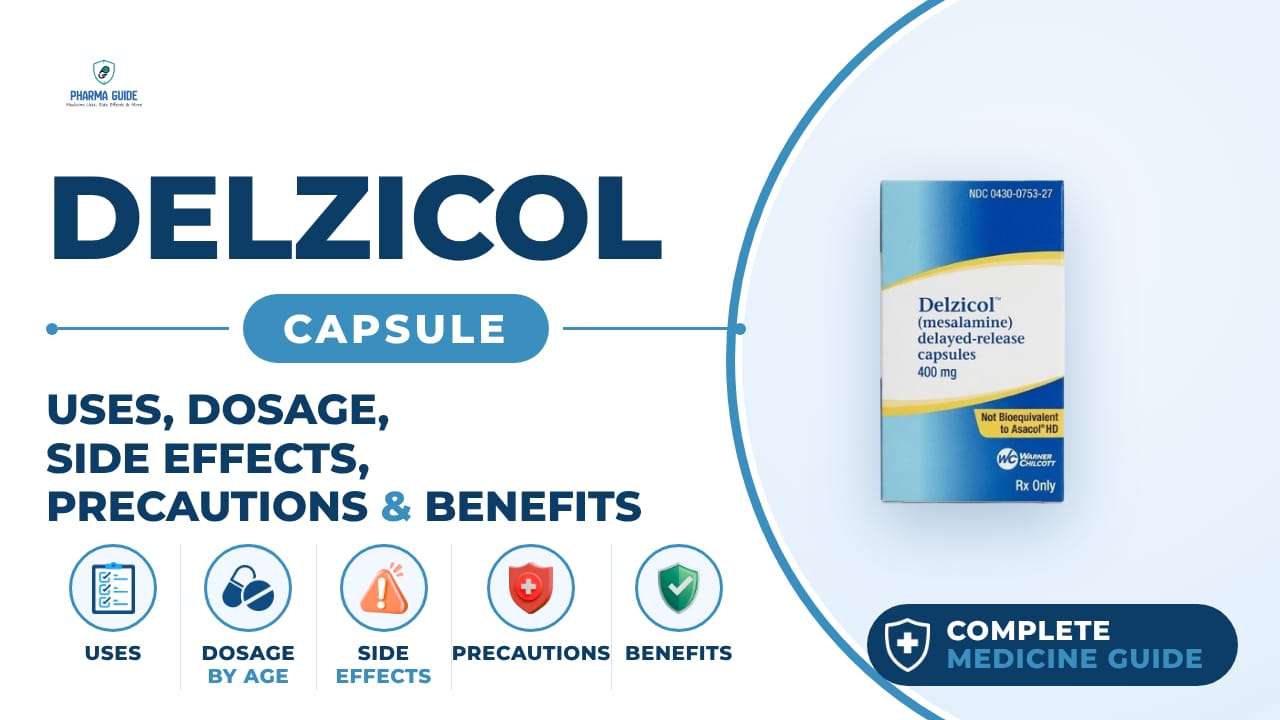
| Generic name | mesalamine |
|---|---|
| Drug class | Aminosalicylate (5-aminosalicylate) |
| Forms | Capsule |

Quick overview
Delzicol Capsule contains mesalamine, an aminosalicylate medicine used to calm inflammation in the gut. It is prescribed for mild to moderate ulcerative colitis, including active flare-ups, and to help maintain remission in adults. Delzicol capsules are designed to release medicine in the lower intestine and colon, where the inflammation occurs.
What is Delzicol Capsule
Delzicol is a prescription medicine that contains mesalamine. It belongs to a group of medicines called aminosalicylates that are used to calm inflammation in the gut. It is used for ulcerative colitis, a disease where the immune system attacks the gut and causes swelling and ulcers in the colon and rectum.
Delzicol Capsule uses
- Mild to moderate ulcerative colitis
- Active ulcerative colitis flare-ups
- Colon inflammation associated with ulcerative colitis
- Rectal bleeding caused by ulcerative colitis
- Maintenance of remission in adults
Benefits of Delzicol Capsule
- Helps reduce colon inflammation
- May reduce rectal bleeding
- Helps improve stool consistency
- Supports symptom control
- Helps maintain remission
How Delzicol Capsule works
Doctors believe Delzicol works by calming inflammation directly in the lining of the colon. It may block an enzyme called cyclooxygenase and reduce production of certain inflammation-causing substances called prostaglandins. The capsule is designed to release its medicine only in the lower intestine and colon, where it's needed.
Delzicol Capsule dosage
Take the capsules with or without food. Swallow the capsules whole; do not cut, break, crush, or chew them. If you cannot swallow the capsules whole, you can carefully open them and swallow the tablets inside whole, without cutting, breaking, crushing, or chewing them; make sure none of the tablets stay in your mouth. Drink plenty of fluids while taking this medicine. Do not switch between Delzicol capsules and other mesalamine products unless your doctor tells you to, since they are not considered interchangeable. If you see capsule shells or partly whole tablets in your stool repeatedly, tell your healthcare provider.
| Age group | Dose |
|---|---|
| Under 18 years | Not recommended |
| 18–64 years | 2,400 mg/day |
| 65+ years | 2,400 mg/day |
Available forms and strengths
- Capsule
Side effects of Delzicol Capsule
Common
- Belching
- Abdominal pain/stomachache
- Constipation
- Dizziness
- Runny nose
- Back pain
- Rash
- Upset stomach (dyspepsia)
- Flu-like symptoms
- Nasopharyngitis (in children)
- Headache (in children)
- Sinusitis (in children)
- Cough (in children)
- Diarrhea (in children)
- Tiredness/fatigue (in children)
- Fever (in children)
- Increased lipase (in children)
Serious
- Kidney problems (renal impairment)
- Acute intolerance syndrome and other allergic reactions, including heart inflammation (myocarditis, pericarditis)
- Liver failure, especially with pre-existing liver disease
- Severe skin reactions (such as Stevens-Johnson syndrome, toxic epidermal necrolysis, DRESS, AGEP)
- Increased sun sensitivity in people with certain skin conditions
- Kidney stones
- Blood disorders, especially in elderly patients or those taking azathioprine or 6-mercaptopurine
Warnings and precautions
Delzicol can cause a syndrome that looks like a flare-up of ulcerative colitis, with cramping, belly pain, and bloody diarrhea, sometimes with fever and rash. If this happens, treatment should be stopped right away.
Allergic (hypersensitivity) reactions can affect the heart, kidneys, liver, lungs, and blood. See a doctor right away if you suspect a reaction, and stop the medicine if another cause can't be found.
Serious skin reactions, including Stevens-Johnson syndrome and other severe conditions, have happened with this medicine. Stop taking it right away if you notice signs of a severe skin reaction.
People with certain skin conditions may become more sensitive to sunlight while taking this medicine.
Kidney stones made of mesalamine can form and may not show up on standard X-rays or CT scans. Drinking enough fluids can help lower this risk.
Each capsule contains some iron, so people taking iron supplements or at risk of too much iron in the body should keep this in mind.
There isn't enough well-controlled research on Delzicol use during pregnancy. It should only be used during pregnancy if it's clearly needed, and you should discuss the risks and benefits with your doctor.
Small amounts of mesalamine pass into breast milk. Your doctor should weigh the benefits of breastfeeding against your need for the medicine and any possible risks to your baby, and caution is advised.
Delzicol can affect how well your kidneys work. Your doctor should check your kidney function before you start and periodically while you take it, especially if you have kidney problems or take other drugs that can harm the kidneys.
People with existing liver disease have developed liver failure while taking mesalamine. Your doctor should weigh the risks and benefits if you have known liver problems.
Storage
- Store at controlled room temperature 20° to 25°C (68° to 77°F); brief exposure to temperatures between 15° and 30°C (59° to 86°F) is allowed
- Protect the capsules from moisture
- Close the container tightly and leave any desiccant pouches in the bottle with the capsules
- Keep out of reach of children
When to see a doctor
Get medical help right away if you have cramping, stomach pain, bloody diarrhea, fever, headache, chest pain, decreased urination, shortness of breath, eye inflammation, fatigue, or rash.
Call your doctor immediately if you notice yellowing of your eyes, itchy skin, feeling very tired, flu-like symptoms, nausea, or vomiting, as these could be signs of liver problems.
Stop the medicine and seek medical care right away if you get blisters or peeling skin, mouth sores, blisters on your lips, mouth, or eyes, high fever, flu-like symptoms, or swollen lymph nodes — these can be signs of a severe skin reaction.
Call your doctor right away if you have severe pain in your side or back, or blood in your urine, as these can be signs of a kidney stone.
Alternatives
- Apriso
- Pentasa
- Lialda
Watch the video
FAQs
What is Delzicol Capsule used for?
Delzicol is used to treat mild to moderate ulcerative colitis, including active flare-ups, and to help maintain remission in adults.
How should Delzicol Capsule be taken?
Take the capsules with or without food, swallowing them whole without cutting, breaking, crushing, or chewing. If you cannot swallow them whole, you can carefully open the capsule and swallow the tablets inside whole. Drink plenty of fluids while taking this medicine.
What is the dosage of Delzicol Capsule for adults?
Adults aged 18 to 64 years and those 65 and older take 2,400 mg per day. It is not recommended for use in people under 18 years.
What are the common side effects of Delzicol Capsule?
Common side effects include belching, abdominal pain, constipation, dizziness, runny nose, back pain, rash, upset stomach, and flu-like symptoms.
Can Delzicol Capsule cause serious side effects?
Yes, serious side effects can include kidney problems, liver failure, severe allergic reactions affecting the heart, kidney stones, and severe skin reactions such as Stevens-Johnson syndrome.
General information, not medical advice
Your prescriber and the leaflet in your pack know your situation. This page does not.
- Follow your prescriber and the leaflet
- Don't start, stop, or change a dose on your own
- Doses and warnings differ by country and product
Sources
Video
Related medicines
Lialda Tablet: Uses, Dosage, Side Effects, Precautions and Alternates
aminosalicylate (5-aminosalicylate)
Lialda (mesalamine) is used to induce and maintain remission of mild to moderate ulcerative colitis. Learn about dosage, side effects, and precautions.
Canasa Suppository: Uses, Dosage, Side Effects, Precautions and Alternates
Aminosalicylate (5-aminosalicylate)
Canasa Suppository (mesalamine) treats ulcerative proctitis by reducing rectal inflammation, bleeding, and urgency. Learn dosage, side effects, and warnings.