
Safety
General information, not medical advice
Your prescriber and the leaflet in your pack know your situation. This page does not.
- Follow your prescriber and the leaflet
- Don't start, stop, or change a dose on your own
- Doses and warnings differ by country and product
Aptiom Tablet: Uses, Dosage, Side Effects, Precautions and Alternates
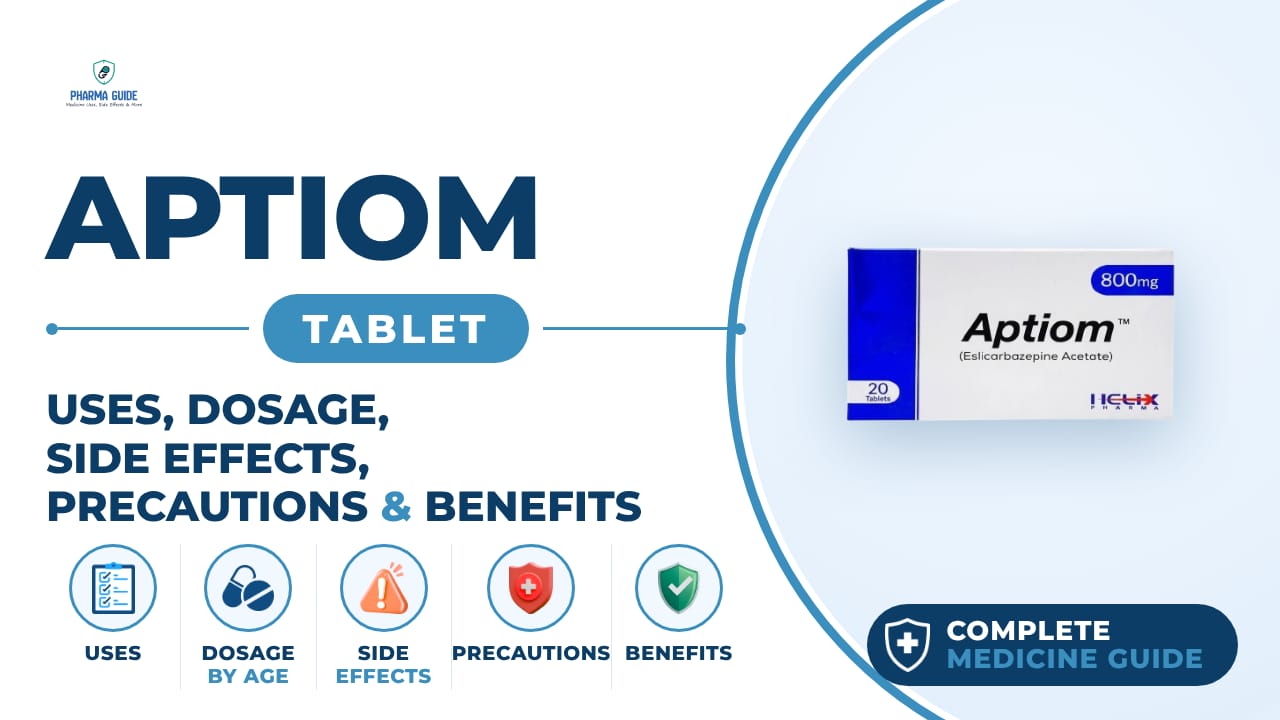
| Generic name | eslicarbazepine acetate |
|---|---|
| Drug class | Antiepileptic (dibenzazepine anticonvulsant) |
| Forms | Tablets (200 mg, 400 mg, 600 mg, 800 mg) |
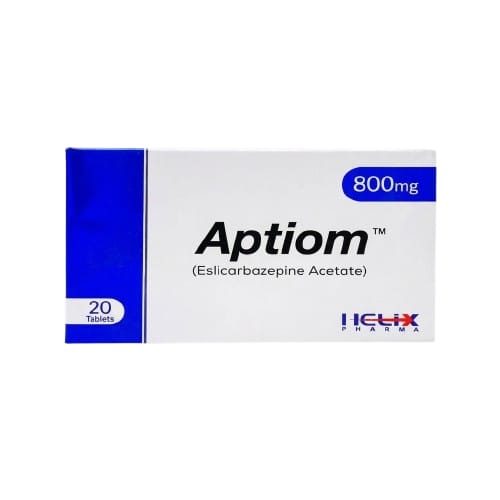
Quick overview
Aptiom Tablet contains eslicarbazepine acetate, an antiepileptic medicine from the dibenzazepine anticonvulsant class. It is a prescription anti-seizure medicine taken by mouth to treat partial-onset seizures in epilepsy. Aptiom may be used alone or together with other anti-seizure medicines to help manage recurrent seizures as part of long-term epilepsy treatment.
What is Aptiom Tablet
Aptiom is a prescription anti-seizure medicine. It contains eslicarbazepine acetate and is taken by mouth as a tablet.
Aptiom Tablet uses
- Treats partial-onset seizures in epilepsy.
- Helps control seizures that begin in one area of the brain.
- Used alone or with other anti-seizure medicines.
- Helps manage recurrent seizures.
- Supports long-term epilepsy treatment.
Benefits of Aptiom Tablet
- Helps control partial-onset seizures.
- May reduce seizure frequency.
- May help prevent seizures from disrupting daily activities.
- Supports long-term epilepsy management.
- May improve quality of life when seizures are controlled.
How Aptiom Tablet works
Aptiom is thought to work by blocking sodium channels in the brain, which calms down overactive nerve signals that can lead to seizures.
Aptiom Tablet dosage
Aptiom can be taken with or without food. Tablets can be swallowed whole or crushed, and are taken once a day.
Do not stop taking this medicine suddenly without talking to your healthcare provider first, since stopping abruptly can cause serious problems including seizures that will not stop.
If you miss a dose, take it as soon as you remember, but skip it if it is almost time for your next dose. Do not take extra medicine to make up for it. Ask your healthcare provider what to do if you miss a dose.
People with moderate to severe kidney problems may need a different, lower dosing schedule. People taking certain other seizure medicines such as carbamazepine, phenytoin, phenobarbital, or primidone may need dose adjustments.
| Age group | Dose |
|---|---|
| Under 18 years | Not recommended |
| 18–64 years | 400 mg, once/day |
| 65+ years | 400 mg, once/day |
Available forms and strengths
Tablets (200 mg, 400 mg, 600 mg, 800 mg)
Side effects of Aptiom Tablet
Common
- Dizziness
- Sleepiness
- Headache
- Nausea
- Double vision
- Vomiting
- Tiredness
- Blurred vision
- Problems with coordination or balance
- Vertigo (feeling like the room is spinning)
- Shakiness (tremor)
Serious
- Thoughts of suicide or self-harm
- Serious allergic reactions (swelling of face, lips, tongue; trouble breathing or swallowing; hives)
- Serious skin reactions (rash, blistering, peeling skin, fever, sore throat)
- DRESS syndrome/multi-organ hypersensitivity (fever, rash, swollen glands, organ involvement)
- Low sodium levels in the blood (hyponatremia)
- Liver problems (yellowing of skin or eyes, dark urine, nausea, loss of appetite, stomach pain)
- Decreased blood cell counts
- Increased seizure frequency or status epilepticus if stopped suddenly
Warnings and precautions
- Like other seizure medicines, Aptiom may cause suicidal thoughts or actions in a very small number of people, about 1 in 500. Watch for new or worsening depression, anxiety, agitation, or unusual changes in mood or behavior.
- Aptiom can cause serious allergic reactions and severe skin reactions, which may or may not include a rash.
- Aptiom can lower sodium levels in the blood, which can become dangerous.
- Do not stop taking Aptiom suddenly, as this can cause serious problems including seizures that won't stop.
- Aptiom can make hormonal birth control less effective, so additional or alternative non-hormonal birth control should be used.
- People allergic to oxcarbazepine should not take Aptiom, as some people allergic to oxcarbazepine may also be allergic to Aptiom.
- Aptiom may harm an unborn baby. Pregnant patients should discuss the risks and benefits of taking Aptiom with their healthcare provider, and may be asked to join a pregnancy registry that tracks outcomes.
- Aptiom passes into breast milk, so you and your healthcare provider should discuss whether to take Aptiom or breastfeed.
- People with kidney problems should tell their healthcare provider, since dose adjustments are needed for moderate to severe kidney impairment.
- People with liver problems should tell their healthcare provider. Aptiom should be stopped if jaundice or other signs of significant liver injury occur.
- Tell your doctor about your alcohol use before taking Aptiom.
- Do not drive, operate heavy machinery, or do dangerous activities until you know how Aptiom affects you, since it may slow your thinking and motor skills.
Storage
- Store at 68°F to 77°F (20°C to 25°C)
- Safely throw away medicine that is out of date or no longer needed
- Keep out of reach of children
When to see a doctor
- Call your healthcare provider right away if you have thoughts about suicide or dying, new or worse depression, agitation, aggression, panic attacks, or other unusual changes in mood or behavior.
- Call your healthcare provider right away if you notice swelling of the face, eyes, lips, or tongue, a skin rash, fever, swollen glands, or sore throat that doesn't go away, or yellowing of skin or eyes.
- Call your doctor right away if you have symptoms of low sodium such as nausea, confusion, severe weakness, muscle pain, or more frequent seizures.
- If you take too much Aptiom, call your healthcare provider or go to the nearest hospital emergency room right away.
Alternatives
- Lamotrigine
- Brivaracetam
- Levetiracetam
Watch the video
FAQs
What is Aptiom Tablet used for?
Aptiom is a prescription anti-seizure medicine used to treat partial-onset seizures in epilepsy. It can be used alone or with other anti-seizure medicines to help manage recurrent seizures as part of long-term epilepsy treatment.
How does Aptiom Tablet work?
Aptiom is thought to work by blocking sodium channels in the brain, which calms down overactive nerve signals that can lead to seizures.
What is the dosage of Aptiom Tablet?
Aptiom is taken once a day, with or without food, and tablets can be swallowed whole or crushed. For adults aged 18 to 64 and those 65 and older, the dose is 400 mg once daily. It is not recommended for people under 18 years. People with moderate to severe kidney problems may need a different, lower dosing schedule, and those taking certain other seizure medicines may need dose adjustments.
What are the common side effects of Aptiom Tablet?
Common side effects include dizziness, sleepiness, headache, nausea, double vision, vomiting, tiredness, blurred vision, problems with coordination or balance, vertigo, and shakiness (tremor).
Can I stop taking Aptiom Tablet suddenly?
No, you should not stop taking Aptiom suddenly without talking to your healthcare provider, as this can cause serious problems including seizures that will not stop.
General information, not medical advice
Your prescriber and the leaflet in your pack know your situation. This page does not.
- Follow your prescriber and the leaflet
- Don't start, stop, or change a dose on your own
- Doses and warnings differ by country and product
Sources
Video
Related medicines
Eslicarbazepine Tablet: Uses, Dosage, Side Effects, Precautions and Alternates
Antiepileptic (dibenzazepine anticonvulsant)
Eslicarbazepine Tablet treats partial-onset seizures in adults and children. Learn how it works, dosage, side effects, warnings, and alternatives.
Banzel Suspension: Uses, Dosage, Side Effects, Precautions and Alternates
Antiepileptic (dibenzazepine anticonvulsant)
Banzel Suspension (rufinamide) is an add-on treatment for Lennox-Gastaut syndrome seizures in adults and children 1+. Learn dosage, side effects, and warnings.