
Safety
General information, not medical advice
Your prescriber and the leaflet in your pack know your situation. This page does not.
- Follow your prescriber and the leaflet
- Don't start, stop, or change a dose on your own
- Doses and warnings differ by country and product
Eslicarbazepine Tablet: Uses, Dosage, Side Effects, Precautions and Alternates
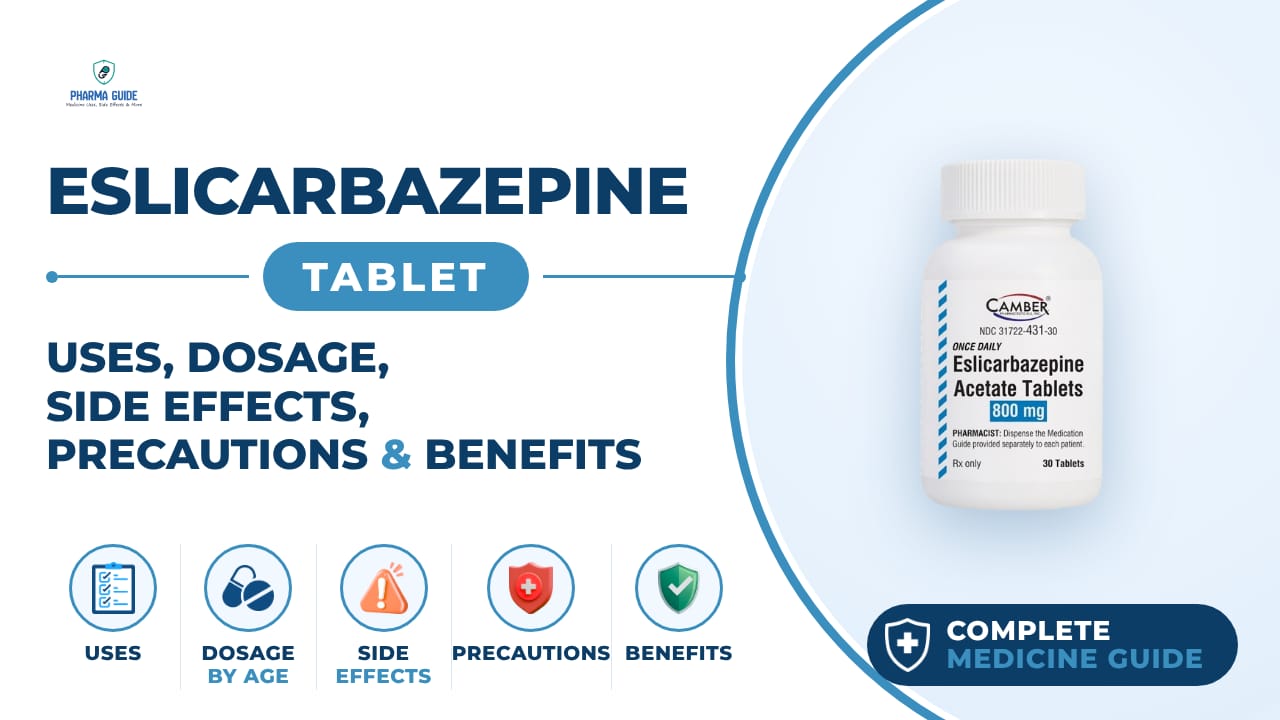
| Generic name | Eslicarbazepine acetate |
|---|---|
| Drug class | Antiepileptic (dibenzazepine anticonvulsant) |
| Forms | Tablets: 200 mg, 400 mg, 600 mg, 800 mg |

Quick overview
Eslicarbazepine Tablet (eslicarbazepine acetate) is a prescription antiepileptic medicine from the dibenzazepine anticonvulsant class. It is used to treat partial-onset seizures in adults, either alone or with other seizure medicines, and together with other seizure medicines in children above a certain age. It works in the brain by calming overactive nerve signals to help block the spread of seizure activity. It is typically taken once a day, and dosing may need adjustment based on age or other health conditions.
What is Eslicarbazepine Tablet
Eslicarbazepine is a prescription medicine used to treat certain types of seizures. It belongs to a group of medicines called anticonvulsants or antiepileptics.
Eslicarbazepine Tablet uses
- Used to treat partial-onset seizures in adults, either alone or together with other seizure medicines
- Used together with other seizure medicines in children above 6 years of age (some sources state 4 years and older)
Benefits of Eslicarbazepine Tablet
- Helps control partial-onset seizures
- May reduce seizure frequency
- May help prevent seizures from disrupting daily activities
- Supports ongoing epilepsy management
- May improve daily functioning when seizures are controlled
How Eslicarbazepine Tablet works
The medicine works in the brain by calming down overactive nerve signals, which helps block the spread of seizure activity. The exact way it works is not fully known.
Eslicarbazepine Tablet dosage
Take once a day, at about the same time every day, unless your doctor tells you otherwise, as this helps control seizures best and helps you remember your dose. It can be taken with or without food. Tablets can be swallowed whole or crushed. If crushing, sprinkle the crushed tablet on applesauce or other soft food and eat it within 10 minutes with a glass of water; do not store the mixture for later use.
Do not stop taking this medicine suddenly without talking to your doctor, as this can cause serious problems including seizures that do not stop. If your doctor decides to stop your treatment, your dose will usually be lowered gradually.
If you miss a dose, take it as soon as you remember; if it is almost time for your next dose, just take the next dose as scheduled and do not double up.
| Age group | Dose |
|---|---|
| Under 18 years | Not recommended |
| 18–64 years | 400 mg, once/day |
| 65+ years | 400 mg, once/day |
Available forms and strengths
- Tablets: 200 mg, 400 mg, 600 mg, 800 mg
Side effects of Eslicarbazepine Tablet
Common
- Dizziness
- Sleepiness/drowsiness
- Headache
- Nausea
- Double vision, blurred vision
- Vomiting
- Feeling tired/fatigue
- Poor coordination
- Shakiness
Serious
- Serious skin reactions (itchy skin rash, redness, blistering and peeling of the skin and/or inside the lips, eyes, mouth, nasal passages or genitals)
- Serious allergic reactions (swelling of the face, throat, hands, feet, ankles, or lower legs; trouble breathing or swallowing)
- Thoughts of suicide or hurting yourself
- Decrease in red and white blood cells (tiredness, shortness of breath, looking pale, headache, chills, dizziness, frequent infections, fever, sore throat, mouth ulcers)
- Decrease in blood platelets (bleeding or bruising more easily, nosebleeds, unusual skin patches)
- Cardiac arrhythmias (irregular, slow, or rapid pulse, lightheadedness, fainting, palpitations, shortness of breath)
- Liver problems (yellowing of skin or eyes, nausea or vomiting, loss of appetite, stomach pain, dark urine)
- Low sodium level in blood (lack of energy, confusion, muscle twitching or convulsions)
- Nervous system problems (dizziness, trouble walking or with coordination, sleepiness, trouble concentrating, vision problems)
- Allergic reactions with fever, rash, and swollen lymph nodes, possibly affecting organs like the liver
Warnings and precautions
- This medicine should only be used during pregnancy if your doctor says it is necessary, since it may affect the baby and there is a pregnancy registry to track safety information. Do not breastfeed while taking this medicine because it could seriously harm your baby.
- If you have kidney problems, your doctor may need to lower your dose. People with mild to moderate liver problems usually take the normal dose, but this medicine is not recommended for people with severe liver problems.
- It isn't known for certain how alcohol affects this medicine, but both alcohol and this medicine can affect the liver, and drinking alcohol may increase dizziness and drowsiness, so it's best to limit alcohol use.
- This medicine can make you feel dizzy, drowsy, and affect your coordination, so avoid driving or using tools or machines until you know how it affects you.
- Do not use this medicine if you have a certain type of heart rhythm disorder called second- or third-degree heart block.
- This medicine may cause a drop in blood sodium levels, especially if combined with other medicines that lower sodium; watch for nausea, tiredness, headache, confusion, muscle weakness, or worsening seizures.
- Long-term use has been linked to bone thinning disorders such as osteopenia and osteoporosis, and fractures.
- This medicine may make your thyroid gland less active, so your doctor may check your thyroid hormone levels.
- This medicine can make hormonal birth control, such as the pill, less effective, so other non-hormonal forms of birth control should be used.
- A small number of people taking anti-epileptic medicines have had thoughts of harming or killing themselves; contact your doctor right away if this happens.
- Do not stop this medicine suddenly, as this can cause serious problems including seizures that do not stop.
Storage
- Store at 15°C to 30°C
- Keep out of reach and sight of children
- Store in a cool, dry place away from moisture and heat
When to see a doctor
- Get emergency medical help right away if you notice signs of a serious allergic reaction, such as hives, trouble breathing, or swelling of your face or throat.
- Seek medical help right away if you develop a serious skin reaction, such as painful red or purple skin that looks burned, blisters, or peeling skin.
- Call your doctor right away if you have symptoms of low sodium levels, such as nausea, confusion, severe weakness, muscle pain, or increased seizures.
- Call your doctor at once if you have severe dizziness or drowsiness, vision changes, thinking problems, or trouble walking or with coordination.
- Call your doctor if you have signs of liver problems, such as nausea, loss of appetite, stomach pain, dark urine, or yellowing of the skin or eyes.
- Report any new or worsening mood or behavior changes, depression, anxiety, agitation, or thoughts of suicide or hurting yourself to your doctor right away.
- If you think you or someone else may have taken too much of this medicine, get medical help immediately, even if there are no symptoms.
Alternatives
- Carbamazepine
- Lacosamide
- Levetiracetam
Watch the video
FAQs
What is Eslicarbazepine Tablet used for?
It is used to treat partial-onset seizures in adults, either alone or with other seizure medicines, and together with other seizure medicines in children above a certain age (6 years, with some sources stating 4 years and older).
How should I take Eslicarbazepine Tablet?
Take it once a day at about the same time every day, with or without food. Tablets can be swallowed whole or crushed and mixed with soft food like applesauce, eaten within 10 minutes with water.
What are the common side effects of Eslicarbazepine Tablet?
Common side effects include dizziness, sleepiness/drowsiness, headache, nausea, double or blurred vision, vomiting, fatigue, poor coordination, and shakiness.
Can I drink alcohol while taking Eslicarbazepine Tablet?
It isn't known for certain how alcohol affects this medicine, but both alcohol and this medicine can affect the liver, and alcohol may increase dizziness and drowsiness, so it's best to limit alcohol use.
Can I stop taking Eslicarbazepine Tablet suddenly?
No, do not stop taking this medicine suddenly without talking to your doctor, as this can cause serious problems including seizures that do not stop. If treatment is stopped, the dose is usually lowered gradually.
General information, not medical advice
Your prescriber and the leaflet in your pack know your situation. This page does not.
- Follow your prescriber and the leaflet
- Don't start, stop, or change a dose on your own
- Doses and warnings differ by country and product
Sources
Video
Related medicines
Aptiom Tablet: Uses, Dosage, Side Effects, Precautions and Alternates
Antiepileptic (dibenzazepine anticonvulsant)
Aptiom Tablet (eslicarbazepine acetate) treats partial-onset seizures in epilepsy. Learn about its uses, dosage, benefits, side effects, and precautions.
Banzel Suspension: Uses, Dosage, Side Effects, Precautions and Alternates
Antiepileptic (dibenzazepine anticonvulsant)
Banzel Suspension (rufinamide) is an add-on treatment for Lennox-Gastaut syndrome seizures in adults and children 1+. Learn dosage, side effects, and warnings.