
Safety
General information, not medical advice
Your prescriber and the leaflet in your pack know your situation. This page does not.
- Follow your prescriber and the leaflet
- Don't start, stop, or change a dose on your own
- Doses and warnings differ by country and product
Banzel Suspension: Uses, Dosage, Side Effects, Precautions and Alternates
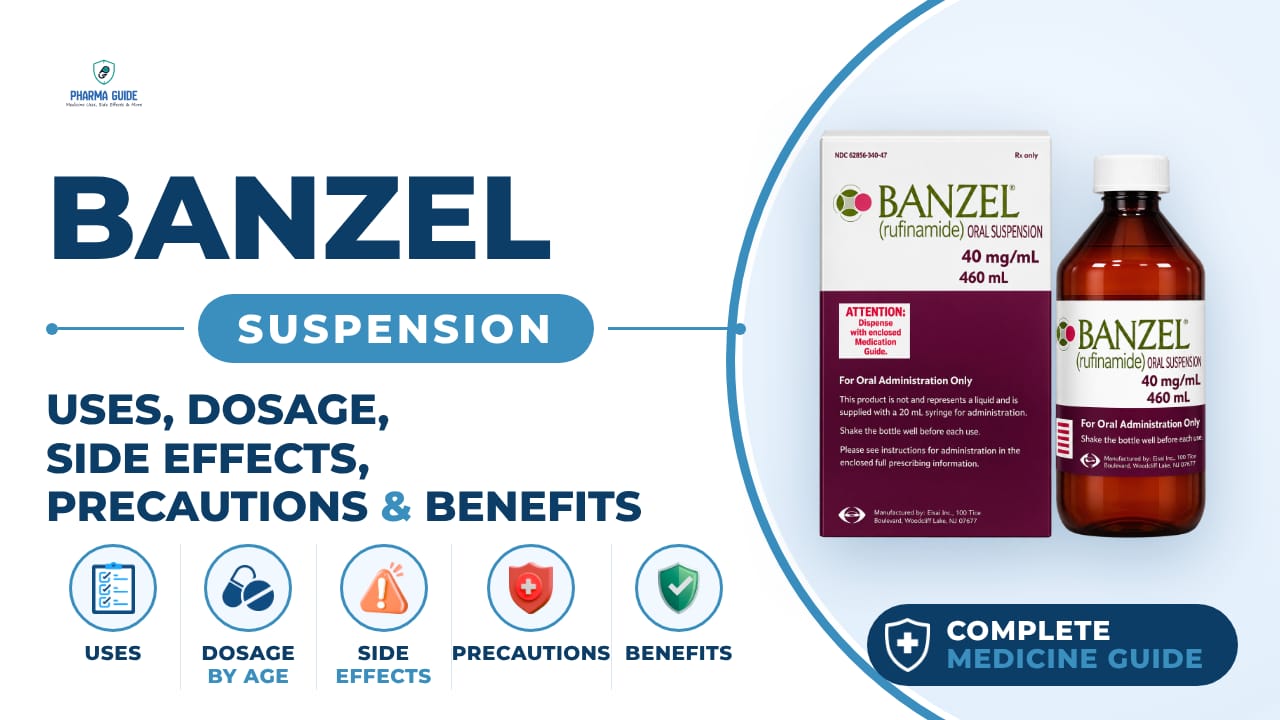
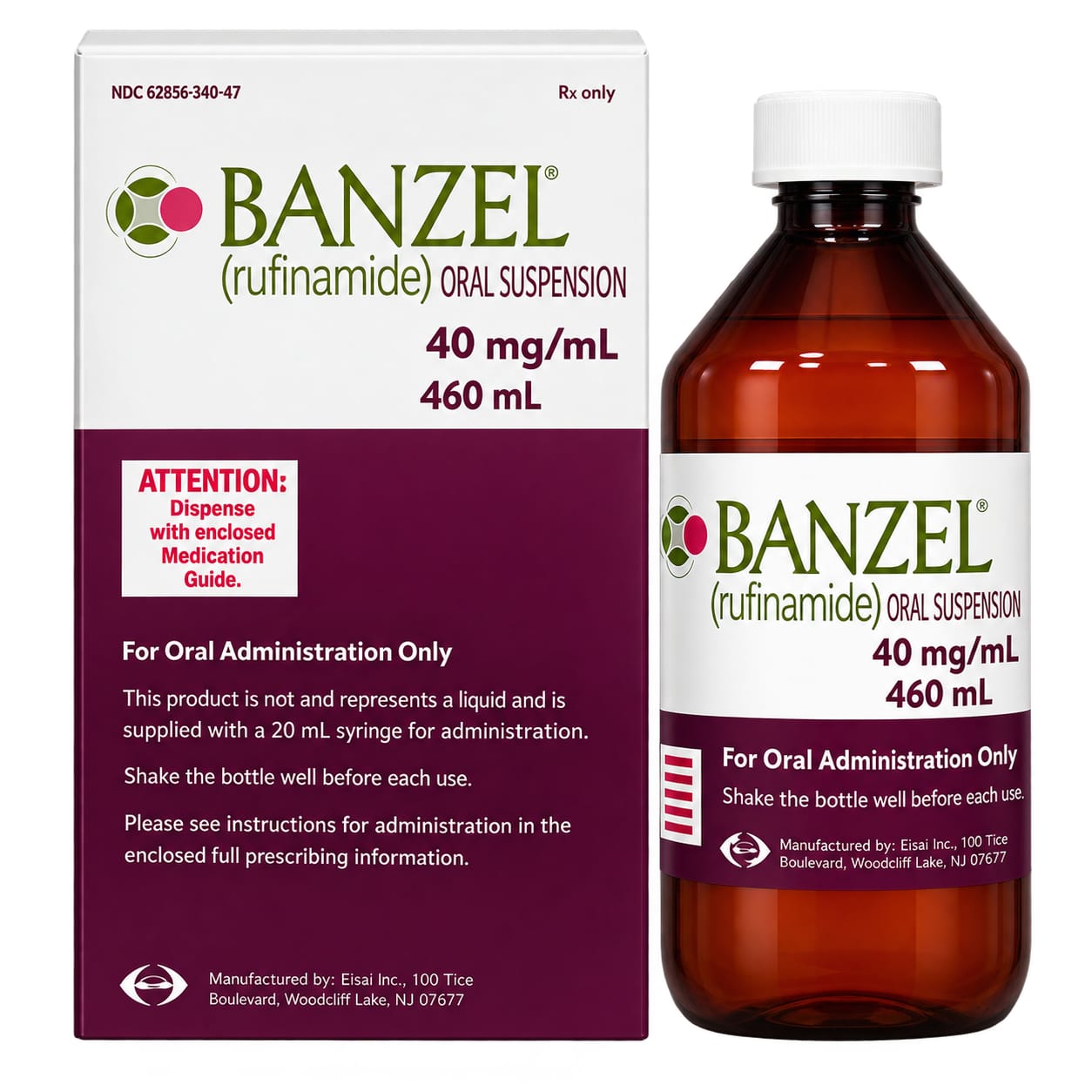
| Generic name | rufinamide |
|---|---|
| Drug class | Antiepileptic (dibenzazepine anticonvulsant) |
| Forms | Film-coated tablets (200 mg, 400 mg), Oral suspension (40 mg/mL) |
Quick overview
Banzel Suspension (rufinamide) is a prescription antiepileptic medicine used together with other medicines to treat seizures caused by Lennox-Gastaut syndrome, a severe form of childhood epilepsy. It is approved for adults and children 1 year of age and older and comes as a 40 mg/mL oral liquid that allows weight-based dosing. It helps reduce the frequency and severity of seizures, including drop attacks, but must be used exactly as prescribed and not stopped suddenly.
What is Banzel Suspension
Banzel is a prescription anti-seizure medicine. It is used together with other medicines to treat seizures caused by Lennox-Gastaut syndrome, a severe form of childhood epilepsy.
Banzel Suspension uses
- Adjunctive (add-on) treatment of seizures associated with Lennox-Gastaut syndrome in adults and children 1 year of age and older
- Treats seizures associated with Lennox-Gastaut syndrome
- Used as adjunctive antiseizure therapy
- Helps reduce seizure frequency in eligible patients
Benefits of Banzel Suspension
- Decreases the overall number and severity of seizures
- Reduces the number of drop attacks (tonic-atonic seizures)
- Available as a 40 mg/mL liquid formulation
- Allows weight-based pediatric dosing
- Can be used from 1 year of age
How Banzel Suspension works
The exact way Banzel controls seizures is not fully known, but it is thought to work by affecting sodium channels in brain cells, which helps calm down overactive electrical signals that cause seizures.
Banzel Suspension dosage
Take Banzel with food; taking it without food may reduce how well it is absorbed. The oral suspension should be shaken well before every dose. Use the provided bottle adapter and calibrated oral dosing syringe to measure each dose of the oral suspension. Insert the adapter firmly into the bottle neck before use and leave it in place for the life of the bottle; it cannot be removed once installed. Replace the cap securely after each use.
If a dose is large, it may need to be given using two syringes or by drawing up the dose in two steps with one syringe. Rinse the dosing syringe with water after each use. Take doses in two equally divided amounts, such as a morning dose and an evening dose.
Do not stop taking Banzel suddenly without talking to your doctor, as this can cause serious problems including seizures that will not stop. If you miss a dose, take it as soon as possible, but if it is almost time for the next dose, skip the missed dose and continue your regular schedule; do not double up to make up for a missed dose. Contact your doctor if you miss more than one dose.
| Age group | Dose |
|---|---|
| Under 1 year | Safety and effectiveness are not established |
| 1–17 years | Start 10 mg/kg/day, divided into 2 doses; may be increased to a maximum of 45 mg/kg/day |
| 18–64 years | Start 400–800 mg/day, divided into 2 doses; maximum 3,200 mg/day |
Available forms and strengths
- Film-coated tablets (200 mg, 400 mg)
- Oral suspension (40 mg/mL)
Side effects of Banzel Suspension
Common
- Headache
- Dizziness
- Fatigue or tiredness
- Somnolence (sleepiness/drowsiness)
- Nausea
- Vomiting
Serious
- Allergic reactions (swelling of face, lips, tongue, throat; difficulty breathing; hives)
- Multi-organ hypersensitivity reaction (DRESS) with rash, fever, swollen glands, liver problems
- Serious skin reactions such as Stevens-Johnson syndrome
- Suicidal thoughts or behavior
- New or worsening depression, anxiety, agitation, aggression, or other mood/behavior changes
- Leukopenia (low white blood cell count)
- Liver problems (nausea, vomiting, loss of appetite, itching, yellowing of skin or eyes, dark urine)
- Heart rhythm problems (irregular, slow, or rapid pulse; palpitations; shortness of breath; dizziness)
- Status epilepticus (seizures that do not stop), especially if the drug is stopped suddenly
- Loss of balance or coordination, trouble walking
- Worsening or increased seizures
Warnings and precautions
- Banzel can increase the risk of suicidal thoughts or behavior in a small number of people. Watch for new or worsening depression, anxiety, agitation, irritability, aggression, or any unusual changes in mood or behavior, and contact a doctor right away if these occur.
- Do not stop taking Banzel suddenly, as this can cause serious problems, including seizures that do not stop (status epilepticus). Any change or stopping of the medicine should be done gradually and under medical supervision.
- Banzel is not safe for people with Familial Short QT syndrome or a family history of this heart rhythm condition, because it can further shorten the heart's QT interval.
- A serious multi-organ allergic reaction (sometimes called DRESS) has happened with Banzel, which can involve rash, fever, and effects on organs like the liver. Anyone who develops a rash while on Banzel needs to be closely watched by a doctor.
- Banzel may make hormonal birth control methods, such as the pill, less effective, so an additional non-hormonal method of birth control is recommended.
- Banzel should only be used in pregnancy if the benefit clearly outweighs the risk, because it may harm the unborn baby. Tell your doctor right away if you become pregnant, and consider joining a pregnancy registry that tracks safety of this medicine during pregnancy.
- Banzel is likely to pass into breast milk and could cause serious side effects in a nursing baby, so you and your doctor should decide whether you will breastfeed or take Banzel, not both.
- People with severe kidney impairment do not need a special dose change, but those undergoing dialysis may need a dose adjustment because dialysis can remove some of the drug.
- Banzel has not been studied in people with severe liver problems and is not recommended for them; it should be used cautiously in people with mild to moderate liver impairment.
- Avoid alcohol while taking Banzel, since it can add to the drowsiness and dizziness caused by this medicine.
- Do not drive or operate machinery until you know how Banzel affects you, since it can cause sleepiness, dizziness, and slowed thinking or motor skills.
Storage
- Store the oral suspension at 59°F to 86°F (15°C to 30°C)
- Store the oral suspension bottle in an upright position
- Replace the cap securely after opening
- Use the oral suspension within 90 days of first opening the bottle, then discard any remainder
- Keep out of the reach and sight of children
When to see a doctor
- Get emergency help right away for signs of a serious allergic reaction, such as swelling of the face, eyes, lips, tongue, or throat, trouble breathing or swallowing, hives, or widespread rash.
- Seek medical help right away for signs of a serious whole-body reaction, such as fever, swollen glands, severe muscle pain, unusual bruising or bleeding, or yellowing of the skin or eyes.
- Call your doctor right away if you have thoughts of suicide or hurting yourself, or other new or worsening mood or behavior changes such as depression, anxiety, agitation, aggression, or panic attacks.
- Call your doctor if your seizures become worse or happen more often while taking Banzel.
- Call your doctor right away if you have loss of balance or coordination or trouble walking.
- If you think you have taken too much Banzel, get emergency medical help or contact your local poison control center right away.
Alternatives
- Clobazam
- Lamotrigine
- Topiramate
- Valproate
Watch the video
FAQs
What is Banzel Suspension used for?
Banzel Suspension is used together with other medicines to treat seizures caused by Lennox-Gastaut syndrome, a severe form of childhood epilepsy, in adults and children 1 year of age and older.
How should Banzel Suspension be taken?
Take Banzel with food, since taking it without food may reduce absorption. Shake the oral suspension well before each dose, use the provided bottle adapter and calibrated dosing syringe to measure doses, and give the total daily amount in two equally divided doses, such as morning and evening.
Can I stop taking Banzel Suspension suddenly?
No. Banzel should not be stopped suddenly without talking to your doctor, as this can cause serious problems, including seizures that will not stop (status epilepticus).
What are the common side effects of Banzel Suspension?
Common side effects include headache, dizziness, fatigue or tiredness, somnolence (sleepiness/drowsiness), nausea, and vomiting.
Is Banzel Suspension safe to use during pregnancy?
Banzel should only be used in pregnancy if the benefit clearly outweighs the risk, because it may harm the unborn baby. Patients should tell their doctor right away if they become pregnant and consider joining a pregnancy registry that tracks the medicine's safety during pregnancy.
General information, not medical advice
Your prescriber and the leaflet in your pack know your situation. This page does not.
- Follow your prescriber and the leaflet
- Don't start, stop, or change a dose on your own
- Doses and warnings differ by country and product
Sources
Video
Related medicines

Eslicarbazepine Tablet: Uses, Dosage, Side Effects, Precautions and Alternates
Antiepileptic (dibenzazepine anticonvulsant)
Eslicarbazepine Tablet treats partial-onset seizures in adults and children. Learn how it works, dosage, side effects, warnings, and alternatives.

Aptiom Tablet: Uses, Dosage, Side Effects, Precautions and Alternates
Antiepileptic (dibenzazepine anticonvulsant)
Aptiom Tablet (eslicarbazepine acetate) treats partial-onset seizures in epilepsy. Learn about its uses, dosage, benefits, side effects, and precautions.