
Safety
General information, not medical advice
Your prescriber and the leaflet in your pack know your situation. This page does not.
- Follow your prescriber and the leaflet
- Don't start, stop, or change a dose on your own
- Doses and warnings differ by country and product
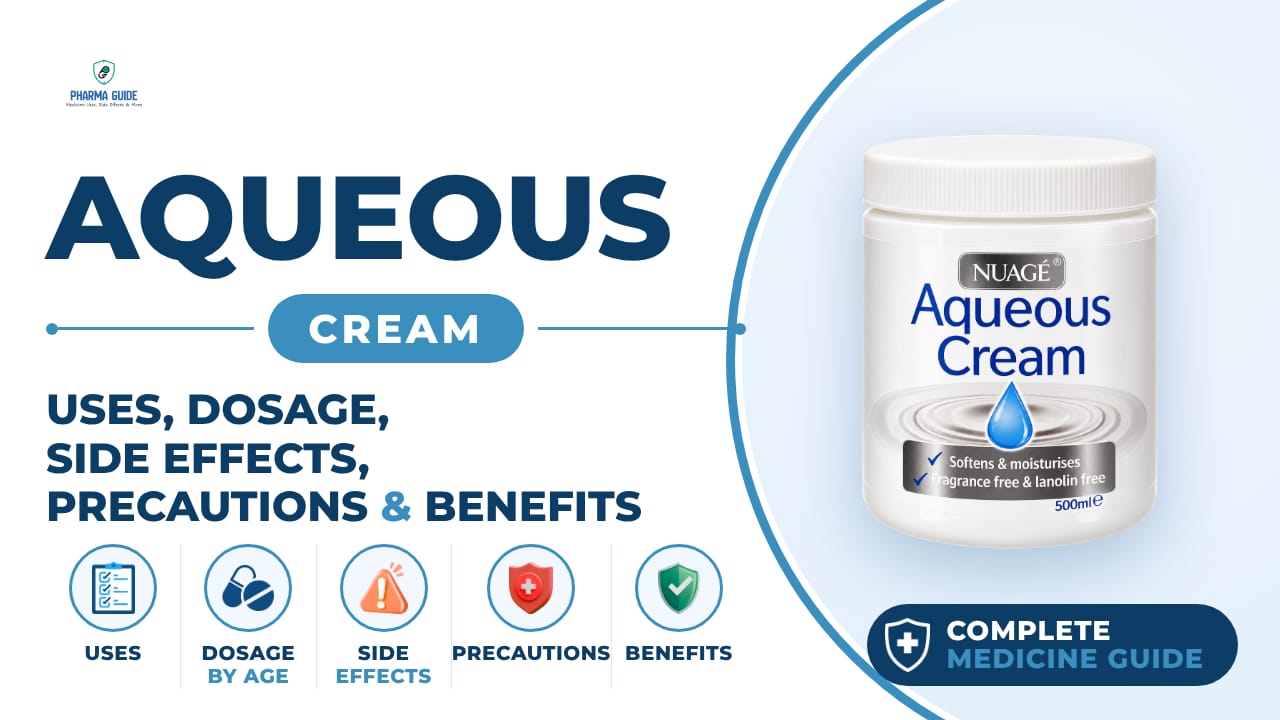
Aqueous Cream: Uses, Dosage, Side Effects, Precautions and Alternates
| Forms | Cream |
|---|
Quick overview
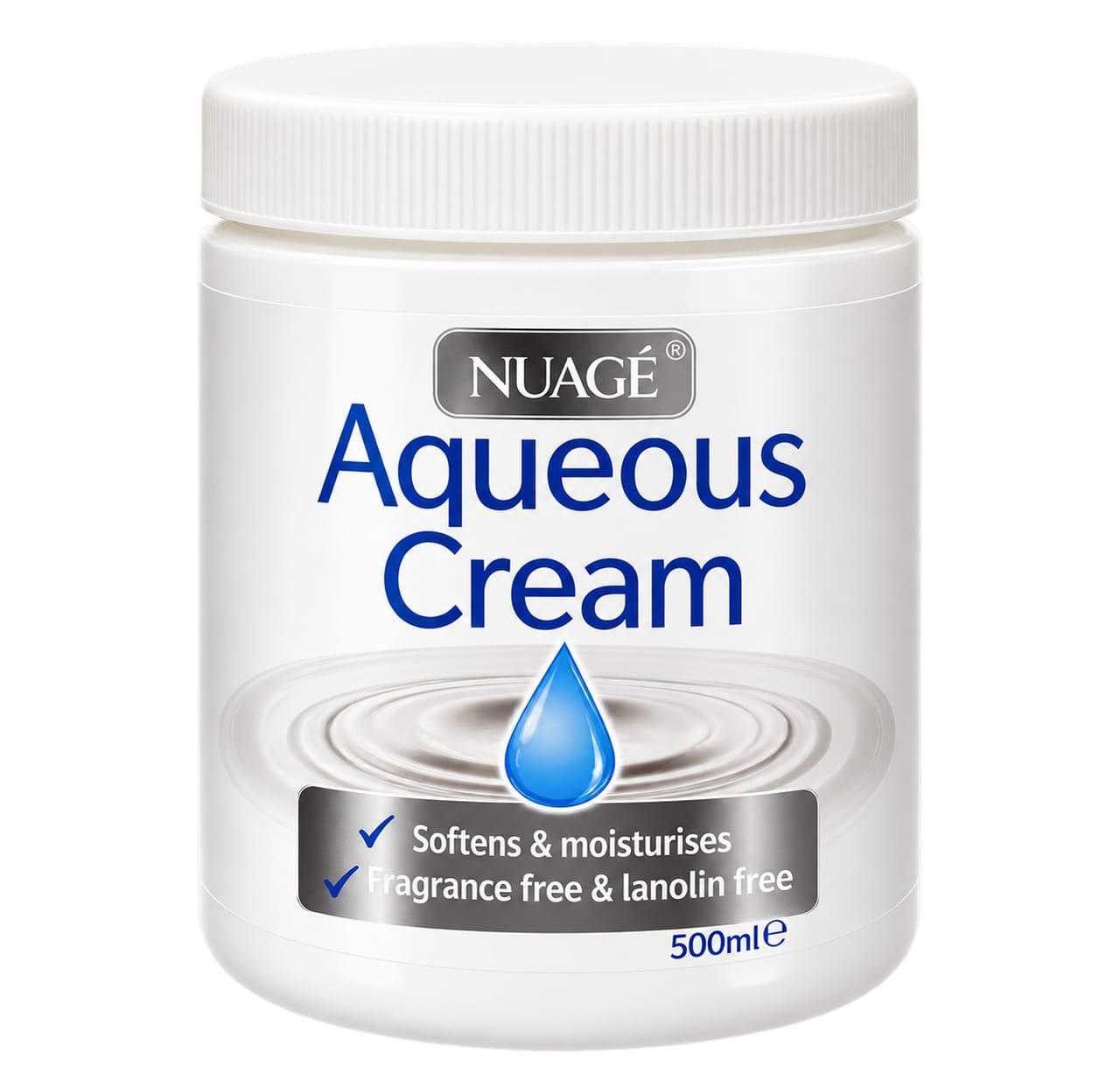
Aqueous Cream is a non-greasy emollient (moisturiser) made from a mixture of emulsifying ointment and water. It is used to relieve dry skin conditions such as eczema and can also be used as a soap substitute. It is applied externally to help the skin retain moisture and reduce dryness.
What is Aqueous Cream
Aqueous Cream is a non-greasy emollient (moisturiser) made from a mixture of emulsifying ointment and water. It is used to relieve dry skin conditions such as eczema and can also be used as a soap substitute.
Aqueous Cream uses
- Relief of minor skin irritations and dry skin conditions such as eczema
- Used as a soap substitute for washing
- Used as a vehicle (base) for other active ingredients applied to the skin
- Moisturizes dry skin
- Helps soften rough or scaly skin
- Supports the skin barrier
Benefits of Aqueous Cream
- Helps retain moisture on the skin and reduce dryness
- Cleanses the skin without the harsh drying effect of regular soap
- Non-greasy and widely available
- Provides skin hydration
- Reduces dryness and roughness
- Easy to apply over larger skin areas
How Aqueous Cream works
When used as a wash or soap substitute, the cream leaves a thin layer of oil on the skin's surface. This layer traps water underneath it and stops water from evaporating from the skin, which helps keep the skin moist.
Aqueous Cream dosage
For external use only. Apply sparingly to the affected area as and when required. When used to carry other active ingredients, follow the dosage your pharmacist tells you. It can be used before or during bathing, showering, or washing as a soap substitute. If the cream contains sodium lauryl sulphate (SLS), it must be rinsed off and not left on the skin for long periods. If the cream is labelled SLS-free, it can be left on the skin and does not need to be washed off. Be careful when using it in the bath or shower, as it can make surfaces slippery; use a bath mat or shower mat, especially for babies and young children.
| Age group | Dose |
|---|---|
| Children 1–11 years | Apply a thin layer to dry skin as needed, commonly several times daily |
| 12–17 years | Apply to affected dry areas as needed, usually several times daily |
| 18–64 years | Apply generously to dry skin as often as needed |
| 65 years and older | Same general topical use; frequent application may be helpful for very dry skin |
Available forms and strengths
- Cream
Side effects of Aqueous Cream
Common
- Skin reactions such as stinging, burning, itching, and redness, especially when used as a leave-on product in children with eczema
Serious
- Allergic (hypersensitivity) reactions
Warnings and precautions
- If the cream touches dressings or clothing, the fabric can catch fire very easily. Keep away from open flames while using this product.
- Do not use if you are allergic to the ingredients in this cream.
- Tell your pharmacist about any other medicines you are using, including ones bought without a prescription, as this cream may interact with them.
- Using this cream as a leave-on moisturiser, especially in children with eczema, may cause skin reactions such as burning, stinging, itching, and redness, often within 20 minutes of applying it.
- Using the cream in the bath or shower can make the floor slippery, so use a bath or shower mat to prevent falls, especially with babies and young children.
- Aqueous Cream can be used during pregnancy, but check with your doctor or pharmacist first if you are pregnant.
- Aqueous Cream can be used while breastfeeding. No specific kidney-related precautions are generally required because aqueous cream is applied to the skin and has minimal systemic absorption. No specific liver-related precautions are generally required with normal topical use.
- There is no known direct interaction with alcohol. Aqueous cream does not usually affect driving or the ability to operate machinery.
Storage
- Keep out of the reach and sight of children
- Keep the container tightly closed
- Do not store above 25°C
- Do not use after the expiry date, which refers to the last day of that month
- Do not dispose of via wastewater or household waste; ask your pharmacist how to dispose of unused product
When to see a doctor
- Contact a doctor if your symptoms get worse or do not improve.
- Stop using the cream and tell your doctor right away, or go to the nearest hospital emergency department, if you have a serious allergic reaction.
- If you notice skin irritation such as burning, stinging, itching, or redness after using the cream, stop using it and speak to your doctor or pharmacist, who can suggest a suitable alternative.
- If you swallow the cream by accident or use more than you should, contact your doctor or pharmacist.
Alternatives
- Emollient cream
- White soft paraffin cream
- Liquid paraffin-based moisturizer
- Cetomacrogol cream
Watch the video
FAQs
What is Aqueous Cream used for?
It is used to relieve dry skin conditions such as eczema, as a soap substitute, and as a vehicle for other active ingredients applied to the skin.
How does Aqueous Cream work?
It leaves a thin layer of oil on the skin's surface that traps water underneath, stopping water from evaporating and keeping the skin moist.
Can Aqueous Cream be left on the skin?
If it contains sodium lauryl sulphate (SLS), it must be rinsed off and not left on the skin. If labelled SLS-free, it can be left on and does not need to be washed off.
What are the side effects of Aqueous Cream?
Common side effects include stinging, burning, itching, and redness, especially when used as a leave-on product in children with eczema. Serious allergic reactions can also occur.
Can Aqueous Cream be used during pregnancy or breastfeeding?
It can be used during pregnancy, but you should check with your doctor or pharmacist first. It can also be used while breastfeeding.
General information, not medical advice
Your prescriber and the leaflet in your pack know your situation. This page does not.
- Follow your prescriber and the leaflet
- Don't start, stop, or change a dose on your own
- Doses and warnings differ by country and product
Sources
Video
Related medicines

Injectafer Injection: Uses, Dosage, Side Effects, Precautions and Alternates
Iron products
Injectafer (ferric carboxymaltose) treats iron deficiency anemia and heart failure-related iron deficiency via IV. Learn uses, dosage, side effects, and

Gliclazide Tablet: Uses, Dosage, Side Effects, Precautions and Alternates
Sulfonylurea (hypoglycemic/antidiabetic agent)
Gliclazide Tablet is a sulfonylurea for type 2 diabetes that boosts insulin release. Learn about dosage, side effects, warnings, and precautions.