
Safety
General information, not medical advice
Your prescriber and the leaflet in your pack know your situation. This page does not.
- Follow your prescriber and the leaflet
- Don't start, stop, or change a dose on your own
- Doses and warnings differ by country and product
Arakoda Tablet: Uses, Dosage, Side Effects, Precautions and Alternates
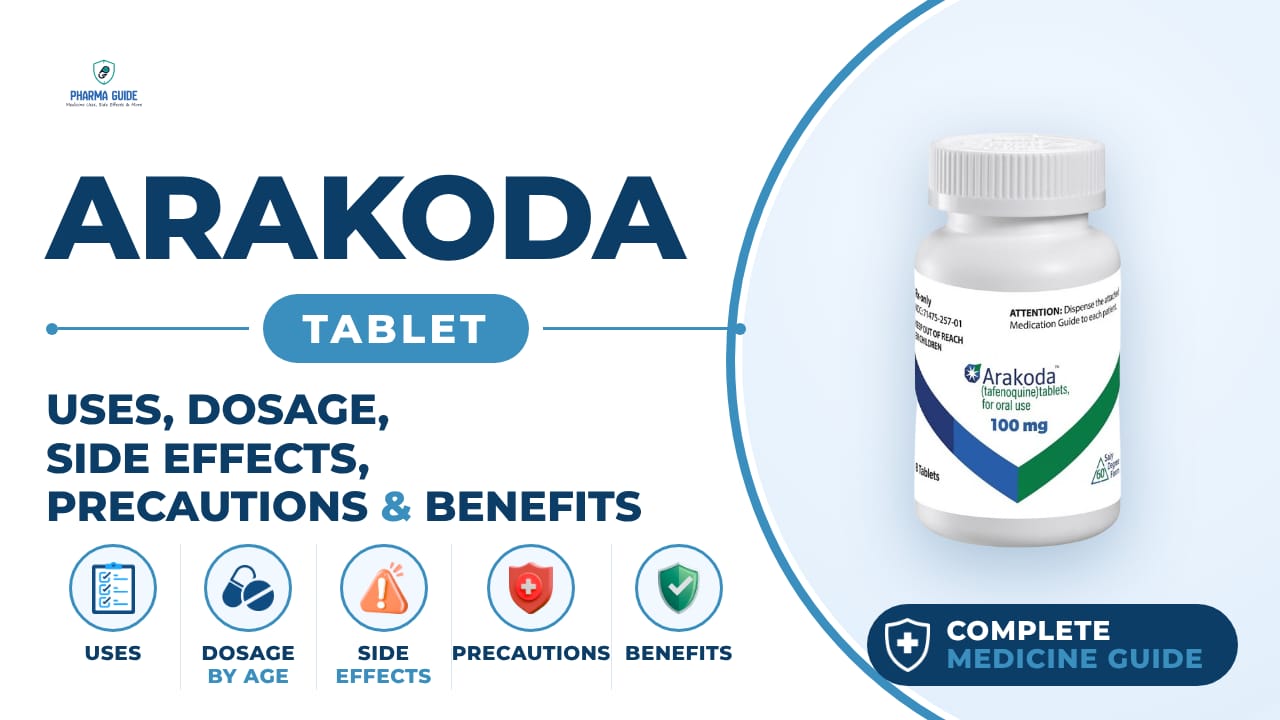
| Generic name | tafenoquine |
|---|---|
| Drug class | aminoquinoline (8-aminoquinoline antimalarial) |
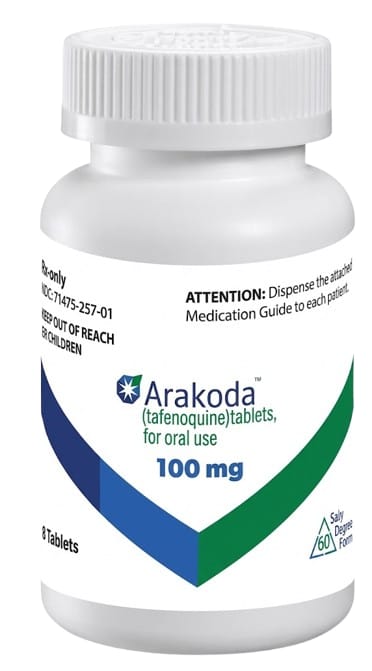
| Forms | Tablet (100 mg) |
Quick overview
Arakoda Tablet (generic name tafenoquine) is a prescription medicine belonging to the aminoquinoline class of antimalarial drugs. It is used to help prevent malaria in adults, including during travel to malaria-risk areas and extended stays in such regions. Arakoda works by acting against the malaria parasite at different stages, including the dormant liver stage. It is taken with food on a schedule that begins before travel and continues through a weekly maintenance dose.
What is Arakoda Tablet
Arakoda is a prescription medicine used to help prevent malaria in adults. Malaria is a serious disease of the blood spread by infected mosquitoes.
Arakoda Tablet uses
- Prevention of malaria in adults.
- Malaria prevention during travel to endemic areas.
- Prevention of malaria during extended stays in risk regions.
Benefits of Arakoda Tablet
- Helps prevent malaria.
- Reduces the risk of malaria infection during travel.
- Provides weekly protection during travel to malaria-risk areas.
- Helps protect against multiple malaria species.
- Offers a convenient weekly maintenance schedule.
How Arakoda Tablet works
Arakoda works by killing the malaria parasite at different stages, including the dormant liver stage, which helps stop the infection from developing.
Arakoda Tablet dosage
Take Arakoda with food. Swallow the tablet whole; do not break, crush, or chew it. Start taking the medicine 3 days before travel to a malaria area, taking it once daily for those 3 days. Continue taking the medicine once weekly while in the malaria area, starting 7 days after the last of the pre-travel doses. Take one final dose 7 days after the last weekly dose, after leaving the malaria area. Complete the full course of treatment, including the doses before travel, during travel, and after leaving the area; do not stop early without talking to your healthcare provider.
Arakoda has not been established as safe and effective in children. Clinical trials did not include enough people aged 65 and older to know if they respond differently than younger adults.
| Age group | Dose |
|---|---|
| Under 18 years | Under 18 years |
| 18–64 years | 200 mg, once/day |
| 65+ years | 200 mg, once/day |
Available forms and strengths
- Tablet (100 mg)
Side effects of Arakoda Tablet
Common
- Headache
- Dizziness
- Back pain
- Diarrhea
- Nausea
- Vomiting
- Increased liver enzyme (ALT) levels
- Motion sickness
- Insomnia (trouble sleeping)
- Depression
- Abnormal dreams
- Anxiety
Serious
- Hemolytic anemia (breakdown of red blood cells), especially in people with G6PD deficiency
- Methemoglobinemia (a blood disorder that reduces oxygen delivery in the body)
- Serious psychiatric effects, including hallucinations, delusions, disorganized thinking, or psychosis
- Serious allergic (hypersensitivity) reactions, including angioedema and hives
- Eye changes called vortex keratopathy (a cornea change seen on eye exam)
- Decreased hemoglobin levels
Warnings and precautions
- All patients must be tested for G6PD deficiency before starting this medicine because of the risk of serious red blood cell breakdown (hemolytic anemia). People with G6PD deficiency or unknown G6PD status should not take it.
- This medicine should not be used by people who have a history of psychotic disorders or who currently have psychotic symptoms such as hallucinations or delusions.
- Because this medicine stays in the body a long time (about 17 days), side effects such as mental health changes, red blood cell breakdown, low blood oxygen, or allergic reactions may show up later rather than right away.
- Avoid taking this medicine together with certain other drugs, including dofetilide and metformin, since it may raise their levels in the body and increase the risk of their side effects.
- Do not take this medicine if you are allergic to tafenoquine, other related antimalarial drugs, or any ingredient in the tablet.
- Arakoda is not recommended during pregnancy because it may harm a baby who has G6PD deficiency.
- Women who can become pregnant should avoid pregnancy or use effective birth control during treatment and for 3 months after the last dose.
- Women should not breastfeed a baby with G6PD deficiency, or a baby whose G6PD status is unknown, during treatment and for 3 months after the last dose, because the baby could develop hemolytic anemia.
- This medicine has not been studied in people with kidney problems, so patients with kidney impairment should be monitored for side effects if they take it.
- This medicine has not been studied in people with liver problems, so patients with liver impairment should be monitored for side effects if they take it.
- It is not known whether alcohol affects this medicine, but drinking heavily can weaken the immune system and make it harder for the body to fight infection.
Storage
- Store at room temperature between 68°F to 77°F (20°C to 25°C)
- Temperature excursions are permitted to 59°F to 86°F (15°C to 30°C)
- Protect from moisture
- Dispense only in the original carton or bottle
- Keep tablets in their blister pack or bottle until ready to take a dose
- Keep out of the reach of children
When to see a doctor
- Get medical help right away if you notice dark urine, dizziness, confusion, tiredness, light-headedness, shortness of breath, pale skin, or yellowing of the skin or eyes — these can be signs of red blood cell breakdown (hemolytic anemia).
- Get medical help right away if you have bluish coloring of the lips or skin, headache, fatigue, shortness of breath, or lack of energy — these can be signs of a blood oxygen problem called methemoglobinemia.
- Get emergency help right away if you have hallucinations, strange or false thoughts, confusion, or trouble thinking while taking this medicine.
- Call your healthcare provider if you have mood changes, anxiety, trouble sleeping, or nightmares that last 3 days or longer while taking this medicine.
- Get medical help right away if you have signs of a serious allergic reaction, such as swelling of the face, lips, tongue, or throat, trouble breathing, rash, or hives.
- Tell your healthcare provider right away if you become pregnant or think you might be pregnant while taking this medicine.
Alternatives
- Chloroquine
- Mefloquine
- Doxycycline
Watch the video
FAQs
What is Arakoda Tablet used for?
Arakoda is a prescription medicine used to help prevent malaria in adults, including during travel to malaria-risk areas and extended stays in such regions.
How is Arakoda Tablet taken?
Take Arakoda with food, starting 3 days before travel with one dose daily. Continue once weekly during travel, starting 7 days after the last pre-travel dose, then take one final dose 7 days after the last weekly dose after leaving the malaria area.
Who should not take Arakoda Tablet?
People with G6PD deficiency or unknown G6PD status should not take it, as should those with a history of psychotic disorders or current psychotic symptoms, or anyone allergic to tafenoquine or related antimalarial drugs.
What are the serious side effects of Arakoda Tablet?
Serious side effects include hemolytic anemia (especially with G6PD deficiency), methemoglobinemia, serious psychiatric effects like hallucinations or psychosis, serious allergic reactions, vortex keratopathy, and decreased hemoglobin levels.
Can Arakoda Tablet be taken during pregnancy?
Arakoda is not recommended during pregnancy because it may harm a baby who has G6PD deficiency. Women who can become pregnant should avoid pregnancy or use effective birth control during treatment and for 3 months after the last dose.
General information, not medical advice
Your prescriber and the leaflet in your pack know your situation. This page does not.
- Follow your prescriber and the leaflet
- Don't start, stop, or change a dose on your own
- Doses and warnings differ by country and product
Sources
Video
Related medicines

Injectafer Injection: Uses, Dosage, Side Effects, Precautions and Alternates
Iron products
Injectafer (ferric carboxymaltose) treats iron deficiency anemia and heart failure-related iron deficiency via IV. Learn uses, dosage, side effects, and

Gliclazide Tablet: Uses, Dosage, Side Effects, Precautions and Alternates
Sulfonylurea (hypoglycemic/antidiabetic agent)
Gliclazide Tablet is a sulfonylurea for type 2 diabetes that boosts insulin release. Learn about dosage, side effects, warnings, and precautions.