
Safety
General information, not medical advice
Your prescriber and the leaflet in your pack know your situation. This page does not.
- Follow your prescriber and the leaflet
- Don't start, stop, or change a dose on your own
- Doses and warnings differ by country and product
Arcapta Inhaler: Uses, Dosage, Side Effects, Precautions and Alternates
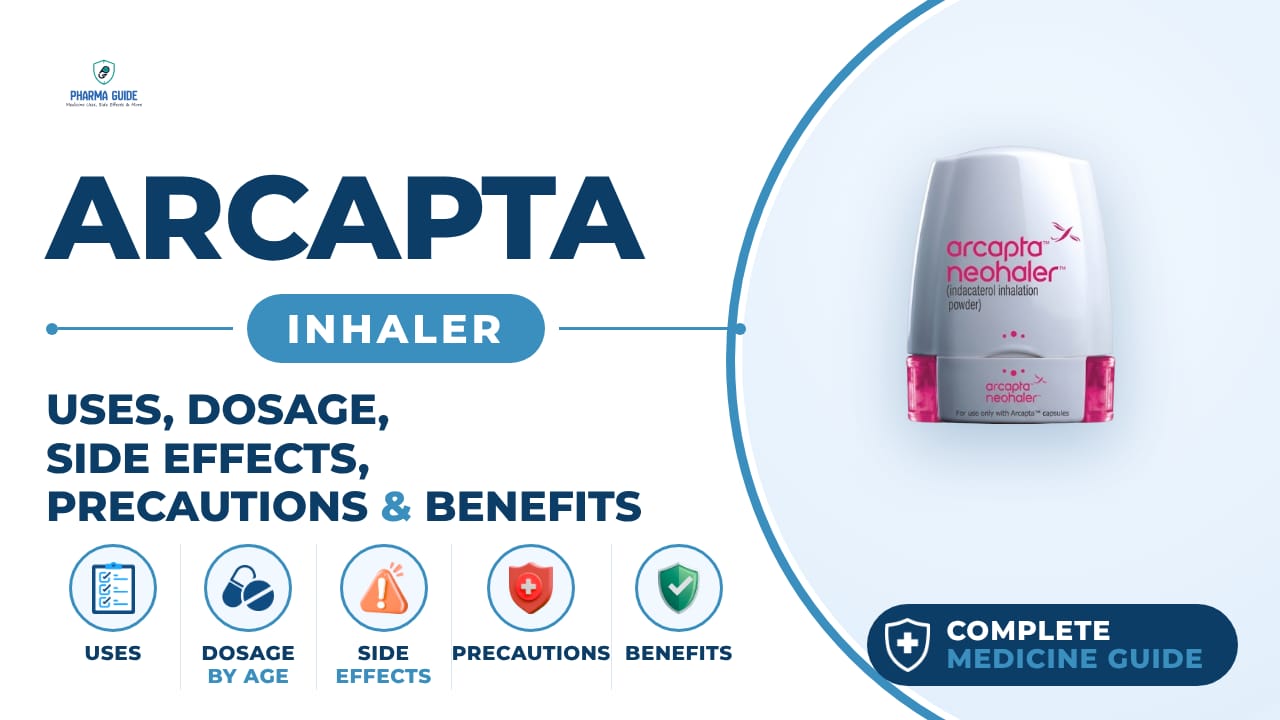
| Generic name | indacaterol |
|---|---|
| Drug class | Long-acting beta2-adrenergic agonist (LABA) / adrenergic bronchodilator |
| Forms | Inhaler |
Quick overview
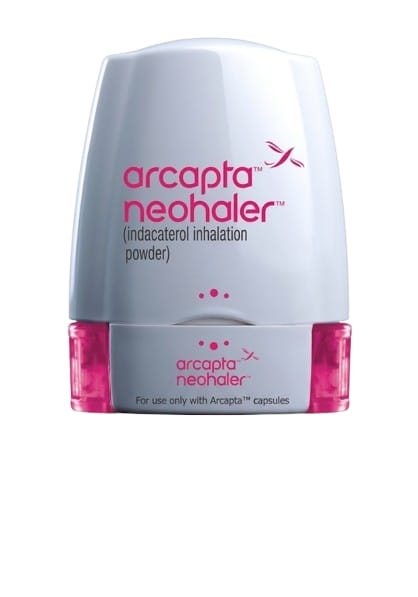
Arcapta Inhaler (indacaterol) is a long-acting beta2-adrenergic agonist (LABA) bronchodilator used once a day to control symptoms of chronic obstructive pulmonary disease (COPD), including chronic bronchitis and emphysema. It works by relaxing the muscles around the airways to improve breathing. It is not approved for asthma and should not be used in children.
What is Arcapta Inhaler
Arcapta Neohaler is an inhaled medicine used long term, once a day, to control symptoms of chronic obstructive pulmonary disease (COPD), including chronic bronchitis and emphysema. It is a bronchodilator that works by relaxing muscles in the airways to improve breathing. It is not approved for asthma and should not be used in children.
Arcapta Inhaler uses
- Chronic obstructive pulmonary disease (COPD).
- Chronic bronchitis associated with COPD.
- Emphysema associated with COPD.
- Long-term maintenance of airway opening.
- Management of ongoing COPD-related breathing difficulties.
Benefits of Arcapta Inhaler
- Helps open the airways.
- Improves airflow.
- Helps reduce shortness of breath.
- Supports long-term breathing control.
- Helps manage COPD symptoms.
How Arcapta Inhaler works
Indacaterol relaxes the muscles around the airways in the lungs by acting on beta2 receptors, which triggers production of a chemical called cyclic AMP. This chemical causes the airway muscles to relax, making it easier to breathe. It acts locally in the lungs after inhalation.
Arcapta Inhaler dosage
Use the inhaler one time each day at the same time of day. Do not swallow the capsules; they are for oral inhalation only and must be used only with the Neohaler device provided. Only remove a capsule from its blister immediately before use, and discard any capsule exposed to air that is not used right away.
If a dose is missed, take it as soon as remembered, but do not take more than one dose in 24 hours. Do not use more than the prescribed amount or use it together with other long-acting beta2-agonist medicines. Keep a fast-acting rescue inhaler on hand for sudden breathing problems, since this medicine does not relieve sudden symptoms.
Do not stop using this medicine without your healthcare provider's guidance, as symptoms may return. Always use the new inhaler device that comes with each new prescription. This medicine is not approved for use in children; it is approved only for adults with COPD.
| Age group | Dose |
|---|---|
| Under 18 years | Not recommended |
| 18–64 years | 75 mcg, once/day |
| 65+ years | 75 mcg, once/day |
Available forms and strengths
- Inhaler — 75 mcg
Side effects of Arcapta Inhaler
Common
- Runny nose
- Cough
- Sore throat
- Headache
- Nausea
- Muscle pain or spasm
- Cold symptoms (stuffy nose, sinus pain, sneezing)
Serious
- Serious allergic reactions, including rash, hives, swelling of the tongue, lips and face, and difficulty breathing or swallowing
- Sudden shortness of breath that may be life-threatening
- Fast or irregular heartbeat (palpitations)
- Increased blood pressure
- Chest pain
- Low blood potassium (which may cause muscle spasm, muscle weakness, or abnormal heart rhythm)
- High blood sugar
- Paradoxical bronchospasm (worsening of breathing right after use)
- Increased risk of asthma-related death when used by people with asthma without an inhaled corticosteroid
Warnings and precautions
- This medicine is approved only for COPD and must not be used to treat asthma, since long-acting beta2-agonist medicines like this one increase the risk of death from asthma.
- This medicine does not relieve sudden breathing problems. Always carry a fast-acting rescue inhaler for emergencies, and do not use extra doses of this medicine for sudden symptoms.
- Do not take the capsules by mouth or place them directly in the mouthpiece — they must only be used with the Neohaler device by inhaling.
- Do not use this medicine more often than prescribed, in higher doses than recommended, or together with other long-acting beta2-agonist medicines, since this can cause an overdose with serious heart effects.
- This product contains milk sugar (lactose) with trace milk proteins, so people with a severe milk protein allergy could have an allergic reaction.
- There is not enough research in pregnant women to know if this medicine is safe for an unborn baby. Tell your doctor if you are pregnant or planning to become pregnant, since it should only be used in pregnancy if the possible benefit is worth the possible risk.
- It isn't known whether this medicine passes into human breast milk or whether it could harm a nursing baby. Talk with your doctor about whether to use this medicine while breastfeeding.
- No specific dosage adjustment information is given for kidney problems; a study in people with kidney impairment was not performed because very little of the drug is removed from the body through the kidneys.
- People with mild to moderate liver problems did not show important changes in how the drug is processed, but studies in people with severe liver problems have not been done.
Storage
- Store in a dry place at room temperature between 59°F to 86°F (15°C to 30°C)
- Protect capsules from light and moisture
- Do not remove capsules from their foil package until just before use
- Do not store capsules in the Neohaler inhaler
- Keep out of the reach of children
When to see a doctor
- Get emergency medical care right away if your breathing problems get worse quickly, or if your rescue inhaler does not relieve your breathing problems.
- Stop using this medicine and get emergency care if you have signs of a serious allergic reaction, such as rash, hives, or swelling of the tongue, lips, or face, or trouble breathing or swallowing.
- If you suddenly have trouble breathing right after using your inhaler, call your healthcare provider or go to the nearest emergency room right away, since this can be life-threatening.
- Call your healthcare provider if your breathing problems worsen over time, if you need your rescue inhaler more often than usual, or if your rescue inhaler stops working as well — do not simply increase your dose of this medicine.
Alternatives
- Striverdi Respimat
- Serevent
- Spiriva
Watch the video
FAQs
What is Arcapta Inhaler used for?
Arcapta Inhaler is used long term, once a day, to control symptoms of chronic obstructive pulmonary disease (COPD), including chronic bronchitis and emphysema, by relaxing muscles in the airways to improve breathing.
Is Arcapta Inhaler approved for asthma?
No, Arcapta Inhaler is approved only for COPD and must not be used to treat asthma, since long-acting beta2-agonist medicines like this one increase the risk of death from asthma.
What is the dosage for Arcapta Inhaler?
Adults 18 years and older, including those 65 and up, use one 75 mcg dose once a day at the same time each day. It is not recommended for children under 18.
Can Arcapta Inhaler be used for sudden breathing problems?
No, this medicine does not relieve sudden breathing problems. A fast-acting rescue inhaler should be kept on hand for emergencies.
What are common side effects of Arcapta Inhaler?
Common side effects include runny nose, cough, sore throat, headache, nausea, muscle pain or spasm, and cold symptoms like stuffy nose, sinus pain, or sneezing.
General information, not medical advice
Your prescriber and the leaflet in your pack know your situation. This page does not.
- Follow your prescriber and the leaflet
- Don't start, stop, or change a dose on your own
- Doses and warnings differ by country and product
Sources
Video
Related medicines
Striverdi Respimat Inhaler: Uses, Dosage, Side Effects, Precautions and Alternates
Long-acting beta2-adrenergic agonist (LABA) / adrenergic bronchodilator
Striverdi Respimat Inhaler (olodaterol) is a once-daily LABA for long-term COPD maintenance. Learn its uses, dosage, side effects, and precautions.

Injectafer Injection: Uses, Dosage, Side Effects, Precautions and Alternates
Iron products
Injectafer (ferric carboxymaltose) treats iron deficiency anemia and heart failure-related iron deficiency via IV. Learn uses, dosage, side effects, and