
Safety
General information, not medical advice
Your prescriber and the leaflet in your pack know your situation. This page does not.
- Follow your prescriber and the leaflet
- Don't start, stop, or change a dose on your own
- Doses and warnings differ by country and product
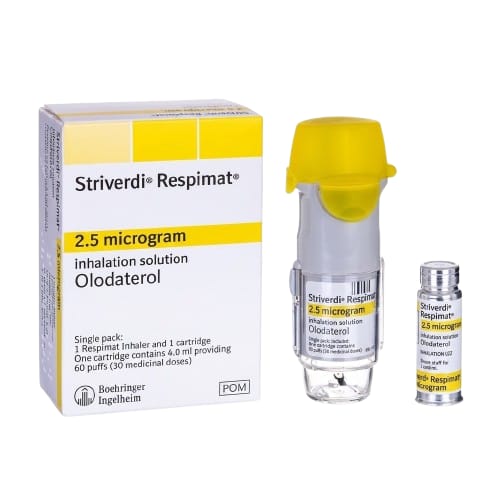
Striverdi Respimat Inhaler: Uses, Dosage, Side Effects, Precautions and Alternates
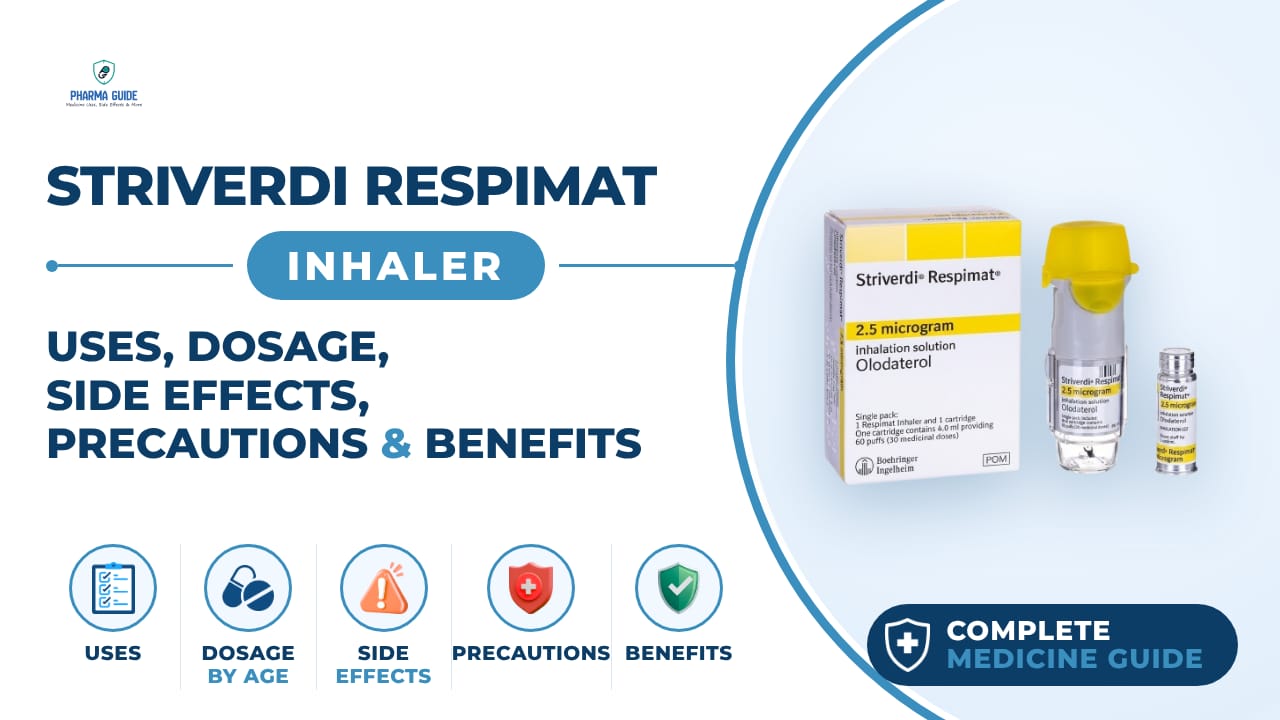
| Generic name | olodaterol |
|---|---|
| Drug class | Long-acting beta2-adrenergic agonist (LABA) / adrenergic bronchodilator |
| Forms | Inhaler |
Quick overview
Striverdi Respimat Inhaler contains olodaterol, a long-acting beta2-adrenergic agonist (LABA) bronchodilator. It is used for the long-term, daily maintenance treatment of chronic obstructive pulmonary disease (COPD), including chronic bronchitis and emphysema. It is not a steroid and must not be used for asthma or for sudden breathing attacks. It works by relaxing the muscles around the airways to make breathing easier over a long period of time.
What is Striverdi Respimat Inhaler
Striverdi Respimat is an inhaled medicine used for the long-term, daily maintenance treatment of chronic obstructive pulmonary disease (COPD), including chronic bronchitis and emphysema. It is not a steroid and is not used to treat asthma or sudden breathing attacks.
Striverdi Respimat Inhaler uses
- Chronic obstructive pulmonary disease (COPD)
- Chronic bronchitis associated with COPD
- Emphysema associated with COPD
- Long-term maintenance of airway opening
- Management of ongoing COPD-related breathing difficulties
Benefits of Striverdi Respimat Inhaler
- Helps open the airways
- Improves airflow
- Reduces shortness of breath
- Helps control wheezing
- Supports long-term breathing management
How Striverdi Respimat Inhaler works
Striverdi Respimat contains olodaterol, which attaches to receptors in the lungs that cause the muscles around the airways to relax and open up, making it easier to breathe. It is long-acting, so it keeps working over a long period of time.
Striverdi Respimat Inhaler dosage
This medicine is for inhalation only; do not swallow it or spray it into the eyes. Take your dose at about the same time each day. You must take two puffs to get one full dose. Continue using it every day, even if you feel well or have no symptoms, because it controls but does not cure COPD.
Do not use this medicine to relieve a sudden attack of breathlessness or wheezing — use your fast-acting reliever inhaler for sudden symptoms instead. If you forget a dose, use it as soon as you remember, but if it is almost time for your next dose, skip the missed one and take your next dose at the usual time the next day — do not double up. Do not use more than one dose in a 24-hour period. This medicine is not approved for use in children or adolescents under 18 years old.
Priming is needed before first use, and again if the inhaler has not been used for several days or weeks, following the instructions provided with the device. Clean the mouthpiece, including the metal part inside, with a damp cloth or tissue only, at least once a week.
| Age group | Dose |
|---|---|
| Under 18 years | Not recommended |
| 18–64 years | 5 mcg, once/day |
| 65+ years | 5 mcg, once/day |
Available forms and strengths
- Inhaler
Side effects of Striverdi Respimat Inhaler
Common
- Runny nose, stuffy nose, sneezing, or sore throat (cold-like symptoms)
- Upper respiratory tract infection
- Cough, bronchitis, or chest infections
- Urinary tract infection symptoms (burning when urinating, frequent urge to urinate)
- Dizziness
- Rash
- Diarrhoea
- Back pain
- Joint pain
Serious
- Allergic reaction: shortness of breath, wheezing or difficulty breathing, swelling of the face, lips, tongue or throat, rash, itching or hives
- Sudden worsening of breathing or wheezing after using the medicine (paradoxical bronchospasm) — a life-threatening airway tightening
- Heart problems: fast or irregular heartbeat, palpitations, chest pain, increased or decreased blood pressure
- Low potassium levels: muscle spasm, muscle weakness, abnormal heart rhythm, leg cramps, constipation, tingling or numbness
- High blood sugar: increased thirst, increased urination, dry mouth, fruity breath odor
Warnings and precautions
- This medicine is only for COPD and must not be used to treat asthma, as long-acting beta agonists like this one can increase the risk of asthma-related death.
- Do not use this medicine to treat sudden worsening of COPD or a breathing attack that has already started — it will not act quickly enough. Use a fast-acting reliever inhaler instead.
- Do not use more than the recommended dose or use it together with other medicines that contain a long-acting beta agonist, as this can cause serious heart-related side effects and may be fatal.
- This medicine can rarely cause a sudden tightening of the airways (paradoxical bronchospasm), which can be life-threatening. Stop using it right away if this happens.
- Do not stop using this medicine or lower your dose without checking with your doctor, as your COPD symptoms could get worse.
- It is not known if this medicine can harm an unborn baby. Tell your doctor if you are pregnant or planning to become pregnant so the risks and benefits can be discussed.
- It is not known whether this medicine passes into breast milk or if it could affect a nursing baby. Tell your doctor if you are breastfeeding or planning to breastfeed so you can decide together whether to use this medicine.
- No dose change is generally needed for kidney problems, including severe kidney impairment, based on available studies.
- No dose adjustment is needed for mild to moderate liver problems. There is no information on use in people with severe liver problems, so tell your doctor if you have severe liver disease.
- It is not known whether drinking alcohol affects this medicine.
- Be careful driving or using machinery until you know how this medicine affects you, as it may cause dizziness in some people.
Storage
- Keep in a cool dry place where the temperature stays below 30°C
- Do not freeze
- Do not store in the bathroom or near a sink; do not leave on a window sill or in the car
- Keep out of the sight and reach of children; a locked cupboard at least one-and-a-half metres above the ground is a good place to store medicines
- Discard the inhaler 3 months after inserting the cartridge, even if it still contains some medicine, or when the inhaler locks (after 60 puffs), whichever comes first
- If your doctor tells you to stop using this medicine, or it has expired or passed its 3-month use period, or the inhaler has locked, ask your pharmacist how to dispose of it properly
When to see a doctor
- Get emergency medical help right away if you have signs of a serious allergic reaction, such as hives, swelling of the face, lips, tongue, or throat, or trouble breathing.
- Seek medical attention right away if your breathing problems suddenly get worse, or if your usual reliever inhaler is not helping as much as before.
- Call your doctor straight away if you notice a fast or irregular heartbeat, chest pain, or other heart-related symptoms after using this medicine.
- If you think you or someone else has used too much of this medicine, get emergency medical help right away, even if there are no symptoms, as overdose can be life-threatening.
Alternatives
- Stiolto Respimat
- Serevent
- Spiriva Respimat
Watch the video
FAQs
What is Striverdi Respimat Inhaler used for?
It is used for the long-term, daily maintenance treatment of chronic obstructive pulmonary disease (COPD), including chronic bronchitis and emphysema. It is not used for asthma or sudden breathing attacks.
What is the dosage of Striverdi Respimat Inhaler?
The recommended dose is 5 mcg once daily, taken as two puffs to get one full dose, at about the same time each day. It is not recommended for use in children or adolescents under 18 years old.
Can Striverdi Respimat be used for a sudden asthma or COPD attack?
No, it should not be used to relieve sudden breathlessness or wheezing since it is not fast-acting. A fast-acting reliever inhaler should be used for sudden symptoms instead.
What are the common side effects of Striverdi Respimat Inhaler?
Common side effects include cold-like symptoms, upper respiratory tract infection, cough or bronchitis, urinary tract infection symptoms, dizziness, rash, diarrhoea, back pain, and joint pain.
How should Striverdi Respimat Inhaler be stored and discarded?
Keep it in a cool, dry place below 30°C, away from freezing, bathrooms, sinks, and direct sunlight. Discard the inhaler 3 months after inserting the cartridge or after 60 puffs, whichever comes first.
General information, not medical advice
Your prescriber and the leaflet in your pack know your situation. This page does not.
- Follow your prescriber and the leaflet
- Don't start, stop, or change a dose on your own
- Doses and warnings differ by country and product
Sources
Video
Related medicines
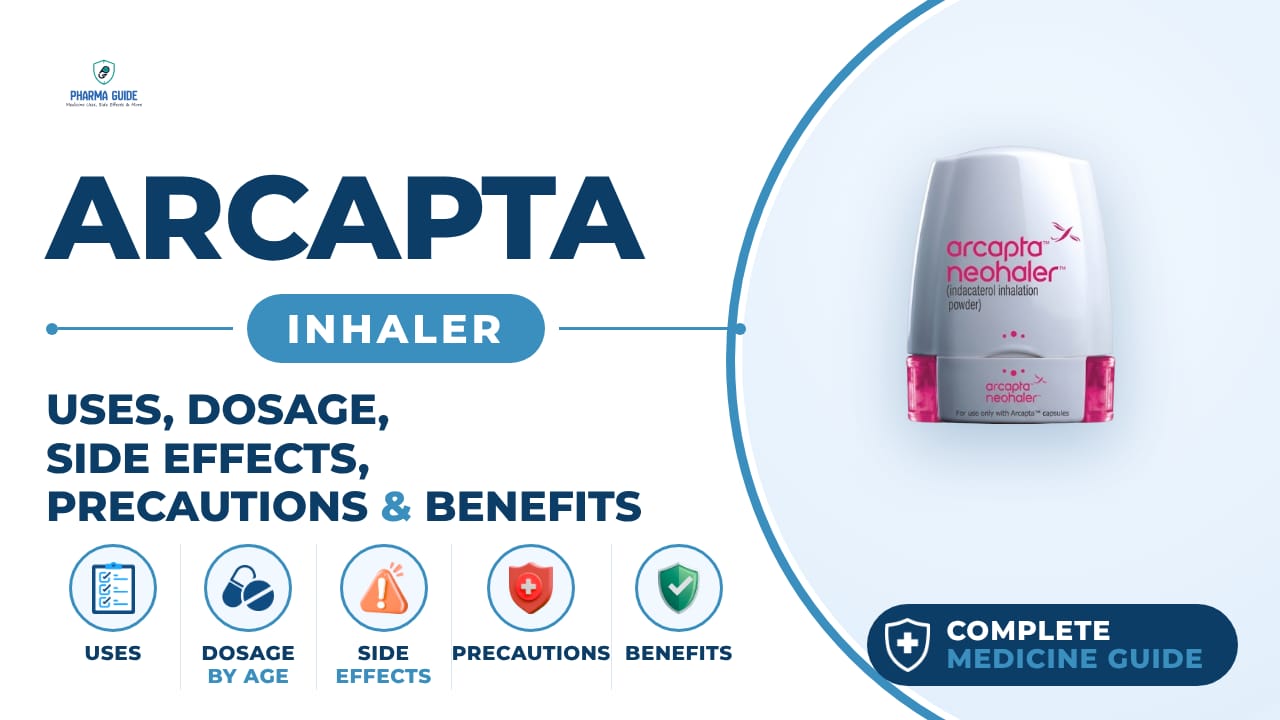
Arcapta Inhaler: Uses, Dosage, Side Effects, Precautions and Alternates
Long-acting beta2-adrenergic agonist (LABA) / adrenergic bronchodilator
Arcapta Inhaler (indacaterol) is a once-daily LABA bronchodilator for COPD symptoms. Learn uses, dosage, side effects, warnings, and storage tips.

Injectafer Injection: Uses, Dosage, Side Effects, Precautions and Alternates
Iron products
Injectafer (ferric carboxymaltose) treats iron deficiency anemia and heart failure-related iron deficiency via IV. Learn uses, dosage, side effects, and