
Safety
General information, not medical advice
Your prescriber and the leaflet in your pack know your situation. This page does not.
- Follow your prescriber and the leaflet
- Don't start, stop, or change a dose on your own
- Doses and warnings differ by country and product
Arcoxia Tablet: Uses, Dosage, Side Effects, Precautions and Alternates
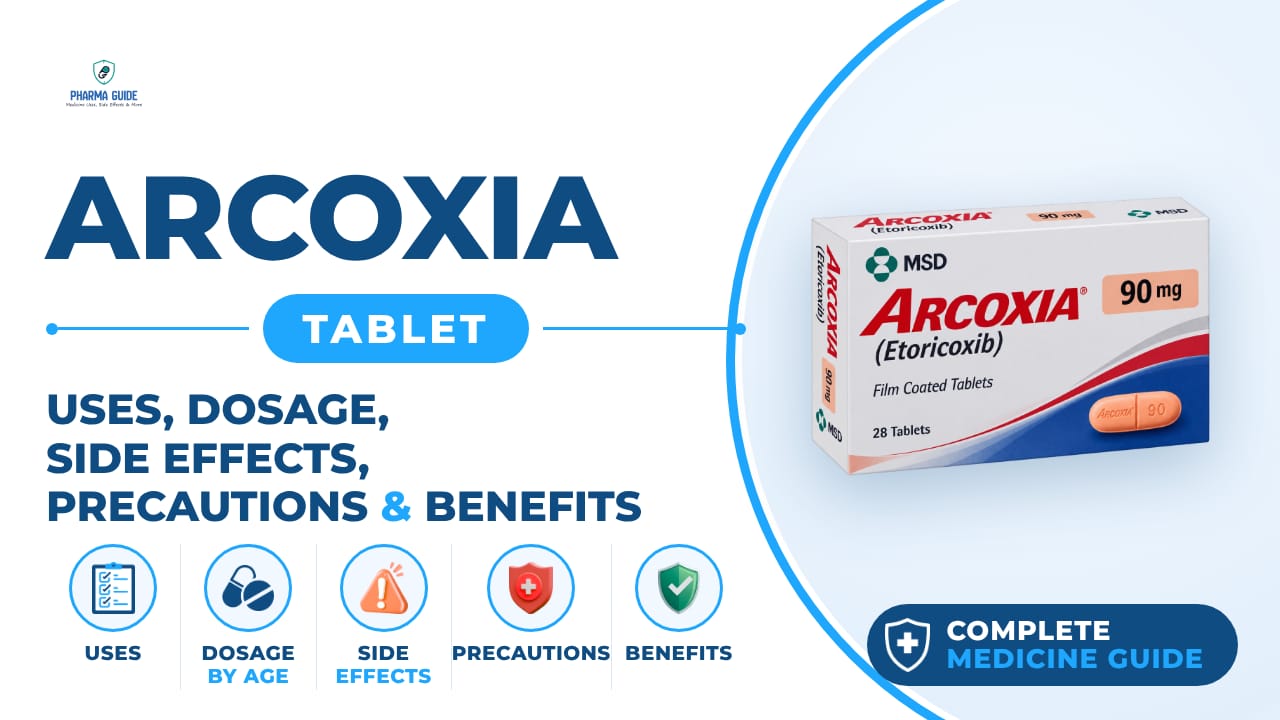
| Generic name | Etoricoxib |
|---|---|
| Drug class | Selective COX-2 inhibitor (non-steroidal anti-inflammatory drug, NSAID) |
| Forms | 30mg film-coated tablet, 60mg film-coated tablet, 90mg film-coated tablet, 120mg film-coated tablet |
Quick overview
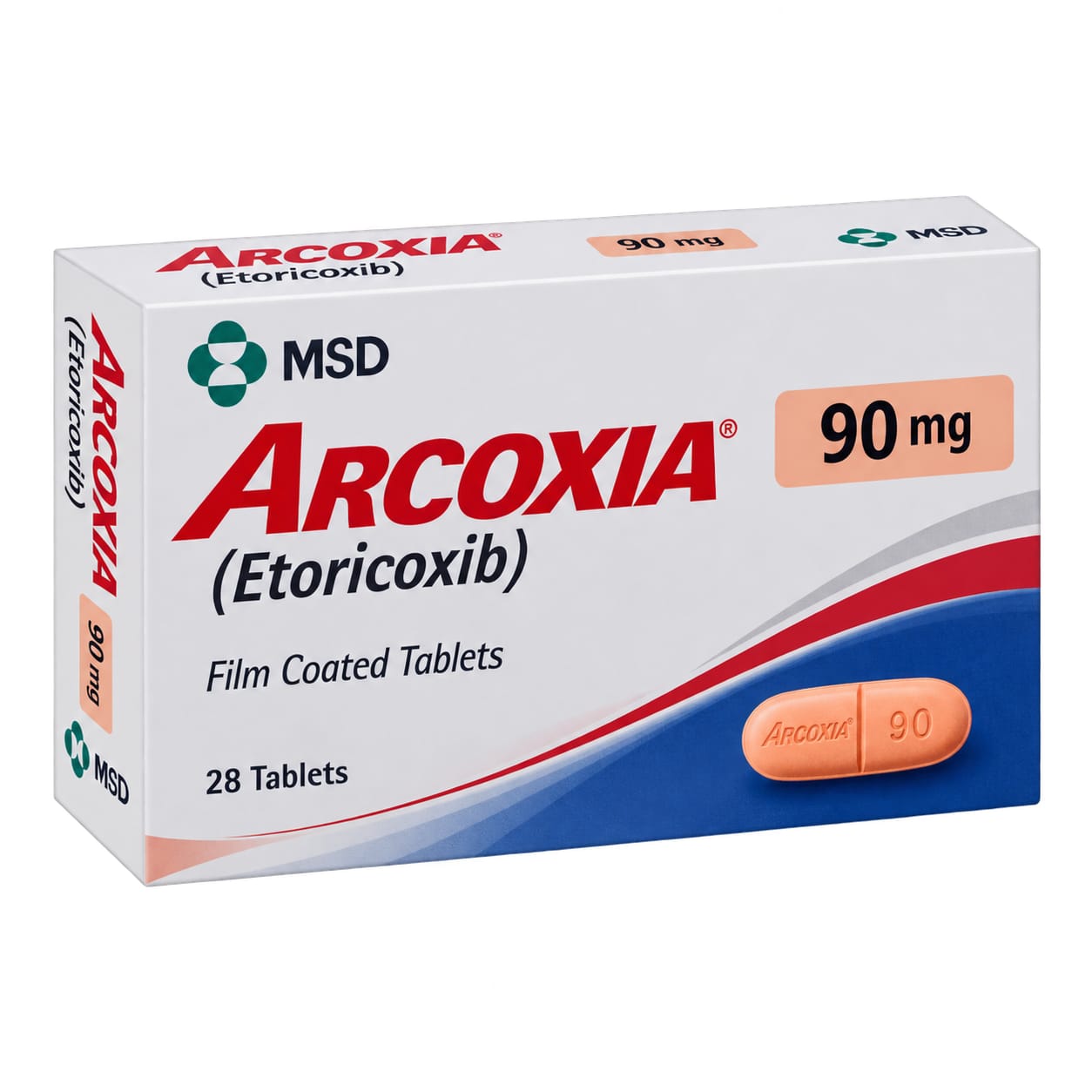
Arcoxia Tablet contains etoricoxib, a selective COX-2 inhibitor belonging to the NSAID family. It is used to reduce pain and swelling in conditions such as osteoarthritis, rheumatoid arthritis, ankylosing spondylitis, gout, and acute or chronic musculoskeletal pain. It works by blocking the COX-2 enzyme involved in inflammation while sparing the COX-1 enzyme that protects the stomach. It is taken once daily by mouth, with dosage depending on age and condition.
What is Arcoxia Tablet
Arcoxia contains the active substance etoricoxib. It is one of a group of medicines called selective COX-2 inhibitors, which belong to a family of medicines called non-steroidal anti-inflammatory drugs (NSAIDs). It helps reduce pain and swelling (inflammation) in the joints and muscles.
Arcoxia Tablet uses
- Acute and chronic treatment of the signs and symptoms of osteoarthritis
- Acute and chronic treatment of the signs and symptoms of rheumatoid arthritis
- Management of ankylosing spondylitis
- Treatment of acute gouty arthritis
- Relief of acute pain, including pain related to minor dental procedures
- Relief of chronic musculoskeletal pain
Benefits of Arcoxia Tablet
- Helps reduce pain and swelling (inflammation) in the joints and muscles
- Relieves pain and inflammation with less risk of stomach ulcers compared to non-selective NSAIDs
- Improves joint mobility and reduces stiffness in arthritis
How Arcoxia Tablet works
Arcoxia reduces pain and inflammation by blocking an enzyme in the body called COX-2, which plays a role in joint inflammation and pain. Unlike other anti-inflammatory medicines, it does not block COX-1, the enzyme involved in protecting the stomach.
Arcoxia Tablet dosage
Arcoxia is for oral use. Take the tablets once a day, with or without food. Swallow the tablets with a glass of water and do not halve the tablet. Take your Arcoxia at about the same time each day. The onset of the effect of Arcoxia may be faster when taken without food. Use the lowest dose that controls your pain and do not take Arcoxia for longer than necessary. For acute pain conditions, Arcoxia should be used only for the acute painful period.
| Age group | Dose |
|---|---|
| Under 16 years | Not recommended |
| 16–17 years | 30–60 mg once daily, depending on the condition |
| 18 years and older | 30–120 mg once daily, depending on the condition |
Available forms and strengths
- 30mg film-coated tablet
- 60mg film-coated tablet
- 90mg film-coated tablet
- 120mg film-coated tablet
Side effects of Arcoxia Tablet
Common
- Stomach pain
- Swelling of the legs and/or feet due to fluid retention (oedema)
- Dizziness
- Headache
- Palpitations or irregular heart rhythm
- Increased blood pressure
- Wheezing or shortness of breath
- Constipation, wind, gastritis, heartburn, diarrhoea, indigestion, nausea, vomiting, mouth ulcers
- Changes in blood tests related to your liver
- Bruising
- Weakness and fatigue, flu-like illness
- Dry socket (after tooth extraction)
Serious
- Severe allergic reaction (angioedema, anaphylactic/anaphylactoid reactions including shock)
- Severe skin reactions such as Stevens-Johnson syndrome or toxic epidermal necrolysis
- Heart attack and stroke
- Heart failure
- Abnormal heart rhythm (atrial fibrillation)
- Liver problems including hepatitis, jaundice and liver failure
- Serious kidney problems including kidney failure
- Stomach ulcers that may become serious and bleed
Warnings and precautions
- Etoricoxib may slightly increase your risk of heart attack and stroke, so it should not be used in those who have already had heart problems or stroke.
- The risk might increase after prolonged treatment, especially with high doses.
- Do not take Arcoxia if you have a current stomach ulcer or bleeding in your stomach or intestines, serious liver disease, serious kidney disease, or uncontrolled high blood pressure. Do not take Arcoxia if you are under 16 years of age.
- Arcoxia can mask or hide a fever, which is a sign of infection. Arcoxia can increase blood pressure in some people, especially in high doses; your doctor will want to check your blood pressure from time to time. Taking aspirin with Arcoxia increases the risk of stomach ulcers. Do not take high-dose aspirin or other anti-inflammatory medicines while taking Arcoxia.
- Arcoxia must not be taken during pregnancy. If you are or could be pregnant or are planning to become pregnant, do not take the tablets. If you become pregnant while taking it, stop and tell your doctor immediately.
- It is not known if Arcoxia is excreted in human milk. If you are breast-feeding or planning to breast-feed, consult your doctor before taking Arcoxia. If you are using Arcoxia, you must not breast-feed.
- Do not take Arcoxia if you have serious kidney disease. Tell your doctor if you have any history of kidney disease, as your doctor will want to keep a check on you.
- Do not take Arcoxia if you have serious liver disease. If you have mild liver disease, you should not take more than 60mg a day; if you have moderate liver disease, you should not take more than 30mg a day.
- Dizziness and sleepiness have been reported in some patients taking Arcoxia. Do not drive or use any tools or machines if you experience dizziness or sleepiness.
Storage
- Do not store above 25°C.
- Store in the original package in order to protect from moisture.
- Keep this medicine out of the sight and reach of children.
- Do not use this medicine after the expiry date marked on the carton and blister strips.
- Do not use this medicine if you notice discoloration, damage or any other signs of deterioration.
- Do not throw away any medicines via wastewater or household waste. Ask your pharmacist how to throw away any medicines you no longer use.
When to see a doctor
- Stop Arcoxia and talk to your doctor immediately if you get shortness of breath, chest pains, or ankle swelling, or if they get worse.
- Stop Arcoxia and talk to your doctor immediately if you notice yellowing of the skin and eyes (jaundice), as these are signs of liver problems.
- Stop Arcoxia and talk to your doctor immediately if you have severe or continual stomach pain or your stools become black.
- Stop Arcoxia and talk to your doctor immediately if you have an allergic reaction, which can include skin ulcers or blistering, or swelling of the face, lips, tongue, or throat that may cause difficulty breathing.
- If you take too many Arcoxia tablets, seek medical attention immediately.
Alternatives
- Celecoxib
- Diclofenac
- Meloxicam
- Ibuprofen
Watch the video
FAQs
What is Arcoxia Tablet used for?
Arcoxia is used for acute and chronic treatment of osteoarthritis and rheumatoid arthritis, management of ankylosing spondylitis, acute gouty arthritis, relief of acute pain including after minor dental procedures, and chronic musculoskeletal pain.
How should I take Arcoxia Tablet?
Arcoxia is taken orally once a day, with or without food, swallowed whole with a glass of water without halving the tablet. It should be taken at about the same time each day, using the lowest dose that controls pain and not for longer than necessary.
What is the dosage of Arcoxia for adults?
Adults 18 years and older may take 30–120 mg once daily depending on the condition. It is not recommended for those under 16 years, and 16–17 year olds may take 30–60 mg once daily depending on the condition.
What are the serious side effects of Arcoxia Tablet?
Serious side effects include severe allergic reactions, severe skin reactions like Stevens-Johnson syndrome, heart attack, stroke, heart failure, abnormal heart rhythm, liver problems, serious kidney problems, and bleeding stomach ulcers.
Who should not take Arcoxia Tablet?
Arcoxia should not be taken by those with a current stomach ulcer or bleeding, serious liver or kidney disease, uncontrolled high blood pressure, prior heart problems or stroke, those under 16 years, or during pregnancy and breast-feeding.
General information, not medical advice
Your prescriber and the leaflet in your pack know your situation. This page does not.
- Follow your prescriber and the leaflet
- Don't start, stop, or change a dose on your own
- Doses and warnings differ by country and product
Sources
- NEW ZEALAND DATA SHEET - ARCOXIA (etoricoxib) film coated tablets, Medsafe, dated 17 April 2023
- Package Leaflet: Information for the User - ARCOXIA 120mg Film-coated Tablets, HPRA, revision date 01.11.16
- Arcoxia (etoricoxib), Drugs.com, reviewed 3 March 2025
Video
Related medicines
Etoricoxib Tablet: Uses, Dosage, Side Effects, Precautions and Alternates
Selective COX-2 inhibitor (non-steroidal anti-inflammatory drug, NSAID)
Etoricoxib Tablet is a COX-2 inhibitor NSAID for osteoarthritis, rheumatoid arthritis, gout, and back pain. Learn uses, dosage, side effects, and precautions.

Injectafer Injection: Uses, Dosage, Side Effects, Precautions and Alternates
Iron products
Injectafer (ferric carboxymaltose) treats iron deficiency anemia and heart failure-related iron deficiency via IV. Learn uses, dosage, side effects, and