
Safety
General information, not medical advice
Your prescriber and the leaflet in your pack know your situation. This page does not.
- Follow your prescriber and the leaflet
- Don't start, stop, or change a dose on your own
- Doses and warnings differ by country and product
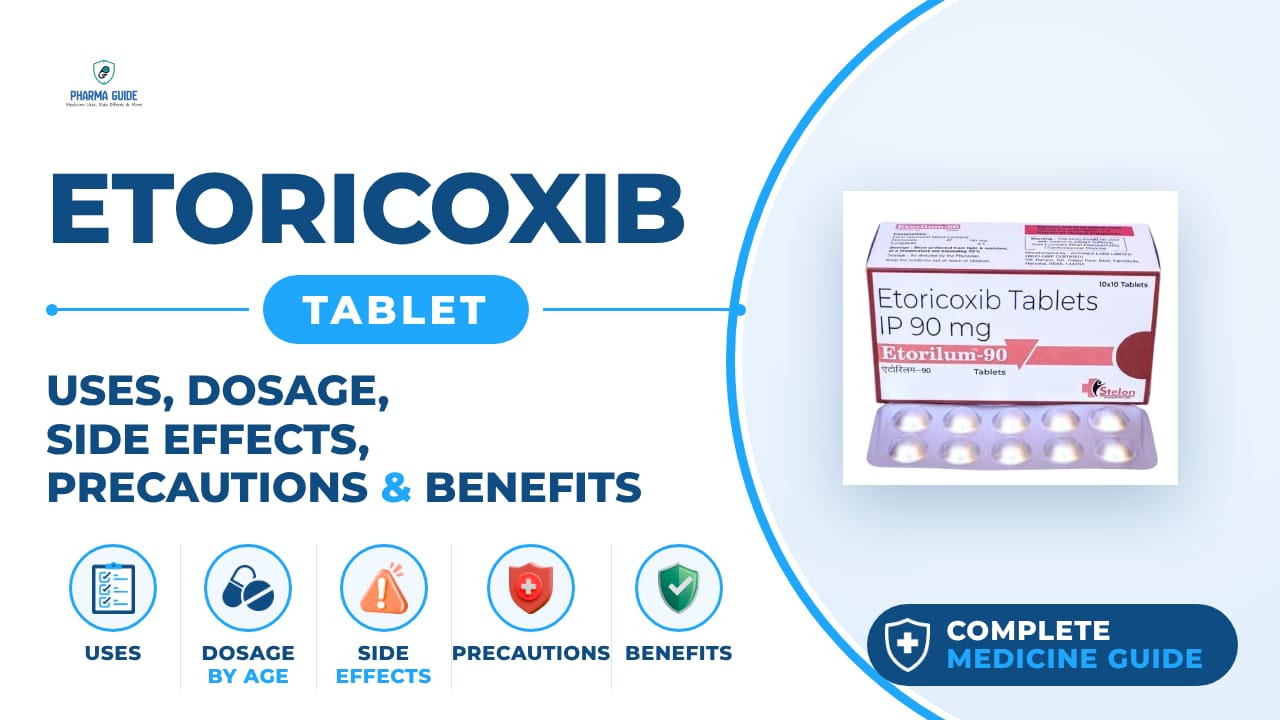
Etoricoxib Tablet: Uses, Dosage, Side Effects, Precautions and Alternates
| Generic name | Etoricoxib |
|---|---|
| Drug class | Selective COX-2 inhibitor (non-steroidal anti-inflammatory drug, NSAID) |
| Forms | Film-coated tablet, Injection (intravenous) |
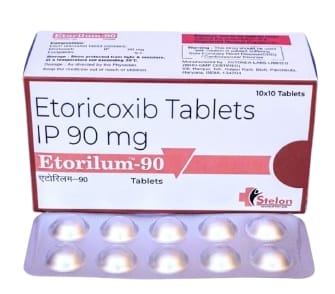
Quick overview
Etoricoxib Tablet is a selective COX-2 inhibitor, a type of non-steroidal anti-inflammatory drug (NSAID), used to reduce pain and swelling in the joints and muscles. It is used for conditions such as osteoarthritis, rheumatoid arthritis, ankylosing spondylitis, and gout, as well as short-term dental pain and persistent low back pain. It is taken once a day and is generally gentler on the stomach than many other NSAIDs.
What is Etoricoxib Tablet
Etoricoxib is a non-steroidal anti-inflammatory medicine (NSAID) that belongs to the group called selective COX-2 inhibitors. It helps reduce pain and swelling (inflammation) in the joints and muscles. Unlike some other NSAIDs, it is gentler on the stomach.
Etoricoxib Tablet uses
- Osteoarthritis
- Rheumatoid arthritis
- Ankylosing spondylitis
- Gout (acute gouty arthritis)
- Short-term relief of moderate pain after dental surgery
- Persistent low back pain
Benefits of Etoricoxib Tablet
- Relieves pain, stiffness, and swelling caused by arthritis and gout
- Reduces inflammation and redness
- Only needs to be taken once a day
- Gentler on the stomach than many traditional NSAIDs
How Etoricoxib Tablet works
Etoricoxib blocks the COX-2 enzyme. This lowers the production of prostaglandins, which are chemical messengers that cause inflammation, pain, and redness. Because it targets COX-2 and leaves the stomach-protecting COX-1 enzyme alone, it is gentler on the stomach.
Etoricoxib Tablet dosage
Take the tablet once a day, exactly as your doctor has told you. Swallow the tablet whole with water. Do not crush or chew it. You can take it with or without food. Taking it without food may make it work faster, but taking it with food may help reduce stomach discomfort. Try to take it at the same time each day to help you remember. After taking it, avoid lying down for at least 30 minutes. Use the lowest dose that controls your pain and do not take it for longer than necessary. Do not give this medicine to children or adolescents under 16 years of age.
| Age group | Dose |
|---|---|
| Under 16 years | Not recommended |
| 16–17 years | Not recommended unless specifically prescribed by a doctor |
| 18 years and older | Dose depends on the condition being treated; common adult doses are 30–120 mg once daily |
Available forms and strengths
- Film-coated tablet
- Injection (intravenous)
Side effects of Etoricoxib Tablet
Common
- Stomach pain and abdominal discomfort
- Indigestion
- Dizziness
- Headache
- Feeling tired or weak
- Diarrhoea or constipation
- Swelling of the legs and/or feet due to fluid retention (oedema)
- Increased blood pressure
- Palpitations or irregular heartbeat
- Wind, gastritis, heartburn, nausea, or vomiting
- Bruising
- Flu-like illness
Serious
- Breathing problems, such as wheezing or shortness of breath
- Chest pains or worsening ankle swelling
- Yellowing of the skin and eyes (jaundice) - a sign of liver problems
- Severe or continual stomach pain, black stools, or blood in vomit
- Allergic reaction, including skin ulcers or blistering, or swelling of the face, lips, tongue, or throat that may cause difficulty breathing
- Heart attack or stroke
- Serious kidney problems
- Liver failure or hepatitis
Warnings and precautions
- Do not take etoricoxib during pregnancy or if you could be pregnant. If you become pregnant, stop taking it and consult your doctor.
- It is not known if etoricoxib passes into breast milk. If you are breastfeeding or planning to, talk to your doctor first. If you are using etoricoxib, you must not breastfeed.
- Do not take etoricoxib if you have serious kidney disease. Tell your doctor if you have any history of kidney problems. It can affect how the kidneys work in some people, especially with long-term use.
- Do not take etoricoxib if you have serious liver disease. If you have mild liver disease you should not take more than a limited daily dose, and less if you have moderate liver disease. Tell your doctor about any liver problems.
- Dizziness and sleepiness have been reported in some people taking etoricoxib. Do not drive or use tools or machines if you feel dizzy or sleepy.
- Etoricoxib may slightly increase your risk of heart attack and stroke. It should not be used by people who have already had heart problems or a stroke.
- Do not take etoricoxib if you have a current stomach ulcer or bleeding in your stomach or intestines, or inflammatory bowel disease such as Crohn's Disease, Ulcerative Colitis, or Colitis.
- Do not take etoricoxib if you have high blood pressure that has not been controlled by treatment. It can raise blood pressure in some people, especially at high doses.
- Taking etoricoxib together with aspirin increases the risk of stomach ulcers. Do not take high-dose aspirin or other anti-inflammatory medicines while taking etoricoxib.
- The risk of heart attacks and strokes may increase after prolonged treatment, especially with high doses. Use the lowest dose that controls your pain and do not take it for longer than necessary.
- Etoricoxib can mask or hide a fever, which is a sign of infection. Tell your doctor if you are being treated for an infection.
- Do not give this medicine to anyone under 16 years of age.
Storage
- Keep out of the sight and reach of children.
- Keep away from direct heat and light in a cool, dry place.
- Store blisters in the original package to protect from moisture.
- Do not use after the expiry date on the pack.
- Do not keep expired or unneeded medicines. Do not dispose of them via wastewater or household waste. Ask your pharmacist how to dispose of medicines no longer required.
When to see a doctor
- Stop taking etoricoxib and seek medical help immediately if you have shortness of breath, chest pains, or worsening ankle swelling.
- Stop taking etoricoxib and talk to your doctor immediately if you notice yellowing of the skin and eyes (jaundice), which are signs of liver problems.
- Stop taking etoricoxib and seek help immediately if you have severe or continual stomach pain or your stools become black.
- Stop taking etoricoxib and get medical help immediately if you have an allergic reaction such as skin ulcers or blistering, or swelling of the face, lips, tongue, or throat that may cause difficulty breathing.
- If you take too many tablets, seek medical attention immediately. Overdose symptoms can include severe stomach pain, nausea, breathing problems, and even coma.
Alternatives
- Naproxen
- Celecoxib
- Arcoxia
Watch the video
FAQs
What is Etoricoxib Tablet used for?
It is used for osteoarthritis, rheumatoid arthritis, ankylosing spondylitis, gout, short-term relief of moderate pain after dental surgery, and persistent low back pain.
How should I take Etoricoxib Tablet?
Take it once a day exactly as your doctor advises, swallowing the tablet whole with water without crushing or chewing it. It can be taken with or without food, and you should avoid lying down for at least 30 minutes after taking it.
What is the dosage of Etoricoxib Tablet for adults?
For those 18 years and older, the dose depends on the condition being treated, with common adult doses ranging from 30-120 mg once daily.
What are the serious side effects of Etoricoxib Tablet?
Serious side effects include breathing problems, chest pains, worsening ankle swelling, jaundice, severe stomach pain, black stools, allergic reactions, heart attack, stroke, and serious kidney or liver problems.
Can Etoricoxib Tablet be taken during pregnancy?
No, etoricoxib should not be taken during pregnancy or if you could be pregnant. If you become pregnant while taking it, stop and consult your doctor.
General information, not medical advice
Your prescriber and the leaflet in your pack know your situation. This page does not.
- Follow your prescriber and the leaflet
- Don't start, stop, or change a dose on your own
- Doses and warnings differ by country and product
Sources
- https://www.carehospitals.com/medicine-detail/etoricoxib
- https://www.medanta.org/medicine-detail/etoricoxib-uses-side-effects-dosage-interactions-and-more
- https://www.drugs.com/uk/pdf/leaflet/1022164.pdf
- https://patient.info/medicine/etoricoxib-for-pain-and-inflammation-arcoxia
- https://www.medicines.org.uk/emc/product/9317/pil
Video
Related medicines
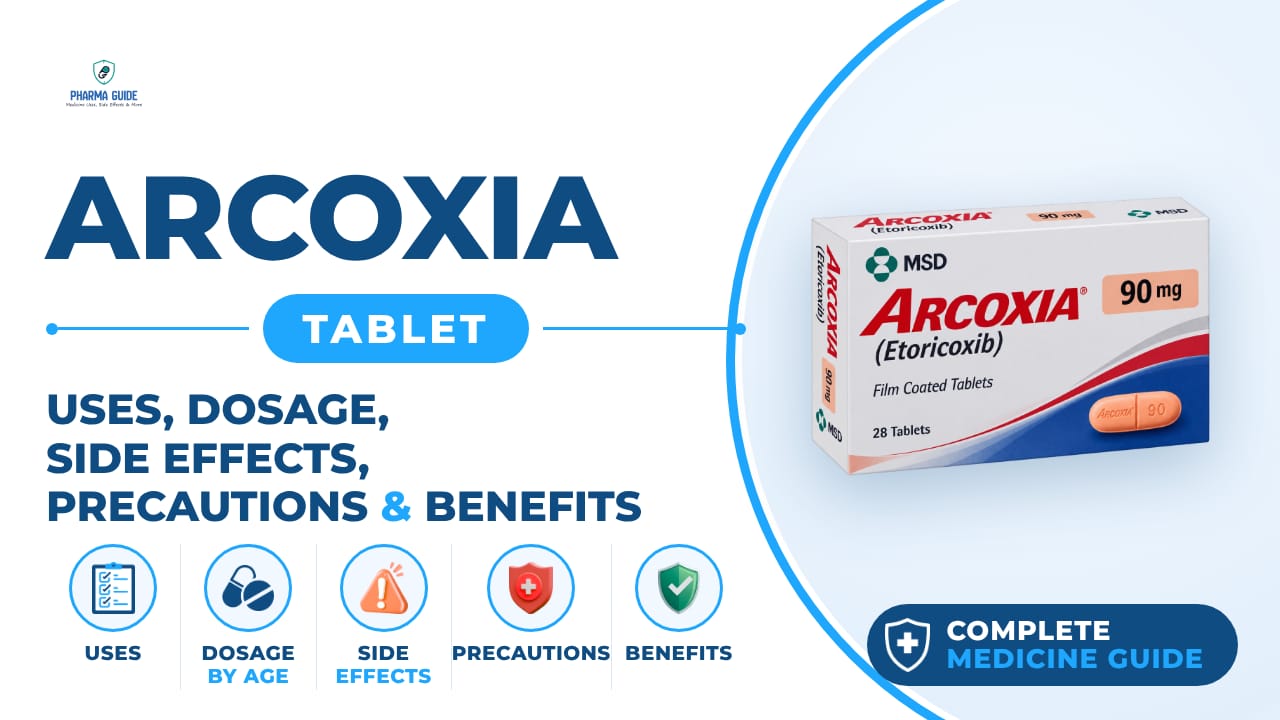
Arcoxia Tablet: Uses, Dosage, Side Effects, Precautions and Alternates
Selective COX-2 inhibitor (non-steroidal anti-inflammatory drug, NSAID)
Arcoxia Tablet (etoricoxib) relieves pain and inflammation in osteoarthritis, rheumatoid arthritis, gout, and ankylosing spondylitis. Learn dosage, side

Injectafer Injection: Uses, Dosage, Side Effects, Precautions and Alternates
Iron products
Injectafer (ferric carboxymaltose) treats iron deficiency anemia and heart failure-related iron deficiency via IV. Learn uses, dosage, side effects, and