
Safety
General information, not medical advice
Your prescriber and the leaflet in your pack know your situation. This page does not.
- Follow your prescriber and the leaflet
- Don't start, stop, or change a dose on your own
- Doses and warnings differ by country and product
Aristada Injection: Uses, Dosage, Side Effects, Precautions and Alternates
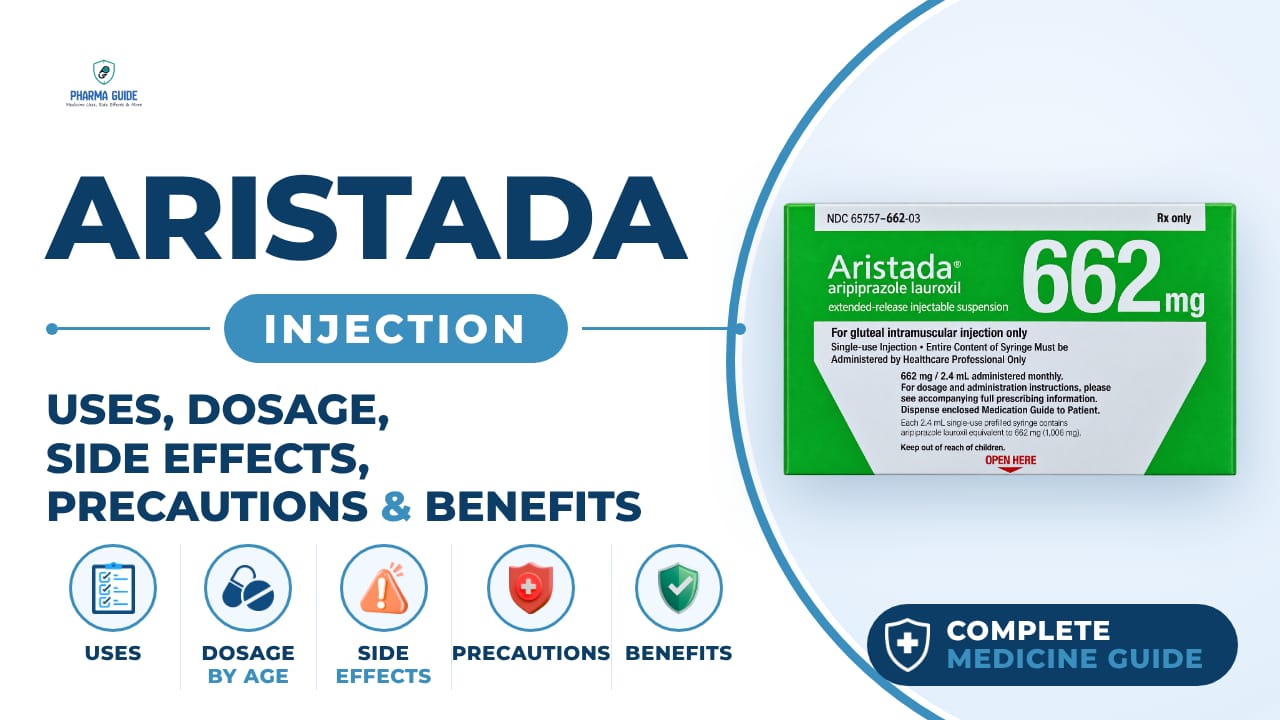
| Generic name | aripiprazole lauroxil |
|---|---|
| Drug class | atypical antipsychotic |
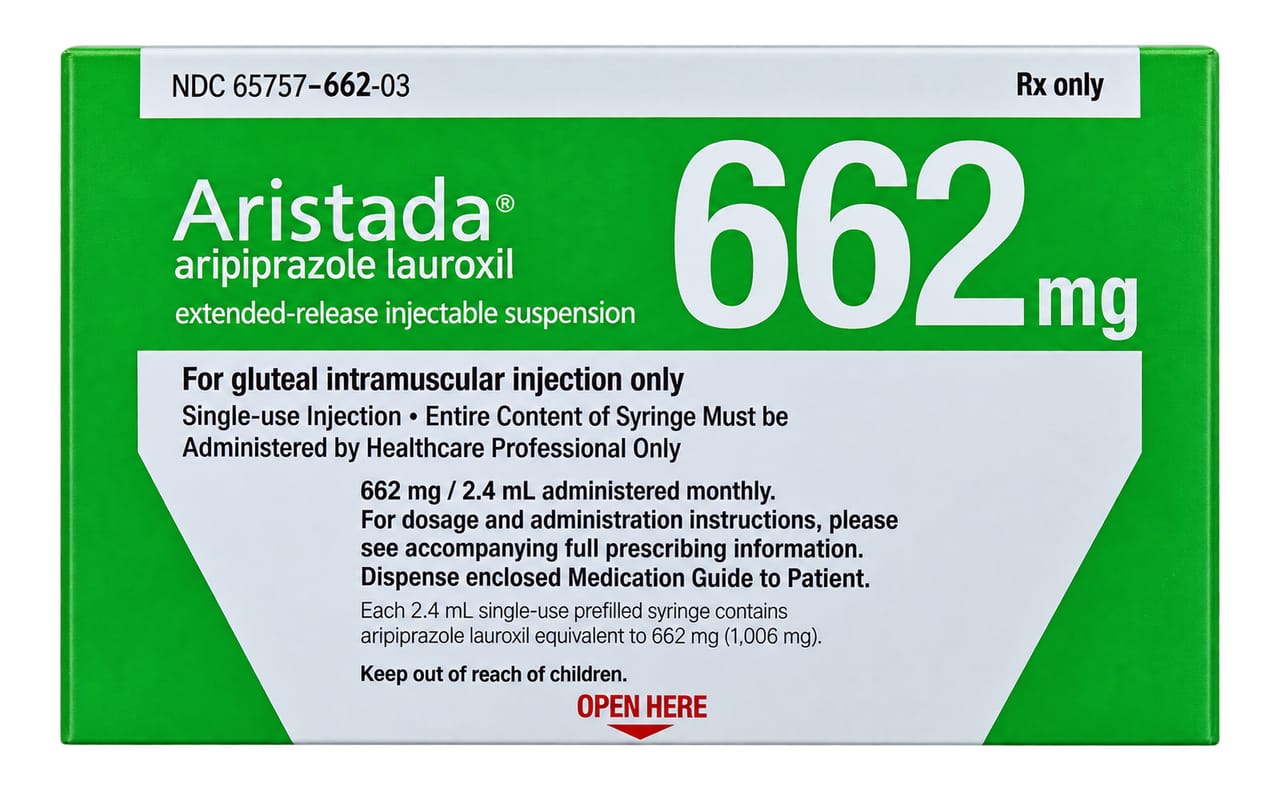
| Forms | Extended-release injectable suspension in pre-filled syringes (441 mg, 662 mg, 882 mg, or 1064 mg strengths) |
Quick overview
Aristada Injection (aripiprazole lauroxil) is an atypical antipsychotic given as an injection into a muscle to treat schizophrenia in adults. It must always be given by a healthcare professional and is never self-administered. The injection is given on a monthly, every-6-week, or every-2-month schedule, depending on the dose.
What is Aristada Injection
Aristada is a prescription medicine given as an injection into a muscle. It is used to treat schizophrenia in adults. It must always be given by a healthcare professional.
Aristada Injection uses
- Treatment of schizophrenia in adults
- Provides long-term maintenance antipsychotic treatment
- Helps control hallucinations
- Helps reduce delusions
- May improve disorganized thinking
Benefits of Aristada Injection
- Helps control symptoms of schizophrenia with an injection given monthly, every 6 weeks, or every 2 months instead of a daily pill
- Provides extended-release medication coverage
- Offers dosing intervals from monthly to every 2 months
- Reduces the need for daily antipsychotic tablets after appropriate initiation
- May help maintain symptom stability in schizophrenia
How Aristada Injection works
The medicine is thought to help balance certain brain chemicals (dopamine and serotonin), which may help improve symptoms of schizophrenia, although the exact way it works is not fully known.
Aristada Injection dosage
This medicine is only given as an injection into a muscle (the upper arm or buttock) by a healthcare professional — it is never self-administered. If you have never taken aripiprazole before, your healthcare provider will first have you try the oral form to make sure you can tolerate it before starting the injections.
There are two ways to start treatment: receiving a special starter injection along with one dose of oral aripiprazole, or taking oral aripiprazole every day for 21 days in a row along with your first injection. Follow your treatment schedule exactly as your healthcare provider tells you to, since the injections are given on a monthly, every-6-week, or every-2-month schedule depending on your dose.
If you miss a dose, contact your healthcare provider right away to find out what you should do next; do not wait until your next scheduled appointment.
| Age group | Dose |
|---|---|
| Under 18 years | Safety and effectiveness have not been established |
| 18–64 years | 441 mg monthly, 662 mg monthly, 882 mg monthly or every 6 weeks, or 1,064 mg every 2 months, depending on the established oral aripiprazole dose |
Available forms and strengths
- Extended-release injectable suspension in pre-filled syringes (441 mg, 662 mg, 882 mg, or 1064 mg strengths)
Side effects of Aristada Injection
Common
- Restlessness or feeling like you need to move (akathisia)
- Pain at the injection site
- Weight gain
- Headache
- Trouble sleeping (insomnia)
Serious
- Increased risk of death in elderly people with dementia-related psychosis
- Stroke or other blood vessel problems in the brain in elderly people with dementia-related psychosis
- Neuroleptic malignant syndrome (a potentially fatal reaction with high fever, stiff muscles, confusion, sweating, and changes in pulse, heart rate, and blood pressure)
- Uncontrollable body movements (tardive dyskinesia) that may not go away
- High blood sugar or diabetes, high cholesterol or triglycerides, and weight gain
- Unusual, strong urges such as gambling, sexual urges, shopping, or binge eating that are hard to control
- Low blood pressure when standing up, causing dizziness or fainting
- Falls
- Low white blood cell count
- Seizures
- Problems controlling body temperature
- Difficulty swallowing
Warnings and precautions
- Elderly people with psychosis related to dementia who take this type of medicine have a higher risk of death. This medicine is not approved for treating dementia-related psychosis.
- Elderly patients with dementia may have a higher chance of stroke or similar brain blood vessel problems, including fatal cases.
- Mix-ups can happen between this medicine and the related starter injection (Aristada Initio); they must not be substituted for each other.
- A rare but potentially fatal reaction called neuroleptic malignant syndrome can occur, with high fever, muscle stiffness, confusion, and changes in heart rate or blood pressure.
- This medicine can cause uncontrollable body movements called tardive dyskinesia, which may not go away even after stopping treatment.
- This medicine can cause high blood sugar, high cholesterol or triglycerides, and weight gain.
- Some people have experienced strong, uncontrollable urges such as gambling, sexual urges, shopping, or binge eating while taking this medicine.
- This medicine can cause a drop in blood pressure when standing up, which may cause dizziness or fainting, especially when starting treatment.
- This medicine may cause sleepiness, dizziness, or unsteadiness that can lead to falls and injuries such as fractures.
- This medicine can lower white blood cell counts, which can increase infection risk; people with a history of low white blood cell counts need regular blood tests.
- Use this medicine cautiously if you have a history of seizures or conditions that make seizures more likely.
- This medicine can make it harder for your body to cool down, so take care in hot weather, during exercise, or if you are becoming dehydrated.
- This medicine has been linked to swallowing problems and should be used carefully in people at risk of inhaling food or liquid into the lungs.
- This medicine may cause withdrawal or movement symptoms in babies born to mothers who took it late in pregnancy. Tell your healthcare provider if you are pregnant or planning to become pregnant.
- The medicine passes into breast milk, and it is not known if it may harm a nursing baby. Talk to your healthcare provider about the best way to feed your baby if you are taking this medicine.
- No dose change is needed for people with mild to severe kidney problems.
- No dose change is needed for people with mild to severe liver problems.
- Alcohol can worsen sedation and impairment.
- This medicine may affect your judgment, thinking, or motor skills, so avoid driving or operating dangerous machinery until you know how it affects you.
Storage
- Store at room temperature between 68°F and 77°F (20°C to 25°C), with brief exposure allowed between 59°F and 86°F (15°C to 30°C).
- All kit materials, including the syringe and needles, should be stored at room temperature.
When to see a doctor
- Get emergency help right away if you have signs of neuroleptic malignant syndrome, such as high fever, stiff muscles, confusion, sweating, or changes in heart rate and blood pressure.
- Tell your healthcare provider if you notice new, uncontrollable movements of your face, tongue, or other body parts.
- Call your healthcare provider if you have symptoms of high blood sugar, such as being very thirsty, urinating more than usual, extreme hunger, feeling sick to your stomach, feeling weak or tired, feeling confused, or having fruity-smelling breath.
- Talk to your healthcare provider if you or your family notice unusual urges to gamble, shop, eat, or have sexual urges that feel hard to control.
Alternatives
- Aripiprazole oral tablets
- Abilify Maintena
- Asimtufii
Watch the video
FAQs
What is Aristada Injection used for?
Aristada is a prescription injectable medicine used to treat schizophrenia in adults. It provides long-term maintenance antipsychotic treatment and helps control hallucinations, delusions, and disorganized thinking.
How often is Aristada Injection given?
Aristada is given as an injection into a muscle on a monthly, every-6-week, or every-2-month schedule, depending on the dose, and must always be administered by a healthcare professional.
Can I give myself an Aristada injection?
No. Aristada must always be given by a healthcare professional as an injection into the upper arm or buttock muscle; it is never self-administered.
What should I do if I miss a dose of Aristada?
If you miss a dose, contact your healthcare provider right away to find out what you should do next rather than waiting until your next scheduled appointment.
What are the serious side effects of Aristada Injection?
Serious risks include neuroleptic malignant syndrome, tardive dyskinesia, high blood sugar and cholesterol changes, low blood pressure on standing, falls, low white blood cell count, seizures, trouble controlling body temperature, and difficulty swallowing. Elderly people with dementia-related psychosis have an increased risk of death and stroke.
General information, not medical advice
Your prescriber and the leaflet in your pack know your situation. This page does not.
- Follow your prescriber and the leaflet
- Don't start, stop, or change a dose on your own
- Doses and warnings differ by country and product
Sources
Video
Related medicines
Latuda Tablet: Uses, Dosage, Side Effects, Precautions and Alternates
atypical antipsychotic
Latuda Tablet (lurasidone) treats bipolar depression and schizophrenia. Learn about dosage, benefits, side effects, warnings, and precautions before use.

Seroquel XR Tablet: Uses, Dosage, Side Effects, Precautions and Alternates
Atypical antipsychotic
Seroquel XR Tablet (quetiapine) treats schizophrenia, bipolar disorder, and depression. Learn about dosage, benefits, side effects, and key safety warnings.