
Safety
General information, not medical advice
Your prescriber and the leaflet in your pack know your situation. This page does not.
- Follow your prescriber and the leaflet
- Don't start, stop, or change a dose on your own
- Doses and warnings differ by country and product
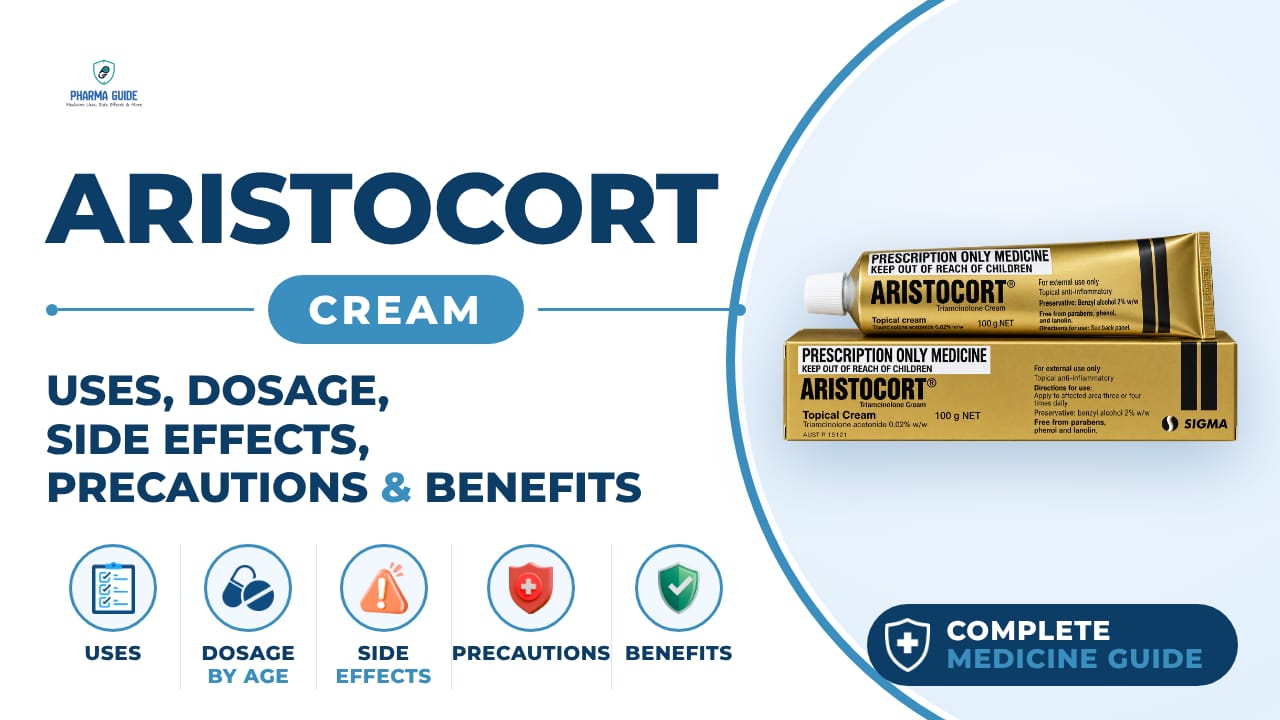
Aristocort Cream: Uses, Dosage, Side Effects, Precautions and Alternates
| Generic name | triamcinolone acetonide |
|---|---|
| Drug class | corticosteroid (moderate-strength topical steroid) |
| Forms | cream, ointment |
Quick overview
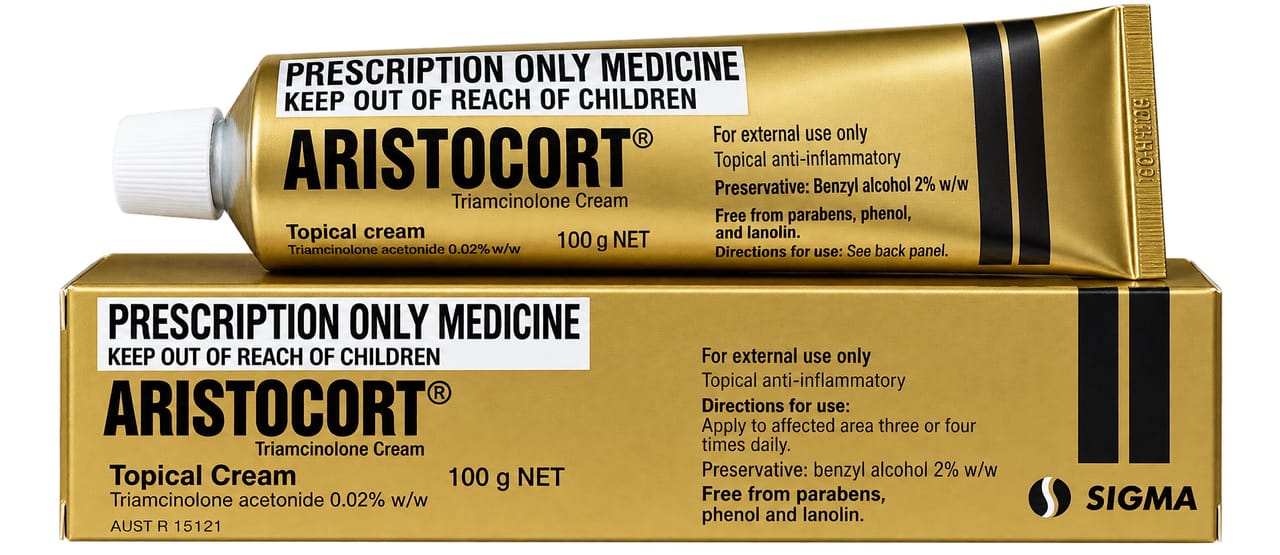
Aristocort Cream contains triamcinolone acetonide, a moderate-strength topical corticosteroid. It is applied to the skin to calm redness, swelling, itching, and discomfort caused by conditions such as psoriasis, eczema, and other types of dermatitis. It is available as a cream or ointment and should be used exactly as directed by a doctor or pharmacist.
What is Aristocort Cream
Aristocort is a cream or ointment that contains the steroid medicine triamcinolone acetonide. It is applied to the skin to calm redness, swelling, itching, and discomfort caused by various skin conditions.
Aristocort Cream uses
- Psoriasis (a skin condition with raised, rough, red patches covered with dry, silvery scales)
- Eczema (an itchy skin condition with redness, swelling, oozing, and crusting)
- Other types of dermatitis
- Itching on the anus or vulva
- Inflammation of the external part of the ear
Benefits of Aristocort Cream
- Reduces redness, swelling, itching, and discomfort of many skin problems
- Calms rough, scaly patches of psoriasis
- Soothes allergic or irritant skin reactions
- Reduces skin inflammation
- Relieves itching and irritation
- Decreases redness and swelling
How Aristocort Cream works
Aristocort works like a natural hormone your body makes. It calms down the immune system's inflammatory response, which reduces swelling, redness, and itching in the skin.
Aristocort Cream dosage
Smooth a small amount onto the affected area three or four times a day. Use just enough to cover the area without forcing it in or causing discomfort; do not rub or stretch the skin. If using the cream, apply enough so it disappears into the skin without leaving residue. If using the ointment, apply enough for a thin, even layer over the affected area.
Do not use on broken or open skin wounds unless your doctor says to. Wash your hands after applying, and be careful to avoid getting it in your eyes; if this happens, rinse your eyes with water. Do not bandage or wrap the treated area unless your doctor tells you to.
Use it at the same time each day. Do not use just before a bath, shower, or swimming, as this may reduce how well it works. If you miss an application, use it as soon as you remember, but skip it if it's almost time for the next one — do not double up.
Do not use for longer than your doctor recommends, as this can increase the chance of side effects. Do not use under dressings or on large areas of skin unless your doctor tells you to. Do not use on skin folds like the armpit or groin area unless your doctor says to.
| Age group | Dose |
|---|---|
| Under 1 year | Some Aristocort formulations are contraindicated |
| 1–5 years | Apply a small/thin amount to the affected area only as prescribed; prolonged use should be avoided |
| 6–11 years | Apply a thin layer to the affected skin, commonly 2–4 times daily depending on the specific formulation |
| 12–64 years | Apply a small/thin amount 2–4 times daily to affected areas |
Available forms and strengths
- Cream
- Ointment
Side effects of Aristocort Cream
Common
- Itching or irritation
- Redness
- Rash
- Burning or stinging
- Dryness, scaling, or cracking of the skin
- Acne or pimples
- Changes in skin color
Serious
- Blisters and inflammation under bandages or dressings if these are used
- Eye problems such as cataracts, glaucoma and blurred vision
- Thinning or weakening of the skin, or pigment changes, especially with long-term use
- Signs of adrenal gland problems such as blurred vision, dizziness or fainting, fast or irregular heartbeat, increased thirst or urination, irritability, or unusual tiredness
Warnings and precautions
- Do not use this medicine if you are allergic to triamcinolone acetonide or any of its ingredients, if you have a viral skin infection like cold sores, shingles, or chicken pox, a fungal infection like thrush, tinea or ringworm, or tuberculosis of the skin.
- Do not use this medicine in or near the eyes.
- Do not use it right before a bath, shower, or swim, as it may not work as well.
- Do not use it under dressings or on large areas of skin unless your doctor tells you to, as this can increase absorption into the body and the risk of side effects.
- Using large amounts for a long time may cause thinning of the skin and stretch marks, especially on the face, joint creases, groin, and armpits.
- Long-term use in infants and children should be avoided, as it may affect growth and cause adrenal gland suppression.
- Check with your doctor if you are pregnant or planning to become pregnant before using this medicine.
- Talk to your doctor if you are breastfeeding or plan to breastfeed. Do not apply the cream to the breasts before breastfeeding.
- Topical use generally has limited systemic absorption, but prolonged treatment over large areas should be medically supervised.
- No routine liver-specific adjustment is generally required for limited topical use.
- No significant direct interaction is expected with alcohol when used topically.
- There is no information available on whether this medicine affects your ability to drive or use machines.
Storage
- Store below 25°C. Do not refrigerate.
- Store it in a cool dry place away from moisture, heat or sunlight; for example, do not store it in the bathroom, near a sink, in the car, or on window sills.
- Keep it where young children cannot reach it.
- If you no longer need to use this medicine or it is out of date, take it to any pharmacy for safe disposal.
When to see a doctor
- If you think you have used too much of this medicine, get urgent medical help right away by contacting your doctor or going to your nearest hospital emergency department, even if you feel fine.
- Stop using the cream and see your doctor right away if you develop a skin rash, burning, stinging, swelling, or irritation on the skin.
- Talk to your doctor right away if you notice more than one of these signs: blurred vision, dizziness or fainting, a fast or irregular heartbeat, increased thirst or urination, irritability, or unusual tiredness or weakness, as these may be signs of adrenal gland problems.
- Tell your doctor if you feel the medicine is not helping your condition, or if you have not used it exactly as prescribed.
Alternatives
- Hydrocortisone cream
- Desonide cream
- Mometasone cream
- Betamethasone cream
Watch the video
FAQs
What is Aristocort Cream used for?
It is used to treat psoriasis, eczema, other types of dermatitis, itching on the anus or vulva, and inflammation of the external ear.
How do you apply Aristocort Cream?
Smooth a small amount onto the affected area three or four times a day, using just enough to cover the area without rubbing or stretching the skin. Use it at the same time each day and avoid applying it right before a bath, shower, or swim.
What are the side effects of Aristocort Cream?
Common side effects include itching, irritation, redness, rash, burning or stinging, dryness, scaling, cracking, acne, and changes in skin color. Serious effects can include skin thinning, eye problems, and signs of adrenal gland problems.
Can Aristocort Cream be used on broken skin or under bandages?
No, it should not be used on broken or open skin wounds, or under dressings or bandages, unless your doctor says to.
Is Aristocort Cream safe during pregnancy or breastfeeding?
You should check with your doctor if pregnant or planning pregnancy, and talk to your doctor if breastfeeding; avoid applying the cream to the breasts before breastfeeding.
General information, not medical advice
Your prescriber and the leaflet in your pack know your situation. This page does not.
- Follow your prescriber and the leaflet
- Don't start, stop, or change a dose on your own
- Doses and warnings differ by country and product
Sources
Video
Related medicines

Injectafer Injection: Uses, Dosage, Side Effects, Precautions and Alternates
Iron products
Injectafer (ferric carboxymaltose) treats iron deficiency anemia and heart failure-related iron deficiency via IV. Learn uses, dosage, side effects, and

Gliclazide Tablet: Uses, Dosage, Side Effects, Precautions and Alternates
Sulfonylurea (hypoglycemic/antidiabetic agent)
Gliclazide Tablet is a sulfonylurea for type 2 diabetes that boosts insulin release. Learn about dosage, side effects, warnings, and precautions.