
Safety
General information, not medical advice
Your prescriber and the leaflet in your pack know your situation. This page does not.
- Follow your prescriber and the leaflet
- Don't start, stop, or change a dose on your own
- Doses and warnings differ by country and product
Aristospan Injection: Uses, Dosage, Side Effects, Precautions and Alternates
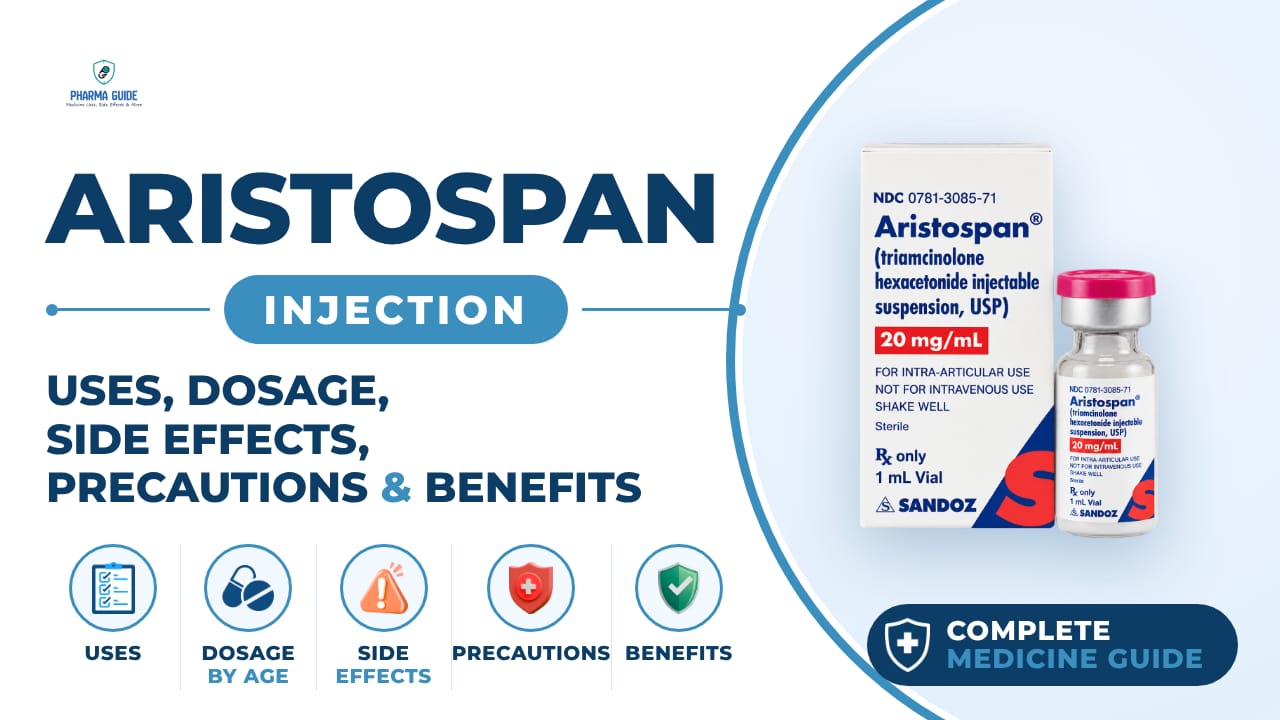
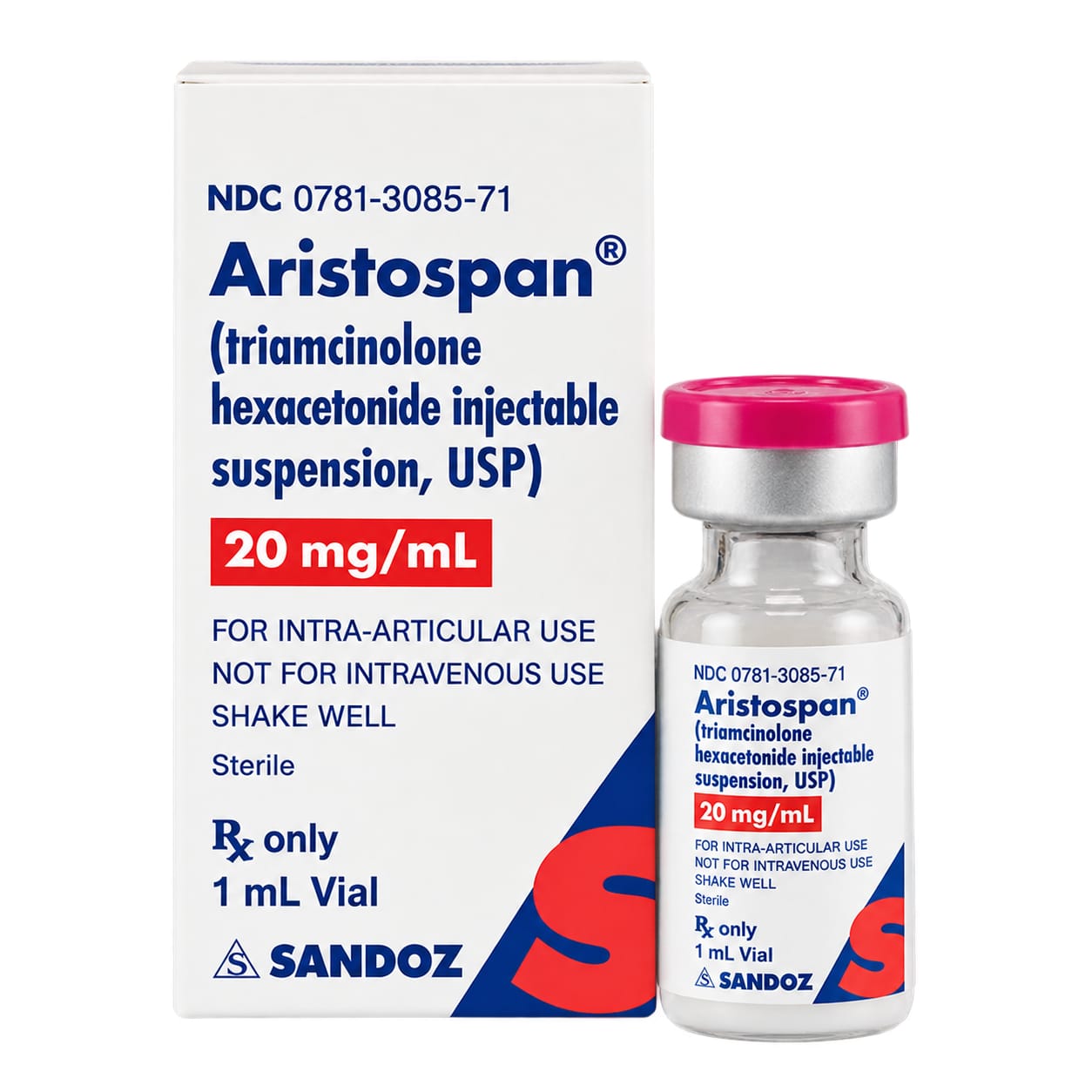
| Generic name | triamcinolone hexacetonide |
|---|---|
| Drug class | Glucocorticoid (corticosteroid) |
| Forms | Suspension for injection |
Quick overview
Aristospan Injection (triamcinolone hexacetonide) is a glucocorticoid corticosteroid given as an injection into a joint or soft tissue to reduce inflammation. It is used for conditions such as gouty arthritis, bursitis, tenosynovitis, tennis elbow, rheumatoid arthritis, and synovitis of osteoarthritis, as well as for inflammation, allergic reactions, and certain skin diseases in patients who cannot take medicine by mouth. It works as a long-acting, localized anti-inflammatory and must be administered by a trained health professional.
What is Aristospan Injection
Aristospan is a steroid medicine given as an injection into a joint or soft tissue to reduce inflammation.
Aristospan Injection uses
- Short-term treatment of acute gouty arthritis
- Acute and subacute bursitis
- Acute nonspecific tenosynovitis
- Epicondylitis (tennis elbow)
- Rheumatoid arthritis
- Synovitis of osteoarthritis
- Inflammation, allergic reactions, certain types of arthritis, gout, and skin diseases in patients who cannot take medicine by mouth
Benefits of Aristospan Injection
- Reduces joint and soft tissue inflammation during a flare-up
- Can help relieve pain and swelling from arthritis, bursitis, and tendon inflammation
- Provides long-acting corticosteroid activity
- Reduces inflammation
- Helps decrease swelling and discomfort
- Can provide localized treatment directly to an affected joint
- May provide prolonged symptom control after a local injection
How Aristospan Injection works
Aristospan is a corticosteroid that calms inflammation. When injected into a joint, it is absorbed slowly from the injection site and acts mainly as an anti-inflammatory in the area where it's given.
Aristospan Injection dosage
This medicine is given as a shot into a muscle, joint, or skin lesion by a nurse or trained health professional. The syringe should be gently shaken to mix the suspension evenly right before use. If mixed with a local anesthetic, the mixture should be used within one week and any leftover discarded after that time. Repeat injections into the same joint are usually not given more often than every three to four weeks. If you have been using this medicine for a long time, it should be stopped gradually and not all at once, as directed by your doctor.
| Age group | Dose |
|---|---|
| Children and adolescents | Dosing must be individualized by a specialist |
| 18–64 years | General labeled initial dosage may range from 2–48 mg/day, depending on the disease and response. |
| 65–74 years | No separate age-specific dose; use the lowest effective individualized dose with closer monitoring. |
| 75 years and older | Individualized cautiously because corticosteroid complications may be more significant. |
Available forms and strengths
Suspension for injection
Side effects of Aristospan Injection
Common
- Nausea
- Bloating
- Appetite changes
- Stomach or side pain
- Headache
- Sleep problems (insomnia)
- Acne
- Scaling or other skin changes
- A wound that is slow to heal
- Thinning hair
- Bruising or swelling
- Sweating more than usual
- Irregular menstrual periods
Serious
- Sudden vision loss, blurred vision, tunnel vision, eye pain or swelling, or seeing halos around lights
- Fast, irregular, or pounding heartbeats; fluttering in the chest; shortness of breath; sudden dizziness or passing out
- Severe headache, confusion, slurred speech, arm or leg weakness, trouble walking, loss of coordination, feeling unsteady, very stiff muscles, high fever, profuse sweating, or tremors
- Signs of a serious allergic reaction (anaphylaxis): rash, itching, hoarseness, trouble breathing, trouble swallowing, or swelling of the hands, face, or mouth
- Signs of infection such as fever or chills, especially after exposure to chicken pox or measles
Warnings and precautions
- Serious, sometimes fatal, nerve-related problems such as spinal cord damage, paralysis, blindness, or stroke have occurred when corticosteroids were injected into the space around the spinal cord (epidural). This medicine is not approved for that use.
- This product contains benzyl alcohol, which has been linked to a fatal 'gasping syndrome' in premature and low-birth-weight babies, so it must not be used in newborns.
- High doses of corticosteroids should not be used to treat traumatic brain injury, since a study found this increased the risk of death.
- This medicine makes it easier to get infections and can hide the signs of an infection you already have.
- Chicken pox and measles can become serious or even fatal in people taking this medicine, so exposure should be avoided.
- Do not stop using this medicine suddenly without your doctor's guidance; it usually needs to be reduced gradually.
- This medicine should only be used during pregnancy if your doctor decides the benefit is worth the potential risk to the baby, since corticosteroids have caused birth defects in animal studies.
- Corticosteroids can pass into breast milk and may affect a nursing baby, so caution is needed if you are breastfeeding.
- This medicine should be used carefully if you have kidney problems, since fluid and salt retention can occur.
- People with liver cirrhosis may be more strongly affected by this medicine.
Storage
- Store at 20°-25°C (68°-77°F) [see USP Controlled Room Temperature]. Protect from light.
- DO NOT FREEZE.
When to see a doctor
- Get medical help right away if you have signs of a serious allergic reaction like rash, itching, hoarseness, trouble breathing or swallowing, or swelling of the hands, face, or mouth.
- Seek medical care immediately for serious eye symptoms such as sudden vision loss, blurred vision, tunnel vision, eye pain or swelling, or seeing halos around lights.
- Seek medical care immediately for serious heart symptoms such as a fast, irregular, or pounding heartbeat, fluttering in the chest, shortness of breath, or sudden dizziness or passing out.
- Seek medical care immediately for a severe headache, confusion, slurred speech, arm or leg weakness, trouble walking, loss of coordination, feeling unsteady, very stiff muscles, high fever, profuse sweating, or tremors.
- Tell your doctor right away if you are exposed to chicken pox or measles while using this medicine.
- Call your doctor if you notice a marked increase in joint pain with swelling, more restricted movement, fever, or feeling unwell, as this may indicate a joint infection.
Alternatives
- Kenalog
- Triamcinolone acetonide injection
- Methylprednisolone injection
Watch the video
FAQs
What is Aristospan Injection used for?
It is used for acute gouty arthritis, bursitis, tenosynovitis, tennis elbow, rheumatoid arthritis, synovitis of osteoarthritis, and inflammation or allergic reactions in patients who cannot take medicine by mouth.
How is Aristospan Injection given?
It is given as a shot into a muscle, joint, or skin lesion by a nurse or trained health professional. Repeat injections into the same joint are usually not given more often than every three to four weeks.
What are the common side effects of Aristospan Injection?
Common side effects include nausea, bloating, appetite changes, stomach pain, headache, insomnia, acne, skin changes, slow-healing wounds, thinning hair, bruising, sweating, and irregular menstrual periods.
Can Aristospan Injection be stopped suddenly?
No, if you have been using this medicine for a long time, it should be stopped gradually and not all at once, as directed by your doctor.
Is Aristospan Injection safe to use during pregnancy?
It should only be used during pregnancy if your doctor decides the benefit is worth the potential risk to the baby, since corticosteroids have caused birth defects in animal studies.
General information, not medical advice
Your prescriber and the leaflet in your pack know your situation. This page does not.
- Follow your prescriber and the leaflet
- Don't start, stop, or change a dose on your own
- Doses and warnings differ by country and product
Sources
Video
Related medicines

Injectafer Injection: Uses, Dosage, Side Effects, Precautions and Alternates
Iron products
Injectafer (ferric carboxymaltose) treats iron deficiency anemia and heart failure-related iron deficiency via IV. Learn uses, dosage, side effects, and

Gliclazide Tablet: Uses, Dosage, Side Effects, Precautions and Alternates
Sulfonylurea (hypoglycemic/antidiabetic agent)
Gliclazide Tablet is a sulfonylurea for type 2 diabetes that boosts insulin release. Learn about dosage, side effects, warnings, and precautions.