
Safety
General information, not medical advice
Your prescriber and the leaflet in your pack know your situation. This page does not.
- Follow your prescriber and the leaflet
- Don't start, stop, or change a dose on your own
- Doses and warnings differ by country and product
Arterolane + Piperaquine Tablet: Uses, Dosage, Side Effects, Precautions and Alternates
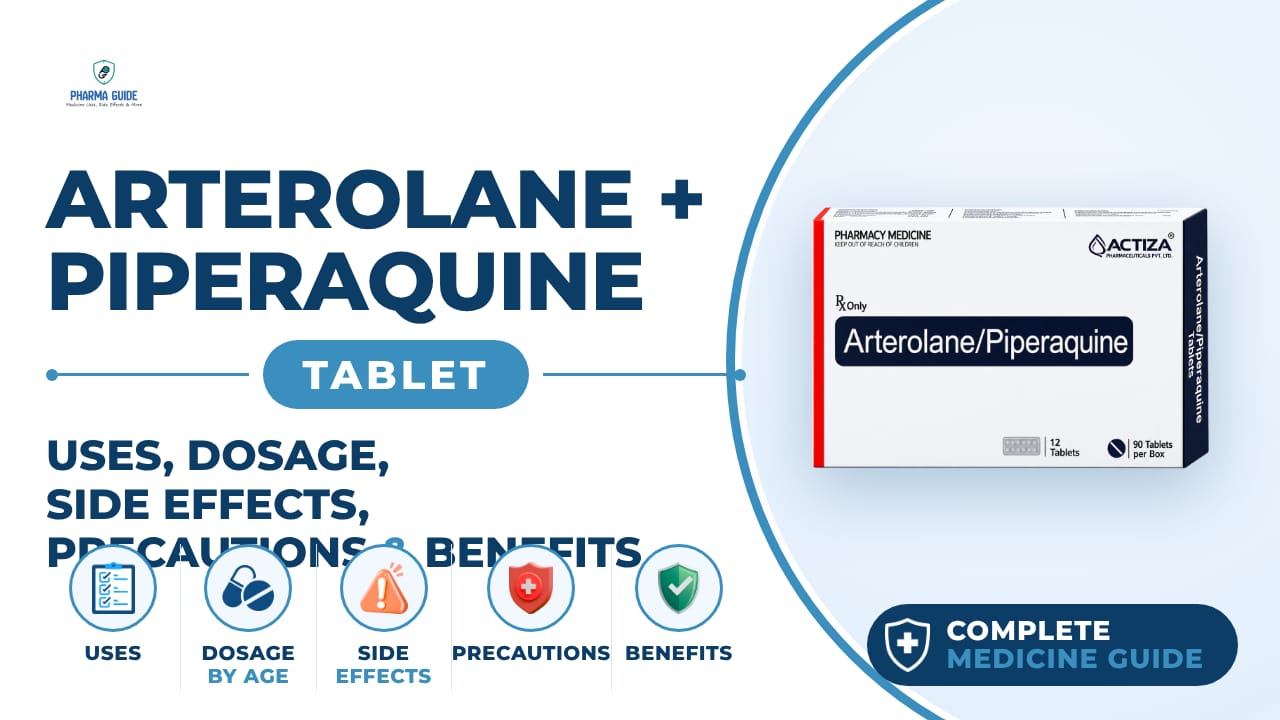
| Generic name | Arterolane and Piperaquine |
|---|---|
| Drug class | Antimalarial agents |
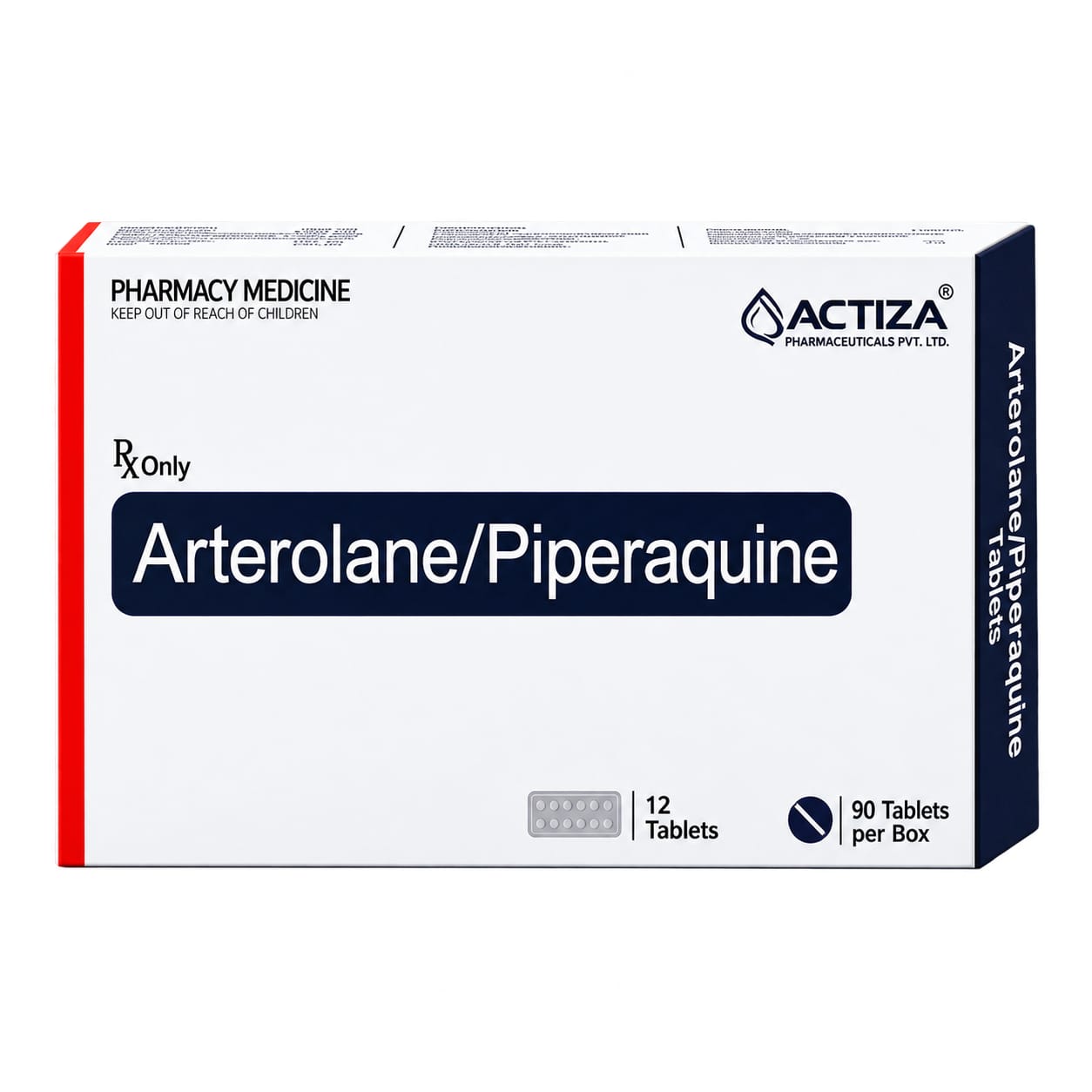
| Forms | Tablet |
Quick overview
Arterolane + Piperaquine Tablet is a combination antimalarial medicine used to treat acute, uncomplicated malaria caused by Plasmodium falciparum. Arterolane rapidly kills malaria parasites in the blood, while Piperaquine prevents further parasite growth and multiplication. It is taken once daily for 3 days, with the dose depending on age, and helps reduce fever, clear symptoms, and prevent the infection from coming back.
What is Arterolane + Piperaquine Tablet
Arterolane + Piperaquine is a combination medicine used to treat malaria, a serious disease caused by Plasmodium parasites spread through mosquito bites. It treats acute and uncomplicated malaria. Arterolane rapidly kills malaria parasites in the blood, while Piperaquine prevents further parasite growth and multiplication.
Arterolane + Piperaquine Tablet uses
- Treatment of acute uncomplicated malaria
- Effective against Plasmodium falciparum infections
- Helps in rapid reduction of fever and malaria symptoms
- Prevents recurrence of malaria infection
Benefits of Arterolane + Piperaquine Tablet
- Rapid symptom relief from malaria
- Dual action for better treatment outcomes
- Prevents recurrence of infection
- Effective against drug-resistant malaria strains
How Arterolane + Piperaquine Tablet works
Arterolane kills malaria parasites quickly by producing reactive oxygen compounds that damage the parasite's vital proteins. Piperaquine works alongside this by blocking the parasite's ability to break down a toxic byproduct called heme, which builds up and helps kill the parasite. Together this stops the infection, clears the parasites from the blood, and helps prevent the malaria from coming back.
Arterolane + Piperaquine Tablet dosage
Take this medicine exactly as prescribed by your doctor. Swallow the tablet whole with water, preferably after food to improve absorption and reduce stomach upset. Do not chew, crush, or break the tablet. Do not skip doses or stop early, even if you feel better, as this can lead to the malaria coming back. Make sure to finish the entire course of treatment.
If you vomit within 1 hour of taking a dose, you should take a replacement dose. This medicine can be taken with or without food, as advised by your doctor. If you miss a dose, take it as soon as possible, but skip it if it is almost time for your next dose; do not double up to make up for a missed dose.
| Age group | Dose |
|---|---|
| 6 months–under 2 years | Pediatric dispersible formulation: 37.5 mg/187.5 mg once daily for 3 days |
| 2–under 6 years | Pediatric dispersible formulation: 75 mg/375 mg once daily for 3 days |
| 6–12 years | Pediatric dispersible formulation: 112.5 mg/562.5 mg once daily for 3 days |
| 13–74 years | Adult tablet formulation: 150 mg/750 mg once daily for 3 days, when appropriate for the patient |
Available forms and strengths
- Tablet
Side effects of Arterolane + Piperaquine Tablet
Common
- Headache
- Dizziness and fatigue
- Nausea, vomiting, and indigestion/dyspepsia
- Abdominal pain and loss of appetite
- Loss of appetite
- Allergic reactions (rare)
Serious
- Anemia (low red blood cell count)
- Irregular heartbeat
- Breathing trouble
- Skin rash
- Liver problems
- Severe tiredness
Warnings and precautions
- Piperaquine can affect heart rhythm by prolonging the QTc interval. Use this medicine with extreme caution, or avoid it, if you have pre-existing heart disease or are taking other medicines that also affect heart rhythm.
- Do not take this medicine if you are allergic to arterolane, piperaquine, or any of the other ingredients in the tablet.
- This medicine may interact with other medicines such as aspirin, tamoxifen, or certain antibiotics like ciprofloxacin.
- Tell your doctor about all medicines you are taking. Drinking grapefruit juice may raise the levels of this medicine in your body, which could increase the risk of side effects.
- This medicine is not generally recommended during pregnancy unless your doctor decides it is absolutely necessary, as it may harm the baby. Talk to your doctor about the risks and benefits before taking it.
- This medicine is not generally recommended while breastfeeding unless your doctor decides it is absolutely necessary. Talk to your doctor about the risks and benefits before taking it.
- People with kidney disease should use this medicine with caution because of a higher risk of serious side effects. Your doctor should monitor your kidney function closely, and may adjust your dose or choose a different medicine if needed.
- People with liver disease should use this medicine with caution because of a higher risk of serious side effects. Your doctor should monitor your liver function closely, and may adjust your dose or choose a different medicine if needed.
- It is best to avoid alcohol while taking this medicine, as it may increase side effects such as dizziness and vomiting. Talk to your doctor before drinking alcohol.
- This medicine can affect your ability to drive safely. If you feel sleepy, dizzy, or have trouble focusing, do not drive or use machinery, and tell your doctor.
Storage
- Place in a cool, dry spot protected from sunlight
- Follow label instructions precisely to avoid mishaps
- Keep it inaccessible to children and pets
- Check the expiry date frequently
- Dispose of unused medicine in the trash, not down the drain
When to see a doctor
- If you take too much of this medicine, get emergency medical help or contact your doctor right away. Tell your doctor right away if you notice an irregular heartbeat, breathing trouble, skin rash, or severe tiredness, as these can be signs of a serious problem.
Alternatives
- Artesunate + Amodiaquine
- Dihydroartemisinin + Piperaquine
- Artemether + Lumefantrine
Watch the video
FAQs
What is Arterolane + Piperaquine Tablet used for?
It is used to treat acute, uncomplicated malaria caused by Plasmodium falciparum. It helps reduce fever, clear symptoms, and prevent the infection from coming back.
How is Arterolane + Piperaquine Tablet taken?
It is taken once daily for 3 days, with the dose depending on age. Swallow the tablet whole with water, preferably after food, without chewing, crushing, or breaking it. Finish the entire course even if you feel better.
What should I do if I miss a dose or vomit after taking it?
If you vomit within 1 hour of taking a dose, take a replacement dose. If you miss a dose, take it as soon as possible, but skip it if it is almost time for your next dose; do not double up.
What are the serious side effects of Arterolane + Piperaquine Tablet?
Serious side effects include anemia, irregular heartbeat, breathing trouble, skin rash, liver problems, and severe tiredness. Contact your doctor right away if these occur.
Is Arterolane + Piperaquine Tablet safe during pregnancy?
It is not generally recommended during pregnancy unless your doctor decides it is absolutely necessary, as it may harm the baby. Discuss the risks and benefits with your doctor.
General information, not medical advice
Your prescriber and the leaflet in your pack know your situation. This page does not.
- Follow your prescriber and the leaflet
- Don't start, stop, or change a dose on your own
- Doses and warnings differ by country and product
Sources
Video
Related medicines

Injectafer Injection: Uses, Dosage, Side Effects, Precautions and Alternates
Iron products
Injectafer (ferric carboxymaltose) treats iron deficiency anemia and heart failure-related iron deficiency via IV. Learn uses, dosage, side effects, and

Gliclazide Tablet: Uses, Dosage, Side Effects, Precautions and Alternates
Sulfonylurea (hypoglycemic/antidiabetic agent)
Gliclazide Tablet is a sulfonylurea for type 2 diabetes that boosts insulin release. Learn about dosage, side effects, warnings, and precautions.