
Safety
General information, not medical advice
Your prescriber and the leaflet in your pack know your situation. This page does not.
- Follow your prescriber and the leaflet
- Don't start, stop, or change a dose on your own
- Doses and warnings differ by country and product
Artificial Tears Eye Drops: Uses, Dosage, Side Effects, Precautions and Alternates
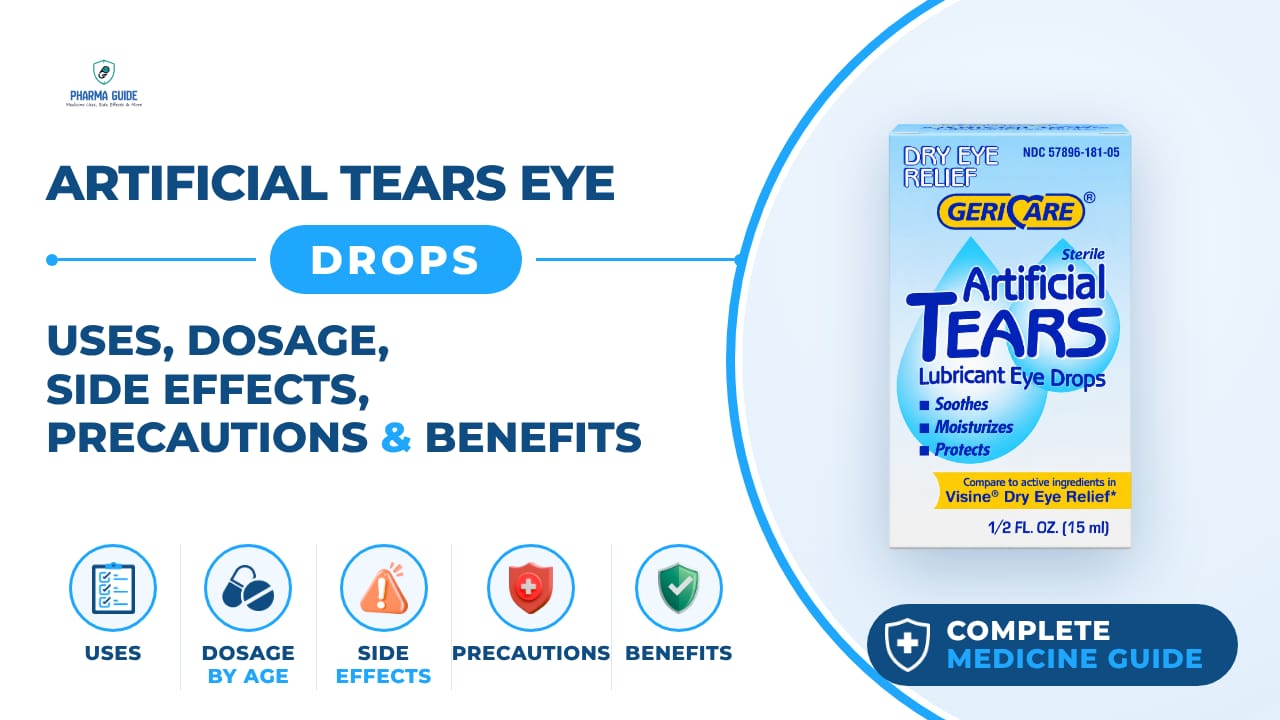
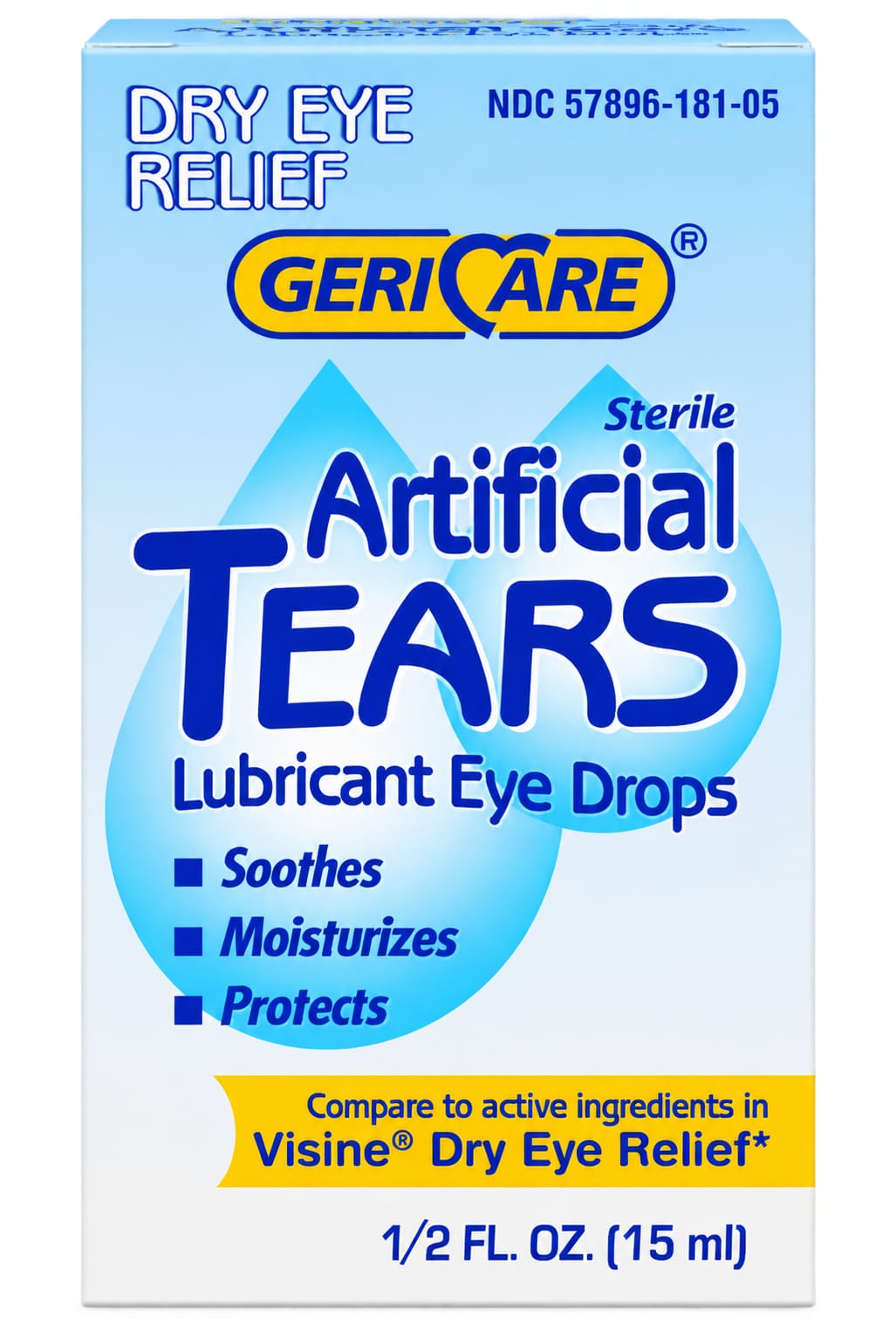
| Generic name | Artificial Tears |
|---|---|
| Forms | Eye solution (drops), Eye ointment |
Quick overview
Artificial Tears Eye Drops are used to relieve discomfort and irritation caused by dry eyes. Dry eyes occur when the eyes do not make enough tears or when tears evaporate too quickly. This medicine works by moistening and protecting the outer surface of the eye. It is available as an eye solution and an eye ointment.
What is Artificial Tears Eye Drops
Artificial Tears Eye Drops (generic name: artificial tears) treat discomfort caused by dry eyes. Dry eyes happen when you don't make enough tears or when your tears evaporate too quickly. This medicine works by moistening and protecting the outer surface of your eyes.
Artificial Tears Eye Drops uses
- Treats discomfort and irritation caused by dry eyes
- May be used for other purposes your health care provider decides
Benefits of Artificial Tears Eye Drops
- Gives quick relief from dryness and soothes irritation
- Can improve blurry vision caused by dry eyes
- Helps keep the eye surface moist, which may lower infection risk
- Helpful for people who get eye strain from long screen use
- Often used for eye comfort and healing after eye surgery
How Artificial Tears Eye Drops works
Artificial tears coat the eye with a smooth, moist layer that reduces friction when you blink, helps the tear film stay stable, and rinses away debris and allergens, acting like a protective shield to keep the eyes comfortable.
Artificial Tears Eye Drops dosage
This medication is only for use in the eye. Do not swallow it. Wash your hands before and after use. Tilt your head back slightly and pull down the lower eyelid to form a pouch for the drops. Try not to let the dropper tip touch your eye, fingers, or any other surface, to avoid contaminating the bottle. Close your eyes gently for a few moments after putting in the drops so they can coat the eye.
Use the drops at regular times as directed, and do not use them more often than told. If you wear contact lenses, take them out before using the drops and wait at least 15 minutes before putting them back in. Talk to your care team before giving this to children, since precautions apply even though it may be used in children as young as 6 for some conditions.
If you miss a dose, use it as soon as you remember; if it is almost time for the next dose, skip the missed one. Do not use double doses.
| Age group | Dose |
|---|---|
| Infants & Children | Use only if recommended by a healthcare professional |
| 6 Years and Above | 1–2 drops in affected eye(s) as needed |
| Adults (18–64 Years) | 1–2 drops in affected eye(s) several times daily as required |
| Older Adults (65+ Years) | 1–2 drops in affected eye(s) as needed; use regularly if prescribed |
Available forms and strengths
- Eye solution (drops)
- Eye ointment
Side effects of Artificial Tears Eye Drops
Common
- Blurry vision
- Eye irritation or itching
- Temporary blurred vision (with gel-based drops)
- Mild irritation
Serious
- Allergic reactions such as skin rash, itching, hives, or swelling of the face, lips, tongue, or throat
Warnings and precautions
- Tell your care team before using this medicine if you have had a change in vision, an eye infection or injury, wear contact lenses, or have had an unusual or allergic reaction to artificial tears, other medicines, foods, dyes, or preservatives.
- Do not use other eye products without checking with your care team first, since interactions are not expected but should still be discussed.
- Do not touch the tip of the container to any surface, and do not share this medicine with others. Do not use if the product changes color or becomes cloudy.
- This medicine does not permanently cure dry eyes; it only manages the symptoms.
- Tell your care team if you are pregnant or trying to become pregnant before using this medicine.
- Tell your care team if you are breastfeeding before using this medicine.
- Wash hands before using eye drops.
- Do not use if the solution is cloudy or the bottle is damaged.
- Remove contact lenses before use if advised.
- Avoid sharing eye drops with others.
Storage
- Keep out of the reach of children and pets.
- Store at room temperature between 20 and 25 degrees C (68 and 77 degrees F). Do not freeze.
- Get rid of any unused medication after the expiration date.
- Take the medication to a medication take-back program if possible.
- If you cannot return it, check the label to see if it should be thrown in the garbage or flushed. If unsure, ask your care team. If safe for the trash, mix the medication with something like cat litter or coffee grounds, seal it in a bag, and throw it away.
When to see a doctor
- Stop using the drops and contact your care team if you get eye pain, changes in vision, ongoing redness or irritation, or if your eye condition gets worse or lasts more than 72 hours.
- Get medical help right away for signs of an allergic reaction, such as rash, itching, hives, or swelling of the face, lips, tongue, or throat.
- If you think you have used too much of this medicine, contact a poison control center or go to an emergency room right away.
- See an eye specialist if you have persistent dryness, redness or pain, sensitivity to light, blurred vision, or eye discharge.
Alternatives
- Optive Eye Drops
- Systane Ultra
- Refresh Tears
- Blink Tears
Watch the video
FAQs
What is Artificial Tears Eye Drops used for?
It is used to treat discomfort and irritation caused by dry eyes, which occur when the eyes don't make enough tears or when tears evaporate too quickly.
How do Artificial Tears Eye Drops work?
They coat the eye with a smooth, moist layer that reduces friction when blinking, helps stabilize the tear film, and rinses away debris and allergens, acting like a protective shield to keep the eyes comfortable.
What is the dosage of Artificial Tears Eye Drops?
For those 6 years and above, 1-2 drops are used in the affected eye(s) as needed. Adults may use 1-2 drops several times daily as required, while older adults use 1-2 drops as needed or regularly if prescribed.
What are the common side effects of Artificial Tears Eye Drops?
Common side effects include blurry vision, eye irritation or itching, temporary blurred vision with gel-based drops, and mild irritation.
Can contact lens wearers use Artificial Tears Eye Drops?
Yes, but contact lenses should be removed before using the drops, and you should wait at least 15 minutes before putting them back in.
General information, not medical advice
Your prescriber and the leaflet in your pack know your situation. This page does not.
- Follow your prescriber and the leaflet
- Don't start, stop, or change a dose on your own
- Doses and warnings differ by country and product
Sources
Video
Related medicines

Injectafer Injection: Uses, Dosage, Side Effects, Precautions and Alternates
Iron products
Injectafer (ferric carboxymaltose) treats iron deficiency anemia and heart failure-related iron deficiency via IV. Learn uses, dosage, side effects, and

Gliclazide Tablet: Uses, Dosage, Side Effects, Precautions and Alternates
Sulfonylurea (hypoglycemic/antidiabetic agent)
Gliclazide Tablet is a sulfonylurea for type 2 diabetes that boosts insulin release. Learn about dosage, side effects, warnings, and precautions.