
Safety
General information, not medical advice
Your prescriber and the leaflet in your pack know your situation. This page does not.
- Follow your prescriber and the leaflet
- Don't start, stop, or change a dose on your own
- Doses and warnings differ by country and product
Asacol Tablet: Uses, Dosage, Side Effects, Precautions and Alternates
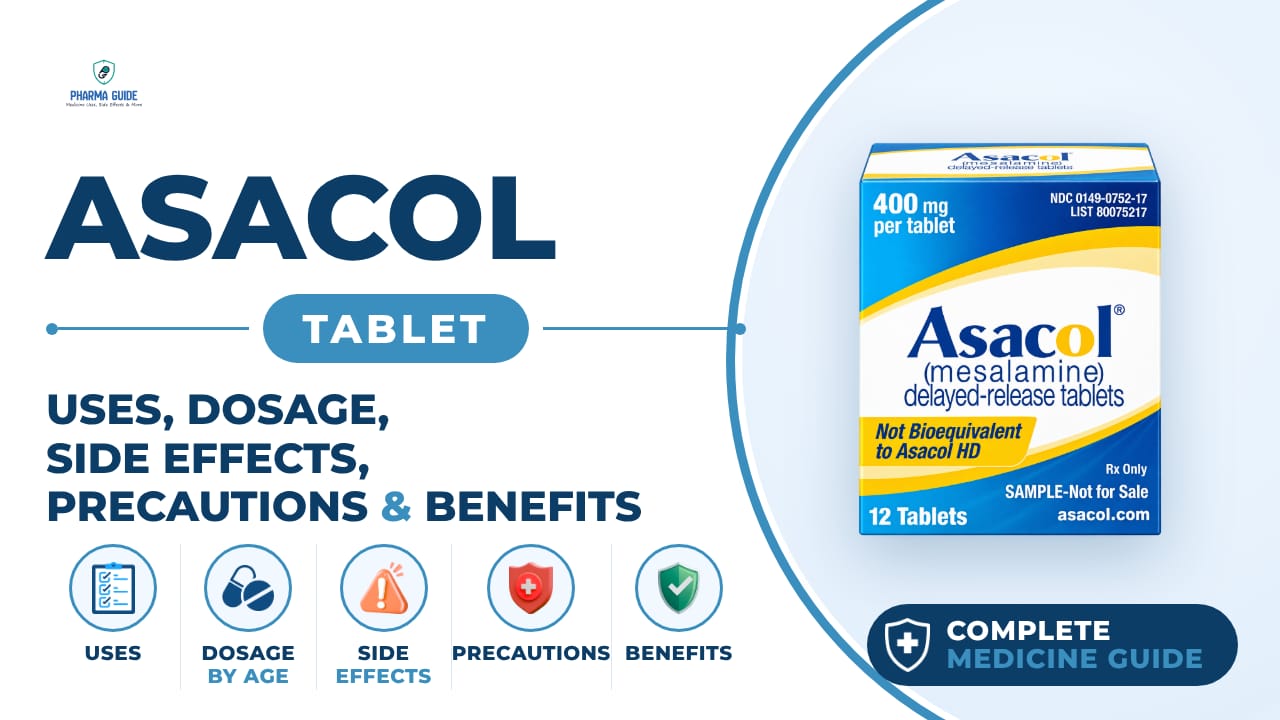
| Generic name | mesalamine (5-aminosalicylic acid, 5-ASA) |
|---|---|
| Drug class | Lower Gastrointestinal Anti-inflammatory / Aminosalicylate |
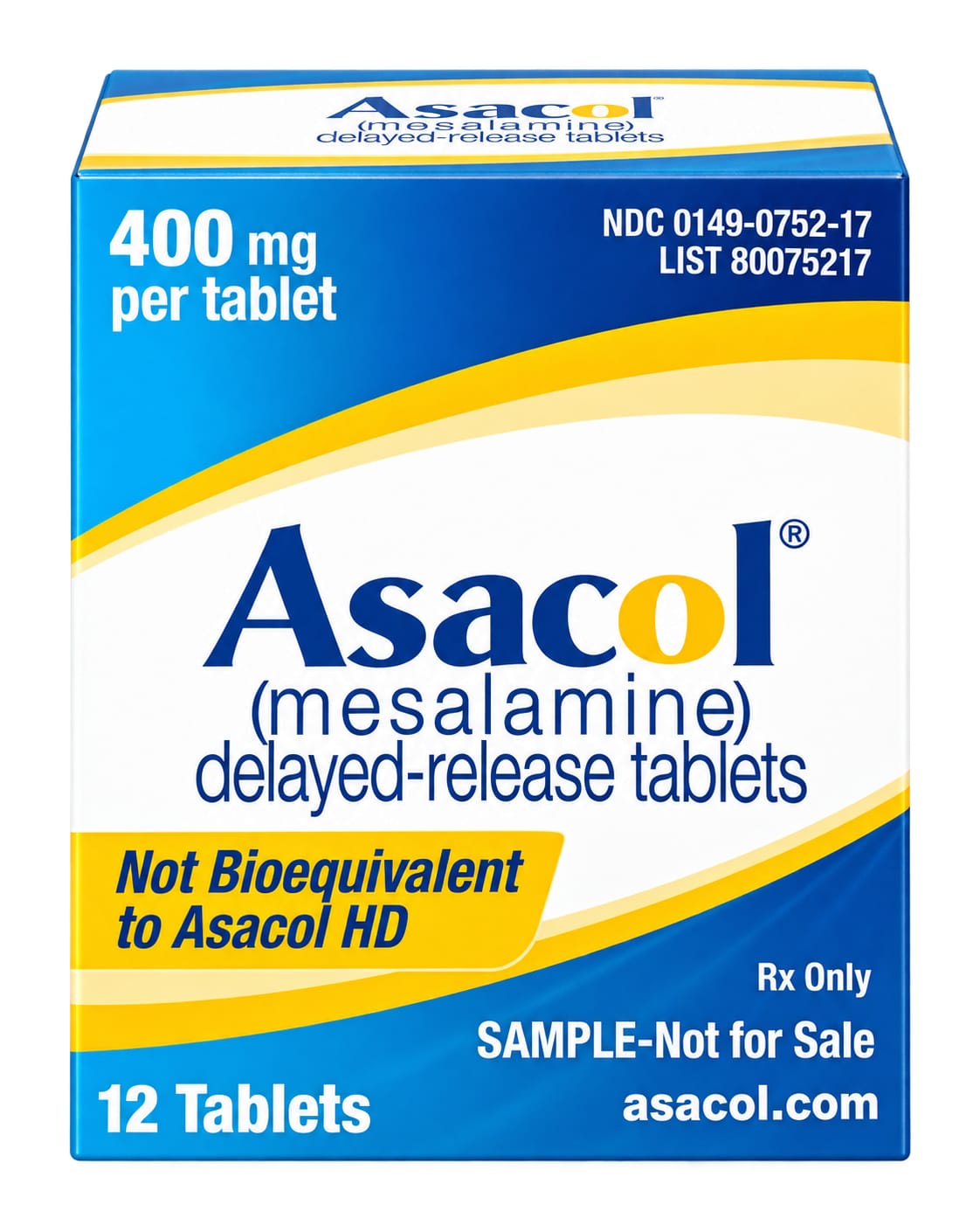
| Forms | Enteric coated tablet, 400 mg |
Quick overview
Asacol Tablet contains mesalamine (5-aminosalicylic acid, 5-ASA), an aminosalicylate medicine used to treat ulcerative colitis. It is an enteric-coated tablet that works directly within the colon to reduce inflammation, helping to treat active disease and maintain remission. Common side effects include nausea and diarrhea, while serious risks involve kidney or liver problems and allergic reactions. It should always be used exactly as prescribed by a doctor.
What is Asacol Tablet
Asacol is a prescription medicine containing mesalamine in an enteric-coated tablet. It is used to treat ulcerative colitis, a long-term condition that causes swelling and sores in the lining of the colon and rectum.
Asacol Tablet uses
- Treatment of mild to moderate active ulcerative colitis
- Maintenance of remission of mild to moderate ulcerative colitis
- Treats moderately active ulcerative colitis
- Reduces inflammation in the lining of the colon
- Helps control diarrhea associated with ulcerative colitis
- May reduce rectal bleeding and abdominal symptoms caused by colonic inflammation
Benefits of Asacol Tablet
- Reduces inflammation directly at the site in the colon and rectum
- Can help bring on and maintain remission of ulcerative colitis symptoms
- Reduces inflammation directly within the colon
- Helps improve ulcerative-colitis symptoms
- Can decrease diarrhea and rectal bleeding
- May help achieve remission of active disease
How Asacol Tablet works
Asacol's coating stops the medicine from dissolving until it reaches the terminal ileum and colon. Once released there, the active ingredient (mesalamine) acts locally on the lining of the colon and rectum to reduce the swelling that causes ulcerative colitis symptoms, and lets the sores heal.
Asacol Tablet dosage
Swallow tablets whole; do not break, crush, or chew them, as this damages the special outer coating. Asacol can be taken with or without food. Take only as prescribed by your doctor; do not change the number or frequency of tablets without consulting your doctor. Doses are usually taken in divided amounts through the day. Do not stop taking this medicine suddenly without talking to your doctor, as symptoms may come back. You may sometimes see what looks like a whole or partial tablet in your stool; this is usually not a problem, but tell your doctor if it happens often. This medicine is not recommended for infants under 2 years of age, and safety and effectiveness in children have not been established.
| Age group | Dose |
|---|---|
| Under 12 years | Not established |
| 12–17 years | 800 mg delayed-release formulation |
| 18–64 years | 1,600 mg three times daily |
Available forms and strengths
- Enteric coated tablet, 400 mg
Side effects of Asacol Tablet
Common
- Nausea
- Diarrhea
- Abdominal pain
- Headache
- Worsening of ulcerative colitis symptoms
- Abnormal liver function tests
- Rash
- Flatulence (gas)
- Indigestion
- Rhinitis (stuffy or runny nose)
- Back pain
- Dizziness
Serious
- Allergic reaction (itching, hives, swelling of face or hands, tightness in chest, trouble breathing)
- Kidney problems (changes in urine output, cloudy or tea-colored urine, blood in urine, weight gain from fluid retention, confusion, swelling of eyes/hands/legs/feet)
- Liver problems (severe abdominal pain or distension, nausea, vomiting, loss of appetite, bloating, yellowing of skin or eyes)
- Fever
- Exacerbation of colitis symptoms with cramping, abdominal pain, bloody diarrhea, and sometimes fever, headache, malaise, itching, rash, and eye redness
Warnings and precautions
- If you have an allergic reaction, stop taking Asacol and get medical help right away. Watch for itching, hives, swelling of the face or hands, tightness in the chest, or trouble breathing.
- Kidney failure has been reported with mesalamine medicines like Asacol. Tell your doctor if you have a history of kidney problems before starting treatment, and expect regular kidney function tests before and during treatment.
- Do not take this medicine if you are allergic to it, to aspirin-like medicines (salicylates), if you have severe kidney or liver problems, a stomach or intestinal ulcer, a urinary tract blockage, if you can't swallow tablets whole, or if the patient is an infant under 2 years old.
- Liver problems, including liver failure, have been reported with medicines similar to Asacol.
- There isn't enough research on using Asacol during pregnancy to know for certain it's safe. Your doctor will weigh the benefits of treating your colitis against any possible risks.
- Small amounts of the medicine and its breakdown products can pass into breast milk. Talk to your doctor about whether it's right for you to take this medicine while nursing.
- This medicine should not be used if you have severe kidney problems. If you have mild or moderate kidney problems, your doctor will only prescribe it if the benefits outweigh the risks, and will check your kidney function before and during treatment.
- This medicine should not be used if you have severe liver problems. If you have mild to moderate liver problems, your doctor will only prescribe it if the benefits outweigh the risks, and will monitor your liver function.
- This medicine isn't known to directly interact with alcohol, but drinking alcohol could make side effects like headache, nausea, and diarrhea worse, and could also worsen your colitis symptoms.
- Mesalamine does not usually impair driving, although driving should be avoided if dizziness or other symptoms affecting alertness occur.
Storage
- Store at controlled room temperature (15°C – 30°C).
When to see a doctor
- Tell your doctor right away if your colitis symptoms get worse, or if you develop fever, rash, chest pain, stomach pain, or trouble breathing while taking this medicine.
- Get emergency help for signs of a serious allergic reaction, such as hives, trouble breathing, or swelling of the face, lips, tongue, or throat.
- Stop the medicine and call your doctor right away if you get severe stomach pain, cramping, or bloody diarrhea, especially with fever, headache, or feeling generally unwell.
- Contact your doctor if you notice signs of kidney problems, such as changes in how much you urinate, swelling, nausea, or feeling very tired or confused.
- If you think you have taken too much of this medicine, contact a doctor or your local poison control center right away, even if you don't notice any symptoms.
Alternatives
- Lialda / mesalamine
- Apriso / mesalamine
- Pentasa / mesalamine
Watch the video
FAQs
What is Asacol Tablet used for?
Asacol Tablet is used to treat mild to moderate active ulcerative colitis and to maintain remission of the disease. It reduces inflammation in the colon lining and can help control diarrhea, rectal bleeding, and abdominal symptoms caused by colonic inflammation.
How should I take Asacol Tablet?
Swallow the tablets whole without breaking, crushing, or chewing them, as this damages the special coating. Asacol can be taken with or without food, and doses are usually taken in divided amounts through the day exactly as prescribed by your doctor.
What are the common side effects of Asacol Tablet?
Common side effects include nausea, diarrhea, abdominal pain, headache, worsening of ulcerative colitis symptoms, abnormal liver function tests, rash, flatulence, indigestion, rhinitis, back pain, and dizziness.
Can I drink alcohol while taking Asacol Tablet?
Asacol isn't known to directly interact with alcohol, but drinking alcohol could worsen side effects like headache, nausea, and diarrhea, and could also worsen your colitis symptoms.
Is Asacol Tablet safe to use during pregnancy?
There isn't enough research on using Asacol during pregnancy to know for certain it's safe, so your doctor will weigh the benefits of treating your colitis against any possible risks.
General information, not medical advice
Your prescriber and the leaflet in your pack know your situation. This page does not.
- Follow your prescriber and the leaflet
- Don't start, stop, or change a dose on your own
- Doses and warnings differ by country and product
Sources
Video
Related medicines

Injectafer Injection: Uses, Dosage, Side Effects, Precautions and Alternates
Iron products
Injectafer (ferric carboxymaltose) treats iron deficiency anemia and heart failure-related iron deficiency via IV. Learn uses, dosage, side effects, and

Gliclazide Tablet: Uses, Dosage, Side Effects, Precautions and Alternates
Sulfonylurea (hypoglycemic/antidiabetic agent)
Gliclazide Tablet is a sulfonylurea for type 2 diabetes that boosts insulin release. Learn about dosage, side effects, warnings, and precautions.