
Safety
General information, not medical advice
Your prescriber and the leaflet in your pack know your situation. This page does not.
- Follow your prescriber and the leaflet
- Don't start, stop, or change a dose on your own
- Doses and warnings differ by country and product
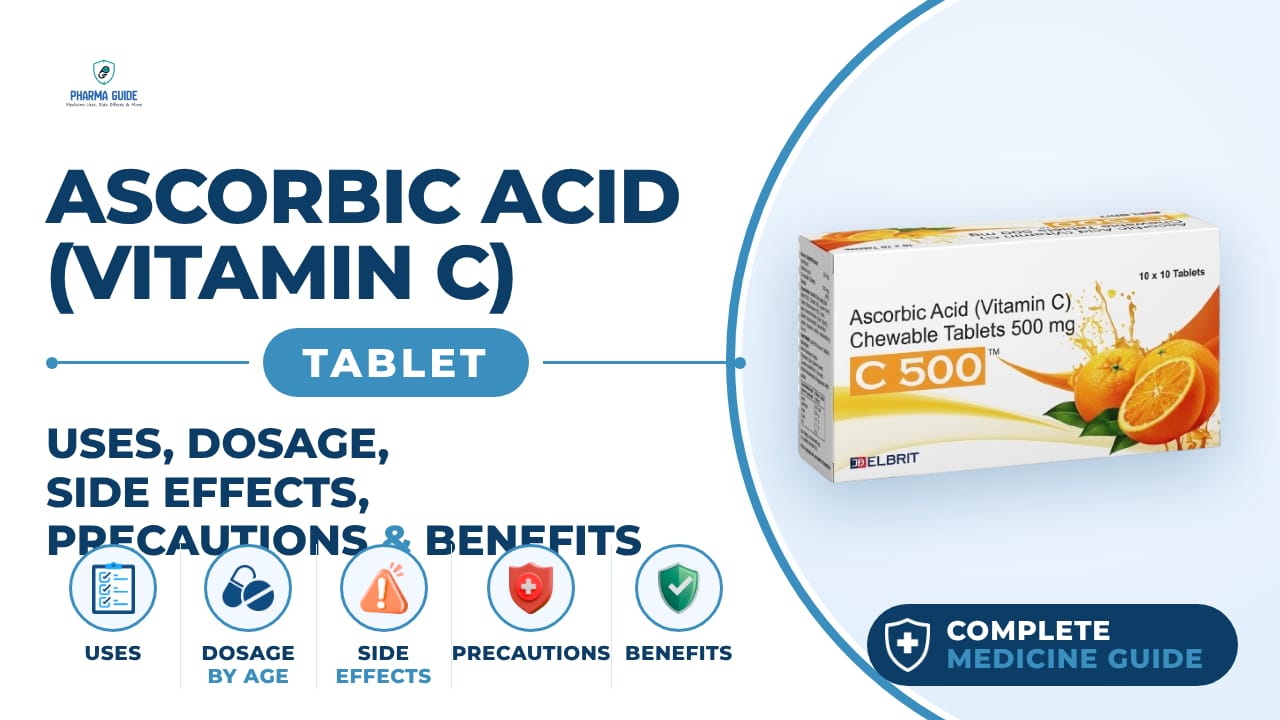
Ascorbic Acid (Vitamin C) Tablet: Uses, Dosage, Side Effects, Precautions and Alternates
| Generic name | Ascorbic Acid |
|---|---|
| Drug class | Antioxidant / vitamin supplement |
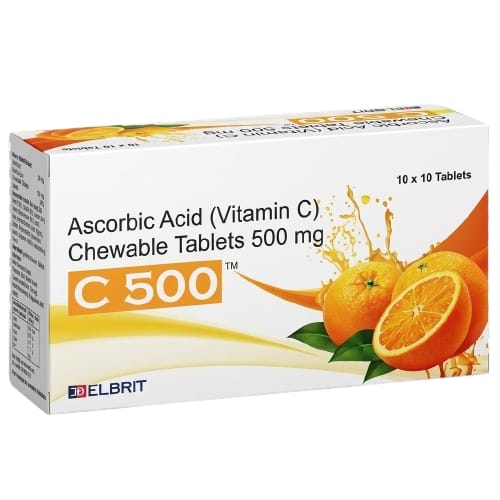
| Forms | Tablet, Capsule, Lozenge, Chewable tablet, Chewable gel (gummy), Liquid drops, Powder |
Quick overview
Ascorbic Acid, also known as Vitamin C, is a water-soluble vitamin used to treat or prevent Vitamin C deficiency and scurvy, support wound healing, and support the immune system. It also acts as an antioxidant that protects cells from damage and helps the body absorb iron from plant-based foods. It comes in several forms, including tablets, capsules, lozenges, chewables, and liquid drops, and is generally taken once a day.
What is Ascorbic Acid (Vitamin C) Tablet
Ascorbic Acid, also known as Vitamin C, is a water-soluble vitamin needed for many body processes. It helps make collagen, a key part of skin, bones, and connective tissue, and it acts as an antioxidant that protects cells from damage.
Ascorbic Acid (Vitamin C) Tablet uses
- Treating or preventing Vitamin C deficiency and scurvy
- Helping wounds heal
- Supporting the immune system
- Acting as an antioxidant to protect cells
- Helping the body absorb iron from plant-based foods
Benefits of Ascorbic Acid (Vitamin C) Tablet
- Helps correct Vitamin C deficiency
- Supports wound healing
- Supports immune system function
- Protects cells from damage caused by free radicals
- Improves absorption of iron from plant foods
- Supports healthy skin, tissues, and blood vessels
How Ascorbic Acid (Vitamin C) Tablet works
Ascorbic Acid works as an antioxidant that protects cells from damage caused by free radicals, and it is needed by the body to help wounds heal, improve iron absorption from plant foods, and support the immune system.
Ascorbic Acid (Vitamin C) Tablet dosage
Take it by mouth, usually once a day or as directed by your doctor. Follow the directions on the package, product label, or your doctor's instructions carefully. Take it exactly as directed — do not take more, less, or more often than recommended. It may take up to 4 weeks for symptoms of scurvy to improve.
It comes in extended-release capsules and tablets, lozenges, chewable tablets, chewable gummies, and liquid drops. Some forms contain sodium and should be avoided on a sodium- or salt-restricted diet.
| Age group | Dose |
|---|---|
| Under 4 years | 25 mg, once/day |
| 4–8 years | 45 mg, once/day |
| 9–13 years | 50 mg, once/day |
| 14–18 years | 75 mg, once/day |
| 18+ years | 75–90 mg, once/day |
Available forms and strengths
- Tablet
- Capsule
- Lozenge
- Chewable tablet
- Chewable gel (gummy)
- Liquid drops
- Powder
Side effects of Ascorbic Acid (Vitamin C) Tablet
Common
- Nausea and vomiting
- Stomach cramps and diarrhea
- Heartburn or acid reflux
- Headache
- Flushing or redness of the skin
- Dizziness
- Difficulty falling or staying asleep
- Fatigue
- Gas
Serious
- Kidney stones
- Severe allergic reaction (anaphylaxis)
- Breakdown of red blood cells (hemolysis) in people with G6PD deficiency
- Worsening of kidney disease, iron overload disorders, or certain cancers
Warnings and precautions
- Vitamin C is generally safe during pregnancy and is important for the health of both mother and baby, but high-dose supplements should only be used after talking with a healthcare provider.
- Vitamin C is generally safe while breastfeeding, but it's best to meet needs through diet and discuss any supplement use with a healthcare provider.
- People with kidney disease or a history of kidney stones should talk to their doctor before taking Ascorbic Acid, since high doses may increase the risk of kidney stones.
- Use cautiously if you have a history of kidney stones.
- Tell your doctor if you have kidney disease or iron-overload conditions.
- High doses may cause stomach upset, nausea, or diarrhea, which may affect driving.
- Do not take more than the recommended daily amount, since high doses can cause negative effects.
- Ascorbic Acid can affect the results of certain lab tests, such as blood glucose and urine glucose/ketone tests, so tell your healthcare provider you are taking it before any lab tests.
- Ascorbic Acid may interact with medicines such as blood thinners and blood pressure medications, so check with your healthcare provider before taking it alongside other medications.
- People who smoke may need more vitamin C because smoking can reduce how well it works.
- Ascorbic acid may interact with certain medications, including warfarin, acetaminophen, aluminium-containing antacids, aspirin, and barbiturates.
Storage
- Store Ascorbic Acid in a cool, dry place, protected from heat, light, and moisture
- Do not put it where children or pets can reach it
- Keep it at room temperature, between 20 and 25°C (68-77°F)
- Keep it in its original packaging with the top securely fastened; do not transfer it to a different container
- Keep the medication in the container it came in, tightly closed, and out of reach of children
- Store it at room temperature and away from excess heat and moisture, not in the bathroom
- Dispose of unneeded medication in a way so that pets, children, and other people cannot take it; do not flush it down the toilet; use a medicine take-back program
When to see a doctor
- High doses of Ascorbic Acid can rarely cause a severe allergic reaction (anaphylaxis)
- People with G6PD deficiency can experience breakdown of red blood cells (hemolysis) from high doses
- If the person who took too much has collapsed, had a seizure, has trouble breathing, or cannot be woken up, get emergency medical help right away
- Call your doctor if you have any unusual problems while taking this vitamin
Alternatives
- Multivitamin
- Calcium Ascorbate
- Sodium Ascorbate
Watch the video
FAQs
What is Ascorbic Acid (Vitamin C) Tablet used for?
It is used to treat or prevent Vitamin C deficiency and scurvy, help wounds heal, support the immune system, act as an antioxidant to protect cells, and help the body absorb iron from plant-based foods.
What is the dosage of Ascorbic Acid (Vitamin C) Tablet?
It is taken by mouth, usually once a day. Doses vary by age: 25 mg for under 4 years, 45 mg for 4–8 years, 50 mg for 9–13 years, 75 mg for 14–18 years, and 75–90 mg for adults 18 and older. It may take up to 4 weeks for scurvy symptoms to improve.
What are the side effects of Ascorbic Acid (Vitamin C) Tablet?
Common side effects include nausea, vomiting, stomach cramps, diarrhea, heartburn, headache, flushing, dizziness, trouble sleeping, fatigue, and gas. Serious effects can include kidney stones, severe allergic reaction, red blood cell breakdown in people with G6PD deficiency, and worsening of kidney disease, iron overload, or certain cancers.
Who should be cautious when taking Ascorbic Acid (Vitamin C) Tablet?
People with kidney disease, a history of kidney stones, or iron-overload conditions should talk to their doctor before taking it, since high doses may increase the risk of kidney stones and other issues.
Can Ascorbic Acid (Vitamin C) Tablet interact with other medications?
Yes, it may interact with blood thinners, blood pressure medications, warfarin, acetaminophen, aluminium-containing antacids, aspirin, and barbiturates, so check with your healthcare provider before combining it with other medicines.
General information, not medical advice
Your prescriber and the leaflet in your pack know your situation. This page does not.
- Follow your prescriber and the leaflet
- Don't start, stop, or change a dose on your own
- Doses and warnings differ by country and product
Sources
Video
Related medicines

Injectafer Injection: Uses, Dosage, Side Effects, Precautions and Alternates
Iron products
Injectafer (ferric carboxymaltose) treats iron deficiency anemia and heart failure-related iron deficiency via IV. Learn uses, dosage, side effects, and

Gliclazide Tablet: Uses, Dosage, Side Effects, Precautions and Alternates
Sulfonylurea (hypoglycemic/antidiabetic agent)
Gliclazide Tablet is a sulfonylurea for type 2 diabetes that boosts insulin release. Learn about dosage, side effects, warnings, and precautions.